Pevita Pearce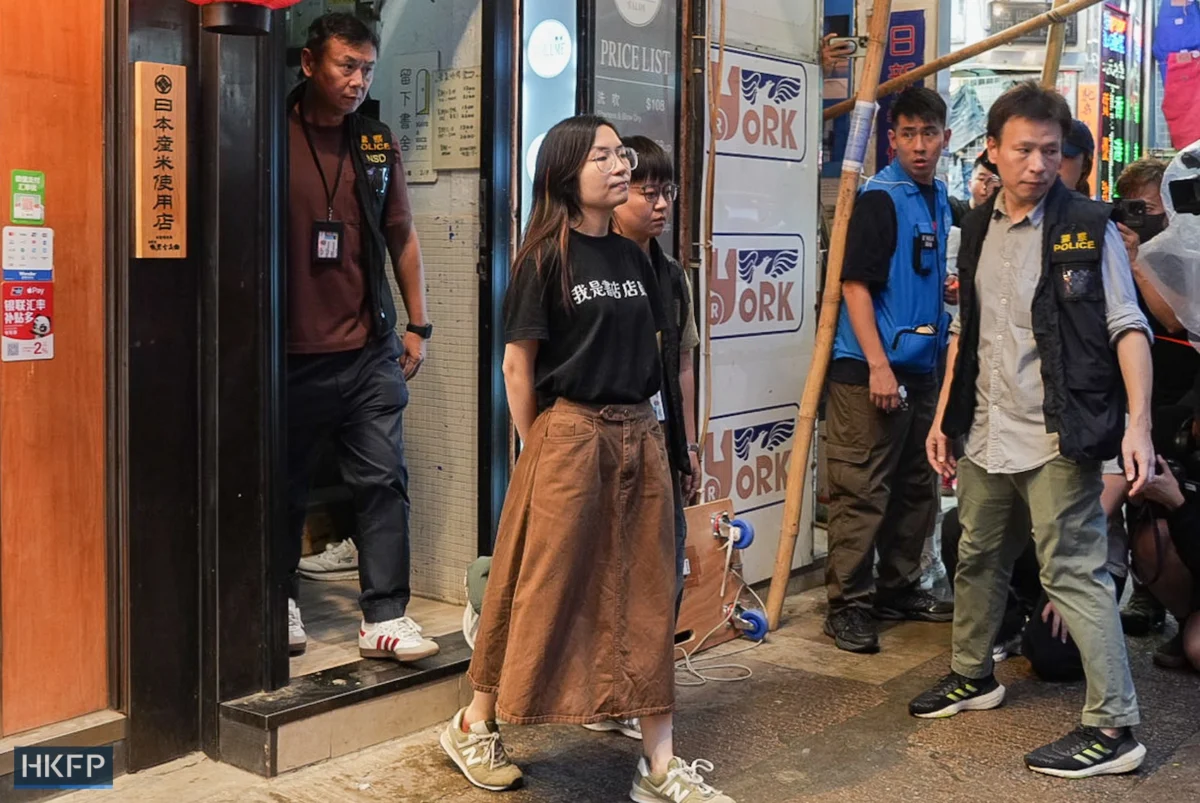
The Taiwanese branch of Hong Kong-based logistics firm Jaguar Logistics has reportedly informed its clients that it will no longer ship "prohibited books" to the city, citing compliance with Beijing’s national security law. This decision marks a significant development in the ongoing enforcement of the legislation, which has increasingly cast a shadow over freedom of expression and the circulation of information in Hong Kong. The move by Jaguar Logistics, a company with extensive operations across Asia, highlights the extraterritorial reach and chilling effect of the national security law on international trade and the book industry.
The Taiwanese media outlet Formosa Television (FTVN) first reported on Tuesday that Jaguar Logistics’ Taiwan branch had issued a notice outlining its new policies. According to a copy of the notice obtained by FTVN, the firm stated it would not transport "prohibited publications" and mandated that clients provide a detailed list of book titles within all shipments destined for Hong Kong. Furthermore, Jaguar Logistics announced it would refuse to ship to bookstores currently under government investigation. The company specifically named Greenfield Bookstore, Have a Nice Stay, Book Punch, and Hunter Bookstore as examples of establishments to which it would not deliver. These four independent bookstores have been the focus of national security police investigations this year, with staff members arrested on suspicion of sedition.

Jaguar Logistics’ headquarters in Hong Kong did not immediately respond to inquiries from the Hong Kong Free Press (HKFP) on Wednesday. A staff member at the headquarters stated that they needed to gather more information from their Taiwan branch before providing a comment. In parallel, Hong Kong’s Customs and Excise Department informed HKFP that it would not comment on remarks made by individual organizations. However, the department reiterated its commitment to safeguarding national security, stating that it would detain shipments suspected of containing seditious items and refer them to the police for investigation.
The decision by Jaguar Logistics appears to be influenced by previous encounters with Hong Kong customs. A representative from the Taiwan branch reportedly told FTVN that their containers bound for Hong Kong had been detained by the city’s customs department in the past, resulting in financial losses for the company. This suggests a risk-averse approach by the logistics firm to avoid further complications and potential penalties under the national security law.
A Tightening Grip on Information: The Crackdown on Independent Bookstores

The directive from Jaguar Logistics comes in the wake of a series of raids and arrests targeting independent bookstores in Hong Kong. Last week, authorities raided Greenfield Bookstore and Have a Nice Stay, leading to the arrest of five individuals on suspicion of selling seditious publications. This incident marked the third wave of operations by national security police against independent booksellers this year. In March, staff from Book Punch were arrested for alleged sedition, followed by similar arrests at Hunter Bookstore in June. In total, 11 individuals have been arrested in connection with these bookstore raids. While all have been released on bail, none have been formally charged.
Following the arrests, Secretary for Security Chris Tang stated that authorities would not provide a list of banned publications. He emphasized that booksellers are responsible for ensuring the legality of the titles they stock, adding that a published list of banned books could inadvertently help offenders circumvent detection by altering titles. This approach places the onus entirely on individuals and businesses to navigate the ambiguities of the national security law.
Jaguar Logistics’ Cautious Stance and Client Communication

A Ming Pao reporter, posing as a customer, contacted Jaguar Logistics’ Taiwan branch, which clarified that the notice was not issued at the direct behest of Hong Kong authorities. Instead, the branch stated it was acting "out of caution." The staff member reportedly informed the reporter that the company does not possess a definitive list of prohibited books, nor has one been provided by the Hong Kong government.
The notice, therefore, serves as a broad advisory to clients. It reminds them to refrain from shipping publications that are deemed "critical of the Chinese government," "sensitive to the Hong Kong government," or bearing "provocative titles." This vague categorization underscores the challenge faced by businesses in adhering to the national security law, where interpretations of what constitutes seditious or prohibited content can be broad and subject to change.
Jaguar Logistics, established in 1997, operates across mainland China, Hong Kong, Taiwan, and Southeast Asia, according to its corporate website. Its presence in multiple jurisdictions means that its compliance policies are scrutinized by various legal frameworks, yet the paramount concern for business continuity in Hong Kong appears to be adherence to the national security law.

Broader Implications for Freedom of Expression and Trade
The decision by Jaguar Logistics is a significant indicator of the chilling effect the national security law is having on the free flow of information and goods in Hong Kong. By ceasing to ship potentially sensitive materials, the company is preemptively mitigating risks, a strategy likely to be emulated by other logistics providers and businesses operating in the region. This self-censorship, driven by fear of legal repercussions, can lead to an erosion of intellectual discourse and a reduction in the diversity of available literature.
The lack of a clear, publicly accessible list of prohibited publications, as articulated by Secretary Chris Tang, places an immense burden on individuals and businesses. It forces them to engage in a constant process of self-assessment and risk management, potentially stifling legitimate academic and cultural exchange. The arrests of booksellers and the subsequent actions by logistics firms suggest a pattern of enforcement that extends beyond direct violations to creating an environment where the mere possibility of transgression leads to restrictive practices.

The Hong Kong government’s stance, as communicated by the Customs and Excise Department, emphasizes its resolve to enforce national security. While the department refrains from commenting on specific corporate decisions, its general statement about detaining seditious shipments signals a continued commitment to rigorous enforcement. This creates a challenging operational landscape for companies like Jaguar Logistics, which must balance their commercial interests with the imperative to comply with evolving legal requirements.
The situation also raises questions about the future of Hong Kong as a global hub for information and ideas. The national security law, enacted in June 2020, has been a point of contention for many international observers and organizations concerned about Hong Kong’s autonomy and freedoms. The increasing self-censorship and the restrictive measures adopted by businesses indicate a tangible impact on the city’s vibrant cultural and intellectual landscape. The case of Jaguar Logistics serves as a stark reminder of how national security legislation can reshape the operational realities for businesses and the accessibility of information for residents and visitors alike. The long-term consequences for Hong Kong’s status as an international city and a center for free expression remain a subject of significant concern.


 Reynand Wu
 Siti Muinah