Nila Kartika Wati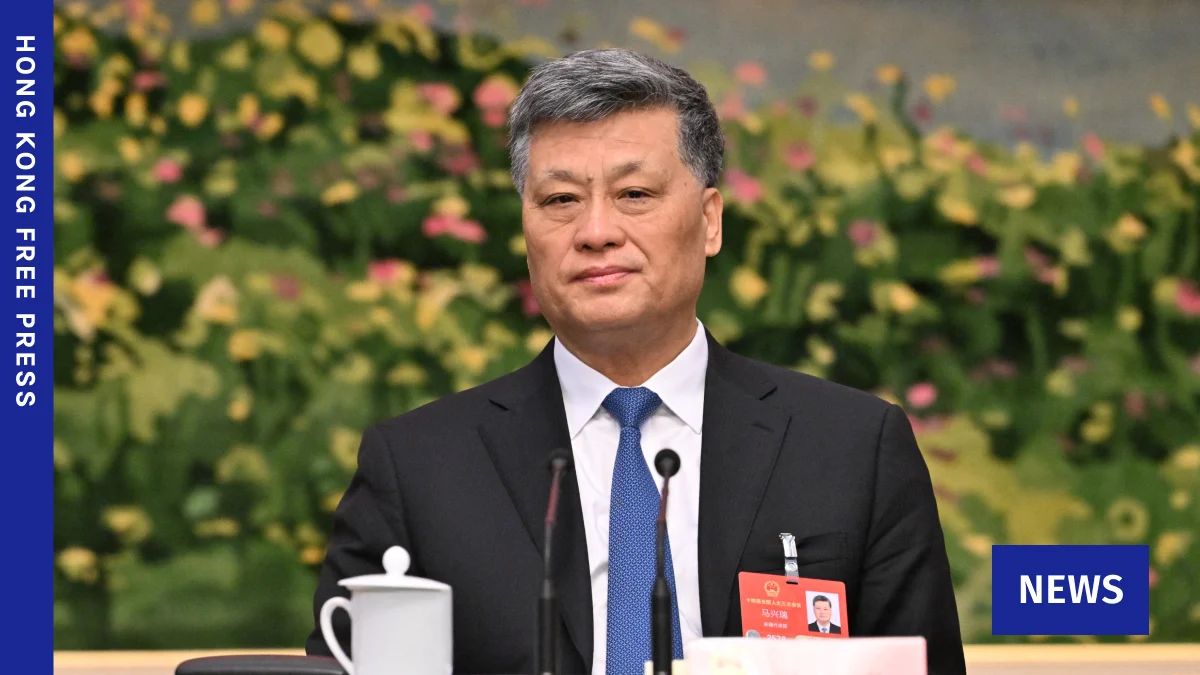
Beijing, China – China has formally expelled Ma Xingrui, a former top official in the Xinjiang Uyghur Autonomous Region, from the ruling Communist Party of China (CPC) and stripped him of all his public posts following a comprehensive investigation into severe corruption allegations. The announcement, made by state media on Tuesday, detailed a litany of charges against Ma, including nepotism, bribery, engaging in transactions of power-for-sex and money-for-sex, and illicitly accepting vast sums of money and valuables. This high-profile purge underscores President Xi Jinping’s unwavering and increasingly stringent anti-corruption campaign, which has targeted officials across all levels of government and party hierarchy.
Allegations of Extensive Malfeasance

The investigation, which commenced in April, culminated in a report approved by the Party’s Politburo, its highest decision-making body, headed by President Xi Jinping. Xinhua, the official state news agency, reported that the Party’s anti-corruption watchdog, the Central Commission for Discipline Inspection (CCDI), found Ma Xingrui, 66, to have committed "particularly serious" violations of party discipline and national laws. The detailed findings revealed that Ma allegedly facilitated illegal advantages for his family members, including the purchase of real estate at significantly reduced prices. Furthermore, he is accused of leveraging his powerful position to secure "huge benefits" for relatives and associates, engaging in widespread influence peddling.
The report explicitly highlighted Ma’s involvement in "power-for-sex and money-for-sex transactions," a charge frequently leveled against disgraced officials in China’s anti-corruption drive, reflecting the deep-seated issues of moral decay and abuse of authority within certain party ranks. Beyond personal enrichment and illicit sexual conduct, Ma was also found to have "sought benefits for others in business operations, project contracting and job promotion," activities characteristic of systemic bribery and the abuse of public office for private gain. The scale of his illicit gains, described as "huge amounts of money and valuables," signifies the gravity of his transgressions in the eyes of the Party.
Context of Xi Jinping’s Anti-Corruption Campaign

Ma Xingrui’s downfall is the latest in a decade-long, relentless anti-corruption campaign spearheaded by President Xi Jinping since he came to power in 2012. Dubbed a fight against both "tigers" (high-ranking officials) and "flies" (lower-level cadres), the campaign has disciplined millions of officials, purged political rivals, and consolidated Xi’s authority within the Party. The CCDI, a formidable internal disciplinary body, operates with broad powers, investigating party members for corruption, malfeasance, and violations of party discipline. Its investigations often precede formal legal proceedings, with expulsions from the Party effectively ending an official’s political career and leading to criminal prosecution.
The Party portrays the anti-corruption drive as essential for maintaining public trust and ensuring the long-term viability of the CPC. Official pronouncements consistently emphasize the Party’s commitment to self-purification and the eradication of practices that undermine its legitimacy. Critics, however, often point to the campaign’s dual function: while genuinely tackling corruption, it also serves as a potent tool for removing political opponents and solidifying Xi’s factional control. The removal of a Politburo member like Ma Xingrui, who was part of the Party’s elite 24-member decision-making body, sends a strong message that no official is immune, regardless of rank or past contributions.
Ma Xingrui’s Tenure in Xinjiang and Broader Regional Issues
Ma Xingrui’s most recent prominent role was as the Communist Party Secretary of Xinjiang, a position he held between 2021 and 2025. This period was particularly sensitive for the vast, resource-rich northwestern region, which has been under intense international scrutiny due to China’s policies targeting the Uyghur Muslim minority.
Before Ma’s tenure, Xinjiang had experienced a series of deadly attacks on civilians up until the mid-2010s, which Beijing attributed to armed separatist and Islamist groups. In response, Chinese authorities initiated a sweeping crackdown over the last decade, framed domestically as a counter-terrorism effort. This crackdown has involved extensive surveillance, mass detention, and cultural and religious suppression, primarily affecting the Uyghur population.
Human rights organizations globally have vehemently condemned these policies, describing them as gross violations of human rights. Reports from various international bodies and advocacy groups have detailed accounts of mass internment camps, forced labor, forced sterilization, and widespread cultural assimilation efforts. A landmark 2022 report by the then-UN High Commissioner for Human Rights, Michelle Bachelet, cited "possible crimes against humanity" in Xinjiang, based on an extensive review of available evidence. China has consistently denied these allegations, claiming the facilities are vocational training centers designed to combat extremism and poverty, and that the region enjoys stability and economic development. Ma’s removal for corruption, however, adds another layer of complexity to the narrative surrounding governance in Xinjiang, albeit unrelated to the human rights allegations themselves.

Chronology of Events and Related Developments
- 2012: President Xi Jinping launches the comprehensive anti-corruption campaign targeting "tigers and flies."
- Mid-2010s: Xinjiang experiences a series of violent attacks, prompting Beijing to initiate a strict counter-terrorism crackdown.
- 2021-2025: Ma Xingrui serves as the Communist Party Secretary of Xinjiang, a period marked by ongoing international concern over human rights in the region.
- April [Year of Investigation]: Ma Xingrui comes under investigation by the Central Commission for Discipline Inspection (CCDI).
- 2022: The UN High Commissioner for Human Rights releases a report citing "possible crimes against humanity" in Xinjiang.
- Tuesday [Date of Announcement]: State media announces Ma Xingrui’s expulsion from the Communist Party and removal from all posts following the Politburo’s approval of the CCDI’s corruption report.
Official Responses and Party Stance
While no immediate external reactions from international bodies or foreign governments were reported regarding Ma’s specific corruption case, the official narrative from Beijing remains consistent: the Party is unwavering in its commitment to root out corruption at all levels. Spokespersons and state media typically emphasize that such actions demonstrate the Party’s self-correcting mechanism and its determination to uphold discipline and integrity. The CCDI’s stern language, describing Ma’s case as "particularly serious," is intended to signal the Party’s zero-tolerance policy towards deep-seated corruption, especially when it involves high-ranking officials. This reinforces the image of a Party striving for clean governance and accountability, despite persistent criticisms regarding its opaque legal processes and lack of independent oversight.

Broader Implications and Analysis
The expulsion of a Politburo member like Ma Xingrui carries significant implications for China’s political landscape. Firstly, it underscores the continued intensity and breadth of President Xi Jinping’s anti-corruption campaign. Far from winding down, the campaign appears to maintain its momentum, serving as a constant reminder to all officials about the risks of malfeasance and the imperative of political loyalty. The targeting of such a senior figure suggests that Xi’s authority remains absolute and that he is willing to dismantle powerful networks to maintain Party discipline and his own control.
Secondly, Ma’s case reinforces the Party’s internal disciplinary mechanisms as the primary tool for addressing corruption, rather than external judicial processes. The CCDI’s comprehensive report and the Politburo’s approval highlight the Party’s centralized control over accountability. This approach, while effective in purging officials, often lacks the transparency and due process associated with independent legal systems, raising concerns among international observers about the politicization of anti-corruption efforts.

Finally, while Ma’s corruption charges are distinct from the controversial human rights issues in Xinjiang, his removal from a leadership position in such a politically sensitive region could, in the long term, lead to subtle shifts in regional governance, or at least a reaffirmation of Beijing’s absolute control over local officials. However, the core policies in Xinjiang are directed from the central government, and a change in leadership due to corruption is unlikely to signal a fundamental shift in Beijing’s approach to the region’s ethnic minorities. Instead, it more broadly serves as a testament to the ongoing internal power dynamics and the Party’s continuous efforts to project an image of a disciplined and incorruptible leadership, even as it continues to grapple with endemic corruption.

 Sagoh
Sagoh
 Asro
Asro