Asep Darmawan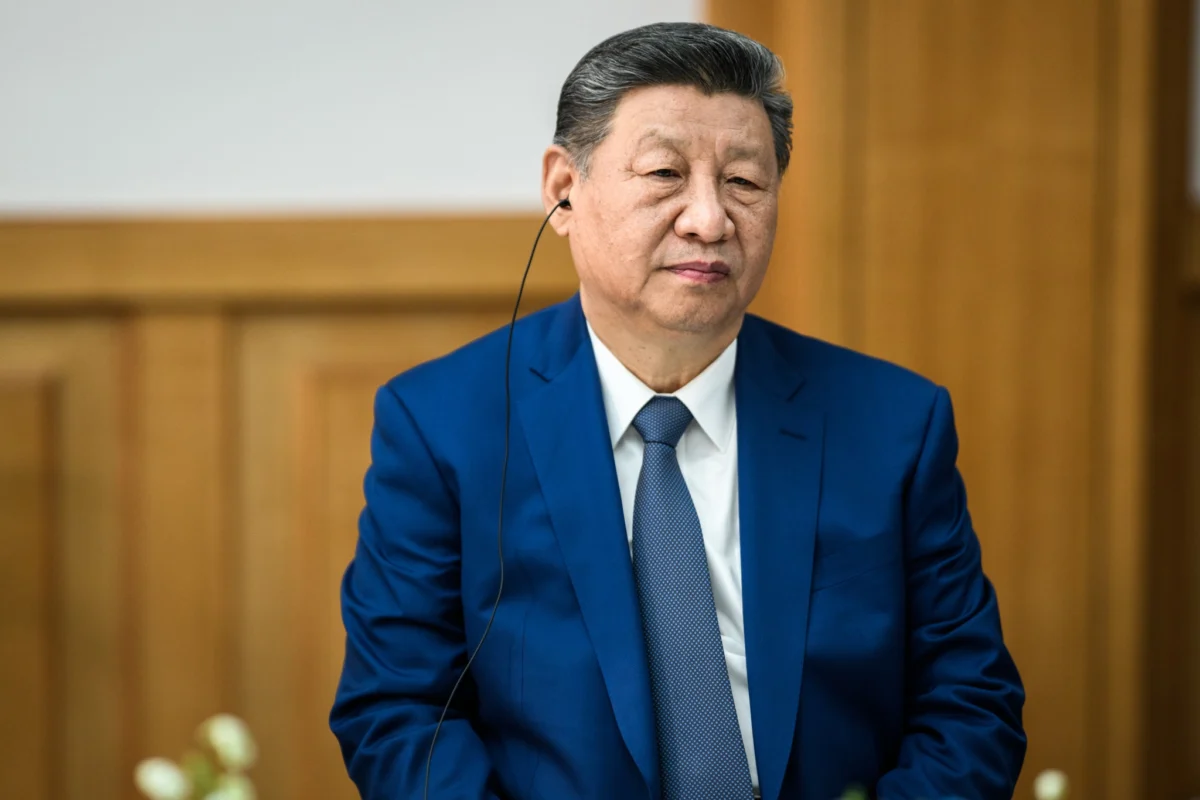
Shanghai, China – Chinese President Xi Jinping on Friday issued a powerful call for extensive international collaboration in the development of artificial intelligence, emphatically stating that the burgeoning technology should not be monopolized by any single nation. Speaking at the opening of the prestigious World Artificial Intelligence Conference (WAIC) in Shanghai, Xi’s remarks underscored Beijing’s vision for a shared global future in AI, even as geopolitical tensions and technological rivalries continue to shape the sector. His address laid out a comprehensive framework for ethical governance, risk mitigation, and inclusive growth in the AI landscape, resonating deeply within a global community grappling with the profound implications of this transformative technology.
President Xi characterized AI development not as "a solo performance by a single country, but a symphony of international cooperation." This evocative metaphor highlighted China’s desire for a multilateral approach, a stark contrast to the increasing trend of technological decoupling and nationalistic competition. He further warned against the "overstretching [of] the national security concept in the field of AI or placing one country’s security over that of others," a clear, albeit implicit, reference to the stringent export controls and restrictions imposed by the United States and the European Union on Chinese tech imports. These measures, often justified on national security grounds, have fueled a global debate about the balance between safeguarding national interests and fostering open scientific advancement.
The backdrop to Xi’s pronouncements is a rapidly evolving global AI landscape where Chinese models are making significant strides, increasingly closing the gap with, and in some aspects, even challenging the most advanced offerings from the United States. These Chinese innovations are also gaining traction globally due to their competitive costs and adaptable nature. However, the rapid advancement of AI has simultaneously brought to the forefront critical questions about its governance. Concerns range from its potential deployment in military combat and autonomous weapon systems to its misuse by malicious actors such as hackers and terrorists, all of which demand urgent international dialogue and consensus.

The Geopolitical Chessboard of AI
The rivalry between the United States and China in the AI domain is arguably the most significant technological contest of the 21st century. While the U.S. has historically held a lead in foundational research, advanced semiconductor manufacturing, and significant venture capital investment, China has rapidly emerged as its "closest and most comprehensive competitor," according to Poe Zhao of the analysis publication Hello China Tech. Zhao noted that the United States "retains a clear lead in advanced chips, frontier computing infrastructure and the most capital-intensive model development." However, China’s aggressive national strategy, substantial state investment, and a vast talent pool have propelled its AI sector forward at an unprecedented pace.
This competition has manifested in a series of strategic moves and counter-moves. The U.S. Department of Commerce, for instance, has implemented a series of export controls targeting China’s access to advanced semiconductors and chip-making equipment, aiming to slow Beijing’s progress in areas like AI and supercomputing. These restrictions are rooted in concerns that advanced AI capabilities could be leveraged for military modernization or surveillance, posing risks to global security. Similarly, the European Union has also navigated complex policy discussions regarding technology imports from China, balancing economic interests with security considerations. These actions have inevitably led to "tussles between Washington and American AI labs" over who controls access to cutting-edge technology, highlighting the complex interplay between government policy, private innovation, and national security.
The World Artificial Intelligence Conference: A Global Platform

The World Artificial Intelligence Conference (WAIC) serves as China’s premier annual gathering for showcasing its advancements in AI and articulating its strategic vision for the sector. Held in Shanghai, a city positioned as a global hub for innovation, the four-day event attracts a diverse array of participants, including over 1,000 Chinese tech firms, government officials, leading researchers, and prominent industry figures from around the world. The WAIC is not merely a trade show; it is, as Poe Zhao aptly described, "the most important annual event for understanding the direction of China’s AI industry," offering a window into Beijing’s policy priorities, technological breakthroughs, and international ambitions.
The sheer scale of the conference is impressive, with approximately 3,000 new products and solutions on display. These range from sophisticated semiconductor systems designed for high-performance AI computing to innovative consumer applications, such as a smartphone capable of autonomously operating various apps. Beyond the technological spectacle, a primary focus of this year’s WAIC was the overarching theme of global governance, particularly regarding the potential impact of AI on cybersecurity, international conflict, job markets, and the broader world economy.
Charting a Course for Global Governance: The WAICO Initiative
President Xi’s emphasis on global cooperation was not merely rhetorical; it was accompanied by concrete steps towards establishing new multilateral frameworks. A significant development on Thursday, preceding Xi’s main address, saw Chinese Foreign Minister Wang Yi and representatives from 29 countries sign an agreement to establish the World Artificial Intelligence Cooperation Organization (WAICO). This new intergovernmental body, headquartered in Shanghai, is designed to "promote consultation and collaboration between members to ensure the healthy and orderly development of AI," as reported by state media.

The list of signatory countries, including Russia, Pakistan, and Indonesia, reflects China’s efforts to build a coalition of nations aligned with its vision for a more inclusive and less U.S.-centric approach to AI governance. WAICO aims to provide a platform for member states to discuss common challenges, share best practices, and potentially develop joint standards and ethical guidelines for AI. The participation of high-profile international figures, including UN Chief Antonio Guterres, Cambodian Prime Minister Hun Manet, and Thai Deputy Prime Minister Anutin Charnvirakul, lent significant weight to the conference and underscored the global recognition of AI’s transformative potential and the urgent need for international coordination. Guterres, in particular, has been a vocal proponent of global AI governance, advocating for international norms and standards to prevent misuse and ensure equitable access to the technology’s benefits. The establishment of WAICO can be seen as China’s proactive move to shape the global AI governance architecture, potentially offering an alternative or complementary forum to existing discussions led by Western powers or the UN.
China’s AI Prowess on Display
The WAIC served as a prominent stage for China’s leading tech companies and startups to unveil their latest advancements, demonstrating the rapid progress being made across various AI sub-fields. One of the most anticipated announcements came from the Beijing-based startup Moonshot AI, which released its powerful new flagship model, Kimi K3, on Friday. Early reports suggest that Kimi K3’s performance could rival, if not surpass, some of the leading large language models developed by U.S. tech giants, signaling China’s increasing capabilities in generative AI.
Other notable highlights at this year’s conference included MiniMax’s M3 model, a groundbreaking development that represents the first mass-produced phone equipped with an autonomous AI agent. This innovation points to a future where AI is deeply integrated into personal devices, capable of understanding complex user commands and performing multi-step tasks independently. Huawei, a company at the forefront of China’s technological drive despite U.S. sanctions, showcased its Atlas 950 "supernode," an advanced AI architecture specifically designed for high-performance machine learning and complex reasoning tasks. These offerings collectively illustrate a major theme of the WAIC: the transition from theoretical AI models to practical, deployable systems that can be integrated "at scale" into everyday life and industrial applications, as emphasized by Hello China Tech’s Zhao.

From Models to Real-World Impact: The Rise of AI Agents
A significant trend observed at the WAIC was the increasing prominence of AI agents. These intelligent tools are designed to interact with users, manage software, and execute complex tasks with minimal human intervention. Their emergence signals a shift from AI as a mere analytical or generative tool to an active, autonomous assistant capable of driving efficiency and innovation across various sectors. The autonomous AI agent in MiniMax’s M3 phone is a prime example, demonstrating how these agents could revolutionize human-computer interaction and personal productivity. This focus on deployable agents aligns with China’s broader industrial policy, which seeks to integrate AI into all facets of the economy, from manufacturing and logistics to healthcare and smart cities.
Strategic Imperative: China’s AI Ecosystem
Artificial intelligence has been designated a strategic pillar of China’s industrial policy, underpinned by a robust national strategy articulated in its "New Generation Artificial Intelligence Development Plan" launched in 2017. This ambitious plan set a goal for China to become the world leader in AI by 2030, a target that continues to guide massive state investment and policy support. The aim is not only to achieve technological breakthroughs but also to build a comprehensive domestic AI ecosystem, reducing reliance on foreign technology. This includes everything from bolstering domestic chip production capabilities – a critical bottleneck exacerbated by U.S. sanctions – to fostering a vibrant landscape of consumer AI applications. The government’s strategic focus ensures a steady flow of resources into research and development, talent cultivation, and infrastructure building, creating a fertile ground for AI innovation.

Economic Scale and Global Influence
The sheer economic scale of China’s AI sector is staggering. The Chinese market for AI was valued at 1.2 trillion yuan (approximately US$177 billion) in 2025 and is projected to grow by more than 30 percent in the current year, according to official data. This rapid expansion is indicative of the deep penetration of AI across various industries and consumer applications. A telling metric of this widespread adoption is the dramatic increase in the daily consumption of "tokens" – the industry unit of AI usage – which state media reported has grown a thousandfold over the past two years. This signifies an exponential rise in the actual deployment and utilization of AI models for tasks ranging from content generation to data analysis.
Furthermore, China’s commitment to AI innovation is reflected in its intellectual property output. According to the World Intellectual Property Organization (WIPO), China holds more patent filings for generative AI than any other country globally, with over 43,000 such filings recorded between 2024 and 2025. This patent leadership underscores the breadth and depth of Chinese research and development in cutting-edge AI technologies.
Beyond domestic growth, Chinese AI models are increasingly gaining international traction. A growing number of foreign companies, including industrial giants like Siemens, are adopting Chinese open-source AI models. This trend is driven by several factors: the competitive performance of these models, their generally lower costs compared to Western counterparts, and the greater flexibility and ability to customize offered by their open-source nature. This stands in contrast to the often more closed and proprietary systems offered by U.S. giants such as OpenAI and Anthropic, providing international users with compelling alternatives and further solidifying China’s global influence in the AI sphere.

Challenges and the Path Forward
Despite the strong push for international cooperation, significant challenges remain. The inherent tension between national security concerns and the desire for open collaboration presents a complex dilemma that will require sustained diplomatic efforts to resolve. Achieving a truly global consensus on AI governance, particularly concerning sensitive areas like military applications, data privacy, and ethical guidelines, will be a monumental task given the diverse geopolitical interests and value systems across nations.
President Xi’s address at the WAIC serves as a powerful statement of China’s aspirations: to be a leader not only in AI innovation but also in shaping its global governance. His call for a "people-centric" approach, coupled with the need for robust "laws and regulations, technological monitoring, early warning, and emergency response systems" to ensure AI remains "under human control," highlights a shared global responsibility. As the world grapples with the accelerating pace of AI development, the dialogue initiated at the WAIC and the establishment of WAICO represent crucial steps towards navigating a future where artificial intelligence can truly serve humanity as a "symphony of international cooperation," rather than a source of division and unilateral dominance.

 Sagoh
Sagoh
 Asro
Asro