
 Basiran
Beijing Automotive Group Co (BAIC Group), one of China’s leading state-owned automotive manufacturers, has unveiled an ambitious strategy to entirely phase out the production and sale of conventional fuel-powered vehicles under its own brand by 2025. This bold declaration positions BAIC at the forefront of China’s accelerating transition towards a new energy vehicle (NEV) future, signaling a profound shift in its core business model and contributing significantly to the nation’s broader environmental and industrial objectives.
A Landmark Commitment: Beijing Automotive Group’s Strategic Shift
The pivotal announcement was made by BAIC Group Chairman Xu Heyi, who articulated a clear, two-stage timeline for this transformative initiative. Initially, BAIC aims to cease sales of its self-developed conventional fuel-powered cars within the Beijing municipality by 2020. This will be followed by a nationwide halt to both production and sales of these vehicles by 2025. It is important to note that this commitment specifically applies to BAIC’s proprietary brands and does not extend to its established joint ventures, which include partnerships with South Korean carmaker Hyundai and Germany’s Daimler AG, the parent company of the Mercedes-Benz brand. These joint ventures operate under separate strategic directives, though they too are increasingly incorporating NEV models into their respective product portfolios within the Chinese market, often driven by local regulations and consumer demand.
This strategic pivot by BAIC is not merely an isolated corporate decision but is deeply intertwined with China’s overarching national agenda to dominate the global NEV market and address pressing environmental concerns. As one of China’s largest automotive groups, BAIC’s proactive stance is expected to exert considerable influence across the domestic industry, potentially prompting other major players, particularly state-owned enterprises, to accelerate their own electrification timelines.
The Catalyst: A New Innovation Hub for Future Mobility
The announcement by Chairman Xu Heyi was delivered during a significant weekend event commemorating the official opening of a cutting-edge new energy car technology and innovation center in Beijing. This state-of-the-art facility represents a collaborative effort involving BAIC Group’s dedicated new energy vehicle arm, Beijing Electric Vehicle Co (BJEV), alongside 14 other prominent institutions. Key partners in this consortium include the esteemed Tsinghua University, renowned for its engineering and research prowess, and Contemporary Amperex Technology Co Ltd (CATL), a global titan in battery manufacturing.
The newly established innovation center is envisioned as an open platform designed to harness and mobilize global innovative resources, fostering unprecedented collaboration. Its mission is to facilitate seamless cooperation among a diverse array of stakeholders, encompassing automotive companies, academic institutions, advanced research facilities, and even end-users. The objective is to accelerate the research, development, and commercialization of next-generation NEV technologies, ranging from advanced battery chemistry and electric powertrains to intelligent connectivity and autonomous driving systems. Xu Qiang, head of the Beijing Municipal Science and Technology Commission, underscored the center’s strategic importance, hailing it as a crucial and practical step towards enhancing collaborative innovation, bolstering core technological competitiveness, and solidifying China’s leadership in the burgeoning NEV sector. This synergistic approach aims to create an ecosystem where ideas can be rapidly prototyped, tested, and brought to market, driving continuous advancement in electric mobility.
China’s Electric Revolution: Policy Drivers and Market Dynamics
BAIC’s ambitious commitment comes at a time when new energy vehicles are experiencing explosive growth and gaining unprecedented momentum across China. The nation has firmly established itself as the world’s largest and most dynamic market for NEVs, driven by a confluence of robust government policies, growing consumer awareness, and significant industrial investment.
The Chinese government’s push for NEVs is multi-faceted, rooted in both environmental imperatives and industrial strategic ambitions. Faced with severe urban air pollution and a commitment to global climate change mitigation, Beijing has implemented a comprehensive suite of policies designed to incentivize the production and adoption of electric vehicles. These include substantial direct purchase subsidies, which, while gradually being phased out, played a critical role in jumpstarting the market. More enduring are non-monetary incentives such as preferential license plate allocations and exemptions from purchase restrictions in major cities like Beijing, Shanghai, and Guangzhou, where conventional vehicle registrations are tightly controlled.
Furthermore, China’s "dual-credit" policy, introduced in 2017, mandates carmakers to achieve specific targets for NEV production and fuel efficiency, penalizing those who fall short and rewarding those who exceed quotas. This system effectively compels both domestic and foreign automakers operating in China to prioritize NEV development. The "Made in China 2025" industrial plan explicitly identifies NEVs as a strategic emerging industry, aiming for China to become a global leader in EV technology and manufacturing. This top-down governmental support has created an unparalleled environment for NEV growth.
The market response has been overwhelmingly positive. From January to November of the year the announcement was made, China’s NEV sales surged to 609,000 units, representing a robust 51.4 percent year-on-year growth. The China Association of Automobile Manufacturers (CAAM) projected that overall NEV sales for the full year could reach an impressive 700,000 units, solidifying China’s position as the dominant force in the global electric vehicle landscape. These figures not only reflect increasing consumer confidence and technological maturity but also the effectiveness of the government’s sustained policy interventions.
BAIC’s Proactive Electrification Roadmap and Investment
Within this booming market, BAIC Group, primarily through its BJEV subsidiary, has emerged as one of the country’s leading new energy carmakers. BJEV’s sales performance prior to the announcement underscored its strong market position, with November sales reaching 21,598 cars, an impressive 85 percent surge from the previous month. This strong monthly performance contributed to its cumulative sales of over 88,000 units in the first 11 months of the year, cementing its status as a significant player in the NEV segment.
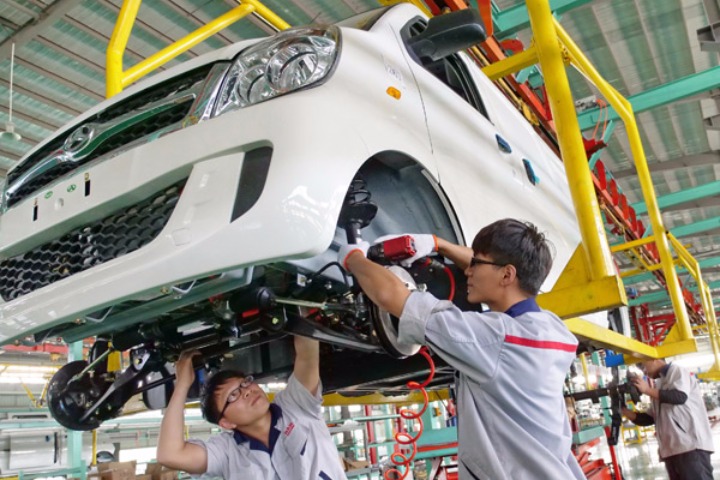
Looking ahead, BAIC’s commitment is backed by substantial financial and strategic investments. At a major auto show, BJEV Deputy General Manager Zhang Yong outlined the company’s aggressive investment plans, projecting an allocation of approximately 10 billion yuan (equivalent to approximately $1.5 billion at the time) towards research and development over the subsequent three to five years. This significant R&D expenditure is earmarked for accelerating technological breakthroughs and is expected to result in the launch of two to three new NEV models annually, ensuring a fresh and competitive product lineup. These new models are anticipated to cover various segments, from compact city cars to more versatile SUVs, catering to a broader spectrum of consumer preferences and needs.
Beyond product development, BAIC also has ambitious plans for fleet expansion, particularly targeting the burgeoning shared mobility sector. The company intends to deploy an impressive 500,000 new energy vehicles for taxi and ride-sharing services across 1,000 cities by 2022. This initiative not only expands the market for BAIC’s NEVs but also contributes to the decarbonization of urban transportation networks, aligning with broader government goals for sustainable city development.
Addressing Range Anxiety: Innovative Charging Infrastructure
One of the persistent challenges hindering widespread EV adoption globally has been "range anxiety" – concerns about vehicle range and the availability of convenient charging infrastructure. BAIC is directly addressing this issue with an innovative and substantial investment in battery charging solutions. Earlier in the year, the carmaker announced plans to invest another 10 billion yuan to construct 3,000 solar-powered battery changing stations.
This strategy diverges from the conventional approach of relying solely on charging stations. Battery swapping technology allows EV drivers to quickly exchange a depleted battery for a fully charged one in a matter of minutes, significantly reducing downtime compared to traditional fast-charging methods. The integration of solar power into these stations further underscores BAIC’s commitment to sustainability, creating a closed-loop system that generates clean energy for its electric fleet. This innovative infrastructure investment is poised to enhance the practicality and convenience of EV ownership, particularly for high-utilization vehicles like taxis and ride-sharing cars, thereby accelerating their adoption.
Industry Reactions and Broader Implications
BAIC’s announcement has been met with significant attention within the automotive industry and among policy circles. Industry analysts view BAIC’s move as a strong signal of confidence in the future of electric mobility in China, and a potential harbinger for other state-owned enterprises (SOEs). As a major SOE, BAIC’s decision often sets a precedent or indicates a broader governmental direction. Experts suggest that such a clear timeline provides certainty for BAIC’s suppliers, investors, and internal operations, allowing for a focused transition. It also aligns perfectly with China’s long-term strategic vision to reduce reliance on imported fossil fuels and establish global leadership in advanced manufacturing, particularly in green technologies.
The implications for the broader Chinese automotive industry are substantial. BAIC’s commitment could intensify competition among domestic automakers to accelerate their own electrification strategies. It might also pressure international joint venture partners operating in China to fast-track their NEV offerings to remain competitive and compliant with increasingly stringent local regulations. For consumers, the shift promises a wider array of advanced electric vehicles, potentially at more competitive prices due to economies of scale and technological advancements driven by such commitments.
Challenges and the Road Ahead for BAIC and China’s EV Sector
While BAIC’s vision is bold and inspiring, the path to achieving a complete phase-out of conventional fuel cars by 2025 is not without its challenges. Significant hurdles include the enormous capital expenditure required for continuous R&D, scaling up NEV production, and building extensive charging and battery-swapping infrastructure. The company will also need to manage the transition of its existing workforce, retraining employees for new skill sets required in EV manufacturing and service.
Furthermore, consumer acceptance remains critical. While NEV sales are booming, market penetration still has room for growth. Factors such as initial purchase cost, perceived range limitations, and the availability of charging facilities outside major urban centers will continue to influence consumer decisions. BAIC’s strategy to target the taxi and ride-sharing sectors is shrewd, as it allows for high-volume deployment and public exposure to NEVs, which can help build confidence and familiarity among potential private buyers.
Technological advancements, particularly in battery energy density, charging speeds, and cost reduction, will be crucial. Collaboration with partners like CATL and Tsinghua University through the new innovation center will be vital for staying at the cutting edge of these developments. The sustainability of battery materials sourcing and recycling also presents a long-term challenge that BAIC and the industry at large will need to address proactively.
A Global Precedent: China’s Ambition in the New Energy Vehicle Era
BAIC Group’s commitment transcends national borders, setting a powerful global precedent. In a world increasingly focused on decarbonization and sustainable transportation, China’s aggressive push for NEVs, exemplified by BAIC’s strategic shift, positions the country as a leader in shaping the future of the automotive industry. This move places BAIC alongside a growing list of global automakers, like Volvo and various European brands, that have announced definitive timelines for phasing out internal combustion engine (ICE) vehicles.
However, BAIC’s commitment, backed by a major state-owned entity in the world’s largest automotive market, carries a unique weight and potential for impact. It underscores China’s ambition not just to be a major player but a dominant force in the new energy vehicle era. By combining robust policy support, massive industrial investment, and innovative infrastructure solutions, China, with companies like BAIC at the helm, is rapidly forging a path towards a fully electrified transportation future, with profound implications for global energy consumption, environmental quality, and industrial competitiveness. The coming years will be critical in observing how BAIC navigates this ambitious transition and contributes to the realization of China’s green mobility aspirations.


 Muslim