Basiran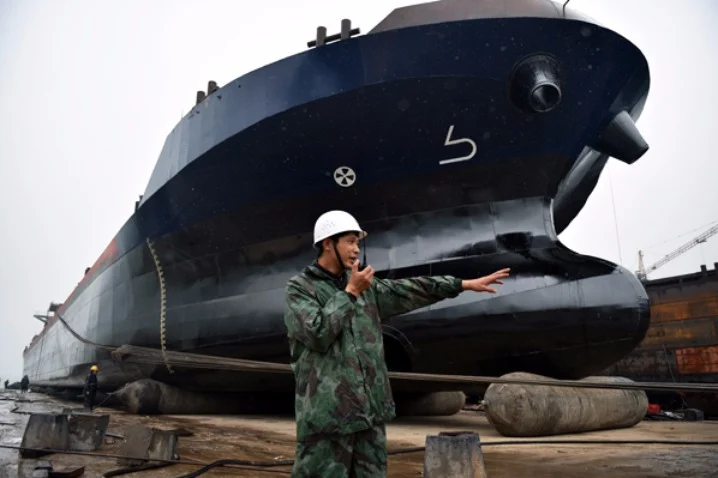
China’s shipbuilding industry has achieved a significant milestone, ascending to the top position globally in terms of new orders received over the first eleven months of the year, effectively surpassing its long-standing competitor, South Korea. This resurgence marks a pivotal moment for the Chinese maritime sector, signaling not only a recovery in market share but also a strategic pivot towards high-value-added vessels and environmentally sustainable technologies.
The definitive data, released by the esteemed British shipbuilding and marine analysis agency Clarkson Research Services on a recent Friday, illuminated China’s impressive performance from January to November. During this period, Chinese shipyards secured a total of 7.13 million compensated gross tons (CGT) across 324 vessels. This figure comfortably placed China ahead of South Korea, which registered 5.74 million CGT in new orders. This achievement is particularly noteworthy as it represents the first instance in seven years that China has outpaced South Korea in the highly competitive global shipbuilding order book.
A Resurgence on the Global Stage: Understanding the Metrics
The metric of compensated gross tons (CGT) is crucial for understanding the true scale of this achievement. Unlike simple gross tonnage, which measures the overall internal volume of a ship, CGT adjusts for the amount of work required to build different types of vessels. More complex ships, such as LNG carriers, cruise ships, or advanced container vessels, require significantly more labor and expertise per unit of volume than simpler bulk carriers or tankers. Therefore, a higher CGT figure indicates a greater workload and, often, a higher value for the orders secured.
China’s dominance in new orders translates directly into market share. The Clarkson data further revealed that China’s shipbuilding industry commanded 36.3 percent of the global market for new orders during the period. This represents a substantial lead of 7 percentage points over South Korea, which accounted for 29.4 percent of worldwide orders. This market share expansion underscores a robust performance by Chinese shipyards throughout the current year, a period characterized by fluctuating global trade demands and evolving environmental regulations.
Chronology of a Comeback: Seven Years in the Making
The seven-year period preceding this milestone was largely dominated by South Korean shipbuilders, particularly in segments requiring advanced technological prowess and high capital investment. Following the 2008 global financial crisis, the shipbuilding industry worldwide faced significant challenges, including overcapacity and a sharp decline in new orders. During this downturn, South Korean yards, with their established expertise in complex LNG carriers, ultra-large container ships, and offshore drilling units, often secured the most lucrative contracts.
China, meanwhile, focused on scaling up its production capabilities, initially excelling in the construction of bulk carriers and tankers, which are generally less complex but vital for global trade. However, the ambition to move up the value chain was always present, supported by significant state investment in research and development and infrastructure. The recent success can be seen as the culmination of years of strategic planning, technological acquisition, and industrial upgrading efforts.
Strategic Orders and High-Value Vessels: Defining the Shift
The nature of the orders secured by Chinese shipyards this year highlights a clear strategic shift from merely quantity to quality and technological sophistication. Two landmark orders exemplify this transformation:
-
Ultra-Large Container Vessels for CMA CGM: In August, French shipping giant CMA CGM SA placed an order for nine colossal 22,000 twenty-foot equivalent units (TEU) container vessels. These massive ships, among the largest in the world, were commissioned from two prominent Chinese shipbuilders: Shanghai Waigaoqiao Shipbuilding Co (SWS) and Hudong Zhonghua Shipbuilding Co. The construction of such ultra-large container ships (ULCS) demands advanced engineering capabilities, precision manufacturing, and efficient project management. Securing this order against fierce international competition underscores the growing trust in Chinese yards for constructing the backbone of global maritime logistics. The value of such an order, typically in the hundreds of millions of dollars per vessel, significantly contributes to the overall CGT figure and demonstrates a move into a higher-profit segment.
-
Breakthrough in Luxury Cruise Ship Construction: A monumental agreement was signed in October, marking China’s entry into the highly specialized and lucrative luxury cruise ship market. China State Shipbuilding Corp (CSSC), in collaboration with China Investment Corp and Carnival Corp (the world’s largest cruise operator), committed to investing a staggering 25.5 billion yuan ($3.85 billion) to construct a super luxury cruise ship. This was the first order of its kind ever received by Chinese shipbuilding companies. Building a cruise ship is widely considered the pinnacle of shipbuilding complexity, requiring expertise not only in naval architecture and engineering but also in interior design, hospitality systems, and advanced safety protocols. This venture, often involving technology transfer and international partnerships, signifies China’s ambition to compete at the very highest end of the maritime manufacturing spectrum.
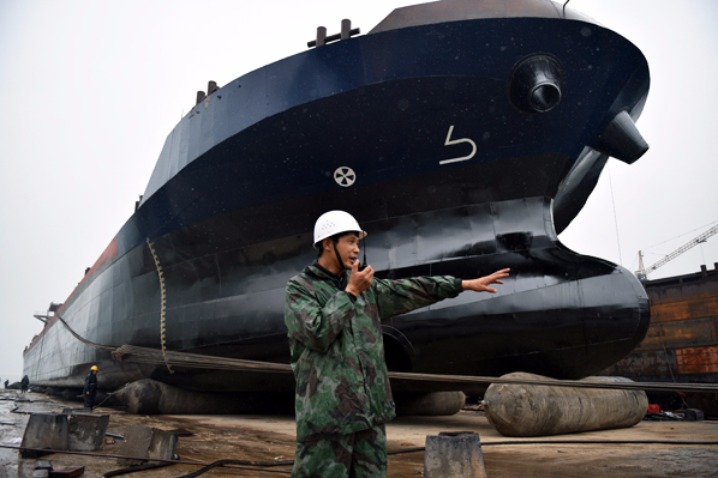
Dong Liwan, a respected shipbuilding industry researcher at Shanghai Maritime University, articulated the implications of these developments, stating that "with the orders for high-value-added ships continuing to go to Chinese shipyards, their South Korean competitors will definitely feel the pinch." This sentiment reflects the intense rivalry in the global shipbuilding arena, where securing such advanced orders is crucial for maintaining technological leadership and securing future profitability.
The Shift Towards Intelligence and Sustainability: Pillars of Future Growth
Beyond the sheer volume and value of orders, China’s shipbuilding business is demonstrably moving towards greater intelligence and environmental friendliness. This strategic evolution aligns with global industry trends and national development goals.
Intelligent Shipbuilding: The concept of "smart ships" is rapidly gaining traction, integrating advanced technologies such as big data analytics, artificial intelligence, and sophisticated sensor networks to enhance operational efficiency, safety, and environmental performance.
- "Great Intelligence" – A Pioneer: At the recent All China Maritime Conference and Exhibition, China State Shipbuilding Corporation (CSSC) delivered the world’s first smart ship, named "Great Intelligence." This vessel, with a loading capacity of 38,800 metric tons, is equipped with a high-performance marine intelligent system that can autonomously learn, analyze, and make decisions. Its capabilities include intelligent navigation, intelligent engine room operation, and intelligent cargo management, representing a significant leap forward in autonomous and optimized vessel operation. This development positions China at the forefront of maritime digitalization.
Environmentally Friendly Shipbuilding: With increasing global pressure to reduce shipping’s carbon footprint and mitigate marine pollution, Chinese shipyards are actively embracing green technologies. International regulations from the International Maritime Organization (IMO), such as the IMO 2020 sulfur cap and upcoming EEXI (Energy Efficiency Existing Ship Index) and CII (Carbon Intensity Indicator) measures, are driving innovation in this area.
- Seawater Lubrication Systems: COSCO Dalian shipyard, a key player in China’s shipbuilding landscape, has signed orders with Thordon Bearings, a renowned marine industry solution provider, for its water-lubricated propeller shaft bearings. This technology is a significant step towards environmental protection as it utilizes seawater as the lubrication medium instead of traditional oil, which poses a risk of pollution if leaked. Alex Li, managing director of CY Engineering Co Ltd, Thordon Bearings’ partner in China, highlighted the importance of this collaboration: "The latest order is a significant sign showing Chinese shipbuilders’ commitment to reducing industry-borne emissions and pollutants." This commitment extends to exploring alternative fuels like LNG, methanol, and eventually hydrogen, as well as optimizing hull designs for greater energy efficiency.
Industry Leadership and Future Aspirations: The "Strong Shipbuilding Country" Vision
The progress observed is not accidental but a result of deliberate national strategy. Sun Licheng, president of the influential China Classification Society, emphasized this trajectory: "China’s shipbuilding industry is realizing the transformation with its hardworking spirit to achieve technical breakthrough and innovation." He further elaborated that "While maintaining growth, it is realizing production mode transformation, structural adjustment and transformation, and upgrading, and reinforcing China’s shipbuilding status in the world."
The long-term objective, as articulated by Sun, is for China to become a "strong shipbuilding country by 2020." This ambitious goal encompasses not just market share but also technological leadership, particularly in advanced intelligent manufacturing and industrial equipment capabilities. This vision is deeply integrated into broader national industrial policies, such as "Made in China 2025," which identifies high-end marine equipment and high-tech ships as strategic priorities for domestic innovation and global competitiveness. Achieving this requires sustained investment in research and development, fostering a highly skilled workforce, and developing a robust supply chain for advanced marine components.
Broader Economic and Geopolitical Implications
China’s ascendancy in global shipbuilding carries profound economic and geopolitical implications.
Economic Impact:
- Job Creation and Industrial Chain: A thriving shipbuilding industry supports a vast network of ancillary industries, including steel manufacturing, engine production, electronics, coating suppliers, and logistics, generating substantial employment and fostering industrial growth across various sectors.
- Export Revenue: Shipbuilding contributes significantly to China’s export revenues, solidifying its position as a global manufacturing powerhouse.
- Technological Spillovers: Innovations in shipbuilding, particularly in areas like automation, advanced materials, and environmental technologies, often have spillover effects into other manufacturing sectors, driving broader industrial upgrading.
Geopolitical Significance:
- Maritime Power: A robust shipbuilding capacity is fundamental to being a major maritime power. It enables the expansion and modernization of a nation’s merchant fleet, essential for securing supply chains and facilitating international trade.
- Strategic Autonomy: Reducing reliance on foreign shipyards for critical vessels, especially those with advanced capabilities, enhances a nation’s strategic autonomy and national security. This includes not only commercial vessels but also the underlying industrial base that can support naval construction if required.
- Global Trade Influence: By building a significant portion of the world’s new ships, China gains further influence in global shipping and trade dynamics, strengthening its role in shaping international maritime standards and practices.
The journey to reclaim the top spot has been multifaceted, encompassing significant capital investment, strategic technological acquisitions, and a focused drive towards innovation. As the global maritime industry continues to grapple with decarbonization, digitalization, and evolving trade patterns, China’s commitment to intelligent and environmentally friendly shipbuilding positions it strongly for sustained leadership in the decades to come. The "pinch" felt by competitors underscores a fundamental shift in the global maritime manufacturing landscape, with China firmly charting a course towards long-term dominance.

 Evan Lee Salim
 Suro Senen