Lina Irawan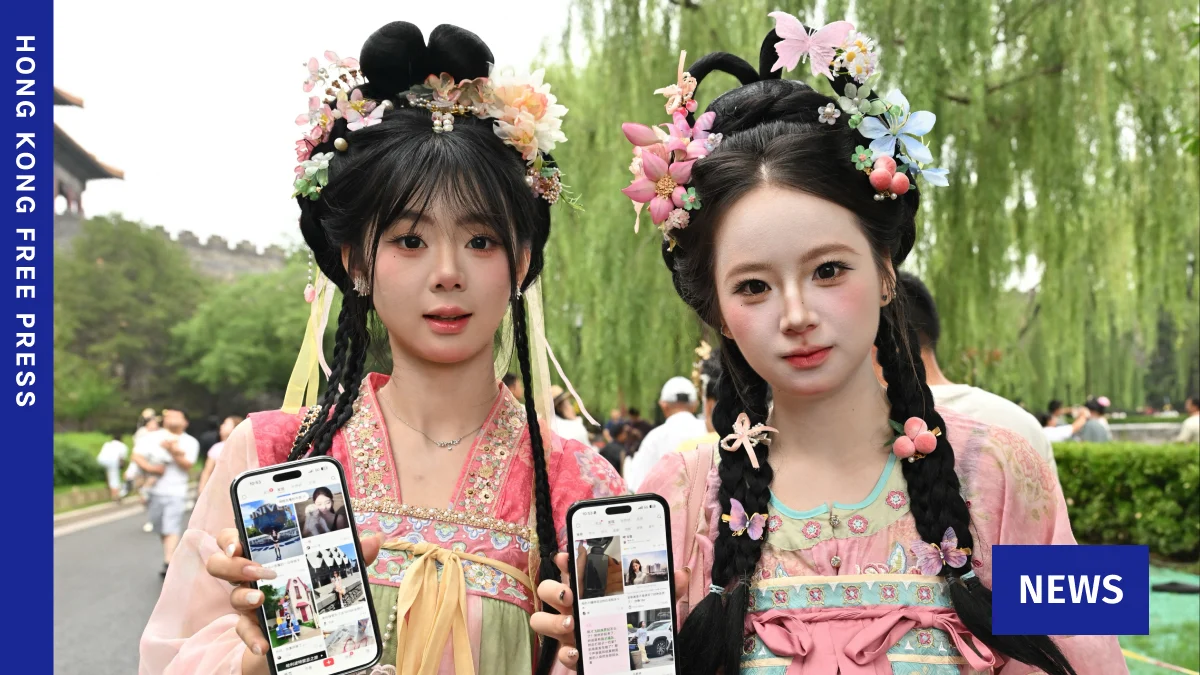
Beijing, China – The bustling tourist hubs of Beijing, from the historic grandeur of the Forbidden City to the serene shores of Shichahai Lake, are witnessing a profound transformation driven by Xiaohongshu, China’s immensely popular lifestyle and social commerce application. This platform, often dubbed "China’s Instagram" or "RedNote" in English, has not only reshaped how domestic travelers discover and plan their itineraries but has also ignited fierce competition among the legions of professional photographers catering to an insatiable demand for shareable, aesthetically pleasing content. At Shichahai, for instance, a picturesque lake renowned for its willow-lined banks and traditional architecture, women adorned in elegant, flowing traditional robes pose meticulously, each snap destined for their Xiaohongshu feeds, embodying a burgeoning cultural phenomenon.
The app’s impact extends far beyond scenic backdrops and costumed photoshoots; it has become an indispensable guide for millions, fundamentally altering the landscape of China’s booming domestic travel industry. With domestic travel hitting unprecedented highs – exceeding 6.5 billion trips last year, a remarkable 16 percent increase year-on-year, according to Xinhua news agency reports in March – Xiaohongshu’s influence is undeniable. The platform itself is reportedly preparing for a confidential initial public offering (IPO) in Hong Kong as early as the end of 2026, a move that underscores its significant market valuation and strategic importance in China’s digital economy.

The Rise of Xiaohongshu: From Shopping Guide to Lifestyle Oracle
Founded in 2013 by Miranda Qu and Charlwin Mao, Xiaohongshu initially began as an online community for Chinese consumers to share overseas shopping experiences and product reviews. It quickly pivoted, however, recognizing the immense potential in user-generated content focused on lifestyle, beauty, fashion, and crucially, travel. Its interface, which combines elements of Pinterest’s curated visual boards with Instagram’s photo and video sharing, allows users to post photos, short videos, and even livestream their experiences. This unique blend fostered a vibrant community where users could discover, review, and recommend everything from restaurant finds to hidden travel gems.
Over the past decade, Xiaohongshu has meticulously cultivated an ecosystem of aspirational content, making it a go-to source for inspiration. Its monthly active user (MAU) base has swelled to 350 million as of May, a substantial leap from 300 million just a year prior, as reported by data analysis platform Qiangua. While its core demographic remains young women in affluent cities, the platform has successfully broadened its appeal, attracting a diverse range of users, including Chinese speakers in Malaysia and Singapore, and older demographics seeking practical travel advice. This expansion speaks to its comprehensive content library and user-friendly design, cementing its role as a digital oracle for modern Chinese lifestyles.

The "Daka" Phenomenon and its Economic Ripple Effects
Central to Xiaohongshu’s influence is the "daka" (打卡) culture, loosely translated as "check-in" or "punch-in." This practice involves visiting aesthetically pleasing or trendy locations, capturing them with professional-grade photos or videos, and sharing them online to garner social validation. These "daka" spots, often identified and popularized through Xiaohongshu, range from historical landmarks like Shichahai Lake to obscure cafes, art installations, and even entire cities.
The platform’s ability to drive footfall to these locations has created significant economic ripple effects. Local businesses, once struggling for visibility, now find themselves propelled into the national spotlight. A prime example is Zibo, a quiet industrial city in Shandong province, which unexpectedly became a domestic tourism hotspot after its unique, affordable marinated barbecue skewers went viral on Xiaohongshu. Tourists, inspired by tantalizing posts, flocked to Zibo, boosting its local economy and creating an unexpected tourism boom. This "Xiaohongshu effect" demonstrates the platform’s power to democratize tourism, shifting focus from traditional, well-established destinations to more niche, community-driven experiences.

Beyond businesses, Xiaohongshu has also fostered a new wave of micro-entrepreneurship. At Shichahai, for instance, the demand for high-quality photos has led to a bustling ecosystem of freelance photographers. Li Geng, an 18-year-old photographer, is one such entrepreneur, touting her services to passing tourists, charging 10 yuan ($1.47) per photo. However, this burgeoning market is also characterized by intense competition. Li Geng notes the significant disadvantage faced by those without a strong online presence. She highlights competitors who boast tens of thousands of followers on Xiaohongshu, leveraging their digital reach to attract customers and even offer lower prices, effectively outmaneuvering those who rely solely on street solicitation. This dynamic underscores how digital influence has become a critical currency in the modern gig economy, reshaping traditional service industries.
The User Journey: From Inspiration to Itinerary
For millions of Chinese travelers, Xiaohongshu is now the primary gateway to travel inspiration and planning. Ming Yii Lai, a senior strategy consultant at Daxue Consulting, observes that for "a lot of younger travelers," the app is their first port of call. Tourists like Mina Chen, a 20-year-old student from Hunan province, exemplify this trend. During her visit to Beijing’s Shichahai area with her sister, Chen meticulously planned her trip using recommendations gleaned from other Xiaohongshu users. Searching keywords like "citywalk" on the app yielded detailed itineraries, including dining suggestions, photogenic spots, and optimized routes between attractions. "It is now indispensable (to me)," Chen remarked, emphasizing the app’s integral role in her travel experience.

The platform’s content depth extends beyond mere recommendations. Users actively share "travel strategies" (旅行攻略) – comprehensive guides that often include hidden local gems, transportation tips, detailed dining reviews, and even advice on the best angles for photoshoots. Meng Jiaxuan, 20, dressed in her traditional outfit at Shichahai, illustrates this meticulous planning, admitting she even researched specific poses for her photoshoot on Xiaohongshu. This granular level of detail, presented through engaging visuals, fosters a sense of authenticity and peer-to-peer trust that traditional travel guides often struggle to replicate.
The appeal of Xiaohongshu’s travel content also resonates with Chinese speakers beyond mainland China. Ernest Phua, a 58-year-old retiree from Singapore, turned to the platform to plan his trips to Guangdong and Yunnan. He found that searching for "travel strategy" in Mandarin on Xiaohongshu offered a "great difference" compared to platforms like YouTube. Phua explained, "If we want to know what it is really like in China and what locals like to do, eat and go to, Xiaohongshu has lots of content." This sentiment highlights the platform’s unique ability to provide an insider’s perspective, appealing to a broader demographic seeking authentic cultural immersion.
Challenges and Criticisms in a Rapidly Evolving Landscape

While Xiaohongshu has undeniably spurred economic growth and reshaped travel habits, its rapid ascent has not been without challenges and criticisms. One significant issue is overtourism. The sudden influx of visitors to viral "daka" spots, particularly those in previously quiet or sensitive ecological areas, can strain local infrastructure, disrupt communities, and even lead to environmental degradation. The delicate balance between promoting tourism and preserving local culture and environment remains a constant concern.
Another prevalent criticism revolves around the commercialization of content and the authenticity of recommendations. Ming Yii Lai of Daxue Consulting points out that paid posts from food bloggers "who sing high praises about shops or destinations" have drawn complaints when the actual experience falls short of the online hype. This blurring of lines between genuine user reviews and sponsored content raises questions about transparency and trust, challenging users to discern authentic recommendations from marketing ploys. Furthermore, businesses that become overly reliant on platform traffic face vulnerability to algorithmic changes or shifts in user trends, highlighting the precarious nature of digital dependency.
Global Spotlight and Future Trajectory

Xiaohongshu’s influence has also begun to extend beyond China’s borders, albeit within specific demographics. The platform gained global attention last year amid discussions of a potential US government ban on TikTok. This led to a segment of American users, humorously dubbed "TikTok refugees," flocking to RedNote as an alternative. While the user bases and content styles differ significantly—Xiaohongshu focusing more on curated lifestyle content and community-driven recommendations versus TikTok’s short-form entertainment—this episode showcased the platform’s potential for international appeal, particularly among those seeking a visually rich, aspirational social media experience.
The reported preparations for an initial public offering in Hong Kong, with market debut potentially by late 2026 and whispers of a valuation that could be in the tens of billions, mark a pivotal moment for Xiaohongshu. An IPO would provide the capital for further expansion, technological innovation, and potentially a more aggressive push into international markets, expanding its reach beyond current Chinese-speaking communities. While AFP has contacted Xiaohongshu for official comment on its IPO plans, the market anticipates this move as a testament to its robust growth and enduring relevance in the digital lifestyle sector.
In conclusion, Xiaohongshu has cemented its position as a powerful force in China’s digital economy, fundamentally altering how tourism operates and how individuals engage with cultural experiences. From fostering new entrepreneurial avenues for photographers to inspiring millions to explore their country, the app has become a cultural touchstone. As it navigates the complexities of overtourism, content authenticity, and global expansion, Xiaohongshu’s trajectory will continue to offer a fascinating case study in the evolving relationship between technology, culture, and commerce in the 21st century. Its ability to blend visual storytelling with practical utility has not just created a platform, but a vibrant digital ecosystem that continuously redefines travel and lifestyle for a generation eager to share their world.


 Sagoh
Sagoh
 Asro
Asro