Rifan Muazin
The recent approval of a significant tax overhaul in the United States has ignited a wave of analysis and cautious optimism among Chinese economic experts. While the legislation, a cornerstone of President Donald Trump’s economic agenda, aims to stimulate domestic investment and economic growth, scholars in China are urging a measured and objective assessment of its likely benefits, particularly for specific economic sectors and international capital flows. Initial projections suggest that the headline reduction in the corporate tax rate may not translate into the substantial real-world tax savings initially anticipated, prompting a deeper examination of the bill’s intricate mechanisms and its broader global implications.
Unpacking the US Tax Reform: Beyond the Headline Figures
At the heart of the US tax reform is a dramatic reduction in the corporate tax rate, a move intended to re-energize American businesses and attract foreign investment. However, Chinese scholars, such as Liu Shangxi, head of the Chinese Academy of Fiscal Sciences, point to analyses from the US Congressional Budget Office that indicate a more nuanced reality. Despite a nominal 15 percentage point cut, the actual decrease in tax payments for many corporations could be as low as 2 percentage points. This discrepancy is attributed to simultaneous expansions of the tax base, effectively broadening the scope of taxable income. This technical detail is crucial, as it suggests that the allure of a lower headline rate might be partially offset by a wider net for taxation.
Liu Shangxi emphasized that international investors will not be swayed solely by a headline tax reduction. Their decisions to reallocate capital to the United States will be the result of a complex calculus, factoring in not only tax burdens but also the fundamental economic viability of the market. This includes assessing factors such as market potential, the quality and availability of infrastructure, the regulatory environment, and the overall ease of doing business. In essence, tax advantages alone are unlikely to be a decisive factor for sophisticated global investors who prioritize long-term profitability and stability.
The prevailing assumption among scholars is that the immediate beneficiaries of the tax cuts will be business owners and investors. The theory posits that this initial boost to capital accumulation will, in turn, stimulate increased investment. This heightened investment activity is then expected to create more jobs and, subsequently, lead to an upward pressure on wages for workers. This ripple effect, a cornerstone of supply-side economic theory, is being closely watched by observers worldwide.
China’s Precedent: A Decade of Proactive Tax Reform
China’s own experience with tax reform provides a valuable comparative context for understanding the US initiative. Beijing has been implementing significant tax reductions for years, with the value-added tax (VAT) pilot program, launched in 2012, being a particularly noteworthy example. According to official Chinese data, these ongoing economic rebalancing reforms have resulted in a cumulative tax revenue reduction of nearly 1.7 trillion yuan (approximately $257 billion). This demonstrates a long-standing commitment by the Chinese government to leverage fiscal policy as a tool for economic adjustment and growth.
These reforms have strategically targeted specific sectors to foster innovation and sustainable development. Businesses engaged in technology innovation and those focused on green development have seen tax burdens eased. Furthermore, small and medium-sized enterprises (SMEs), often considered the backbone of an economy, have also benefited from targeted tax relief. This approach underscores a deliberate strategy to channel resources towards areas deemed critical for future economic prosperity and environmental sustainability.
The impact of these reforms extends to government revenue streams. In the past five years alone, the central government’s income from administrative fees has decreased by an average of 320 billion yuan per year. Provincial-level governments have also experienced a reduction, with their income from administrative fees declining by approximately 47 billion yuan annually. This fiscal recalibration reflects a conscious effort to reduce the burden on businesses and stimulate economic activity through decreased fiscal intervention.
Timeline and Legislative Hurdles: The Path to US Tax Law
The journey of the US tax reform bill from proposal to enacted law has been a complex and protracted one, marked by intense legislative maneuvering. Following its approval by Congress, the bill was expected to be presented to President Donald Trump for his signature, a process that typically takes at least two weeks. However, the possibility of further delays, stemming from ongoing negotiations and potential political challenges, has remained a persistent factor.
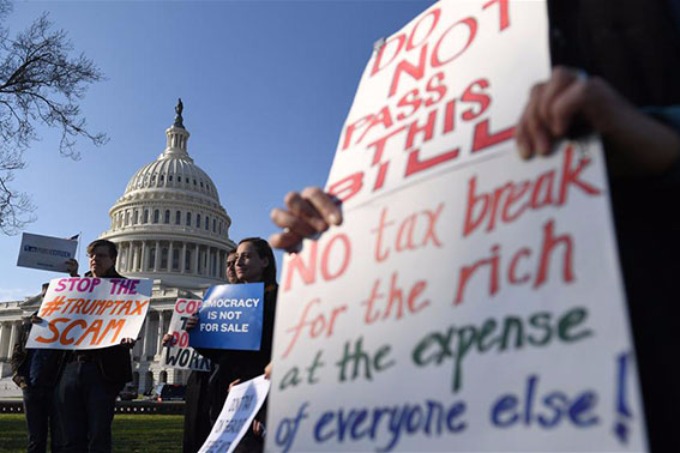
The core of the legislative challenge lay in reconciling the differing versions of the bill passed by the House of Representatives and the Senate. Intensive negotiations were required to bridge these divergences, with these discussions extending well into December. This intricate process highlighted the significant political capital and strategic compromises necessary to shepherd such a sweeping piece of legislation through the US Congress.
A key element of contention and a focal point of international concern has been the inclusion of "base erosion rules" in both the House and Senate bills. These rules are designed to combat tax avoidance strategies that exploit loopholes in tax systems to shift profits to low- or no-tax jurisdictions. The Organization for Economic Cooperation and Development (OECD) has identified such practices as a significant challenge to global tax fairness. The inclusion of these measures in the US reform signals a more assertive stance by the US in addressing international tax avoidance, which could have direct implications for multinational corporations operating across borders.
Global Economic Ripples: Implications for Chinese Businesses and Beyond
The implications of the US tax overhaul extend far beyond American borders, with Chinese investors and multinational corporations poised to feel its effects. A research note from KPMG, a leading professional services firm, suggests that Chinese investors might see an increase in after-tax returns from their US investments, a direct consequence of the reduced corporate tax rate. This could incentivize greater capital flow into the US market, particularly for sectors that benefit most from the reform.
Conversely, Chinese multinational enterprises may face intensified competition from their US counterparts. The lower tax burden on American companies could enhance their profitability and their ability to invest in research and development, market expansion, and competitive pricing strategies. This could create a more challenging operating environment for Chinese firms competing in the global marketplace.
In response to these potential shifts, Chinese tax policymakers are likely to consider implementing measures to maintain the competitiveness of Chinese businesses. This could involve further tax incentives, adjustments to regulatory frameworks, or other fiscal strategies aimed at leveling the playing field. The Chinese government’s proactive approach to economic management suggests a readiness to adapt its policies to safeguard national economic interests.
The Specter of Tax Competition: A Global Economic Landscape Transformed?
The long-term implications of the US tax reform, should President Trump successfully sign the bill into law, could usher in a new era of global tax competition. Liu Yi, a professor at the School of Economics at Peking University, cautioned that a wave of tax reduction initiatives might emerge among the world’s major economies. As nations strive to attract and retain investment, they may feel compelled to lower their own corporate tax rates, potentially leading to a downward spiral in tax revenues.
This intensified competition could have significant consequences for public services and social welfare programs. If governments experience a decline in tax revenue, they may be forced to reduce expenditures on areas such as welfare, education, and healthcare. This, in turn, could potentially lead to a decline in the living standards of citizens and a weakening of the social safety net. The delicate balance between stimulating economic growth through tax cuts and maintaining robust public services will be a critical challenge for governments worldwide in the years to come.
The US tax overhaul, therefore, represents more than just a domestic policy change; it is a significant development with the potential to reshape the global economic landscape. The strategic responses of countries like China, coupled with the ongoing evolution of international tax norms, will be crucial in determining the ultimate impact of this landmark legislation. The coming months and years will undoubtedly reveal the full extent of its influence on investment flows, corporate competitiveness, and the broader trajectory of global economic development.


 Nana Wu
 Suro Senen