Nila Kartika Wati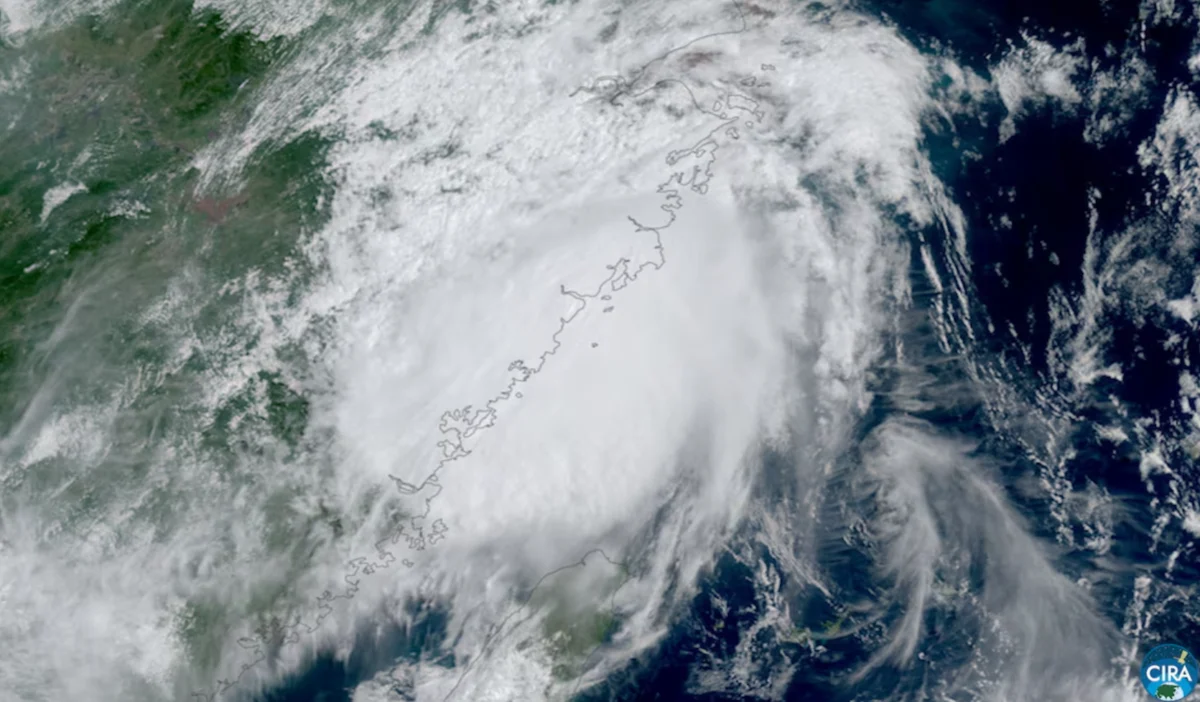
Authorities in eastern China’s Fujian province implemented extensive emergency measures on Thursday, including the closure of schools and the suspension of numerous ferry routes, as forecasters issued severe warnings regarding the torrential rainfall anticipated from Typhoon Saudel. The powerful storm, which made its third landfall in China on Fujian’s coast during the morning hours of August 28, 2026, has prompted a heightened state of alert across the region, further compounding a period marked by an escalating frequency and intensity of extreme weather phenomena across the nation.
Typhoon Saudel’s Trajectory and Immediate Impact on Fujian

Typhoon Saudel, after twice lashing the neighboring Zhejiang province with considerable force, continued its destructive path, making its third significant landfall on China’s eastern seaboard. The storm, characterized by its sustained heavy rainfall and strong winds, led to immediate and decisive actions from provincial and municipal authorities in Fujian. In the bustling cities of Fuzhou and Quanzhou, all in-person school activities were promptly halted, ensuring the safety of students and educational staff. Beyond academic institutions, several prominent tourist attractions, including various theme parks in Fuzhou, were also temporarily closed to the public, underscoring the severity of the impending weather.
The maritime sector, a critical component of Fujian’s coastal economy and transportation network, faced significant disruption. State broadcaster CCTV reported that a total of 24 passenger ferry routes operating along the extensive Fujian coastline were suspended on Thursday. These suspensions were deemed essential to mitigate risks to maritime traffic and ensure public safety in the face of treacherous sea conditions and reduced visibility. Local fisheries were advised to return to port, and smaller vessels were urged to seek safe harbor, while larger commercial shipping operations were cautioned to reroute or delay their journeys. The economic ripple effects of such widespread closures are immediate, impacting daily commutes, supply chains, and the regional tourism industry during what might otherwise be a busy period.
Broader Context: China’s Vulnerability to Extreme Weather

The arrival of Typhoon Saudel is not an isolated incident but rather the latest in a series of severe weather events that have relentlessly battered parts of China over the past few months. The nation has experienced a slew of typhoons, each bringing torrential rainfall, triggering widespread flooding, and necessitating the evacuation of hundreds of thousands of people from high-risk zones. This pattern of escalating extreme weather has placed immense pressure on China’s disaster preparedness and response mechanisms.
Earlier in the year, particularly in July, southern China’s Guangxi region bore the brunt of Typhoon Maysak, which unleashed devastating floods that claimed the lives of at least 159 people. The scale of destruction in Guangxi highlighted the vulnerability of inland and mountainous areas to sudden, intense rainfall, which often leads to flash floods and landslides. These events not only result in tragic loss of life but also cause extensive damage to infrastructure, agricultural land, and local economies, necessitating colossal reconstruction efforts and long-term recovery programs. The memory of Maysak’s destructive power served as a stark reminder for authorities across China to act swiftly and decisively in the face of subsequent meteorological threats like Saudel.
Adding to the regional crisis, just last week, a catastrophic flood event unfolded along the border area between Nepal and China’s Tibet region. This natural disaster resulted in a staggering loss of life, with over 1,200 confirmed fatalities and more than 4,750 people reported missing as of Thursday. While geographically distinct from the coastal typhoons, this event underscored the pervasive and diverse nature of extreme weather challenges facing the broader Asian continent, emphasizing the growing risks exacerbated by climate change across varied topographies, from coastlines to high-altitude regions.

Official Responses and Preparedness Measures
Fujian’s emergency management authority has been proactive in its response to Typhoon Saudel, issuing urgent warnings about the potential for not only rainstorms but also devastating secondary disasters. These include the high risk of flash floods, particularly in river basins and low-lying urban areas, and landslides in mountainous and hilly regions, where saturated soil can give way under heavy precipitation. "The province is currently experiencing a period of persistent, heavy rainfall," the authority stated in a WeChat announcement, urging residents to remain vigilant and adhere strictly to all official advisories.
Proactive evacuation measures have been a cornerstone of China’s disaster management strategy. In the week prior to Saudel’s landfall, approximately 247,700 people residing in high-risk areas within Fujian and neighboring provinces had already been evacuated. This massive logistical undertaking, reported by Xinhua news agency, involved coordinated efforts by local governments, emergency services, and community volunteers to relocate residents to safer shelters, ensuring access to food, water, and medical aid. Such large-scale evacuations are critical in minimizing casualties, though they invariably cause significant disruption to the lives of those affected. The continuous investment in early warning systems, including sophisticated meteorological monitoring and rapid communication networks, has proven instrumental in facilitating these timely and effective pre-emptive actions.

The Climate Change Nexus: A Global Imperative
The scientific community has consistently warned that the intensity and frequency of extreme weather events, such as the typhoons and floods currently impacting China, are projected to increase significantly as the planet continues to warm due to anthropogenic fossil fuel emissions. Warmer ocean temperatures provide more energy for tropical storms, leading to stronger winds and heavier rainfall. A warmer atmosphere also holds more moisture, intensifying precipitation events globally. This scientific consensus underscores the urgent need for global action on climate change mitigation and adaptation.
China, as the world’s largest emitter of greenhouse gases, plays a pivotal role in this global challenge. Its rapid industrialization and economic growth over the past decades have contributed substantially to global emissions. However, the nation has also emerged as a global powerhouse in renewable energy, demonstrating a significant commitment to transitioning away from fossil fuels. China has set an ambitious target to achieve carbon neutrality by 2060, a goal that requires monumental shifts in its energy production, industrial practices, and urban development. This dual reality—being a major emitter while simultaneously leading in green technology—positions China at the forefront of both the problem and potential solutions to the climate crisis.

Socio-Economic Implications and Future Resilience
The recurring onslaught of extreme weather events carries profound socio-economic implications for China. The immediate economic costs include direct damages to infrastructure such as roads, bridges, and power grids, as well as widespread destruction of homes, businesses, and agricultural land. The disruption to transportation and supply chains can have cascading effects, impacting national and international trade. For instance, the suspension of ferry routes and the closure of tourist sites during Typhoon Saudel directly affect regional tourism revenues and the livelihoods of those dependent on these sectors.
Beyond the immediate financial costs, there are significant social disruptions. Mass evacuations, though vital for safety, displace communities, disrupt education, and can lead to long-term psychological stress for affected populations. The loss of life, as seen in Guangxi and the Nepal-Tibet border region, represents an immeasurable human cost. For China, a nation with a vast population and diverse geography, building resilience against these intensifying threats is a continuous and evolving challenge. This involves not only robust emergency response systems but also long-term strategies for climate adaptation, including upgrading infrastructure to withstand extreme weather, developing drought-resistant crops, and implementing nature-based solutions for flood management.

Conclusion: Navigating a New Climate Reality
The ongoing experience with Typhoon Saudel in Fujian and the broader pattern of extreme weather across China serve as a potent reminder of the escalating climate crisis. The closures, evacuations, and tragic loss of life underscore the immediate and profound impact of a warming planet. While China continues its trajectory towards carbon neutrality and invests heavily in renewable energy, the immediate imperative remains to safeguard its vast population and critical infrastructure from the relentless and increasingly powerful forces of nature. The strategic combination of advanced meteorological forecasting, efficient disaster response, and long-term climate adaptation initiatives will be crucial as China, and indeed the world, navigates this new and challenging climate reality. The lessons learned from each typhoon, each flood, and each landslide will undoubtedly shape future policies and preparedness efforts, striving to minimize human suffering and protect economic stability in the face of an unpredictable climate future.


 Sagoh
Sagoh
 Asro
Asro