Nila Kartika Wati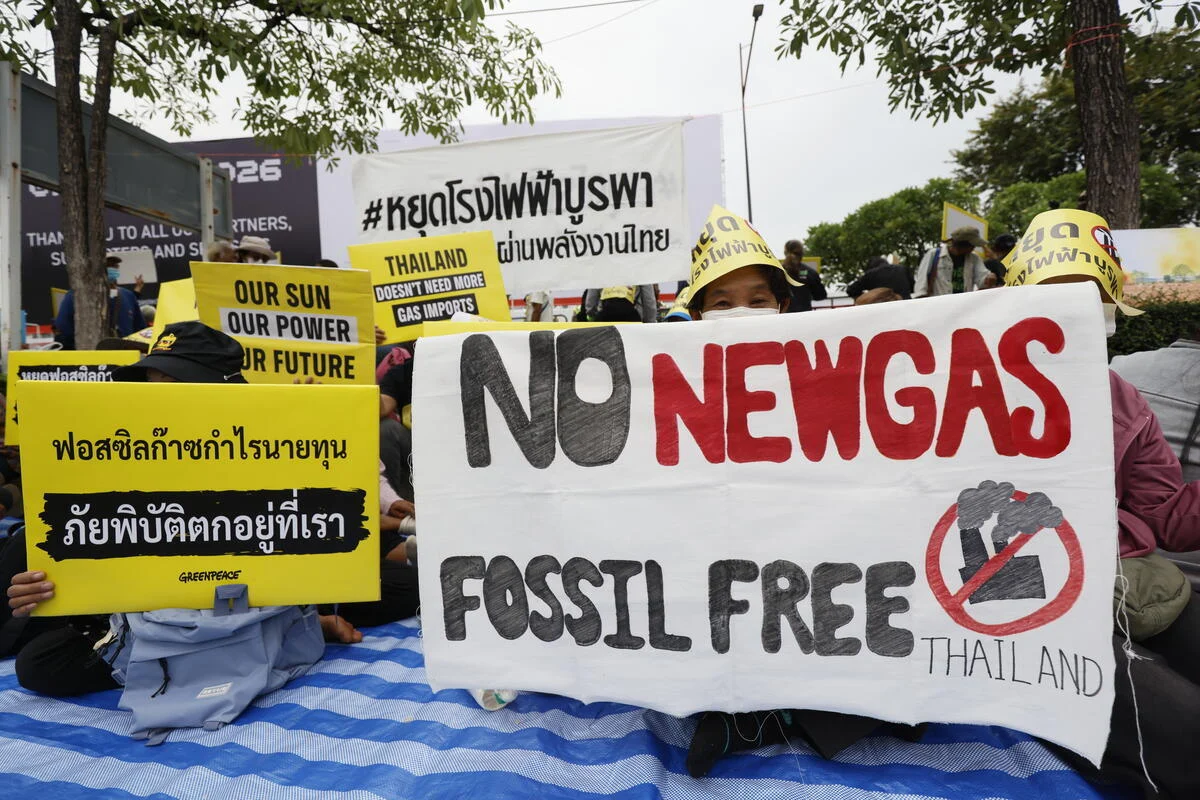
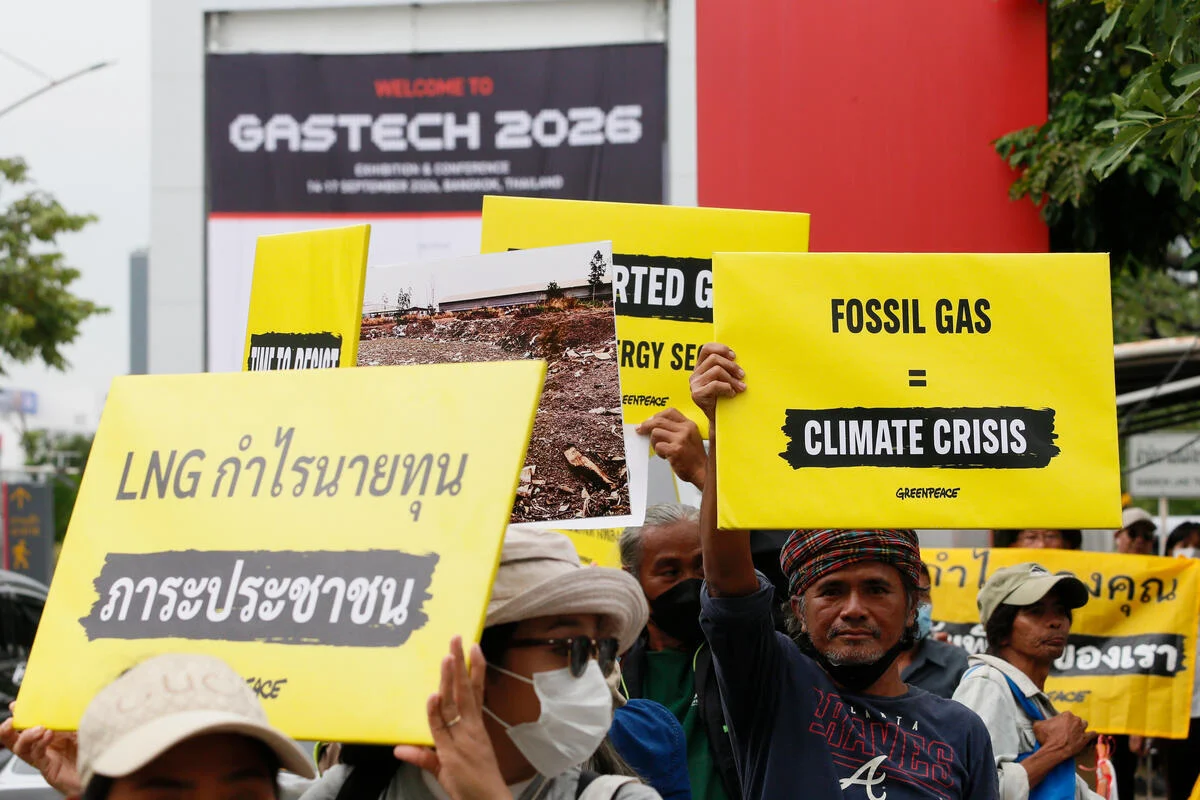
BANGKOK, THAILAND (15 September 2026) – Greenpeace East Asia has issued a strong condemnation of Japan’s continued advocacy for fossil gas and fossil-fueled vehicles as cornerstones of regional growth and energy security. The environmental organization’s criticism follows a series of speeches delivered by Japanese government officials, including Tetsuya Azuma, Director at Japan’s Ministry of Economy, Trade and Industry (METI), at the Japan Energy Summit, a key event within Gastech 2026 held in Bangkok.
Greenpeace argues that Japan’s strategy, exemplified by initiatives such as Prime Minister Sanae Takaichi’s “POWERR Asia” (Partnership on Wide Energy and Resources Resilience Asia) and ongoing subsidies for polluting internal combustion engine (ICE) vehicles, represents a perilous "climate trap." This approach, according to the organization, directly jeopardizes global decarbonization targets and undermines Japan’s international commitments under the Paris Agreement.
The Gastech 2026 summit, a prominent international exhibition and conference for the oil and gas industry, has become a focal point for discussions on global energy futures. This year’s event in Bangkok, held against a backdrop of increasing geopolitical instability and the urgent need for climate action, has seen traditional energy players and their governmental allies defending their positions. However, environmental groups are leveraging such platforms to highlight the perceived misdirection of energy policy.
Japan’s Energy Vulnerabilities and Strategic Reaffirmation
During the summit, Japanese government officials openly acknowledged significant energy vulnerabilities. They highlighted Japan’s extreme reliance on crude oil, with approximately 93% of its supply transiting the Strait of Hormuz, a vital and often volatile chokepoint in the Middle East. This dependence, officials noted, exposes the nation to severe market disruptions in downstream products like naphtha and necessitates substantial subsidies for transport costs to mitigate supply chain bottlenecks originating from the Middle East.
Despite these acknowledged risks and the global momentum towards renewable energy and electric vehicles (EVs), the Japanese government reaffirmed its commitment at Gastech to utilizing the “POWERR Asia” initiative. This partnership aims to expand overseas oil stockpiles and invest in fossil gas infrastructure. Concurrently, while acknowledging the rapid global surge in EV adoption across China, Southeast Asia, and Europe, Japanese officials defended their domestic strategy of promoting combustion engines and advocating for biofuels as a climate solution, a stance Greenpeace deems a "false climate solution."
A Politically Driven Strategy, Not an Environmental Imperative
Greenpeace East Asia asserts that Japan’s current energy strategy, which combines the expansion of overseas fossil fuel investments with a deliberate slowdown in vehicle electrification, is primarily a politically motivated decision. The organization contends that this approach is not grounded in sound environmental science or economic realities but rather driven by short-term industrial politics and the vested interests of powerful corporations.
By choosing to export its reliance on fossil fuels and delay the decarbonization of its automotive sector, Japan risks exacerbating global emissions. This strategy also threatens to lock developing economies into "stranded asset risks" – investments in fossil fuel infrastructure that could become obsolete and economically unviable due to the global transition to clean energy. Furthermore, Greenpeace argues, Japan’s actions set back the worldwide transition away from fossil fuels, a transition that is increasingly seen as not only environmentally necessary but also economically advantageous in the long run.
Japan’s Extensive Fossil Fuel Financing
Data cited by Greenpeace underscores Japan’s significant role as a public financier of fossil fuels. From 2013 to 2024, Japan reportedly funneled an estimated US$93 billion in public finance towards overseas oil and gas projects. This figure is nearly four times the US$24.5 billion directed towards clean energy initiatives during the same period. Notably, gas-only projects accounted for a substantial 60% of the total fossil fuel financing.
Public financial institutions, such as the Japan Bank for International Cooperation (JBIC), play a crucial role in this financing. According to reports, the attributable emissions from JBIC’s fossil fuel investments exceed 400 million metric tons of carbon dioxide equivalent annually. This volume of emissions is comparable to the total national emissions of countries like the United Kingdom or France, highlighting the significant climate impact of Japan’s public financial support for fossil fuels.
Economic Vulnerabilities Tied to Fossil Fuel Dependence
Domestically, Japan’s deep-seated dependence on fossil fuels creates profound economic vulnerabilities. As the world’s fifth-largest energy market and the second-largest importer of Liquefied Natural Gas (LNG), Japan imported nearly 65 million tonnes of LNG in 2025 alone. This reliance makes the nation susceptible to volatile global energy prices and supply chain disruptions.
The statistics regarding crude oil imports are particularly stark. Approximately 90% to 95% of Japan’s crude oil originates from the Middle East. A significant portion, roughly 70% to 93%, of these shipments must traverse the Strait of Hormuz. This geographical reality leaves Japan’s economy acutely exposed to potential supply shocks, currency depreciation, and imported inflation, all of which can have ripple effects on domestic prices and economic stability.
Renewed Calls for a Clean Energy Transition
Despite attempts by Japanese government officials to frame initiatives like regional oil stockpiling, downstream product subsidies, and unproven solutions such as biofuels as pathways to resilience, Greenpeace maintains that doubling down on imported fossil fuels, nuclear power restarts, and polluting combustion vehicles is an unsafe and globally damaging policy.
Expert Voices from Greenpeace
Kazue Suzuki, Climate & Energy Campaigner at Greenpeace Japan, expressed strong disapproval of METI’s vision. "METI’s vision locks Japan and the entire Asia region into expensive, imported gas at the exact wrong time," Suzuki stated. "With supply routes through the Middle East becoming increasingly unstable, the plan raises energy bills and multiplies risk for households and businesses. Gas is not a bridge to growth but a financial trap. Nuclear power is costly and unsafe, and technologies like ammonia co-firing and CCUS are distractions. Japan needs to stop financing fossil gas overseas and put its money into solar and wind that actually deliver energy independence. Ultimately, the country needs a swift, decisive phaseout of all fossil fuels, starting with coal."
Manun Wongmasoh, Climate and Energy Campaigner at Greenpeace Thailand, echoed these concerns, focusing on the implications for Southeast Asia. "Southeast Asia does not need more fossil gas or Japanese financing for new gas infrastructure," Wongmasoh commented. "Thailand and Japan should end their LNG cooperation MOU and avoid locking the region into decades of fossil fuel dependence. Our region has abundant renewable energy potential. What we need is investment in renewables, not new pipelines and LNG terminals that lock countries into volatile fossil fuel prices and risk becoming stranded assets. Doubling down on gas and nuclear, including Small Modular Reactors (SMRs) in the name of ‘energy security’ is reckless. It makes energy more expensive and leaves countries exposed to global market shocks, and leaves people across Southeast Asia to pay the price."
Greenpeace’s Demands for Policy Shift
Greenpeace East Asia has issued a clear call to action, urging the Japanese government and its associated financial institutions to enact immediate policy changes. The organization demands an end to all public financing for overseas fossil gas and oil infrastructure. Furthermore, Greenpeace calls for a phase-out of support for internal combustion engines and a firm commitment to a global energy transition that is just, renewable-led, and centered around electric vehicles.
The organization’s stance highlights a growing global debate on the future of energy, with environmental advocates pushing for a rapid departure from fossil fuels and a comprehensive embrace of renewable energy solutions. The decisions made by major economies like Japan have far-reaching implications for global climate goals and the economic well-being of nations worldwide. The coming years will likely see increased scrutiny and pressure on governments and corporations to align their energy strategies with the urgent need for climate action.
Background and Chronology
The Gastech 2022 conference, held in Milan, Italy, saw similar debates, with a growing recognition of the energy crisis exacerbated by the war in Ukraine, leading some nations to re-evaluate their reliance on Russian gas. However, environmental groups consistently cautioned against using this as an excuse to prolong fossil fuel dependency.
The Paris Agreement, adopted in 2015, sets a global goal to limit global warming to well below 2, preferably to 1.5 degrees Celsius, compared to pre-industrial levels. The recent Intergovernmental Panel on Climate Change (IPCC) reports have underscored the urgency of immediate and deep emissions reductions to achieve this goal.
Japan’s commitment to energy security has historically been linked to its reliance on imported fossil fuels due to limited domestic resources. However, the escalating costs of fossil fuels and the increasing viability of renewable energy technologies have led to a growing divergence in energy policy approaches globally. The "POWERR Asia" initiative, launched in 2023, was presented as a framework to enhance energy resilience in the Asian region, but its focus on fossil fuels has drawn criticism from environmental organizations.
Broader Implications
Japan’s continued investment in fossil fuels, particularly through public finance mechanisms, has significant implications beyond its borders. It can influence the investment decisions of other countries, potentially diverting capital away from renewable energy projects and perpetuating fossil fuel dependency in developing economies. This can create a cycle of "lock-in," where countries become reliant on expensive and polluting energy sources for decades to come.
The promotion of biofuels as a climate solution, while seemingly offering a transitional path, is also fraught with challenges. Critics point to issues of land use change, food security, and the actual carbon footprint of biofuel production, which can sometimes negate its environmental benefits.
The emphasis on nuclear power, including the potential restart of existing plants and exploration of Small Modular Reactors (SMRs), is another contentious aspect. While proponents argue for nuclear’s low-carbon credentials, concerns persist regarding waste disposal, safety, and the high upfront costs and long construction times associated with nuclear projects.
Greenpeace’s critique underscores the growing divide between traditional energy paradigms and the urgent need for a swift and equitable transition to a sustainable energy future. The organization’s call for a complete cessation of fossil fuel financing and a decisive shift towards renewables and EVs represents a significant challenge to the current energy policies of Japan and other nations heavily invested in fossil fuels.
Sources Referenced:
[1] Solutions For Our Climate, Billions Off Course: Japan’s Oil and Gas Financing Fueling Climate Breakdown (3 August 2026).
[2] Friends of the Earth Japan, New Report on Climate Impacts of Japan’s Public Finance (5 November 2025).
[3] Energy Connects, The market outlook for gas and LNG in Asia (8 June 2026).
[4] International Energy Agency (IEA), Strait of Hormuz (10 July 2026).
Media Contact:
Yujie Xue, International Communications Officer, Greenpeace East Asia, +852 5127 3416, [email protected]

 Layla Zulfa
 Raul Delapena Setiawan