Pevita Pearce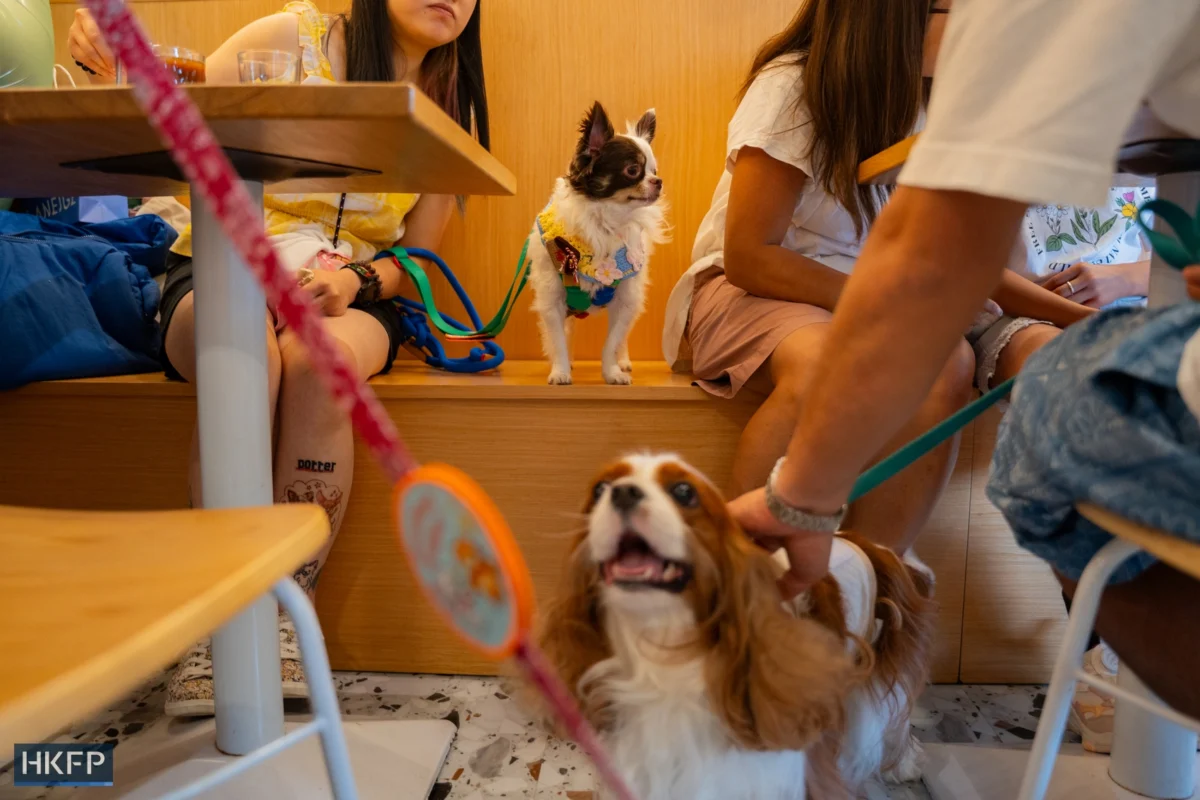
Hong Kong’s ambitious new policy, permitting dogs to enter designated restaurants and cafes, remains firmly in place despite a wave of online criticism and isolated incidents of improper conduct. Environment and Ecology Minister Tse Chin-wan has affirmed the government’s commitment to the scheme, emphasizing that it is a voluntary initiative with no immediate plans for suspension. The policy, which officially commenced on July 9, 2026, has seen an initial rollout with approximately 1,000 establishments securing permits to welcome canine companions.
The backlash gained traction online after a series of social media posts emerged, featuring concerning images and anecdotes. These reportedly depicted dog owners utilizing restaurant utensils for their pets and allowing dogs to perch on dining tables, raising significant hygiene and public health concerns among a segment of the population. While these incidents have been acknowledged by the authorities, they are being characterized as isolated rather than widespread, indicative of the "teething stage" of the new policy.

A Measured Rollout Amidst Public Scrutiny
The policy’s introduction marks a significant departure from decades-old regulations that historically prohibited animals from indoor dining establishments in Hong Kong. The current iteration, however, is a carefully calibrated pilot program. The government has received over 2,200 applications, with licenses ultimately granted to 940 restaurants and cafes. This selective approach, the minister indicated, is designed to allow for careful observation and gradual adaptation.
Minister Tse Chin-wan, speaking on NowTV on Sunday, acknowledged the validity of the viral social media content, stating, "The photos shared by netizens are not fake; these incidents definitely happened. However, this is not a widespread issue." He articulated the government’s strategy to address these infractions: "We hope that through our inspections and education, we can gradually eliminate non-compliant and improper behaviour during this adjustment period." This suggests a proactive approach involving monitoring and corrective measures rather than an outright ban.

The voluntary nature of the scheme is a cornerstone of the government’s defense. "Both the restaurants and the customers have a choice," Tse emphasized. "Therefore, we see no need to halt the policy. We just need to learn as we go, and we will monitor the situation to see if improvements are needed in the future." This stance underscores a belief in adaptive governance, allowing the policy to evolve based on real-world feedback and observed outcomes.
Understanding the Policy’s Framework and Regulations
The revamped policy permits most Hong Kong restaurants, excluding hotpot and barbecue establishments, to apply for a dog-friendly license. This represents a significant liberalization of previous rules. To ensure public health and safety, specific guidelines are in place for canine patrons. Dogs permitted in these establishments must be kept on a leash no longer than 1.5 meters, with the leash either held by an adult or secured to a fixture. Notably, dogs classified as "known dangerous dogs" by court orders, as well as fighting dogs, are explicitly prohibited from entering any participating restaurant.

The government has stated that it will not impose further prescriptive requirements on participating restaurants regarding venue size or the specific nature of their business, beyond the existing exclusions. Instead, the onus is placed on individual establishments to assess their capacity, customer base, and operational suitability before applying for a permit. This approach grants businesses the autonomy to determine if a dog-friendly environment aligns with their brand and clientele.
Public Reaction and the Debate on Hygiene
The online discourse surrounding the policy has been polarized. While a vocal segment has expressed strong reservations, citing potential hygiene risks and concerns about animal behavior, another segment has championed the initiative, highlighting the potential benefits for pet owners and the hospitality sector. Proponents argue that dogs are not inherently unhygienic and that responsible owners can ensure their pets adhere to acceptable standards. They also point out that individuals who are uncomfortable with the presence of dogs can simply opt for establishments that have not obtained dog-friendly permits.

The existence of over 17,000 restaurants in Hong Kong, as of 2023 data from the Food and Environmental Hygiene Department, provides a vast landscape of dining options. This large number suggests that the 940 participating restaurants represent a small fraction of the total, offering ample choice for those who prefer not to dine in dog-friendly environments. The government’s assertion that participants can voluntarily withdraw from the scheme, with 11 applications already processed for restaurants opting out, further reinforces the idea of choice and flexibility within the program.
Background and Context: A Shifting Societal Landscape
The introduction of this policy reflects a broader societal shift in Hong Kong, where pet ownership has been on the rise. As more residents consider their pets as integral family members, the demand for pet-inclusive public spaces and services has grown. For years, Hong Kong’s stringent regulations have limited the extent to which pet owners can integrate their companions into daily life, particularly in public dining settings.

This policy can be viewed as a response to evolving social norms and a growing desire for a more pet-friendly urban environment. Similar initiatives have been successfully implemented in various cities globally, demonstrating that with clear regulations and responsible practices, it is possible to balance the needs of pet owners with public health and comfort.
Analysis of Implications and Future Outlook
The success of the dog-friendly restaurant policy hinges on several factors. Firstly, the effectiveness of the government’s enforcement and education strategies will be crucial in mitigating negative incidents and ensuring compliance. Consistent inspections and clear communication of rules to both restaurant operators and pet owners are essential.

Secondly, the willingness of restaurants to adapt and implement best practices will determine the long-term viability of the scheme. This includes training staff, establishing designated areas for dogs where appropriate, and managing potential conflicts between patrons.
Finally, the public’s perception and willingness to embrace the policy will play a significant role. Continued dialogue, public education campaigns, and showcasing positive examples of dog-friendly establishments could help to foster greater acceptance and reduce the apprehension surrounding the initiative.
The current approach of monitoring and gradual adjustment suggests that the government is open to refining the policy based on its performance. Should widespread issues arise or public opposition intensify significantly, the option to halt or significantly revise the scheme remains. However, for now, Hong Kong is embarking on a new chapter in its culinary landscape, one that seeks to accommodate its growing population of pet lovers while upholding public health standards. The coming months will be critical in determining whether this policy becomes a widely embraced feature of Hong Kong’s vibrant dining scene or a brief, contentious experiment. The government’s commitment to learning and adapting during this "teething stage" indicates a pragmatic approach to navigating the complexities of integrating pets into the fabric of urban life.


 Siti Muinah
 Lina Irawan