Siti Muinah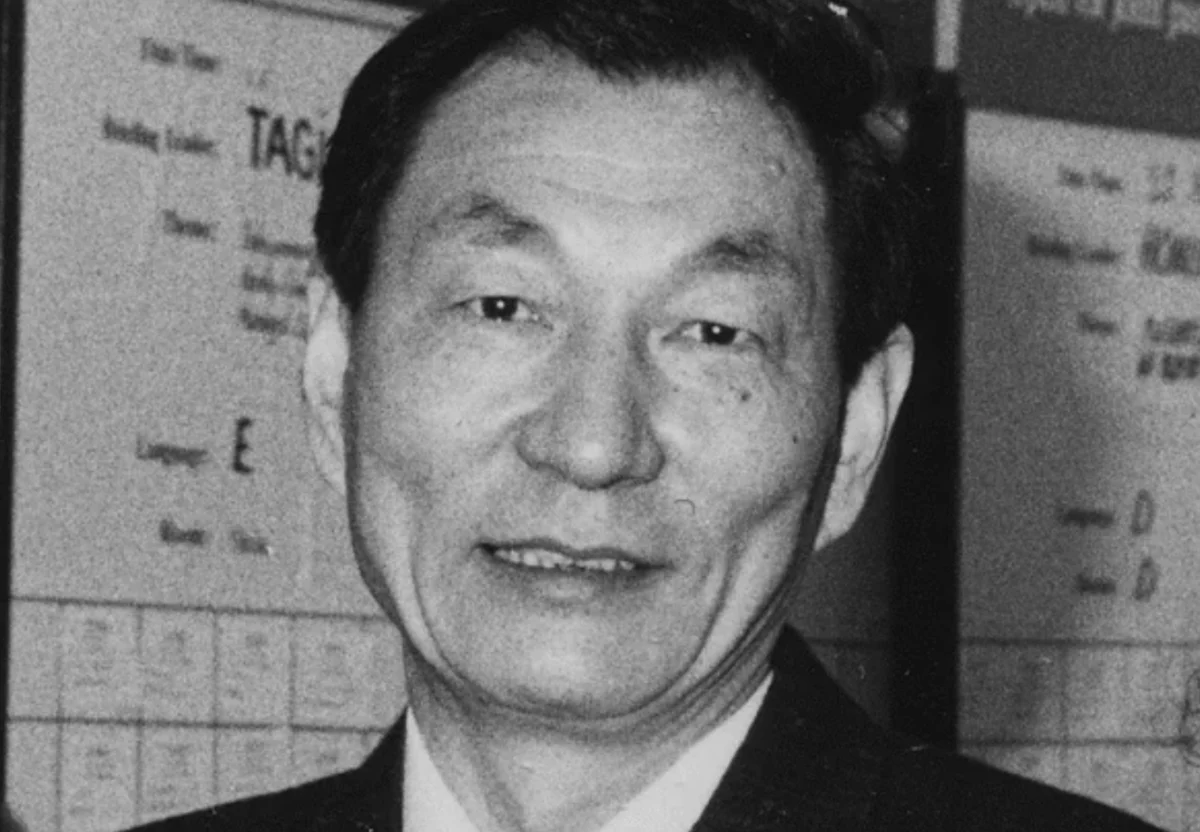
China is observing a period of national mourning for former premier Zhu Rongji, a towering figure in the nation’s economic transformation, who passed away last week at the age of 97. Across Beijing and beyond, flags were lowered to half-mast on Tuesday, signaling a profound respect for the leader often dubbed "China’s economic czar." The day also saw an outpouring of tributes on social media platforms, ahead of a state funeral expected to be attended by the country’s senior leadership, culminating in the cremation of his remains in Beijing.
National Mourning and Public Tributes

The somber mood across China was palpable as national flags fluttered at half-mast at prominent government buildings and public squares. In the heart of the capital, Beijing, the expansive and historically significant Tiananmen Square displayed the national flag lowered in solemn remembrance, a gesture reserved for figures of immense national importance. Journalists observed similar scenes of official mourning throughout the city, reinforcing the gravity of Zhu Rongji’s passing. This nationwide observance of lowered flags underscores the significant position Zhu Rongji held in China’s political pantheon, a tribute typically reserved for former paramount leaders or figures of extraordinary national contribution.
Online, Chinese microblogging site Weibo became a hub for public commemorations, with the lowered flag on Tiananmen Square becoming the top trending topic. Millions of citizens took to their keyboards to share eulogies, anecdotes, and expressions of gratitude for Zhu Rongji’s contributions. One widely shared comment encapsulated the sentiment, stating, "Thank you for everything you have done for this land – we will always remember you." This widespread digital mourning underscored the deep resonance Zhu’s legacy holds with the Chinese populace, who remember his decisive leadership during a critical period of economic reform. Official state media, led by Xinhua, lauded Zhu as "an outstanding proletarian revolutionist (and) statesman," highlighting his unwavering commitment to the Communist Party and the nation’s socialist modernization. Similar observances were noted in Hong Kong, where flags were also lowered as a mark of respect, reflecting the broader impact of his policies and influence across Chinese territories. The consensus among both official narratives and public sentiment highlights his image as a pragmatic and incorruptible leader who steered China through pivotal economic reforms.
The Architect of Modern China’s Economy: Zhu Rongji’s Premiership (1998-2003)

Zhu Rongji’s five-year tenure as premier, beginning in 1998, is widely regarded as one of the most transformative periods in China’s modern economic history. He inherited an economy grappling with the lingering effects of the Asian Financial Crisis, inefficient state-owned enterprises (SOEs), a nascent but troubled financial sector, and the urgent need to integrate further into the global economy. With a reputation for boldness, pragmatism, and a no-nonsense approach, Zhu embarked on a series of reforms that reshaped the economic landscape and laid much of the groundwork for China’s subsequent meteoric rise. His leadership style, characterized by a directness rarely seen in Chinese politics, earned him both admiration for his efficiency and occasional apprehension for his uncompromising nature.
-
Decisive Economic Restructuring and WTO Accession
One of the hallmarks of Zhu’s premiership was his relentless drive to restructure the Chinese economy. His policies were designed to inject market discipline into a system still heavily reliant on central planning. A major component was the reform of state-owned enterprises, many of which were bleeding cash, overstaffed, and technologically backward. Zhu championed the policy of "grasping the large, letting go of the small," which involved consolidating key strategic SOEs into competitive national champions while privatizing or shutting down smaller, loss-making state firms. This initiative, while ultimately successful in improving the overall health of China’s industrial sector, led to significant layoffs, estimated in the tens of millions, creating considerable social dislocation in the late 1990s and early 2000s. To mitigate the profound social impact, nascent social safety nets and unemployment benefits were introduced, though they were often insufficient to fully address the challenges faced by displaced workers in the short term. The long-term outcome, however, was a more agile and competitive industrial base.Perhaps his most globally significant achievement was orchestrating China’s accession to the World Trade Organization (WTO) in 2001. Zhu Rongji personally led the arduous negotiations, enduring years of complex discussions with various member states, particularly the United States. His commitment to opening China’s markets, reducing tariffs, and adhering to international trade rules was instrumental in securing the deal. This move required overcoming considerable domestic resistance from industries fearing foreign competition and navigating intricate geopolitical considerations. WTO membership fundamentally altered China’s economic trajectory, providing unprecedented access to global markets for Chinese goods and attracting massive foreign investment. This solidified China’s role as a manufacturing powerhouse and a key player in the global economy, ushering in an era of unprecedented growth, though it also brought new challenges related to intellectual property rights, environmental concerns, and trade imbalances that continue to shape international relations.

-
Battling Corruption and Financial Sector Reform
Zhu Rongji was renowned for his ardent anti-corruption stance, famously declaring in 1998 that he would prepare "100 coffins" for corrupt officials, with one reserved for himself if he failed. This dramatic and unequivocal commitment resonated deeply with a public weary of graft and inefficiency within the state apparatus. He launched extensive campaigns to crack down on embezzlement, bribery, and misuse of public funds, particularly within the state bureaucracy and state-owned enterprises. His efforts, though not eradicating corruption entirely, sent a clear message that such behavior would not be tolerated at the highest levels of government and introduced a new level of accountability. This moral rectitude contributed significantly to his public image as an "honest official," a title he himself explicitly hoped to earn.Beyond SOEs, Zhu also initiated sweeping reforms in the banking and financial sectors. State banks were burdened with enormous portfolios of non-performing loans, accumulated from decades of policy lending to struggling SOEs without sufficient risk assessment. Zhu’s administration established four asset management companies (AMCs) to absorb and dispose of these bad debts, a crucial step in cleaning up the balance sheets of China’s major state-owned banks and preparing them for eventual public listing and greater market competition. This move, while controversial due to its immense cost to the state, was vital for stabilizing the financial system, preventing a potential collapse, and laying the groundwork for a more robust and market-oriented financial industry.
-
Housing and Fiscal Reforms
Another transformative reform under Zhu’s leadership was the dismantling of the state-allocated housing system. For decades, urban housing was primarily provided by employers or the state, leading to severe shortages, poor maintenance, and a lack of individual choice. In 1998, Zhu’s government officially ended this system, paving the way for a commercial housing market where individuals could purchase their homes. This reform unleashed massive private investment and consumption, stimulating the construction industry and fundamentally changing the urban landscape and wealth distribution in China. While it led to a property boom and significant improvements in living standards for many, it also sowed the seeds of future challenges related to housing affordability, speculative bubbles, and regional economic disparities that China continues to grapple with today.
Furthermore, Zhu played a critical role in strengthening the central government’s fiscal control. He oversaw a significant tax reform in the mid-1990s, when he was vice premier, which centralized tax collection and revenue, shifting power from local governments to the central authority. This reform provided the central government with greater resources to manage macroeconomic policy, fund national infrastructure projects, and implement social welfare programs. This was crucial for maintaining stability during the period of rapid economic change and for providing the financial backbone for his ambitious reform agenda.
A Life of Service: Early Years and Political Ascent
Born in 1928 in Changsha, Hunan province, Zhu Rongji’s early life was marked by the tumultuous events of 20th-century China, including civil war and the establishment of the People’s Republic. He received his education at the prestigious Tsinghua University in Beijing, graduating with a degree in electrical engineering in 1951. His early career saw him join the Communist Party of China in 1949, the year the People’s Republic was founded, and he initially worked in state planning commissions, focusing on industrial development.

However, his career faced a severe setback during the Anti-Rightist Campaign of the late 1950s, when he was branded a "rightist" for his outspoken views and exiled to a cadre school in rural Hunan, effectively sidelining him for two decades. This experience, enduring hardship and political persecution, is believed to have deeply influenced his pragmatic and results-oriented approach to governance, fostering a deep understanding of China’s grassroots realities. He was rehabilitated in 1978, at the dawn of Deng Xiaoping’s reform and opening-up era, and quickly rose through the ranks due to his evident talent and administrative capabilities. He served as Vice-Chairman of the State Economic Commission and later as Mayor of Shanghai from 1987 to 1991. His successful stewardship of Shanghai, transforming it into a vibrant economic hub and attracting significant foreign investment, caught the attention of the national leadership, particularly Deng Xiaoping, who famously endorsed Zhu as a leader capable of managing a modern economy. He then served as Vice Premier from 1991 to 1998 before assuming the premiership, where he would leave his most indelible mark.
A Legacy of Boldness and Pragmatism
Zhu Rongji cultivated an image as a tough, decisive, and highly competent administrator. His public appearances were often characterized by direct, unscripted remarks, a stark contrast to the more guarded style of many Chinese officials. He was known for his sharp intellect, quick wit, and deep understanding of economic policy, often engaging directly with foreign leaders and media with a forthrightness that was both refreshing and powerful. He was not afraid to confront difficult issues head-on, earning him both widespread admiration for his effectiveness and, at times, criticism for the social costs associated with his sweeping reforms.

His legacy is complex but overwhelmingly positive from an economic perspective. He successfully navigated China through the choppy waters of the late 1990s and early 2000s, including the aftermath of the Asian Financial Crisis and the challenges of integrating a massive command economy into the global market. His reforms set the stage for sustained growth, propelling China into a new era of economic prosperity. While the reforms led to significant job losses in state sectors and increased income inequality, they also created millions of new jobs in the burgeoning private sector and lifted countless people out of poverty, fundamentally altering the lives of ordinary Chinese citizens. His commitment to rule of law and anti-corruption, though sometimes limited by systemic issues, marked a significant effort to improve governance and foster a more transparent economic environment. His collaboration with President Jiang Zemin defined an era of rapid economic development and cautious political stability, with both leaders complementing each other’s strengths in an important period of transition.
The State Funeral: A Final Farewell
The formal farewell gathering for Zhu Rongji, preceding his cremation on Tuesday in Beijing, is expected to be a solemn affair attended by China’s top Communist Party leaders, including President Xi Jinping. Such ceremonies for former top-tier leaders are meticulously planned and carry significant political symbolism, serving as an opportunity for the current leadership to pay respects and affirm continuity, while also implicitly acknowledging the contributions of past generations to the Party’s vision and legitimacy. The precise details of the gathering are typically not publicized extensively, maintaining a degree of solemn privacy, but the attendance of the Politburo Standing Committee is a given, underscoring the high regard in which Zhu Rongji is held within the Party hierarchy. The cremation ceremony itself is a private affair, consistent with Chinese state protocols for deceased senior officials, marking the final public acknowledgment of his passing.

Historical Context and Enduring Influence
Zhu Rongji’s contributions are inextricably linked to China’s "reform and opening-up" era, initiated by Deng Xiaoping in the late 1970s. He belonged to a generation of leaders who, having personally experienced the ideological excesses and economic stagnation of the Maoist era, embraced pragmatic economic policies to modernize the country and improve living standards. His tenure as premier solidified China’s trajectory towards a market economy with distinct Chinese characteristics, demonstrating that a centrally planned socialist state could successfully engage with global capitalism.
His policies, particularly those concerning state-owned enterprises, the financial sector, and housing, continue to reverberate in China’s economic policy debates today. The ongoing balance between state control and market forces, the management of systemic financial risks, and the perennial fight against corruption are all issues that Zhu Rongji tackled head-on and that remain central to China’s governance and economic strategy. His steadfast determination to push through unpopular but necessary reforms provides a historical precedent for leaders navigating complex economic challenges. Zhu’s vision for a China integrated into the global economic order, as evidenced by his pivotal role in WTO accession, remains a foundational element of the country’s foreign economic strategy, even as global dynamics shift and China faces new pressures. His personal integrity and dedication to national service, encapsulated in his desire to be remembered as an "honest official," will likely continue to inspire future generations of Chinese leaders and citizens alike, solidifying his place as a pivotal figure in China’s contemporary history.

 Sagoh
Sagoh
 Asro
Asro