Reynand Wu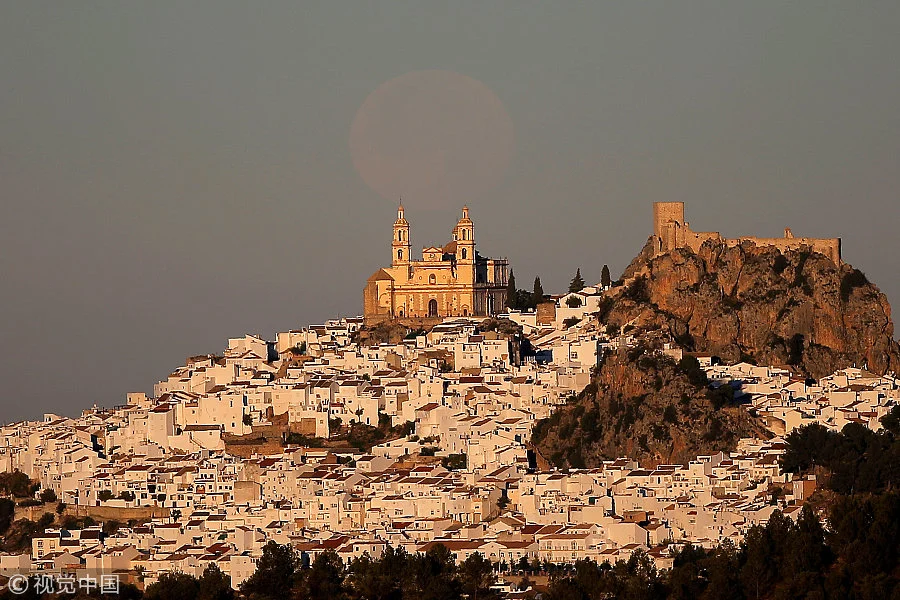
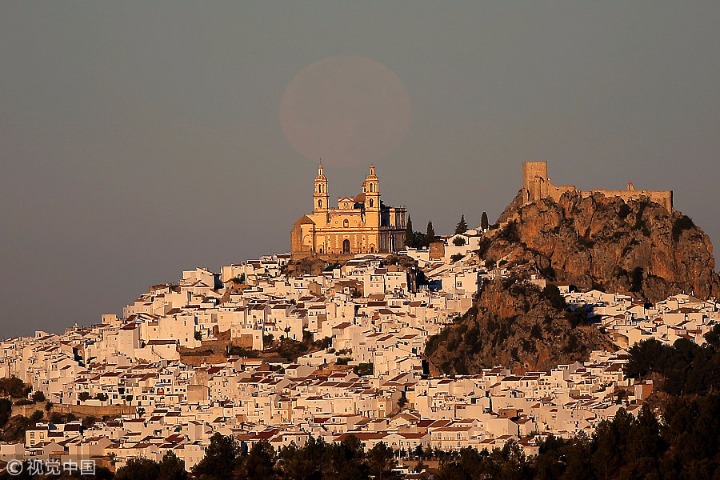
The night sky above Olvera, a picturesque town nestled near Cadiz in southern Spain, was graced by a breathtaking celestial event on December 4, 2017, as a supermoon bathed the historic church of Nuestra Senora de la Encarnacion in an ethereal glow. This extraordinary phenomenon, where the full moon coincided with its closest approach to Earth in its elliptical orbit, rendered the lunar disc noticeably larger and brighter than its typical appearance. This particular full moon, marking the first of the winter months, is traditionally known as the Cold Moon, a name that evokes the season’s chill and the longer nights it brings. The visual spectacle, captured by photographers, offered a profound connection to the cosmos, reminding observers of the enduring cycles of nature and the scientific principles that govern our solar system.
Understanding the Supermoon Phenomenon
The term "supermoon" describes a full moon or a new moon that occurs at or near its perigee, the point in the moon’s orbit when it is closest to Earth. While the moon’s orbit is not perfectly circular, but rather elliptical, its distance from Earth varies throughout the month. Perigee typically occurs about two weeks after apogee, the point when the moon is farthest from Earth. When a full moon aligns with perigee, the moon can appear up to 14% larger and 30% brighter than when it is at its apogee and appears as a "micromoon." This apparent size difference, though subtle to the casual observer, is scientifically significant and contributes to the captivating visual experience. The precise distance during the December 4, 2017, supermoon was approximately 335,433 kilometers (208,429 miles), a relatively close proximity in astronomical terms.
The Significance of the Cold Moon
The nomenclature for full moons often carries historical and cultural weight, with names reflecting seasonal changes, agricultural cycles, or animal behaviors. The December full moon is widely referred to as the Cold Moon, a descriptor that aptly captures the essence of the winter solstice period in the Northern Hemisphere. Other cultures and regions have their own unique names for this lunar event. For instance, some Native American tribes called it the Long Night Moon, referencing the longest nights of the year. Another common name is the Oak Moon, believed to be associated with the acorns ripening on oak trees, although this is more typically linked to the autumn months. Regardless of the specific appellation, the Cold Moon signifies the deepening of winter, a time of introspection and anticipation for the return of longer days.
A Glimpse into Astronomical Cycles
The supermoon event is not a rare occurrence; they happen several times a year. However, the visual impact can vary depending on atmospheric conditions and the specific alignment of the moon with the horizon. When a supermoon rises or sets, it can appear even larger due to the "moon illusion," an optical phenomenon that makes celestial bodies near the horizon seem bigger than when they are overhead. This illusion is thought to be caused by the way our brains perceive distance and size in relation to terrestrial objects. The supermoon of December 4, 2017, was particularly striking as it coincided with the waning crescent phase of the lunar cycle, meaning it was visible in the pre-dawn hours and during twilight, often presenting a more dramatic silhouette against earthly landscapes.
Historical and Cultural Context of Lunar Observations
Throughout human history, the moon has been a source of fascination, mythology, and scientific inquiry. Ancient civilizations meticulously tracked lunar cycles, using them for calendrical purposes, agricultural planning, and religious rituals. The predictable phases of the moon offered a fundamental measure of time, influencing everything from planting and harvesting to the timing of festivals and ceremonies. The supermoon, a more pronounced manifestation of lunar proximity, would have undoubtedly inspired awe and perhaps even apprehension in ancient societies, often interpreted through the lens of divine intervention or omens. Today, while our understanding of celestial mechanics is far more sophisticated, the supermoon continues to evoke a sense of wonder and a connection to the vastness of the universe.
The Role of Photography in Documenting Celestial Events
The advent of digital photography has revolutionized our ability to capture and share celestial events like supermoons. High-resolution cameras and advanced imaging techniques allow for detailed documentation of these phenomena, making them accessible to a global audience. The image from Olvera, Spain, serves as a testament to this capability, freezing a fleeting moment of cosmic grandeur. Photographers, both professional and amateur, often seek out iconic landmarks or dramatic landscapes to frame these celestial displays, creating visually compelling narratives that combine the beauty of Earth with the majesty of space. The interplay of light and shadow, the texture of the moon’s surface, and the surrounding environment all contribute to the artistry of such photographs.
Scientific Interest and Public Engagement
Astronomers and scientists closely monitor lunar cycles, including supermoons, for various research purposes. While a supermoon itself does not typically cause significant geophysical events, the slight increase in tidal forces associated with it can be a factor in coastal erosion or minor fluctuations in sea levels, though these effects are generally negligible. For the general public, supermoons offer an accessible opportunity to engage with astronomy. They encourage people to look up at the night sky, fostering curiosity about space and our place within it. Educational institutions and astronomy clubs often organize viewing events, providing telescopes and expert guidance to enhance the public’s understanding and appreciation of these celestial occurrences.
Broader Implications and Future Observations
The supermoon of December 4, 2017, serves as a reminder of the dynamic nature of our solar system and the ongoing interplay of gravitational forces. While this particular event was a visually stunning display, it also underscores the continuous scientific observation and data collection that inform our understanding of celestial mechanics. Future supermoons will continue to be monitored, offering further insights into lunar orbital variations and potential subtle effects on Earth. The enduring fascination with these events highlights humanity’s innate drive to explore and comprehend the cosmos, a drive that is continually fueled by such visible and awe-inspiring celestial phenomena. The ability to witness and document these events, as exemplified by the striking image from Spain, ensures that the wonder of the universe remains accessible and inspiring for generations to come. The careful study of lunar behavior, including the frequency and magnitude of supermoons, contributes to our broader understanding of planetary formation, orbital dynamics, and the long-term evolution of our solar system. This ongoing scientific endeavor, coupled with the public’s enduring appreciation for these celestial spectacles, solidifies the supermoon’s place as a significant and captivating event in both the scientific and cultural calendars.


 Nana Wu
 Suro Senen