
 Ali Ikhwan

On October 20, DeepSeek, a prominent player in the artificial intelligence landscape, officially released DeepInfer, an advanced inference framework meticulously engineered to power its large-scale model services. This strategic open-sourcing initiative is designed to address some of the most pressing challenges in deploying sophisticated AI models, offering robust support for both Nvidia GPUs and Huawei Ascend processors. The framework introduces a suite of critical capabilities, including distributed inference, speculative decoding, and structured output, all aimed at significantly enhancing operational efficiency for developers and businesses. DeepSeek’s stated ambition behind this release is to empower users to achieve superior throughput and reduced latency, simultaneously curbing computing costs and mitigating energy consumption associated with large language model (LLM) operations. Complementing DeepInfer, the company also open-sourced deepseek-recipe, a crucial component that streamlines the conversion of API requests and meticulously manages model input and output processing, aligning seamlessly with DeepSeek’s internal service architecture. DeepInfer currently extends its support to DeepSeek-V4.1-Flash-1017, with a clear roadmap indicating continuous release of inference code and further optimizations for upcoming models through this ambitious project, details of which are accessible via DeepSeek’s official GitHub repository.
The Criticality of Efficient LLM Inference in Modern AI
The proliferation of large language models has marked a transformative era in artificial intelligence, unlocking unprecedented capabilities in natural language understanding, generation, and complex reasoning. However, the sheer scale and computational demands of these models present formidable hurdles when transitioning from development environments to real-world production deployments. The process of inference – where a trained model processes new input data to generate predictions or responses – is a critical bottleneck. For businesses and developers leveraging LLMs, three key metrics dictate the viability and success of their applications: throughput, latency, and cost.
Throughput refers to the number of requests or tokens an AI model can process per unit of time. In high-demand scenarios, such as chatbots serving millions of users or complex data analysis pipelines, insufficient throughput can lead to significant delays and degraded user experience. Latency, on the other hand, measures the time taken for a single request to be processed and a response to be generated. For interactive applications, even milliseconds of delay can impact user satisfaction and the responsiveness of the system. Finally, cost encompasses the substantial financial outlay associated with the powerful computational hardware (GPUs, TPUs) and energy required to run these models, particularly at scale. As models grow larger and more complex, these costs can become prohibitive, limiting accessibility and innovation.
DeepSeek’s decision to open-source DeepInfer directly addresses these pain points. By providing an optimized framework, the company aims to democratize access to efficient LLM deployment, enabling a broader range of enterprises, from startups to large corporations, to integrate advanced AI capabilities without being encumbered by excessive operational overheads. This move underscores a broader industry trend towards optimizing the entire AI lifecycle, recognizing that model training is only one part of the equation; efficient, scalable, and cost-effective inference is equally, if not more, crucial for real-world impact.
DeepInfer: A Technical Overview of Key Innovations
DeepInfer’s architecture is built upon several advanced techniques designed to squeeze maximum performance and efficiency out of available hardware. Its core features represent significant advancements in inference optimization, reflecting DeepSeek’s deep expertise in large-scale model deployment.
Distributed Inference for Scalability
Large language models often exceed the memory capacity of a single GPU, necessitating their distribution across multiple devices or even multiple nodes in a cluster. Distributed inference is the technique that allows a single model to be partitioned and executed across several GPUs, enabling the deployment of truly massive models that would otherwise be impractical. DeepInfer’s implementation of distributed inference is critical for achieving high throughput and handling large batch sizes, especially when serving multiple concurrent requests. It intelligently manages the partitioning of model layers, weights, and intermediate activations, orchestrating their execution and communication across the interconnected hardware. This capability is paramount for enterprise-grade applications where reliability and the ability to scale on demand are non-negotiable requirements. By optimizing the communication overheads and load balancing across distributed resources, DeepInfer ensures that the aggregated computational power is utilized effectively, minimizing idle time and maximizing processing speed.
Speculative Decoding for Reduced Latency
One of the most innovative features integrated into DeepInfer is speculative decoding, a technique gaining traction for its ability to significantly reduce the latency of LLM generation. Traditional autoregressive decoding, where each token is generated sequentially based on the previously generated tokens, can be slow, especially for long sequences. Speculative decoding accelerates this process by employing a smaller, faster "draft model" (or a simplified version of the main model) to quickly predict a sequence of future tokens. These speculative tokens are then passed to the larger, more accurate "main model" for parallel verification. If the main model confirms the draft tokens, they are accepted, and the process continues. If a token is rejected, the main model generates the correct token, and the draft process restarts from that point. This method often allows multiple tokens to be generated per main model inference step, drastically cutting down the overall generation time without sacrificing output quality. For applications requiring near real-time responses, such as conversational AI or interactive content generation, speculative decoding represents a transformative leap in user experience.
Structured Output for Reliable Application Integration
The ability of LLMs to generate free-form text is powerful, but for many practical applications, developers require outputs in a predictable, machine-readable format. Structured output capabilities, as offered by DeepInfer, enable models to reliably generate responses in specific formats like JSON, XML, YAML, or even adherence to predefined schema. This feature is crucial for integrating LLMs into existing software systems, databases, and APIs. For instance, an LLM might be tasked with extracting specific entities from a document and outputting them as a JSON object, or generating code snippets that conform to a particular syntax. Without structured output, developers would face the cumbersome and error-prone task of parsing free-form text, which can lead to brittle applications and unexpected behavior. DeepInfer’s support for structured output ensures that the model’s responses are not only contextually relevant but also programmatically usable, significantly reducing development effort and increasing the reliability of AI-powered applications.
Multi-Vendor Hardware Support: Nvidia and Huawei Ascend
A distinguishing feature of DeepInfer is its support for a diverse range of hardware, specifically Nvidia GPUs and Huawei Ascend processors. This multi-vendor compatibility is strategically significant for several reasons. Nvidia GPUs have long been the industry standard for AI computation, owing to their powerful CUDA ecosystem and extensive software libraries. However, reliance on a single vendor can introduce supply chain vulnerabilities, cost pressures, and limitations on hardware innovation. The inclusion of Huawei Ascend processors broadens the hardware options for developers, particularly in regions where Huawei’s ecosystem is prevalent or preferred. This move towards hardware agnosticism provides greater flexibility, potentially reduces hardware procurement costs by fostering competition, and enhances resilience against geopolitical or supply chain disruptions. For DeepSeek, supporting Ascend also signifies a commitment to a wider global developer base and acknowledges the growing computational power and ecosystem around alternative AI chip architectures.
DeepSeek’s Ecosystem Play: Deepseek-Recipe and Model Support
Beyond the core DeepInfer framework, DeepSeek’s open-sourcing of deepseek-recipe further solidifies its commitment to providing a comprehensive, end-to-end solution for LLM deployment. The deepseek-recipe component acts as a crucial intermediary, translating generic API requests into the specific input format required by DeepSeek’s models and, conversely, processing model outputs into a consumable format for external applications. This component effectively abstracts away the complexities of model-specific data handling, making it easier for developers to integrate DeepSeek’s models into their workflows without deep knowledge of the underlying model architecture. It standardizes the interface, ensuring consistency and reducing the potential for integration errors.
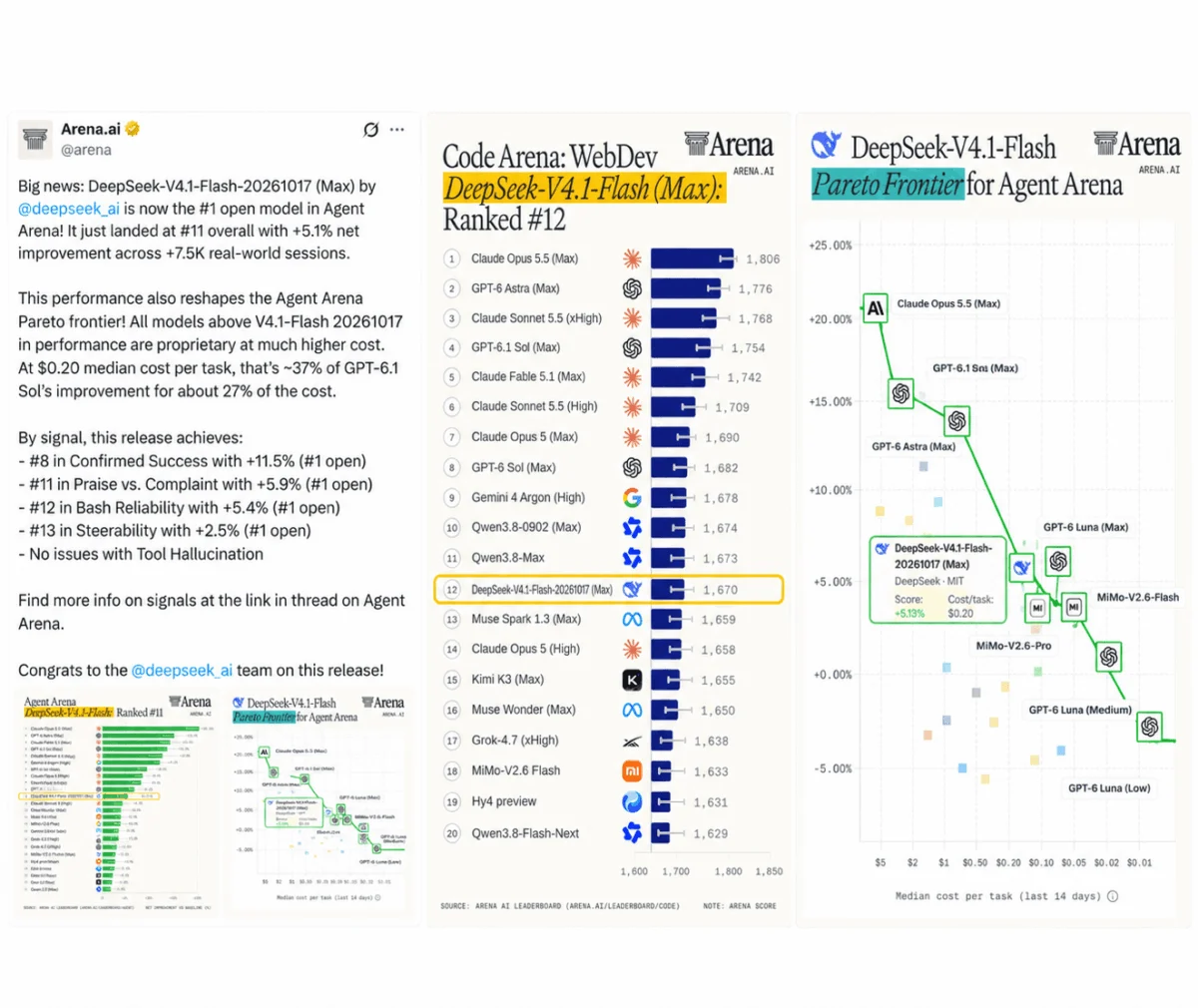
Currently, DeepInfer is optimized to support DeepSeek-V4.1-Flash-1017. While specific details about this particular model variant were not extensively provided in the initial announcement, the "Flash" designation typically implies a version optimized for speed and efficiency, often through techniques like quantization or architectural modifications for faster inference. This focus on a high-performance model variant underscores DeepSeek’s dedication to practical, production-ready AI solutions. The company has also made it clear that this is an ongoing project, with plans to continuously release updated inference code and optimizations for future DeepSeek models. This commitment ensures that as DeepSeek’s model portfolio evolves, its inference framework will keep pace, providing developers with state-of-the-art tools for deploying the latest AI innovations.
A Brief Chronology of DeepSeek’s Journey
DeepSeek AI emerged as a notable entity in the rapidly evolving artificial intelligence landscape, establishing itself as a developer of powerful large language models and associated infrastructure. While specific founding dates and early milestones are not always publicly detailed, DeepSeek has gained significant recognition in the past year through its contributions to open-source AI.
Key moments in DeepSeek’s trajectory include:
- DeepSeek-MoE (Mixture of Experts): DeepSeek garnered considerable attention with the release of its Mixture-of-Experts (MoE) models. MoE architectures allow models to scale to billions or even trillions of parameters while only activating a subset of "experts" for any given input, leading to highly efficient inference compared to dense models of similar parameter counts. This demonstrated DeepSeek’s capability in developing advanced, scalable model architectures.
- DeepSeek-Coder: The company also made significant strides in domain-specific AI with models like DeepSeek-Coder, designed for code generation and understanding. Such specialized models highlight DeepSeek’s strategic focus on delivering high-performance solutions for specific industry needs.
- Open-Source Philosophy: DeepSeek has consistently demonstrated a commitment to open-source principles, making many of its models and tools publicly available. This philosophy aligns with a growing trend in the AI community, where open-sourcing core technologies fosters innovation, collaboration, and wider adoption. The release of DeepInfer and deepseek-recipe is a natural extension of this strategy, providing not just the models but also the crucial infrastructure required to run them effectively.
This steady progression, from developing advanced model architectures to now providing the underlying inference infrastructure, positions DeepSeek as a comprehensive AI provider, capable of delivering solutions across the entire AI deployment pipeline.
Industry Context and Competitive Landscape
The field of LLM inference optimization is intensely competitive, with numerous frameworks and libraries vying for developer adoption. Major players and research institutions have invested heavily in creating solutions to address the challenges of model deployment. Notable examples include:
- vLLM: A popular open-source library known for its efficient memory management and continuous batching techniques, significantly boosting throughput.
- Nvidia TensorRT-LLM: Nvidia’s own highly optimized library for accelerating LLM inference on its GPUs, leveraging specific hardware capabilities.
- Hugging Face Text Generation Inference (TGI): A production-ready solution from Hugging Face, offering features like continuous batching, quantization, and support for various models.
- OpenVINO (Intel): Intel’s toolkit for optimizing and deploying AI models on Intel hardware, demonstrating another vendor’s commitment to inference efficiency.
DeepInfer enters this crowded arena with a compelling proposition. By combining distributed inference, speculative decoding, and structured output within a single, open-source framework, DeepSeek is positioning DeepInfer as a holistic solution. Its explicit support for both Nvidia and Huawei Ascend processors is a significant differentiator, offering a level of hardware flexibility that some competitors may lack. This broad compatibility is particularly attractive to organizations operating in diverse technological ecosystems or those seeking to diversify their hardware supply chains.
The decision to open-source DeepInfer is a strategic move that not only allows DeepSeek to gain community feedback and contributions but also builds trust and accelerates adoption. In a landscape increasingly dominated by proprietary solutions from tech giants, open-source frameworks provide a transparent, customizable, and often more cost-effective alternative, empowering a wider array of developers and businesses to innovate.
Statements and Industry Reactions
DeepSeek’s official statement regarding DeepInfer emphasizes its core objectives: "The release is intended to help developers and businesses improve throughput and latency while reducing computing costs and energy consumption." This declaration aligns perfectly with the current demands of the AI industry, where operational efficiency is paramount for scaling AI applications.
Industry analysts are likely to view DeepInfer’s release as a significant step for DeepSeek, solidifying its position not just as a model developer but as a comprehensive AI infrastructure provider. "This move signals DeepSeek’s strategic commitment to enabling broader adoption of advanced AI models," commented one hypothetical industry observer. "By tackling the often-overlooked but critical aspects of inference, they are lowering the barrier to entry for many enterprises. The inclusion of Huawei Ascend support is particularly noteworthy, diversifying the hardware ecosystem and potentially opening up new markets."
Developers, the primary beneficiaries of such open-source tools, are expected to react positively to a framework that promises tangible performance improvements and cost reductions. The integration of speculative decoding and structured output, in particular, addresses common pain points in building robust and responsive AI applications. The continuous support roadmap for future DeepSeek models also provides a sense of long-term reliability for those considering integrating DeepInfer into their systems.
Broader Implications: Democratization, Sustainability, and Geopolitical Nuances
The release of DeepInfer carries significant implications across several dimensions, impacting the broader AI ecosystem, technological development, and even geopolitical strategies.
Democratizing Access to Advanced AI
By open-sourcing a sophisticated inference framework, DeepSeek is contributing to the democratization of AI. High-performance inference has traditionally been the domain of well-resourced organizations with the expertise and capital to build or acquire proprietary solutions. DeepInfer provides small and medium-sized enterprises (SMEs), academic institutions, and individual developers with access to enterprise-grade optimization tools. This lowers the barrier to entry for developing and deploying advanced AI applications, fostering innovation across a wider spectrum of the economy and potentially leading to a more diverse range of AI-powered products and services.
Energy Efficiency and Sustainability
The rapidly increasing computational demands of large AI models have raised growing concerns about their environmental footprint. The energy consumption associated with training and running these models is substantial. DeepInfer’s focus on "reducing computing costs and energy consumption" directly addresses these sustainability concerns. Techniques like speculative decoding and efficient distributed inference, by maximizing the utilization of hardware and minimizing redundant computations, can lead to a considerable reduction in the energy required per inference. This aligns with global efforts to make AI more environmentally responsible and could set a new standard for sustainable AI deployment.
Hardware Diversification and Geopolitical Nuances
The explicit support for Huawei Ascend processors alongside Nvidia GPUs is perhaps one of the most geopolitically significant aspects of this release. In an era marked by technological competition and supply chain vulnerabilities, particularly between the United States and China, diversifying hardware options is a strategic imperative for many nations and companies. Huawei’s Ascend series represents a formidable alternative to Nvidia’s dominance, especially within the Chinese market and among countries seeking to reduce reliance on Western technology. DeepInfer’s agnostic approach to hardware provides critical flexibility, enabling organizations to build AI infrastructure that is resilient to potential disruptions and aligned with regional technological priorities. This move could accelerate the adoption of non-Nvidia AI hardware, fostering a more competitive and diverse ecosystem for AI computing.
Economic Impact and Innovation
For businesses, the ability to deploy large language models more efficiently and affordably translates directly into economic benefits. Reduced operational costs mean that AI can be integrated into more products and services, creating new revenue streams and enhancing existing offerings. Faster response times and higher throughput enable better customer experiences and more robust internal processes. DeepInfer, therefore, acts as an enabler for broader AI adoption and innovation, potentially unlocking new applications in fields ranging from customer service and content creation to scientific research and data analysis.
Looking Ahead
DeepSeek’s commitment to continuously release inference code and optimizations for future models underscores a long-term vision. As AI models evolve, becoming even larger and more complex, the need for equally advanced inference frameworks will only intensify. DeepInfer’s open-source nature means it has the potential to become a community-driven project, benefiting from external contributions and further accelerating its development. This iterative approach ensures that DeepSeek remains at the forefront of AI deployment efficiency, providing invaluable tools that will shape the future of how large language models are utilized across industries worldwide. The release marks a significant milestone in DeepSeek’s journey, firmly establishing its role not just as an innovator in model development but also as a critical contributor to the foundational infrastructure that powers the AI revolution.

 Reynand Wu

 Lina Irawan