Nila Kartika Wati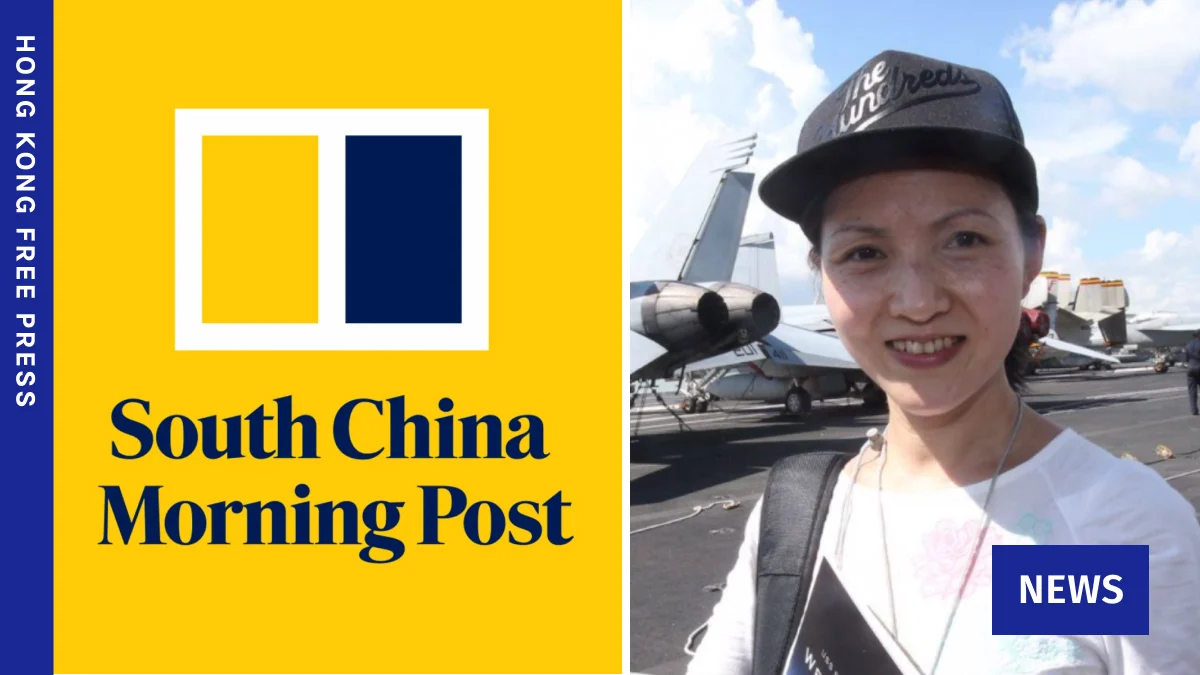
Reporters Without Borders (RSF), a leading international non-governmental organization dedicated to safeguarding press freedom, has voiced profound concern regarding the unexplained disappearance of South China Morning Post (SCMP) reporter Minnie Chan. Chan, a highly respected and award-winning journalist specializing in defense and military affairs, was last known to be actively reporting in Beijing in October 2023, while covering the prestigious Xiangshan Forum, a significant regional security conference. Her sudden and prolonged absence has triggered widespread apprehension within the global journalistic community, casting a renewed spotlight on the precarious state of press freedom in mainland China and, by extension, Hong Kong.
The Enigmatic Disappearance and RSF’s Alarming Claims

Minnie Chan’s disappearance surfaced prominently in a press release issued by the French-based NGO, Reporters Without Borders, on a recent Tuesday. The organization highlighted that there has been no official or public communication regarding her whereabouts since October of the previous year. Chan, renowned for her insightful and often exclusive reporting on the intricacies of China’s People’s Liberation Army (PLA) and broader regional defense policies, had cultivated a reputation as a diligent and knowledgeable correspondent. Her work frequently involved navigating sensitive political and military landscapes, a testament to her expertise and courage in a field often characterized by opacity.
According to RSF, multiple sources within China, whose identities remain undisclosed for their safety, have indicated that Minnie Chan is believed to be held by the Chinese regime. These sources suggest that her detention is likely linked to national security charges, which have not been publicly disclosed. Alarmingly, the same sources suggest that Chan could be facing a severe prison sentence, potentially exceeding ten years. While RSF explicitly stated its inability to independently verify this information or find conclusive evidence of her detention, the consistency of these anonymous reports from credible sources within the region adds a grave layer of urgency to their public appeal. The vagueness surrounding her situation, coupled with the serious nature of the alleged charges, aligns with a troubling pattern observed in cases of individuals detained under China’s expansive national security apparatus.
Profile of a Distinguished Defense Correspondent

Minnie Chan has been a cornerstone of the South China Morning Post’s defense coverage for many years. Her reporting often provided rare glimpses into the inner workings and strategic ambitions of the Chinese military, making her a crucial source for analysts and policymakers worldwide. She covered a wide array of topics, from military modernization and technological advancements to regional disputes and China’s evolving role in global security. Her articles were frequently cited, and she was known for her meticulous research and extensive network of contacts, qualities that made her reporting particularly valuable and, in the current climate, potentially perilous. The "award-winning" descriptor attached to her name further underscores her professional caliber and the significant loss her absence represents to independent journalism.
The Xiangshan Forum, where she was last seen, is China’s premier annual defense and security dialogue, bringing together military officials, academics, and experts from around the globe. Held typically in late October, the forum serves as a platform for China to articulate its security perspectives and engage with international counterparts. It is precisely the kind of high-profile event where a journalist of Chan’s expertise would be invaluable for gathering information and providing nuanced analysis, making her disappearance during such a gathering particularly conspicuous and concerning. Her role at such an event would involve interacting with high-level officials and accessing information that, while public at the forum, could be deemed sensitive by authorities if reported with too much critical depth or if linked to broader, undisclosed investigations.
Calls for Transparency and International Action

Aleksandra Bielakowska, the advocacy manager at RSF’s Asia-Pacific office, issued a strong condemnation of Chan’s disappearance and China’s lack of transparency. "Minnie Chan’s whereabouts must be made public, and the international community must do everything in its power to secure the release of this talented journalist, who does not belong in a Chinese prison," Bielakowska urged. Her statement underscores the organization’s firm belief that Chan’s detention, if confirmed, is a violation of journalistic freedom and human rights. The call for international intervention highlights the perceived inadequacy of domestic legal avenues and the urgent need for diplomatic pressure to ascertain her status and secure her potential release.
The lack of official information from Beijing has only exacerbated these concerns. When questioned about Chan’s situation in 2023, China’s Foreign Ministry spokesperson Wang Wenbin offered a terse and uninformative response, stating, "I’m not aware of that [situation]." Such a dismissive reply is frequently employed by Chinese officials when confronted with sensitive issues involving disappearances or detentions, further fueling suspicions of state involvement and deliberate obfuscation. This standard denial often precedes prolonged periods of detention without public acknowledgment, leaving families and employers in agonizing uncertainty.
The South China Morning Post’s Troubling Silence

Perhaps one of the most concerning aspects of this unfolding narrative is the conspicuous silence from Minnie Chan’s employer, the South China Morning Post. RSF explicitly stated that it had reached out to the SCMP, requesting crucial information regarding Chan’s current employment status, confirmation of her detention, the nature of any potential charges, and details about the support being extended to her. As of the publication of RSF’s press release, the SCMP had not provided any response. This lack of transparency from a prominent Hong Kong-based news organization regarding the fate of its own journalist raises serious questions about editorial independence and the pressures faced by media outlets operating within China’s sphere of influence.
The SCMP’s reluctance to comment follows a previous incident in December 2023, where it reportedly threatened legal action against Hong Kong Free Press (HKFP) over its initial coverage of Chan’s apparent disappearance. While the SCMP did not dispute the factual reporting by HKFP at the time, it issued a statement emphasizing the utmost importance of journalists’ safety and stating that it had no further information to disclose. This response, while acknowledging the general principle of journalist safety, sidestepped the specific allegations surrounding Chan’s case and failed to offer any reassurances or details to the public or to Chan’s colleagues. The paper’s current ownership by Alibaba Group, a mainland Chinese technology conglomerate, has led to increased scrutiny regarding its editorial lines and independence, particularly on sensitive topics related to mainland China. The silence surrounding Minnie Chan’s case serves to amplify these long-standing concerns, suggesting a potential chilling effect within the newsroom and a reluctance to challenge official narratives or perceived governmental sensitivities. This environment creates a vacuum of information, allowing speculation to flourish and further eroding public trust in media accountability.
China: The World’s Largest Prison for Journalists

Reporters Without Borders has consistently ranked China as one of the world’s worst offenders for press freedom, frequently labeling it as the "world’s largest prison for journalists." According to RSF’s latest data, over 100 journalists and press freedom defenders are currently detained in China. This grim statistic underscores a systemic and ongoing crackdown on independent reporting and dissent, exacerbated by the sweeping National Security Law imposed on Hong Kong in 2020. The cases often involve vague charges such as "inciting subversion of state power," "picking quarrels and provoking trouble," or, increasingly, "national security" offenses, which carry severe penalties and are often applied without transparent due process.
The disappearance and detention of Minnie Chan, if confirmed, would fit into a disturbing pattern of targeting journalists, both foreign and domestic, who report on sensitive subjects. Several high-profile cases illustrate this trend:
- Haze Fan (Bloomberg News): A Chinese national working for Bloomberg News, Fan disappeared in December 2020. She was eventually released on bail in 2022 after being held on suspicion of endangering national security. Her case highlighted the inherent risks faced by local staff working for foreign media organizations, who are often more vulnerable to such detentions than foreign passport holders.
- Cheng Lei (Australian Journalist): An Australian citizen working for China’s state broadcaster CGTN, Cheng Lei was detained in August 2020 on charges of "illegally supplying state secrets abroad." She was held for over three years, often in harsh conditions, before being released and deported to Australia in October 2023, following extensive diplomatic efforts by the Australian government. Her prolonged detention without clear evidence or due process drew international condemnation.
- Gui Minhai (Hong Kong Bookseller): A Swedish citizen and Hong Kong-based bookseller, Gui Minhai disappeared from Thailand in 2015 and later reappeared in China, where he was imprisoned. He was accused of illegally providing intelligence to foreign entities and sentenced to ten years in prison in 2020. His case exemplified the long reach of Chinese authorities beyond their borders to apprehend individuals deemed undesirable, even those with foreign citizenship.
- Jimmy Lai (Hong Kong Media Mogul): Founder of the now-defunct Apple Daily, Lai, a British citizen, was arrested in 2020 under the National Security Law. He remains imprisoned, facing charges including collusion with foreign forces, with his trial symbolizing the dramatic erosion of press freedom and judicial independence in Hong Kong.
These cases, alongside numerous others, paint a stark picture of a country where the act of reporting independently, especially on politically sensitive topics like defense, human rights, or state affairs, can lead to arbitrary detention, lengthy imprisonment, and a complete lack of transparency. The chilling effect extends beyond individual journalists, forcing self-censorship and limiting the scope of public discourse.

Broader Implications and the Chilling Effect
The disappearance of Minnie Chan, and the official silence surrounding it, carries profound implications for journalism in Hong Kong and globally. For Hong Kong, once celebrated for its robust press freedom and a beacon for independent reporting in Asia, such incidents further erode the city’s autonomy and its distinct media environment, which has been under increasing pressure since the implementation of the National Security Law in 2020. The perceived inability or unwillingness of the SCMP to publicly address its reporter’s situation signals a deepening crisis for media independence in the territory. It sends a chilling message to other journalists, both local and foreign, that reporting on sensitive issues within mainland China, or even from Hong Kong, carries significant personal risks.
Internationally, the case serves as a potent reminder of the challenges faced by foreign correspondents and local staff working for international news organizations in China. It reinforces the perception of an opaque legal system where individuals can be held incommunicado for extended periods without formal charges or access to legal representation. This environment makes it increasingly difficult for journalists to fulfill their role of informing the public, hindering global understanding of China and its policies. It compels foreign news bureaus to operate with extreme caution, potentially leading to self-censorship and a reduction in critical investigative journalism.

The calls from RSF for the international community to act are not merely symbolic. They reflect a growing recognition that individual cases of journalistic detention in China are part of a broader strategy to control information and suppress critical reporting. Diplomatic pressure, public advocacy, and coordinated efforts by international organizations are often the only recourse for those caught in the Chinese judicial system’s national security dragnet. The collective voice of governments, human rights groups, and media organizations is essential to challenge such practices and uphold the fundamental principles of press freedom.
As the world awaits any definitive news regarding Minnie Chan’s fate, her disappearance stands as a stark emblem of the escalating risks for journalists in China. The silence from both Beijing and her employer only amplifies the urgent demand for transparency and accountability from all parties involved. The pursuit of truth should not come at the cost of freedom, and the international community must remain vigilant in advocating for the rights of journalists like Minnie Chan, who dedicate their lives to shedding light on critical global issues. Her case is a powerful testament to the ongoing struggle for press freedom in an increasingly authoritarian landscape.


 Muslim
 Nana Muazin