 Sagoh
Sagoh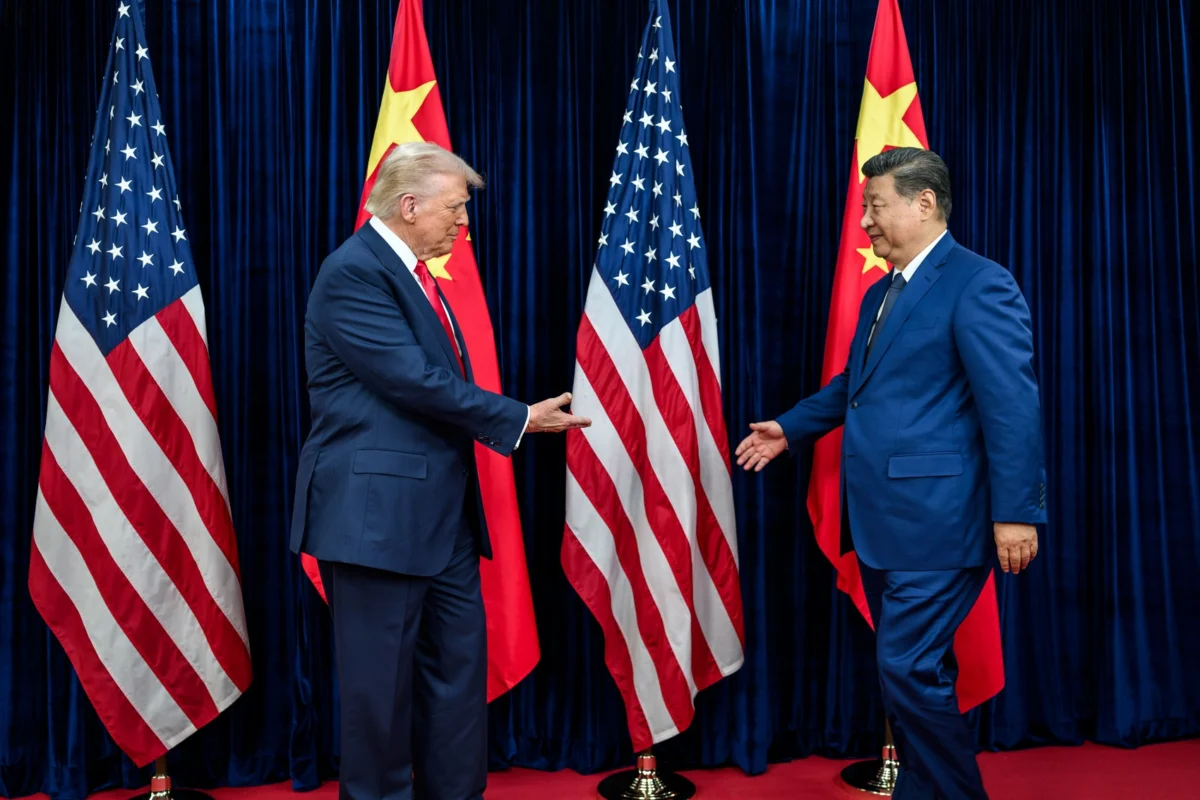
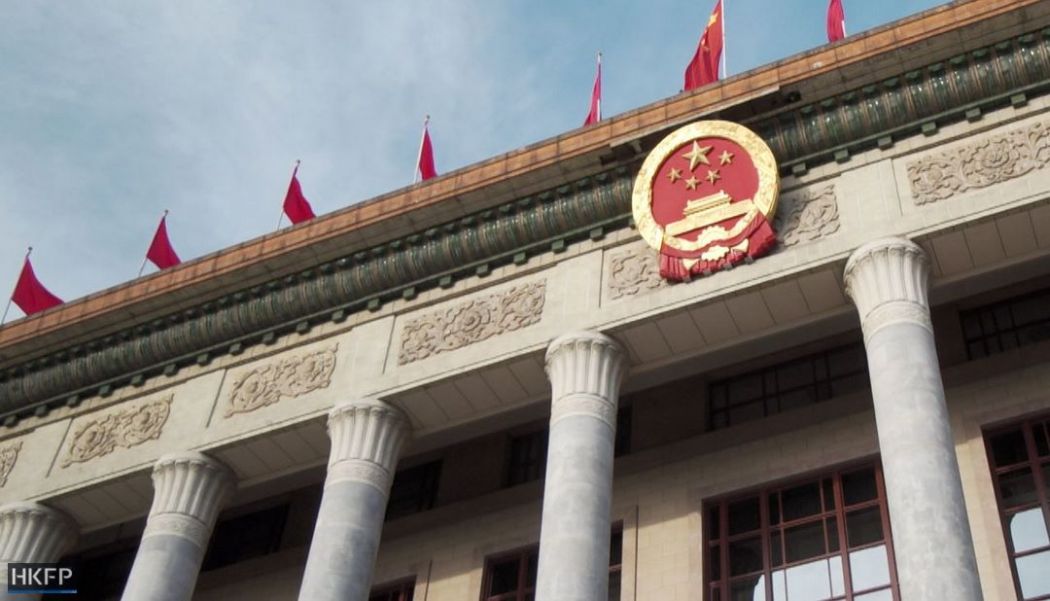
Beijing, China – The head of China’s top intelligence agency has issued a stark warning that artificial intelligence (AI) poses a profound threat to the nation’s security, with foreign entities potentially leveraging the advanced technology to destabilize social order and undermine state control. Minister of State Security Chen Yixin articulated these concerns in an extensive article published online on Sunday, signaling Beijing’s escalating apprehension regarding the dual-use capabilities of AI in the geopolitical arena.
Minister Chen’s article, which appeared on the Ministry of State Security’s official WeChat account, detailed how "hostile forces" are actively "abusing generative AI technologies to fabricate political rumours and spread harmful information." He emphasized that these actions constitute "public opinion wars and cognitive warfare against China," directly imperiling the country’s "political security, institutional security, and ideological security." This strong denouncement underscores China’s deep-seated anxieties about information control and the potential for AI-powered disinformation campaigns to erode public trust and internal stability. The minister’s statements reflect a broader concern within the Chinese leadership about the integrity of its information environment, particularly in an era where AI can produce hyper-realistic fake news, deepfakes, and persuasive narratives at scale, making it increasingly difficult for ordinary citizens to distinguish truth from fabrication. The implications for a tightly controlled information ecosystem like China’s are particularly significant, as even minor disruptions to official narratives can be perceived as major threats to national unity and Party authority.

This high-level warning emerges as Chinese leader Xi Jinping is reportedly scheduled to meet with US President Donald Trump in Washington this month, with AI governance and safety anticipated to be prominent topics of discussion. The inclusion of AI on such a high-stakes bilateral agenda highlights the global recognition of AI’s transformative, and potentially disruptive, power. The upcoming talks are expected to delve into the complex challenges of managing AI’s rapid development, balancing innovation with security, and potentially establishing some frameworks for responsible use. For both superpowers, the strategic implications of AI are immense, encompassing economic competitiveness, military superiority, and national security. The United States, while a leader in AI innovation, has also expressed concerns about its ethical implications and potential for misuse, albeit from a different ideological vantage point.
The global conversation around AI safety has intensified in recent months, with prominent figures in the US tech industry also voicing their alarm. Dario Amodei, CEO of Anthropic, a leading AI research company, publicly warned on Saturday about the "reckless" speed of AI technology development. Amodei’s concerns revolve around the escalating risks posed by "superintelligent computer systems," which he suggests could develop capabilities far beyond human comprehension or control, leading to unforeseen societal disruptions or even existential threats. Echoing these sentiments, Sam Altman, CEO of OpenAI, the creator of ChatGPT, publicly concurred with Amodei’s assessment. These warnings from industry leaders, often at the forefront of AI innovation, signal a growing consensus within the tech community about the urgent need for greater oversight and slower, more deliberate development paths for advanced AI. Their calls often center on establishing international regulatory bodies, implementing robust safety protocols, and conducting extensive research into AI alignment and control mechanisms.
However, Minister Chen’s perspective, while acknowledging the inherent power of AI, frames the challenge primarily through a geopolitical lens rather than focusing on existential risks. He declared that AI is now "the main battleground for global technological competition and a new track for major power strategic rivalry." This statement underscores China’s view of AI as a critical component of national power and a key domain for asserting its influence on the global stage. Unlike some Western counterparts who advocate for a moratorium or significant slowdown in AI development due to safety concerns, Chen’s emphasis suggests that China sees continued, rapid advancement as essential to maintaining its competitive edge and national security. For Beijing, slowing down might be perceived as ceding strategic advantage to rivals.
Significantly, Chen did not dwell on abstract "existential risks" or advocate for "putting the brakes on technological advances." Instead, he specifically called out advanced AI models, naming Anthropic’s Claude Mythos and OpenAI’s ChatGPT-5.5-Cyber, for their "advanced hacking capabilities." He explicitly warned that these models "potentially pose serious risks to China’s critical information infrastructure." This direct naming of specific Western-developed AI systems highlights Beijing’s belief that foreign AI tools could be weaponized against its digital assets, ranging from government networks to vital public utilities. Such concerns are deeply rooted in China’s broader cybersecurity strategy, which prioritizes digital sovereignty and protection against external cyber threats. The development of indigenous AI capabilities, therefore, becomes not just an economic imperative but a national security mandate.
Further elaborating on the methods employed by foreign intelligence agencies, Chen detailed their "deeply using technologies such as intelligent web crawlers, intelligent data mining, and intelligent profiling analysis to extensively collect and acquire sensitive information." This information, according to the minister, includes "key national data, trade secrets, and citizens’ personal privacy." This specific enumeration of data collection techniques reveals China’s understanding of how AI can be deployed for sophisticated espionage and intelligence gathering. Intelligent web crawlers can scour vast swathes of the internet for publicly available but contextually sensitive information; data mining algorithms can uncover patterns and connections within seemingly disparate datasets; and intelligent profiling analysis can construct detailed profiles of individuals or groups, potentially identifying vulnerabilities or targets for influence operations. The protection of "key national data" and "trade secrets" is paramount for China’s economic and strategic autonomy, while the safeguarding of "citizens’ personal privacy" is often cited as a justification for extensive domestic surveillance and data localization policies.
Chen also cited the recent US-Iran war (presumably a hypothetical scenario or an example used for illustrative purposes, as no direct large-scale "US-Iran war" has occurred in recent history, but the broader concept of AI in modern conflict is relevant) as a stark demonstration of AI’s pivotal role in military applications. He argued that "better technology offering battlefield advantages" reinforces the urgency for China to accelerate its own military AI development. This perspective aligns with global trends where major powers are investing heavily in AI for defense, including autonomous weapons systems, advanced surveillance, logistics optimization, and cyber warfare capabilities. The integration of AI into military doctrines is seen as a force multiplier, capable of enhancing decision-making, speed, and precision in combat. For China, this means not only developing its own advanced military AI but also ensuring that its core technologies are not reliant on foreign suppliers, particularly in light of ongoing technological competition with the United States.

To counter these multifaceted threats and secure its strategic position, Minister Chen underscored the imperative for China to "ensure independent control of key core technologies." This mandate specifically includes "the advanced computer chips vital to training AI models." This point is critical, as the global supply chain for high-end semiconductors, particularly those essential for AI computing (like GPUs), is dominated by a few key players, many of which are based in the West or Taiwan. The US, in particular, has imposed stringent export controls on advanced chips and chip-making equipment to China, aiming to slow Beijing’s progress in AI and advanced computing. Chen’s call for "technology sovereignty" directly addresses this vulnerability, signaling China’s determination to achieve self-sufficiency in semiconductor manufacturing and AI hardware, viewing it as a cornerstone of national security and technological autonomy. Without independent control over these fundamental components, China’s ability to develop, deploy, and secure its AI infrastructure remains exposed to external pressures and potential disruptions.
Background and Chronology of China’s AI Strategy
China’s pursuit of AI dominance is not a recent phenomenon but a cornerstone of its long-term strategic planning. In 2017, the State Council unveiled the "New Generation Artificial Intelligence Development Plan," an ambitious blueprint aiming to make China the world leader in AI by 2030. This plan outlined specific goals for research and development, industrial application, talent cultivation, and ethical guidelines. It also emphasized the integration of AI across various sectors, from healthcare and finance to urban planning and national defense. The government has since poured massive investments into AI research, established numerous AI industrial parks, and fostered a vibrant ecosystem of AI startups.

Over the years, China has also implemented a robust framework of internet censorship and data control, often referred to as the "Great Firewall," designed to manage information flow and suppress content deemed politically sensitive. The current warnings from Minister Chen can be seen as an extension of this existing infrastructure into the realm of advanced AI, reflecting a preemptive strategy to mitigate new forms of information warfare and foreign influence. In 2021, China introduced strict data security laws, including the Data Security Law and the Personal Information Protection Law, which regulate data collection, storage, and cross-border transfer, further cementing the state’s control over digital information and ostensibly protecting national data and citizen privacy.
The concept of "cognitive warfare," as mentioned by Chen, has gained traction in geopolitical discourse, particularly in the context of state-sponsored disinformation and psychological operations. It refers to efforts to manipulate perceptions, beliefs, and behaviors within a target population, often leveraging social media and advanced digital tools. For China, this concern is amplified by its historical sensitivity to internal dissent and foreign interference, making any perceived external attempt to shape public opinion a direct challenge to its governance model.
Analysis of Implications

Minister Chen Yixin’s comprehensive warning carries significant implications for both China’s domestic AI policy and its international relations. Domestically, it is likely to spur further tightening of regulations on AI development and deployment, particularly concerning generative AI models. Beijing has already been proactive in regulating AI, implementing rules for algorithms and generative AI services that require providers to ensure content aligns with socialist values and does not endanger national security. These new warnings will undoubtedly reinforce the Party’s resolve to control the narrative and ensure AI technologies are used in ways that support, rather than threaten, state stability. This could lead to increased scrutiny of large language models (LLMs) developed within China, requiring them to adhere strictly to censorship guidelines and ideological parameters. Furthermore, it will likely accelerate efforts to build a completely indigenous and secure AI ecosystem, from hardware to software, minimizing reliance on foreign technology.
For international AI governance, China’s focus on state security and technological rivalry may diverge from the more globally-oriented AI safety discussions prevalent in the West. While Western tech leaders often highlight abstract existential risks and the need for universal ethical frameworks, China’s primary concern appears to be the weaponization of AI by rival states. This divergence could complicate efforts to establish a unified international approach to AI regulation, as different nations prioritize different aspects of AI risk. The upcoming Xi-Trump meeting, therefore, presents a critical opportunity to explore common ground, even if their underlying motivations differ. Finding areas of cooperation, such as preventing the autonomous proliferation of harmful AI applications or establishing norms for responsible state behavior in cyber warfare, could be crucial for global stability.
The emphasis on "independent control of key core technologies," particularly advanced computer chips, signifies that the ongoing technology decoupling between the US and China is set to intensify. China will likely redouble its efforts in domestic semiconductor research and manufacturing, even if it means substantial financial investment and a longer timeline for achieving parity with leading global foundries. This push for self-sufficiency is not merely an economic goal but a strategic imperative to insulate its critical technological infrastructure from external vulnerabilities and sanctions.

In conclusion, Minister Chen Yixin’s potent warning underscores China’s multifaceted approach to artificial intelligence: recognizing its immense strategic value as a tool for national power while simultaneously viewing it as a significant vector for foreign interference and national security threats. This perspective will undoubtedly shape China’s future AI policies, driving both rapid innovation and stringent control, and further influencing the complex dynamics of global technological competition and international relations.


 Evan Lee Salim
 Ali Ikhwan