Raul Delapena Setiawan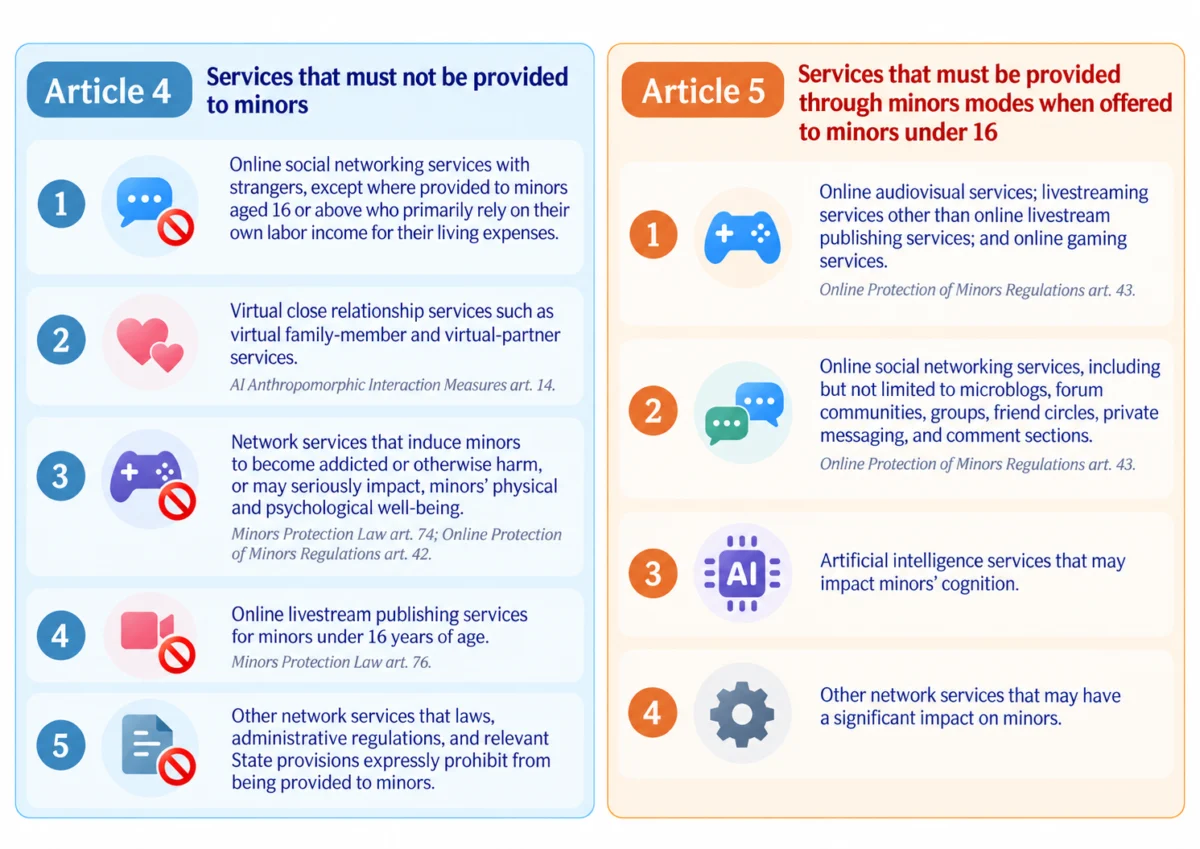
China’s State Council has released a significant new draft authority aimed at consolidating and expanding the nation’s regulatory framework for protecting minors in the digital space. This latest legislative volley represents a coordinated effort to streamline existing mandates while introducing rigorous new requirements for hardware manufacturers, software developers, and artificial intelligence service providers. As the internet becomes increasingly inseparable from the daily lives of China’s youth, the government is shifting from reactive measures toward a systemic, integrated "Minors Mode" ecosystem that spans the entire technological stack, from device permits to algorithmic content delivery.
The draft provisions build upon a foundation established by the 2020 revisions to the Law on the Protection of Minors and the 2023 Regulations on the Protection of Minors Online. However, the new draft introduces several "firsts" in digital governance, including a blanket prohibition on certain types of social interaction and mandatory reporting requirements for platforms that experience high volumes of underage traffic. By addressing the technical workarounds that have historically undermined real-name verification, the State Council aims to create a "closed-loop" environment where a minor’s identity is recognized and protected across different platforms and devices simultaneously.

Strengthening the Identification of Minor Users
A perennial challenge in digital governance is the accurate identification of underage users. While many Western nations continue to debate the privacy implications of mandatory age verification, China has long operated a real-name registration system. Despite this, the effectiveness of such systems has been hampered by minors using adult credentials, "guest modes," or forged identification. To close these loopholes, Article 6 of the new draft outlines five specific illustrative means for identifying minor users. These methods emphasize a multi-layered approach that moves beyond simple ID entry to include behavioral analysis and cross-platform verification.
The draft acknowledges that technology alone has not been a panacea. Industry data suggests that a significant percentage of minors still access adult-oriented content by borrowing the smartphones of grandparents or older siblings. To combat this, the new rules encourage service providers to utilize more sophisticated detection mechanisms. This shift places a higher burden of proof on the service provider to ensure that the user behind the screen matches the registration data, potentially signaling a wider adoption of biometric checks or more frequent "re-verification" prompts when suspicious usage patterns—such as late-night gaming or excessive spending—are detected.
Mandatory Implementation of the Minors Mode
The centerpiece of the draft is the mandatory transition to "Minors Mode." Article 9 stipulates that once a user is identified as a minor, the service must automatically switch to a restricted interface. This removes the "opt-in" choice that previously allowed many guardians or minors to bypass protective settings. This mandatory switch applies to a broad range of services, effectively making Minors Mode the default state of the internet for anyone under the age of 18.

This systemic integration is further reinforced by Article 12, which links the granting of internet access permits for hardware—such as smartphones, tablets, and smartwatches—to the quality and presence of their built-in Minors Modes. Telecommunications departments are now tasked with reviewing these features during the hardware testing phase. This means that a device cannot be legally sold or operated on Chinese networks unless its native operating system provides a robust, verifiable environment for child safety. This "hardware-level" enforcement ensures that protection is not just an app-specific feature but a fundamental characteristic of the device itself.
Prohibitions on Socializing with Strangers and AI Interaction
One of the most notable and debated additions in the draft is Article 4(1), which introduces a full prohibition on minors using social networking services to interact with strangers. While the term "strangers" remains legally undefined in the current draft, the intent is clearly to prevent the grooming and harassment that often occur in unregulated chat rooms or the comment sections of viral videos. This rule likely implies that minors will only be permitted to interact with accounts they have a verified real-world connection with, or those that have been vetted by guardians.
Furthermore, the draft expands the scope of regulation to include Generative Artificial Intelligence (AI). Article 5(3) requires Minors Modes for AI services that may "impact minors’ cognition." This is a significant expansion of earlier rules that applied only to "human-like" AI or chatbots designed for sustained relationships. By broadening the definition to include any AI that could influence a minor’s perception of reality or cognitive development, the State Council is taking a proactive stance against the potential psychological risks posed by large language models and synthetic media. Platforms will be required to ensure that AI-generated content for minors is educational, age-appropriate, and free from the biases or "hallucinations" that could mislead developing minds.

Timeline of China’s Minor Protection Legislation
The current draft is the culmination of nearly a decade of intensifying digital regulation. The following timeline illustrates the evolution of these policies:
- 2019: The Cyberspace Administration of China (CAC) introduces the first "Youth Mode" for short-video platforms like Douyin and Kuaishou.
- 2020: Revisions to the Law on the Protection of Minors codify the concept of digital protection, providing a high-level legal basis for subsequent regulations.
- 2021: Strict "Gaming Curfews" are implemented, restricting minors to three hours of online gaming per week (one hour each on Friday, Saturday, and Sunday).
- 2023: The State Council publishes the comprehensive "Regulations on the Protection of Minors Online," which established the framework for data privacy and content filtering.
- Late 2024: Guidelines for the "Mobile Internet Minors Mode" are finalized, focusing on mutual recognition between app stores, devices, and applications.
- 2026 (Current Draft): The new authority consolidates previous rules, introduces AI-specific protections, and mandates automatic switching and hardware-level compliance.
Oversight, Reporting, and Crisis Intervention
To ensure these rules are not merely "paper tiger" regulations, the draft introduces a rigorous filing and reporting system. Under Article 12, platforms with a "large number" of minor users or those that have a "significant impact" on the youth population must file detailed reports on their Minors Mode implementation with national-level internet authorities. Provincial authorities will oversee smaller platforms. This creates a hierarchy of accountability where the largest tech giants—such as Tencent, ByteDance, and NetEase—are subject to direct federal scrutiny.
In a move toward holistic welfare, the draft also introduces a "Crisis Intervention" mandate. Service providers are now required to monitor for signs of emotional distress, including self-harm or suicidal ideation. If such behavior is detected within a Minors Mode, the provider must immediately intervene and notify the minor’s guardian or emergency contacts. While the technical standards for detecting such crises are still being refined, this provision signals a shift in the role of tech companies from passive content hosts to active participants in the mental health safety net.

Supporting Data and Industry Implications
The necessity of these rules is underscored by data from the China Internet Network Information Center (CNNIC). As of 2023, the number of underage internet users in China exceeded 191 million, with an internet penetration rate among minors reaching nearly 97%. Research indicates that while the "Youth Mode" has been successful in reducing screen time for some, nearly 30% of surveyed minors reported knowing how to bypass these restrictions using adult accounts.
The economic implications for the tech sector are substantial. Compliance costs are expected to rise as companies must now invest in more sophisticated AI for content moderation and age verification. Furthermore, the restriction on "socializing with strangers" could impact the growth of new social media startups that rely on discovery algorithms and open networking to build user bases. However, for established giants, these rules provide a clearer regulatory "red line," potentially reducing the risk of unpredictable crackdowns by providing a standardized compliance roadmap.
Broader Impact and Global Context
The State Council’s draft rules place China at the forefront of global efforts to regulate the digital lives of children. While the European Union’s General Data Protection Regulation (GDPR) and the United Kingdom’s Online Safety Act focus heavily on data privacy and the "duty of care," China’s approach is more prescriptive, dictating specific functional requirements like "automatic switching" and "hardware permits."

Critics of the policy point to the potential for increased surveillance and the erosion of digital anonymity. The requirement for real-name verification and behavioral monitoring, while intended for protection, also expands the state’s ability to track the online activities of the next generation. Conversely, proponents argue that in an era of algorithmic addiction and predatory online behavior, a "walled garden" approach is the only effective way to safeguard child development.
As the draft moves toward finalization, the focus will shift to how "socializing with strangers" and "AI impacting cognition" are defined in practice. The clarity of these definitions will determine whether the rules foster a healthier digital environment or create an overly restrictive space that stifles the digital literacy and curiosity of Chinese youth. Regardless of the outcome, the State Council has made it clear that the era of "self-regulation" for minor protection is over, replaced by a comprehensive, state-led mandate for a safe and healthy internet.

 Iffa Jayyana
 Ammar Sabilarrohman