
 Reynand Wu
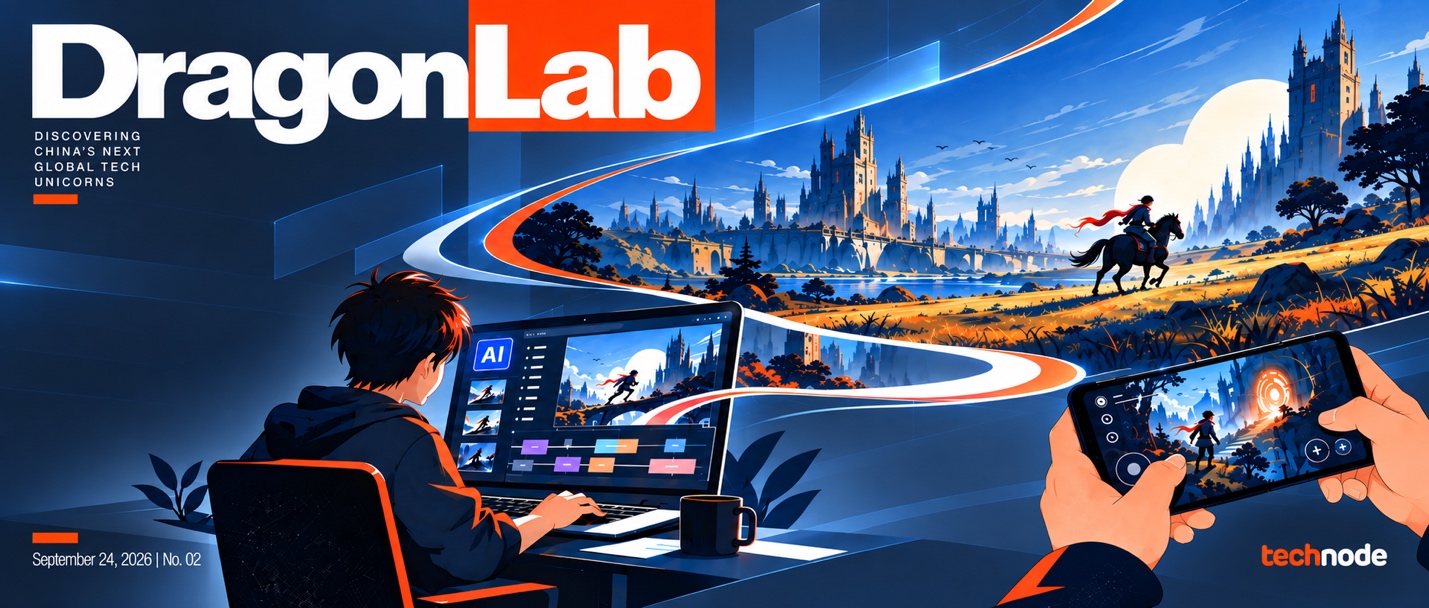
The intricate landscape of video game development, traditionally a bastion of specialized roles from concept designers and meticulous programmers to skilled artists and diligent producers, is on the cusp of a profound transformation. While professional engines like Unity and Unreal have democratized access to powerful tools over the past two decades, and no-code platforms have lowered technical barriers for aspiring creators, a new generation of startups is venturing into an even more ambitious frontier: leveraging artificial intelligence to initiate game creation from a simple verbal idea. This visionary approach is epitomized by JIYI’s SOON, an AI-powered platform poised to redefine the genesis of interactive entertainment.
SOON’s core proposition is audacious yet compelling: to enable users to articulate a creative concept in natural language and swiftly translate it into a playable game experience. This innovation challenges the conventional wisdom that game development demands years of specialized learning and hands-on tool mastery. Instead, JIYI explores the radical notion that AI can absorb a significant portion of the work historically undertaken by human designers, artists, and programmers, dramatically accelerating the journey from ideation to prototype. The company’s ambition is succinctly captured in its aspiration: to deliver "a game studio in minutes."
The evolution of game creation tools provides essential context for understanding SOON’s disruptive potential. Before the advent of generative AI, platforms like GDevelop emerged as significant enablers. Originating as an open-source project in 2008 and later formalized by GDevelop France in 2021, GDevelop established itself as a leading no-code game engine. It empowered individuals to craft games without the need for traditional programming languages, replacing complex code with a visual, event-based system for building interactions and gameplay. This allowed creators to publish games across web, desktop, and mobile platforms, making game development accessible to a broader audience than ever before. GDevelop’s success underscored a pervasive demand to lower technical barriers, and it has since integrated AI features as an assistive layer, albeit retaining its fundamental identity as an engine operated by human creators.
SOON, while sharing GDevelop’s objective of democratizing game development, pushes the paradigm further. Rather than merely simplifying an engine’s interface, it aims to substantially reduce the manual effort required within an engine-like workflow. The platform prioritizes natural-language interaction, allowing AI to shoulder a larger share of the execution burden, transforming an initial concept into a playable game. This strategic differentiation means that while GDevelop enables creators to build scenes, define events, and manage assets without conventional coding, SOON seeks to automate much of that intricate process.
Currently, SOON’s focus is strategically narrowed to 2D and mini-game projects. This deliberate constraint allows the platform to operate within a more manageable framework, optimizing AI automation for production processes and ensuring a relatively stable output quality. This contrasts with general-purpose engines like GDevelop, which support both 2D and 3D development, but it highlights SOON’s commitment to achieving deeper AI-driven generation rather than matching the expansive breadth of traditional engines.

The early performance metrics of SOON are indicative of its potential. During its second round of testing, users generated an impressive count of over 3,000 game projects within a mere 45 days. The platform actively contributed to generating code, game logic, characters, scenes, and user interfaces, demonstrating its efficacy in automating multiple facets of the development pipeline. While large-scale commercial games will undoubtedly continue to rely on experienced teams and sophisticated development environments, SOON is proving its value for rapid prototyping, smaller projects, and creator-driven initiatives.
JIYI’s trajectory differs significantly from many AI gaming startups in the U.S., which often originate from software or AI research backgrounds, concentrating on specialized areas such as AI characters, interactive agents, or generative content for existing engines. Companies like Inworld AI, for instance, offer tools for integrating intelligent characters and real-time interactions into games built with established engines. JIYI, by contrast, emerged from within China’s vibrant gaming and technology ecosystem, where the exploration of AI is frequently driven by the imperative to reduce the cost and complexity of game production.
Incubated by the Chinese gaming giant Kingnet Network, JIYI has rapidly garnered significant investment, attracting capital from prominent entities such as Bingo Group, Zhongxu Future, and Hengdian Capital. By 2026, the company had successfully raised nearly RMB 100 million (approximately $14 million USD) across two funding rounds. This financial backing underscores investor confidence in JIYI’s vision and the burgeoning potential of AI-driven game creation within the world’s largest video game market. China’s robust domestic development and publishing industry provides a rich environment for startups like JIYI, offering a vast talent pool of developers, publishers, and investors, alongside extensive production experience to fuel innovation.

SOON’s innovative approach has not gone unnoticed. At the 2025 China International Artificial Intelligence Conference, it was lauded as one of the year’s 10 most innovative AI products, a prestigious recognition alongside offerings from technological titans such as Huawei, JD Logistics, and Inspur Cloud. Further solidifying its industry standing, SOON was named "Best AI Game Creation Platform" at the seventh Feifan Awards in July 2026, an accolade specifically targeting the commercial application of AI.
At its core, JIYI’s value proposition is rooted in production efficiency. SOON is engineered to consolidate much of the game-making process into a single, streamlined platform, empowering smaller teams and individual creators to transition from a nascent idea to a playable project with significantly fewer steps and reduced overhead. This focus extends beyond core game creation. In a strategic partnership with CMGE, JIYI launched GamePartner.AI, an AI-powered agent designed to assist developers with the intricate process of publishing games to major platforms like Apple’s App Store and Google Play, while also facilitating connections with advertising monetization services such as AppLovin. This integrated approach highlights JIYI’s commitment to a holistic ecosystem that supports not only game creation but also commercialization.
One of the most profound implications of AI game creation is the potential for the "one-person game studio" to produce projects of unprecedented ambition. Traditional game development has long been constrained by resource limitations; a brilliant concept often languishes due to a lack of specialized programming, artistic, or design skills. AI tools stand to fundamentally alter this equation. A lone creator, previously requiring a team of specialists, could leverage AI to rapidly generate early versions, swiftly test concepts, and refine ideas at a fraction of the traditional cost and time. This mirrors transformative shifts observed in other creative industries. The advent of digital cameras, sophisticated editing software, and online publishing platforms significantly lowered the barriers to creating and distributing photography and video, granting independent creators direct access to tools and audiences once exclusive to large studios. Game development appears poised to follow a similar trajectory. If platforms like SOON can effectively handle a substantial portion of the technical heavy lifting, individuals brimming with ideas but possessing limited development experience could find a remarkably accessible pathway to realizing playable creations.

However, the journey of AI in game creation is not without its significant challenges. Generating a coherent and engaging game presents a far greater complexity than simply generating individual assets. A truly successful game is an intricate tapestry woven from compelling mechanics, precise pacing, appropriate challenge, and effective feedback loops, all coalescing to sustain player engagement. While platforms like Meshy in the U.S. and Hyper3D’s Rodin in China excel at generating production-ready assets—characters, props, environments, and textures—thereby saving artists and studios considerable time within existing workflows, SOON adopts a broader approach. It integrates code, game logic, characters, scenes, and UI into a unified creation process, with the ambitious goal of producing a complete, playable project.
Other companies are also expanding beyond asset generation into interactive environments and world-building. Tripo AI, for example, is developing persistent multiplayer worlds through Project Eden, while Runway has explored real-time, AI-generated game worlds that dynamically respond to player input. Yet, a successful game demands much more than mere technical components. It requires compelling gameplay, intricate balance, satisfying progression, immersive storytelling, and a compelling reason for players to return. Extensive research into game design and player experience consistently underscores the critical importance of elements such as challenge, meaningful feedback, deep immersion, and sustained engagement. For tools like SOON, a pivotal challenge lies in seamlessly integrating these AI-generated components into an experience that feels coherent, emotionally resonant, and genuinely captivating for players. The question is not just can AI generate a game, but can it generate a good game—one that truly resonates with human players?
Despite these complexities, SOON marks a new and exciting chapter for game creation. For years, platforms such as GDevelop have broadened access to game development by simplifying tools. SOON is pushing this frontier further, assigning a significantly larger role to AI in the intricate process spanning the initial concept to a playable game. The platform is still under active development, and high-budget, commercial titles will undoubtedly continue to rely on the expertise of seasoned teams and sophisticated production pipelines. However, SOON points toward a radically different kind of creator workflow—one where individuals can describe their vision, rapidly visualize a playable result, and then iteratively refine it through subsequent instructions. This paradigm shift could democratize game creation for countless individuals who possess imaginative ideas but lack the specialized experience in coding, engine mastery, or production pipelines. For them, the journey of making a game may soon begin not with arduous tool learning, but with the simple, exhilarating act of articulating an idea.


 Iffa Jayyana
 Azzam Bilal Chamdy