Muslim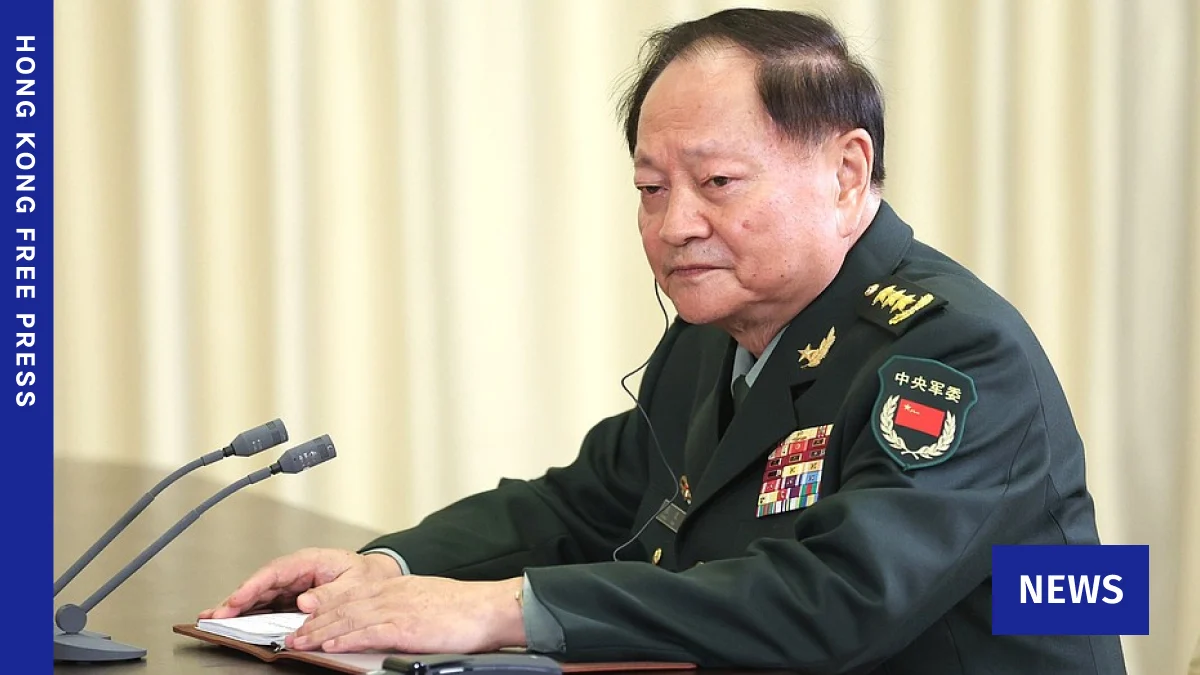
Beijing, China – China has officially expelled two high-ranking military officers from the ruling Communist Party, state media reported Monday, confirming earlier investigations into "serious violations of the law." The expulsions mark a significant development in President Xi Jinping’s ongoing anti-corruption drive, which has seen numerous officials, including those within the powerful People’s Liberation Army (PLA), fall under scrutiny.

The two officers identified are Zhang Youxia and Liu Zhenli. Zhang Youxia, until recently, held the esteemed position of the more senior of the two vice chairmen on the Central Military Commission (CMC), making him China’s highest-ranked general. Liu Zhenli served as a member of the CMC and the Minister of National Defense. Their removal from the party and impending transfer to military legal organs for prosecution underscores the depth and reach of President Xi’s anti-graft efforts, which have become a defining characteristic of his tenure.
The initial announcement of their investigation by the Ministry of Defence in January described them as "suspected of serious violations of discipline and the law," a phrase widely understood in China as a euphemism for corruption. The official state news agency Xinhua provided further details on Monday, stating that their cases involved "exceptionally large sums of money," a significant indicator of the alleged scale of their transgressions.

A Shocking Fall from Grace: Zhang Youxia’s Ouster
The downfall of Zhang Youxia, in particular, has surprised many observers. As a prominent figure within the PLA and a long-standing member of the CMC, his position implied a level of trust and proximity to President Xi. Zhang is often described as a "princeling," belonging to a generation of children of revolutionary leaders, a group that has historically held significant influence within the Communist Party. His close association with Xi Jinping was evident in numerous public appearances and state visits, including a notable meeting with Russian President Vladimir Putin in 2023. His expulsion, therefore, signals that even individuals perceived to be close to the top leadership are not immune to the anti-corruption campaign.
The investigation into Zhang Youxia and Liu Zhenli has revealed a pattern of alleged misconduct that extends beyond financial impropriety. Xinhua reported that the two men were found to have "become disloyal to the Party… and crossed red lines." Specific offenses cited include forming "cliques" – a term often used to describe factionalism and the building of personal power bases within the party – and accepting "huge sums of money for personal gain." Furthermore, the report indicates they "used their positions to help others in matters such as job promotion," suggesting a system of patronage and quid pro quo that undermined the meritocratic principles of the military hierarchy.

The Anti-Graft Campaign: A Defining Feature of Xi’s Era
President Xi Jinping launched a sweeping anti-corruption campaign shortly after assuming power in 2012. This initiative has been presented as essential for purging the Communist Party of corrupt elements, strengthening its legitimacy, and ensuring unwavering loyalty to the leadership. The campaign has led to the investigation and prosecution of hundreds of thousands of officials at various levels, from low-ranking cadres to former Politburo members.
The military, as a crucial pillar of the Communist Party’s power, has been a significant focus of this campaign. In recent years, several high-ranking PLA officials have been investigated and disciplined, including former CMC Vice Chairmen Guo Boxiong and Xu Caihou, both of whom were convicted of corruption. The scale of the current expulsions, involving two CMC vice chairmen, indicates the continued determination to clean house within the armed forces and eliminate potential threats to party discipline and centralized control.

Chronology of Events
- Prior to January 2024: Zhang Youxia and Liu Zhenli hold prominent positions within the Central Military Commission and the Ministry of National Defense, respectively.
- January 2024: The Ministry of Defence announces that Zhang Youxia and Liu Zhenli are under investigation for "serious violations of discipline and the law."
- February 2024 (reported Monday): State media, including Xinhua, reports that the two officers have been expelled from the Communist Party and their cases are being transferred to military legal organs for prosecution. This decision was made during a meeting of top officials in Beijing.
- Prior to Monday’s announcement: Zhang and Liu were stripped of their state CMC positions.
- Monday’s Announcement: Xinhua details the alleged offenses, including "disloyalty to the Party," forming cliques, accepting large sums of money, and using positions for personal gain and to aid others in promotions.
Official Statements and Reaffirmation of Party Control
The official announcement from Xinhua emphasized the party’s unwavering stance against corruption. The report stated that top officials meeting in Beijing "decided to expel" the two men from the Communist Party and initiate legal proceedings. The investigation’s findings, as detailed by Xinhua, highlighted their alleged "disloyalty to the Party" and their transgression of "red lines."
The expulsion is pending ratification at a plenary session of the Party’s Central Committee, a procedural step that confirms the seriousness of the decision. Xinhua’s commentary underscored that Monday’s decision "reaffirms the firm position that… there is absolutely no place for corrupt elements to hide within the military." This statement serves as a clear message to all members of the PLA and the broader party apparatus that adherence to party discipline and loyalty to the leadership are paramount.

Broader Implications and Analysis
The expulsion of Zhang Youxia and Liu Zhenli carries significant implications for China’s military and political landscape.
- Consolidation of Xi Jinping’s Power: The continued success of the anti-corruption campaign, even at the highest echelons of the military, further solidifies President Xi’s authority and control over the PLA. By removing potential rivals or those who may have accumulated independent power bases, Xi ensures that the military remains firmly under party command and loyal to his vision.
- Signal of Zero Tolerance: The sheer seniority of the officers involved sends a stark message that no one is above scrutiny. This demonstrates a commitment to upholding the integrity of the party and the military, regardless of an individual’s past achievements or connections.
- Impact on Military Modernization: While the anti-corruption drive aims to improve the PLA’s efficiency and combat readiness by removing corrupt elements, prolonged purges can also disrupt command structures and introduce uncertainty. However, the party leadership likely views this as a necessary, albeit challenging, step towards building a more disciplined and effective fighting force.
- Public Perception and Legitimacy: The anti-corruption campaign is popular among the Chinese public, who have often grown disillusioned with the perceived corruption of officials. By taking action against high-profile figures, the party aims to bolster its image and demonstrate its commitment to good governance, thereby enhancing its legitimacy.
- Potential for Wider Investigations: The scale of the alleged financial impropriety and the focus on disloyalty suggest that this may not be an isolated incident. It is plausible that these expulsions could trigger further investigations into other individuals or networks within the military or related sectors.
The cases of Zhang Youxia and Liu Zhenli underscore the ongoing efforts by the Chinese Communist Party to maintain internal discipline and ideological purity. As the nation continues its trajectory of economic and military development, the leadership under Xi Jinping appears determined to ensure that its armed forces are not only capable but also impeccably loyal and free from the corrosive influence of corruption. The full extent of the investigations and their ultimate impact on the PLA’s leadership and operational capabilities will likely unfold in the coming months and years. The party’s commitment to transparency, as demonstrated by the detailed reporting on these cases, remains a key element in its strategy to manage public perception and consolidate its authority.

 Jia Lissa