 Azzam Bilal Chamdy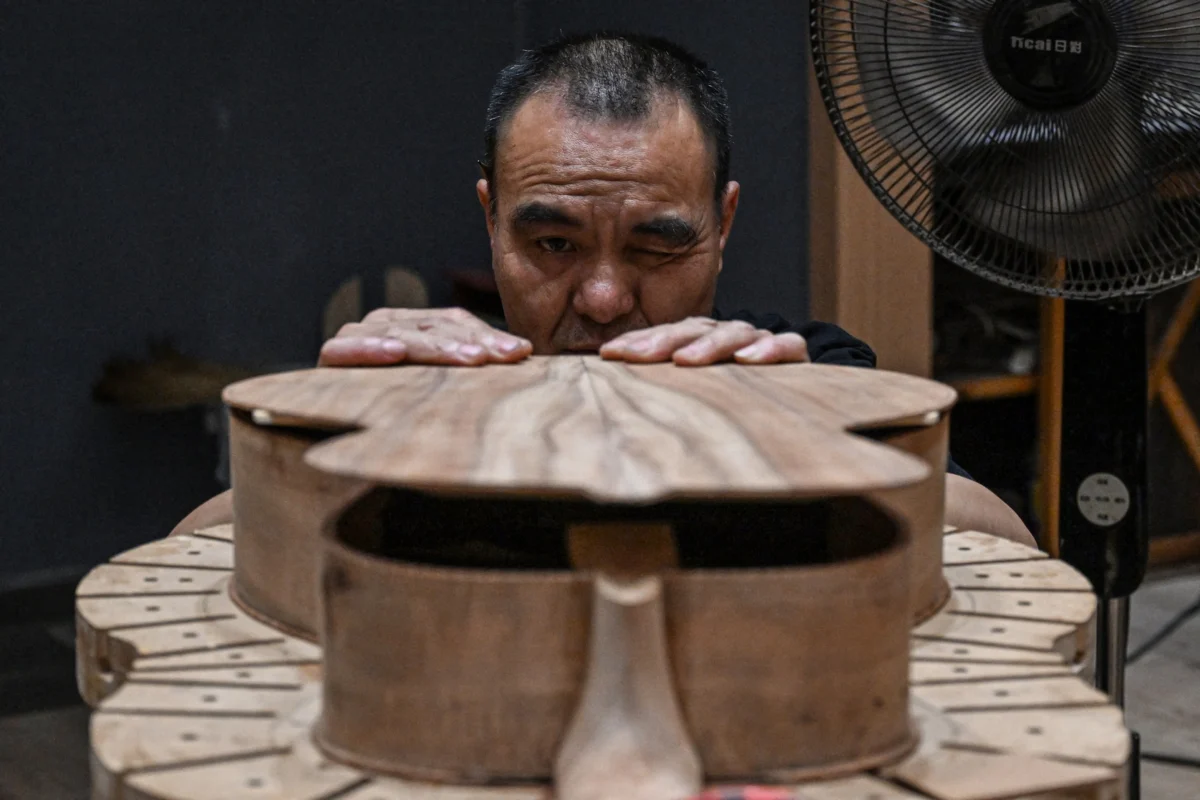
The main industry of Zheng’an, a town nestled in China’s southwestern Guizhou Province, is immediately apparent to any visitor. A colossal guitar sculpture dominates the central square, murals depicting musical instruments adorn walls and pavements, and even the public rubbish bins are whimsically shaped like guitars, creating an immersive ode to its primary craft. This corner of China has rapidly ascended to become a global powerhouse in musical instrument manufacturing, now responsible for producing an astonishing one in every seven guitars sold worldwide. This meteoric rise is all the more remarkable given that a mere decade ago, Zheng’an possessed virtually no guitar-making industry whatsoever.
Zheng’an’s transformation serves as a compelling case study in the efficacy of China’s targeted industrial strategy, showcasing the profound impact achievable when strategic local and central government investment converges with favorable regional conditions. While China boasts hundreds of specialized manufacturing towns, each dedicated to producing a niche item from bicycles to socks, the sheer speed and scale of Zheng’an’s development set it apart as a beacon of economic revitalization and focused industrial growth.
From Migrant Labor to Industrial Hub: A Decade of Transformation
For many years, Zheng’an was a typical rural county facing the pervasive challenge of internal migration. Its working-age residents, seeking better economic prospects and stable employment, routinely left their homes to find work in the bustling factories of Guangdong, southern China’s established manufacturing hub. This outflow of talent and labor was a common narrative across China’s less developed interior provinces, contributing to the demographic and economic disparities between coastal and inland regions.

Among those who ventured out was Zheng Chuanjiu, an enterprising individual who eventually established his own successful guitar-making business in Guangzhou, the capital of Guangdong Province. "The company was doing pretty well at that time and most of our staff in Guangzhou were also our fellow villagers from Zheng’an," Zheng Chuanjiu, founder of Shenqu Guitar, recounted to AFP, highlighting the strong community ties that persisted even in distant industrial centers. This concentration of Zheng’an natives within Guangzhou’s guitar manufacturing sector would later prove to be a crucial advantage for their hometown.
The "Return the Phoenix to the Nest" Initiative
The turning point for Zheng’an arrived in 2012 when local authorities initiated a visionary program dubbed "return the phoenix to the nest" (Fengchao Yin Feng). This initiative was specifically designed to entice skilled migrant workers, like Zheng Chuanjiu and his employees, to return to their hometowns and leverage their accumulated expertise to establish new businesses. The policy aimed not only to stem the tide of outward migration but also to inject entrepreneurial spirit and industrial knowledge directly into the local economy.
"The county officials reached out to us. They wanted us to come back and develop the industry," Zheng Chuanjiu explained, detailing the active outreach efforts by the local government. Shenqu Guitar, under Zheng’s leadership, became the pioneering guitar manufacturer to relocate and settle in Zheng’an’s nascent economic zone. His return acted as a powerful catalyst. "After I’d been working here for a few years, many friends saw how well I was doing and came here to join me to develop the industry," he added, illustrating the ripple effect of successful entrepreneurship and the strength of community networks. The sentiment was echoed by a banner prominently displayed in his factory, proclaiming: "Why go far away to work when home is the best place?"
Chronology of Growth and Development
- Pre-2012: Zheng’an is primarily an agricultural region, experiencing significant out-migration of its working-age population to coastal manufacturing centers like Guangdong.
- 2012: The Zheng’an county government launches the "return the phoenix to the nest" initiative, actively encouraging skilled migrant workers and entrepreneurs to return home and establish businesses. Zheng Chuanjiu’s Shenqu Guitar becomes the first manufacturer to establish operations in the newly designated industrial park.
- 2012-2015: Initial phase of growth. The industrial cluster begins to take shape with the return of more entrepreneurs and skilled workers, attracted by government incentives and the pioneering success of early adopters.
- 2015-2020: Rapid expansion. The number of guitar manufacturers and supporting businesses increases significantly. The local government continues to refine its support policies, offering comprehensive financial, tax, and employment assistance.
- 2019: Master luthier Zhang Weiyi relocates his specialized guitar-making business from Guangzhou to Zheng’an, recognizing the town’s growing reputation and suitable environment for craftsmanship.
- Within ~10 years (by early 2020s): The industrial cluster boasts 87 "home-grown" brands, reflecting a robust entrepreneurial ecosystem. Zheng’an’s annual production capacity reaches 2.5 million guitars, establishing its claim as the "Capital of Guitars, City of Music."
- 2025: Zheng’an emerges as a significant export hub, shipping guitars worth 248 million yuan (approximately $36 million USD) to over 40 countries globally, underscoring its international market penetration.
- January-July 2025: Local enterprises benefit from substantial government support, receiving 147 million yuan in tax reductions and exemptions, demonstrating the ongoing commitment of authorities to foster industrial growth.
- July 27, 2026: A worker is photographed making a guitar at a workshop, indicating continued vibrant manufacturing activity and sustained production. (Based on image caption date)
A Symphony of Support and Natural Advantages
The rapid emergence of Zheng’an’s guitar industry was not merely a matter of entrepreneurial spirit; it was meticulously orchestrated through a combination of strategic policy and favorable environmental factors. Local authorities played a pivotal role by enticing companies with comprehensive support packages. These incentives included significant financial assistance, tax benefits such as three-year tax exemptions, and even ten years of free rent for new businesses establishing themselves in the industrial zone. Furthermore, the streamlining of export-rebate procedures provided another crucial perk, making it easier and more profitable for local firms to engage in international trade. The substantial 147 million yuan in tax reductions and exemptions granted to registered local enterprises between January and July 2025 underscores the scale of this ongoing governmental commitment.

Beyond these policy-driven advantages, Zheng’an possesses unique natural attributes that are ideally suited for guitar manufacturing. The area’s climate, characterized by its specific humidity levels and temperature stability, is deemed perfect for working with wood, a critical material in instrument construction. Master luthier Zhang Weiyi, who relocated his bespoke guitar business from Guangzhou in 2019, attests to this. While Zhang, a craftsman focused on high-end, custom-made instruments, produces only around 150 guitars annually for his "longstanding clients," he acknowledges the environmental benefits. His perspective, "Whether the industry is big or small, whether it’s making an impact, that doesn’t really matter to me… Plus, as artisans, we don’t really care much about those things," offers a glimpse into the artisanal segment of the industry, where quality and craft supersede mass production metrics. Nevertheless, his presence reinforces the town’s growing reputation as a hub for both industrial scale and specialized craftsmanship.
Economic Impact and Global Market Presence
Zheng’an’s transition from an overlooked rural county to a major global supplier is a testament to its robust industrial ecosystem. The town now collectively manufactures 2.5 million guitars annually, a figure that solidly anchors its identity as the "Capital of Guitars, City of Music." This impressive output feeds both domestic demand and a burgeoning international market. In 2025 alone, Zheng’an exported guitars valued at 248 million yuan ($36 million USD) to more than 40 countries, establishing a significant footprint in the global musical instrument trade. This export success is supported by efficient logistics and the continued backing of local authorities in navigating international trade complexities.
The sheer volume of production places Zheng’an as a crucial node in the global supply chain for guitars. While precise global market share figures for individual towns are often difficult to ascertain, producing one in every seven instruments sold worldwide signifies a monumental achievement, especially considering the competitive landscape dominated by established manufacturers in other Asian countries and Western brands. Zheng’an’s rise suggests a successful strategy of combining cost-effective production with increasingly sophisticated manufacturing processes and quality control, enabling it to compete effectively on an international scale.
Broader Implications: Industrial Strategy, Rural Revitalization, and International Scrutiny
Zheng’an’s success story is more than just an economic triumph for a single town; it is a microcosm of broader trends and debates within China’s economic development and its position in the global economy.

China’s Industrial Policy and Rural Revitalization
The specialized industrial cluster model exemplified by Zheng’an is a cornerstone of China’s national industrial strategy. This approach aims to move away from indiscriminate, often polluting, heavy manufacturing towards more specialized, higher value-added production. By identifying and nurturing specific industries in particular regions, the government seeks to foster economies of scale, build expertise, and create distinct regional brands. This strategy is particularly vital for inland provinces like Guizhou, which have historically lagged behind their wealthier coastal counterparts.
Zhejiang University economist Dong Xuebing has articulated the importance of such specialized regional industries in preventing population loss to megacities and boosting development in previously neglected areas. He advocates for more counties to leverage their unique advantages and industrial foundations to pursue "distinctive, differentiated development." For Zheng’an, this strategy has not only generated significant economic growth but has also been instrumental in rural revitalization efforts, providing local employment opportunities and increasing income levels for its residents, thereby contributing to poverty alleviation in a historically poorer region.
International Trade and Subsidies Debate
However, China’s use of state subsidies and various forms of assistance to foster domestic industries has drawn considerable criticism from the United States and European nations in recent years. Accusations of unfair competition have been leveled, particularly in burgeoning sectors such as electric vehicles and solar panels. While the scale of the guitar industry might not be comparable to these strategic sectors, Zheng’an’s development model, heavily reliant on government incentives like tax exemptions and free rent, fits into this broader narrative.
From China’s perspective, these policies are legitimate tools of industrial development, aimed at correcting regional imbalances, fostering innovation, and creating jobs. They argue that such support is necessary to kickstart industries in underdeveloped areas and help them compete against established global players. Critics, however, contend that these subsidies distort international markets, create an uneven playing field, and make it difficult for foreign companies to compete fairly. The success of Zheng’an thus also serves as a point of discussion in the ongoing global debate about state intervention in market economies and its implications for international trade relations.

A Cultural Resonance: The "City of Music"
Beyond the purely economic metrics, Zheng’an’s transformation has had a profound social and cultural impact on its community. The influx of guitar manufacturing has fostered a vibrant musical atmosphere that permeates the town. Master luthier Zhang Weiyi, despite his focus on individual craftsmanship, acknowledges this shift: "I think there’s a really nice atmosphere around it," he observed, describing how music now frequently fills the main square. "All over the streets and alleys, you see quite a few people – both adults and kids – carrying guitar cases, probably on their way to guitar lessons."
This organic development of a musical culture is a significant benefit beyond mere economic prosperity. It speaks to the creation of a unique local identity and a sense of community pride. The presence of numerous guitar factories has likely spurred the growth of music schools and workshops, providing opportunities for residents, especially younger generations, to learn an instrument. This cultural enrichment, coupled with increased economic stability, contributes to a higher quality of life and reinforces the town’s chosen moniker: "Capital of Guitars, City of Music." Zheng’an’s journey illustrates how industrial specialization, when strategically aligned with local conditions and robust governmental support, can not only transform an economy but also redefine a community’s very soul.


 Laily UPN