 Jia Lissa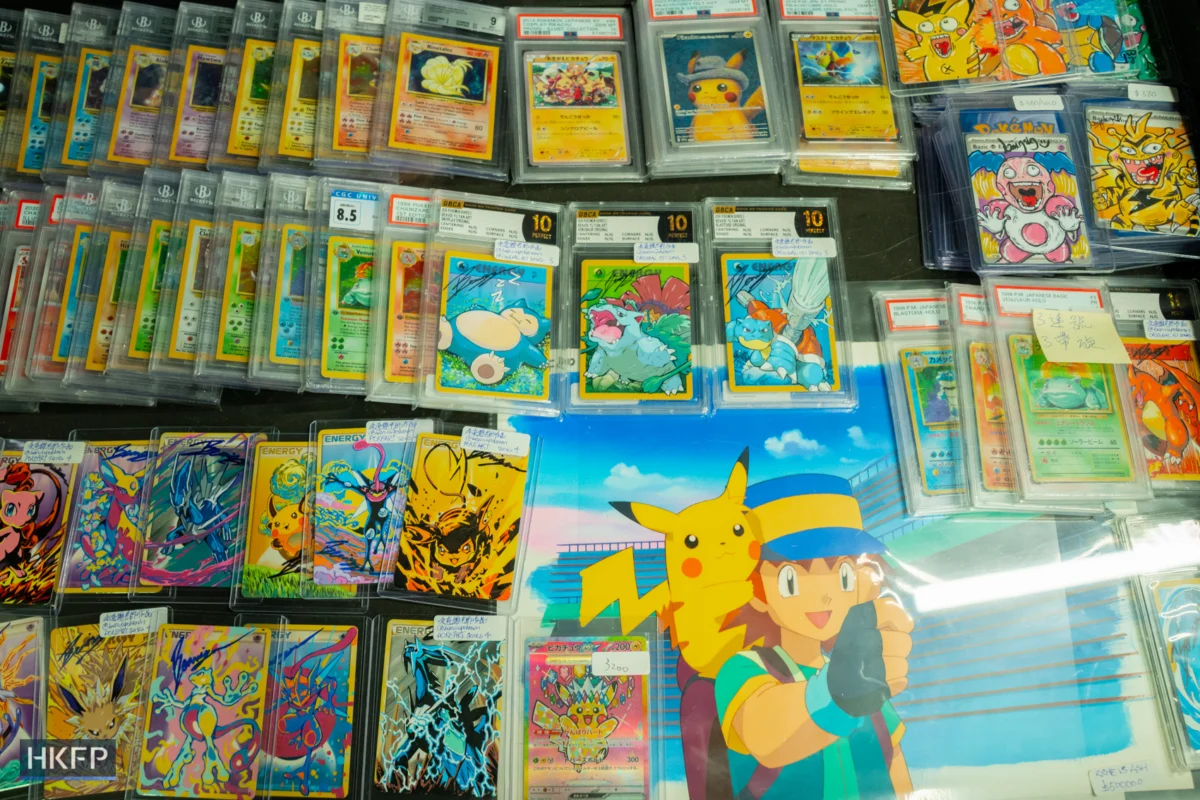
On a sweltering July weekend, the bustling shopping district of Tsim Sha Tsui in Hong Kong became the epicenter of a digital treasure hunt, as thousands of enthusiasts converged to capture a rare Pokémon. This wasn’t a physical quest, but an augmented reality experience within the immensely popular mobile game, Pokémon Go, where the legendary Pokémon Mewtwo materialized exclusively through smartphone screens for a limited two-day event. This gathering highlighted the enduring global appeal of the Pokémon franchise, which, now in its third decade, continues to captivate audiences across various platforms, from video games and anime to the increasingly lucrative trading card market.

The appearance of Mewtwo, a powerful and iconic creature from the franchise’s 1996 origins, in Pokémon Go underscored the game’s ability to create real-world social events. The players drawn to Tsim Sha Tsui represented a diverse cross-section of society, including professionals such as doctors, civil servants, social workers, and risk consultants, alongside dedicated gamers. Among them was Cheng Yip-kai, an 18-year-old university student and the first Hongkonger to win the Pokémon Go World Championship in 2024, known in the game as Yekai0904. His presence underscored the game’s competitive scene and the dedication of its top players.

The Enduring Global Phenomenon of Pokémon

Thirty years after its inception, Pokémon has transcended its origins as a video game to become one of the world’s most successful and recognizable intellectual properties. Its influence spans animated series, blockbuster films, a vast array of video games, and a sprawling merchandise empire encompassing everything from plush toys to fashion apparel. The franchise’s ability to resonate across generations is a testament to its carefully crafted lore and universally appealing characters.

"If you mention Pikachu, an 80-year-old grandmother would know what it is – and so would a child of three or four," commented Pokémon card collector Anthony Cheung to HKFP in Cantonese. "Not every IP [intellectual property] can achieve that." This widespread recognition speaks to the franchise’s remarkable cultural penetration, making characters like Pikachu household names globally.

The Pokémon Card Frenzy: A Collector’s Goldmine

Parallel to the digital fervor surrounding Pokémon Go events, the Pokémon trading card game has experienced an unprecedented surge in popularity and value, transforming into a significant collectible market. Originally launched in 1996, shortly after the release of the first video games, Pocket Monsters Red and Green, for the Game Boy console, these cards offer both a collectible item and a platform for strategic tabletop gameplay.

The market for rare Pokémon cards has reached astonishing valuations, with pristine condition items fetching astronomical sums. In February of the reported year, American influencer Logan Paul reportedly sold his Pikachu Illustrator card, one of the rarest in existence, for an eye-watering US$16.5 million (approximately HK$125 million). This sale shattered previous records and brought widespread attention to the burgeoning Pokémon card investment scene.

Anthony Cheung, who transitioned into Pokémon card collecting after a successful career collecting rare banknotes, noted the dramatic shift in the market. "Cards that had been bought for just 400 Japanese Yen (HK$20.62) in 2018 can now be sold for HK$90,000 – a 4,500-fold increase," he stated, highlighting the unprecedented financial appreciation of these collectibles.

Cheung’s own collecting journey began around 2017, driven initially by nostalgia and a genuine love for the franchise. "I’m sure that back then I was buying [Pokémon cards] out of pure love. It was zero per cent investment," he recalled, reminiscing about his childhood spent watching the animated series and playing the video games. However, the market dynamics began to shift significantly, particularly during the COVID-19 pandemic.

The surge in interest was further amplified by prominent social media figures like Logan Paul. His acquisition of a Pikachu Illustrator card for US$5.3 million (HK$41.6 million) in 2021, and its subsequent resale for over three times that amount in February, cemented the card’s status as a high-value asset. Cheung observed that Pokémon cards seemed to defy conventional market trends. "Across all the categories of items I’ve collected, their prices only rise as supply depletes over time," he explained. "But Pokémon cards have changed my perception… I’ve never seen [something] released so recently become so expensive so fast."

The value of these cards is further enhanced when they are authenticated and graded by reputable grading services, such as the US-based Professional Sports Authenticator (PSA). A notable example is a Psyduck card, designed in the style of Edvard Munch’s "The Scream" and graded PSA 10 (indicating flawless condition), which sold for US$12,611 (HK$98,928) on eBay in the preceding month. These graded cards, originally distributed as free promotional items during a 2018 Munch exhibition at the Tokyo Metropolitan Art Museum, now represent significant investments.

A Diverse Fanbase: From Gamers to Collectors

The appeal of Pokémon cards extends beyond mere investment. Many collectors, like Cheung, share a deep-seated connection to the franchise stemming from their childhood. The continuous creation of new Pokémon species, expanding the roster from the original 151 to over 1,000 today, ensures a perpetual influx of fresh characters and renewed interest. "It never stops – new Pokémon are constantly being created," Cheung added.

This ever-expanding universe of creatures is also a key factor in the franchise’s sustained popularity, according to Kelvin Cheng, a 24-year-old government worker and Pokémon card game player. He was initially drawn to Pokémon in secondary school by the otter-like Oshawott. "Cute, handsome, dragons… [Pokémon] has every type," Cheng explained in Cantonese. "One will always find a Pokémon they like." This broad spectrum of character designs and types ensures that there is a Pokémon to appeal to virtually everyone, fostering a diverse and dedicated fanbase.

The Competitive Spirit: Pokémon Tournaments and Esports

Beyond collecting, the Pokémon franchise thrives on its competitive elements. Kelvin Cheng identifies primarily as a competitive player of the trading card game, having participated in local tournaments in 2022 and 2023. Hong Kong actively hosts Pokémon tournaments as part of an international circuit, with top-performing players earning the opportunity to represent the city at the prestigious World Championships, held annually in August.

The Pokémon trading card game involves two players battling with custom-built 60-card decks, a system that demands strategic thinking and a deep understanding of card synergies. Cheng achieved 11th place in Hong Kong in the current year, securing one of the 16 spots available for Hongkongers at the World Championships held in San Francisco. He ultimately placed 380th out of 1,500 participants globally.

Adrian Tang, a 30-year-old corporate trainer, also qualified for the Pokémon video game competition in San Francisco, marking his second appearance at the world championships, following his participation in 2024 in Hawaii. Tang highlighted that the greatest allure of the Pokémon universe lies in the social bonds it fosters. "This group of people would never have become friends were it not for our shared love for Pokémon," he told HKFP in Cantonese.

Tang’s sentiment was echoed by Cheng Yip-kai, the 2024 world champion. During the July Pokémon Go event in Tsim Sha Tsui, he encountered his former secondary school teacher, who was attending with her two young sons, all engaged in the hunt for Mewtwo. This serendipitous meeting underscored the intergenerational appeal and community-building aspect of the franchise.

Another competitor, Chung, a 39-year-old civil servant and Cheng’s teammate, emphasized that the franchise’s emphasis on human connection is its most significant achievement. "You cannot handle a Mewtwo by yourself – you need 20 players to confront that together," Chung stated in Cantonese, referring to the cooperative nature of certain Pokémon Go events. "In that process, I get to know this or that player and become friends with them. I think this has been [Pokémon’s] biggest success."

The core themes of the Pokémon series – friendship, adventure, and the profound bond between humans and their digital companions – continue to resonate deeply, ensuring its relevance and popularity for decades to come. From the thrill of catching a rare virtual creature in a bustling city to the high-stakes competition of card games and video games, Pokémon’s multifaceted appeal continues to unite a global community of trainers, collectors, and enthusiasts.


 Muslim