 Neng Nana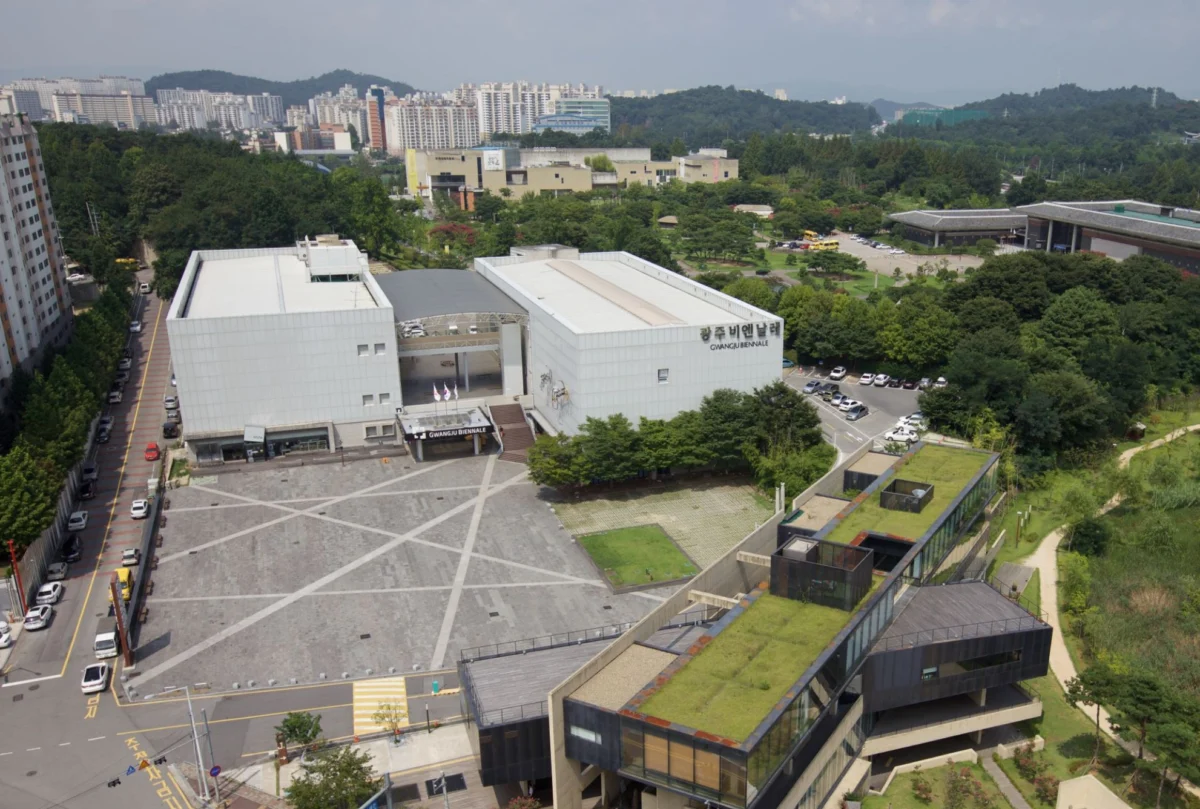
Chinese artists have formally withdrawn from the prestigious Gwangju Biennale, one of Asia’s most significant contemporary art events, following a contentious dispute over the naming of a Taiwanese exhibition. Organizers had initially agreed to allow "Taiwan" in the title of a participating pavilion, a decision that prompted a swift and forceful rebuke from Beijing, underscoring the escalating geopolitical sensitivities surrounding the self-ruled island. The withdrawal, announced Thursday, September [CURRENT YEAR], just two days before the Biennale’s scheduled opening, throws a spotlight on the delicate balance cultural institutions must strike when navigating the complex political landscape of East Asia.
The controversy ignited after the Gwangju Biennale Foundation reversed an earlier decision, restoring the name "Taiwan Pavilion" for an exhibition featuring artists from the island. This move came after intense protest from Taiwanese artists who had accused the Biennale of "political censorship" when the name was initially changed to an acronym, "NTMoFA" (National Taiwan Museum of Fine Arts), in June [CURRENT YEAR]. Beijing, which considers Taiwan an inseparable part of its territory under its "One China" principle, views any official use of "Taiwan" as implying sovereignty, a red line it rigorously enforces globally.
The Genesis of the Dispute: A Shifting Nomenclature

The Gwangju Biennale, renowned for its commitment to artistic expression and its role in fostering international cultural exchange, found itself unexpectedly at the center of a geopolitical firestorm. The event, which brings together artists from around the world across various venues in the southwestern South Korean city, was set to open its latest edition this Saturday.
The initial agreement between the Biennale organizers and the Taiwanese participants stipulated the exhibition would be known as the "Taiwan Pavilion." This designation is common in international art circuits, where nations or regions often present their artists under their respective banners. However, in an unexpected turn in June, the Biennale Foundation unilaterally altered the name to "NTMoFA," the acronym for Taiwan’s National Taiwan Museum of Fine Arts. This change, made without prior consultation or consent from the participating Taiwanese team, sparked immediate outrage.
In a strongly worded joint statement issued last month, the Taiwanese artists decried the alteration as an act of "political censorship" that "brutally erased Taiwan from the poster." They argued that such a move undermined the spirit of artistic freedom and cultural representation, forcing them to participate under a generic institutional name rather than their identity. This protest resonated within the international art community, drawing attention to the subtle yet significant ways political pressures can influence cultural events.
Facing a growing outcry and accusations of caving to external political pressure, the Gwangju Biennale Foundation reconsidered its position. After several rounds of discussions and internal deliberation, the Foundation announced last week that it would reinstate the original designation, "Taiwan Pavilion." This reversal was celebrated by the Taiwanese artists and many observers as a victory for artistic autonomy and cultural integrity. However, it simultaneously set the stage for a counter-reaction from a different quarter.

Beijing’s Unwavering "One China" Stance and the Chinese Withdrawal
Beijing maintains that Taiwan, officially the Republic of China, is a breakaway province that must eventually be reunited with the mainland, by force if necessary. The "One China" principle is a cornerstone of China’s foreign policy, demanding that countries acknowledge Beijing’s claim over Taiwan and refrain from establishing official diplomatic ties or engaging in actions that might suggest Taiwan’s independent statehood. This principle extends to cultural events, where the use of "Taiwan" in an official capacity, rather than "Taiwan, China" or "Chinese Taipei," is often met with severe diplomatic and economic repercussions.
Upon the Gwangju Biennale Foundation’s decision to restore the "Taiwan Pavilion" name, the reaction from mainland China was swift and uncompromising. Chinese artists participating in their own dedicated pavilion at the Biennale immediately halted their preparations. This pause signaled an impending formal protest, which materialized on Thursday when the Chinese delegation officially announced their complete withdrawal from the event.
A spokesperson for the Gwangju Biennale Foundation confirmed the withdrawal to international media, stating, "We have confirmation the Chinese artists are withdrawing from the biennale." While the Foundation expressed regret, it also underscored its commitment to artistic freedom and inclusivity, implicitly defending its decision to restore the Taiwanese exhibition’s original name.

The Chinese Consulate General in Gwangju issued a sharp condemnation of the Biennale Foundation’s action. In a statement, the consulate asserted that the Biennale organizers "openly allowed the Taiwan region of China to participate in the exhibition using a name that is completely inconsistent with its status." The statement reiterated Beijing’s core demand: "This constitutes a serious violation of the One China principle. We once again urge the organisers of the Gwangju Biennale to immediately rectify their wrongdoing." The consulate’s language leaves no room for ambiguity, highlighting the perceived breach of a fundamental diplomatic understanding.
South Korea’s Diplomatic Tightrope Walk
The unfolding controversy placed South Korea in a precarious diplomatic position. As a sovereign nation, South Korea officially adheres to the "One China" policy, recognizing the People’s Republic of China and not maintaining diplomatic relations with Taiwan. However, it also values democratic principles, including freedom of expression and cultural exchange.
South Korea’s foreign ministry quickly moved to de-escalate the situation, issuing a statement aimed at assuaging Beijing while affirming its broader diplomatic stance. The ministry clarified that "the government’s basic position regarding Taiwan remains unchanged." It further emphasized that the decision to restore the "Taiwan Pavilion" name was made "in the cultural and artistic sphere" and "is unrelated to the South Korean government’s position regarding Taiwan."

This nuanced diplomatic response attempts to compartmentalize the issue, separating cultural event decisions from official government policy. The ministry expressed hope that "this issue will not affect South Korea-China relations or exchanges and cooperation between the two countries." This statement underscores Seoul’s desire to avoid broader diplomatic fallout, particularly given its significant economic ties with China, which is one of its largest trading partners. South Korea’s economy is deeply intertwined with China’s, making any perceived challenge to Beijing’s core interests a matter of serious concern for Seoul.
Broader Implications: Artistic Freedom vs. Geopolitical Realities
The Gwangju Biennale incident is far from an isolated event. It is part of a growing pattern where cultural, sporting, and academic institutions worldwide find themselves caught between China’s assertive foreign policy and the demands for artistic or academic freedom. Beijing has consistently used its economic and diplomatic leverage to enforce its "One China" principle, leading to instances where international organizations, airlines, hotel chains, and even entertainment companies have altered their official designations for Taiwan under pressure.
For the international art world, this incident raises critical questions about the limits of artistic freedom in a politically charged global environment. The Gwangju Biennale, founded in 1995 in commemoration of the Gwangju Democratization Movement, has historically positioned itself as a platform for challenging conventional norms and fostering dialogue. Its mission emphasizes freedom of expression and human rights. The decision to reinstate the "Taiwan Pavilion" name, despite the clear risk of upsetting Beijing, can be interpreted by some as an assertion of these founding principles, prioritizing artistic autonomy over political expediency.

However, the withdrawal of Chinese artists also highlights the tangible costs associated with such decisions. Cultural exchange, which is often seen as a bridge between nations, can become a casualty in these geopolitical disputes. The absence of Chinese artists from the Biennale means a loss of diverse artistic perspectives and an opportunity for cross-cultural dialogue. It also sends a chilling message to other international cultural events, forcing them to weigh the potential for diplomatic repercussions against their commitments to inclusive representation.
The Future of Cultural Diplomacy in a Divided World
The Gwangju Biennale saga underscores the increasing difficulty of separating culture from politics in an interconnected yet ideologically fragmented world. Taiwan, a vibrant democracy of over 23 million people, operates as a de facto independent state with its own elected government, military, and currency. Despite this, only a handful of countries officially recognize it due to Beijing’s relentless diplomatic pressure. Its participation in international bodies, from the World Health Organization to global art biennials, is frequently constrained or dictated by the "One China" framework.
This incident is likely to prompt further reflection among cultural organizers globally. Do they accede to powerful geopolitical demands to ensure broad participation, or do they stand firm on principles of freedom and self-determination, potentially at the cost of losing significant participants or funding? The answer is rarely straightforward, particularly for institutions that rely on international cooperation and diverse funding sources.

As the Gwangju Biennale opens its doors this Saturday, the absence of the Chinese pavilion will serve as a stark reminder of the ongoing geopolitical fault lines. While the Taiwanese artists may feel a sense of vindication, the broader art community and host nation will contend with the shadow cast by this diplomatic skirmish. The incident highlights that even in the realm of art, where creativity is meant to transcend boundaries, the immutable realities of international politics continue to shape narratives and interactions, forcing a re-evaluation of how global cultural events can navigate an increasingly complex and polarized world. The delicate dance between artistic integrity, national sovereignty, and powerful diplomatic pressure is set to continue, with cultural institutions frequently finding themselves unwilling participants on the global stage.

 Laily UPN
 Azzam Bilal Chamdy