 Nila Kartika Wati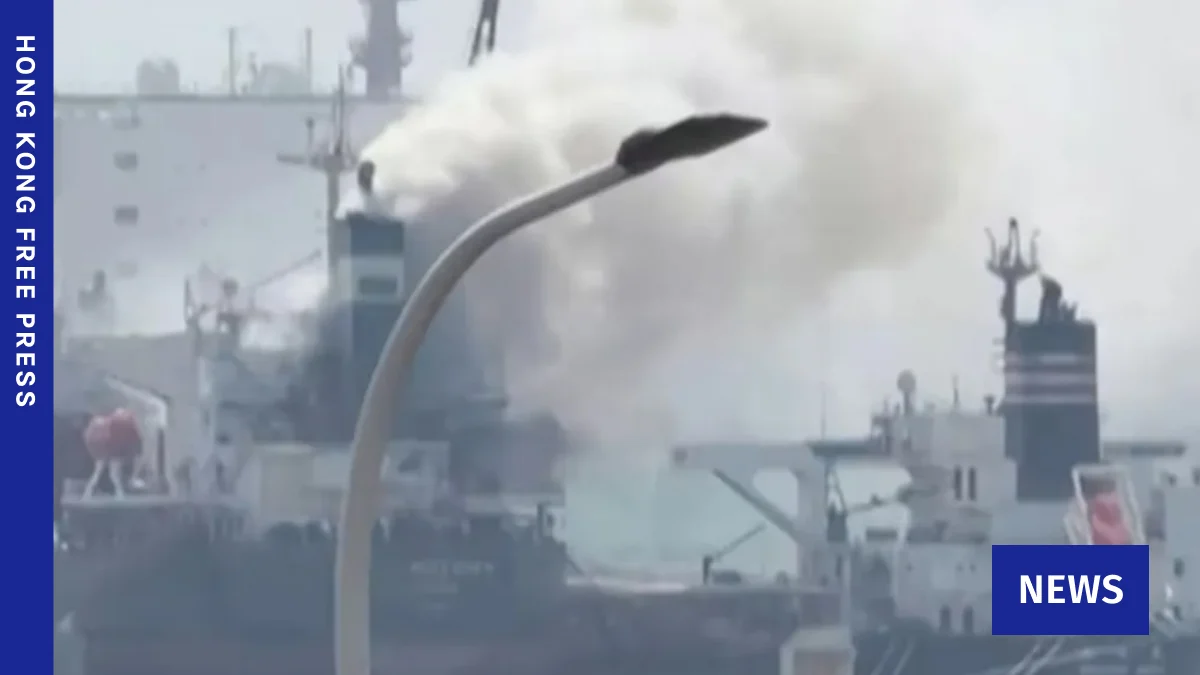
The death toll from a devastating fire that erupted on Thursday aboard a foreign-flagged cargo ship docked in China’s eastern port of Qingdao has tragically risen to 25, state media confirmed, including five individuals previously listed as missing. The incident, which unfolded on the M/V Ocean Melody, a Liberian-flagged bulk carrier undergoing maintenance, has prompted a swift and stern response from Chinese authorities, including a directive from President Xi Jinping to thoroughly investigate and hold those responsible accountable.
The inferno, which began around 11:15 am local time (0315 GMT), quickly engulfed sections of the 190-meter (623-foot) vessel, sending plumes of thick smoke into the sky above the bustling port. The ship, which had 42 crew members and workers on board at the time, became the scene of a frantic rescue operation as emergency services converged on the dock. Initial reports indicated that 17 people were successfully evacuated, five of whom sustained injuries and required medical attention. However, the fate of the remaining 25 individuals remained uncertain for hours, fueling a desperate search that tragically concluded with the discovery of all missing persons, none showing signs of life. By approximately 2:30 pm (0630 GMT), the open flames had been brought under control and extinguished, allowing rescue teams to conduct a full search of the vessel.
Chronology of a Catastrophe

The tragic events began to unfold on a seemingly ordinary Thursday morning in one of China’s most vital maritime hubs. At approximately 11:15 am, a fire was reported on board the M/V Ocean Melody. The vessel, identified by state news agency Xinhua and vessel-tracking websites like MarineTraffic, was moored at the Qingdao Beihai Shipbuilding yard, a subsidiary of the China State Shipbuilding Corporation (CSSC), for scheduled maintenance. The exact cause of the fire has not yet been specified, but fires during ship maintenance, often involving "hot work" like welding or cutting, are a known hazard in shipyards due to the presence of flammable materials, oils, and confined spaces.
Eyewitnesses from nearby residential compounds described seeing heavy, dark smoke billowing from the ship, though no immediate explosion was reported. "I saw the smoke from the ship by chance, but there was no visible fire," one resident told AFP, adding, "I didn’t hear an explosion or smell anything." This suggests the fire may have originated internally before becoming visible.
Upon receiving the distress call, a massive emergency response was launched. Multiple fire trucks, ambulances, and specialized rescue units from the Qingdao municipal fire department, port authorities, and maritime safety agencies rushed to the scene. Videos shared by Xinhua depicted a chaotic but organized scene, with dozens of rescuers, identifiable by their uniforms and equipment, swarming the decks of the Ocean Melody and entering its smoke-filled compartments. Medical teams were on standby at the dockside, ready to provide immediate assistance to the injured and evacuated.
Throughout the afternoon, rescue efforts intensified, focusing on locating the 25 individuals who were unaccounted for. The confined and hazardous environment within the burning ship, compounded by toxic fumes and potential structural damage, made the search exceedingly difficult and dangerous for the first responders. The grim confirmation came later in the evening: "all 25 missing persons had been found, none showing signs of life," according to state broadcaster CCTV, turning a rescue mission into a recovery operation and escalating the incident into one of the deadliest maritime industrial accidents in recent Chinese history.

The M/V Ocean Melody: A Global Link
The vessel at the heart of the tragedy, the Ocean Melody, is a bulk carrier. These ships are the workhorses of global trade, designed to transport unpackaged bulk cargo such as grain, coal, iron ore, and cement across vast distances. Measuring 190 meters (approximately 623 feet) in length, it represents a standard size for vessels operating in major international shipping lanes. Its Liberian flag signifies that it is registered under the Liberian maritime authority, a common practice known as "flag of convenience." This allows shipowners to register their vessels in countries other than their own, often for reasons such as lower taxes, less stringent regulations, or easier access to international crewing. While perfectly legal and common in the shipping industry, it sometimes raises questions about the oversight and enforcement of safety standards, though Liberia is a signatory to major international maritime conventions. The fact that the ship was in Qingdao for maintenance suggests it was undergoing routine checks or repairs, a critical period for vessel safety.
Qingdao: A Strategic Maritime Gateway
Qingdao, located in China’s eastern Shandong province, is far more than just the "hometown and namesake of Tsingtao beer." It stands as one of China’s most important international maritime hubs, a vital artery in global trade networks. The port boasts deep-water facilities capable of handling some of the world’s largest container ships and bulk carriers. According to official data, Qingdao Port is connected to over 700 ports in more than 180 countries and regions, making it a pivotal gateway for exports and imports for China’s vast industrial and agricultural sectors.

In 2023, Qingdao Port reported a cargo throughput exceeding 700 million tons and a container throughput of over 30 million TEUs (Twenty-foot Equivalent Units), solidifying its position among the world’s top ten busiest ports. This immense volume of traffic underscores the critical importance of safety protocols within its shipyards and docking facilities. The Qingdao Beihai Shipbuilding yard, where the Ocean Melody was docked, is a significant player in China’s shipbuilding and repair industry, contributing to the country’s global leadership in maritime manufacturing. The incident casts a spotlight on safety practices within this crucial sector, particularly given the high-risk nature of ship repair operations.
Official Response and the Call for Accountability
The scale of the human loss and the nature of the incident quickly drew attention from the highest levels of Chinese leadership. President Xi Jinping, upon being briefed on the tragedy, "stressed the need to… strictly hold those responsible to account," Xinhua reported. This stern directive signals that the investigation into the fire will be thorough and is likely to result in severe penalties for any identified negligence.
President Xi further emphasized that "all regions and relevant departments must draw profound lessons from this incident, thoroughly investigate and rectify all types of fire hazards." This statement underscores a broader national concern for industrial safety and suggests that the Qingdao incident could trigger a nationwide review of safety protocols, not just in maritime and shipbuilding sectors, but across various industries. Such directives from the top typically lead to intensified inspections, stricter enforcement, and potentially new regulations aimed at preventing similar disasters.

The investigation into the Ocean Melody fire will likely involve multiple agencies, including the China Maritime Safety Administration (MSA), local fire departments, and potentially the Ministry of Transport. Their probe will seek to determine the precise origin and cause of the fire, assess the effectiveness of the ship’s fire suppression systems, evaluate the shipyard’s safety management practices, and examine the emergency response procedures. Factors such as the presence of flammable materials, hot work permits, ventilation systems, crew training, and adherence to international maritime safety conventions (like SOLAS – Safety of Life at Sea) will be meticulously scrutinized.
Broader Implications: China’s Industrial Safety Record
The tragic fire on the Ocean Melody is not an isolated incident but rather fits into a broader pattern of industrial accidents that continue to plague China, a nation that has experienced rapid industrialization. While significant strides have been made in improving safety standards over the years, challenges persist, and safety regulations are, at times, perceived as lax or inconsistently enforced, particularly at the local level or within certain industries.
In the past year alone, China has witnessed several major industrial mishaps:

- August: An explosion and subsequent fire at a shipyard in eastern Fujian province resulted in the death of one fire and rescue worker and injured 12 others. This incident, occurring just months prior to the Qingdao tragedy, highlights the inherent dangers of shipyard operations.
- May: A devastating blast at a fireworks factory in central China killed 37 people, marking one of the nation’s deadliest industrial accidents in recent memory and drawing attention to the hazardous nature of explosives manufacturing.
- July: A fire in a shoe factory, also in Fujian province, claimed the lives of at least 28 people, underscoring the risks associated with manufacturing facilities, often characterized by crowded conditions and combustible materials.
Beyond these specific incidents, China has periodically launched nationwide campaigns to address fire hazards. For instance, a campaign against fire hazards in high-rise buildings was initiated in November, following a huge blaze in Hong Kong. While the specific incident mentioned in the original report with a death toll of 168 in Hong Kong might be a misattribution or refer to a historical event, the fact that a national campaign was prompted by a significant fire highlights the government’s concern over such risks in densely populated urban environments.
The maritime industry, in particular, carries inherent risks due to the complex machinery, flammable fuels, and hazardous materials involved. International maritime organizations and conventions, such as the International Maritime Organization (IMO) and the International Convention for the Safety of Life at Sea (SOLAS), provide a framework for global maritime safety. China, as a leading maritime power, is a signatory to these conventions and is expected to adhere to their stringent requirements. However, the consistent recurrence of major accidents raises questions about the effectiveness of enforcement and oversight at operational levels.
Economic and Reputational Ripple Effects
The loss of 25 lives in the Qingdao port fire is an immeasurable human tragedy, but the incident also carries significant economic and reputational implications. For the families of the deceased and injured, the personal cost is devastating. Economically, the damage to the M/V Ocean Melody, a vital asset in global trade, will result in substantial financial losses, including repair costs, potential write-offs, and prolonged disruption to its operational schedule. Insurance claims will undoubtedly be massive, impacting the marine insurance market.

For Qingdao Port and the Qingdao Beihai Shipbuilding yard, the incident could lead to temporary operational disruptions, increased scrutiny from regulatory bodies, and potentially a downturn in future business if confidence in their safety standards is shaken. On a national level, President Xi’s direct intervention suggests that the Chinese government recognizes the potential damage to its reputation as a global manufacturing and shipping powerhouse. Maintaining a robust safety record is crucial for attracting foreign investment and ensuring the smooth flow of international trade through its ports.
The tragedy serves as a stark reminder of the continuous need for vigilance, stringent safety protocols, and effective enforcement across all industrial sectors, especially in high-risk environments like shipyards. As the investigation progresses, the global maritime community will be watching closely for lessons learned and concrete actions taken to prevent such a catastrophic loss of life from recurring. The call for "profound lessons" to be drawn from this incident underscores the gravity of the situation and the imperative for comprehensive reforms to safeguard human lives and uphold industrial safety standards.


 Pevita Pearce
 Jia Lissa