 Nana Wu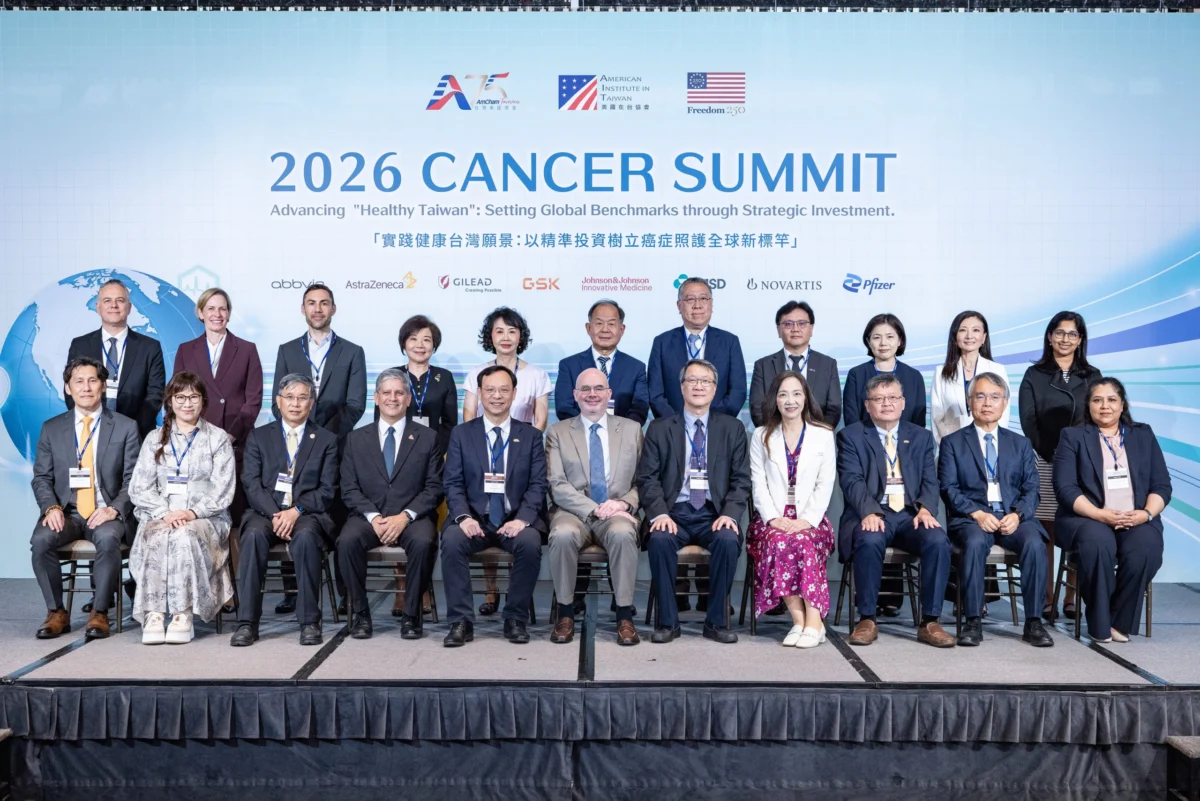
The American Chamber of Commerce in Taiwan (AmCham Taiwan) and the American Institute in Taiwan (AIT) successfully convened the 2026 AmCham Taiwan Cancer Summit on July 28 at the Regent Taipei, marking a significant milestone in the ongoing bilateral efforts to revolutionize oncology care. Under the formal theme, "Advancing ‘Healthy Taiwan’: Setting Global Benchmarks through Strategic Investment," the summit served as a high-level assembly for policymakers, healthcare providers, industry innovators, and patient advocacy groups. The primary objective of the gathering was to delineate a roadmap for optimizing resource allocation, specifically regarding Taiwan’s Cancer Drugs Fund (CDF), while ensuring that the nation’s healthcare infrastructure remains aligned with evolving international standards.
The 2026 summit arrives at a critical juncture for Taiwan’s healthcare system. As the island nation faces an aging population and an increasing incidence of complex cancer cases, the government has pivoted toward a more aggressive and well-funded strategy to maintain its position as a regional leader in medical excellence. Central to the day’s discussions was President Lai Ching-te’s "Healthy Taiwan" vision, an ambitious policy framework that aims to reduce Taiwan’s standardized cancer mortality rate by one-third by the year 2030.
In his opening remarks, AmCham Taiwan President Carl Wegner emphasized that the fight against cancer is a multifaceted challenge that transcends the boundaries of clinical medicine. He noted that addressing the disease requires a synergy of scientific breakthroughs, sustainable financial investment, and robust cross-sector collaboration. Wegner highlighted that the role of public-private partnerships is more vital than ever, particularly in translating laboratory innovations into tangible clinical outcomes that improve the quality of life for patients. By fostering a resilient and future-ready healthcare system, Wegner argued, Taiwan can continue to serve as a global model for integrated cancer care.
Strategic Investment and the Evolution of the Cancer Drugs Fund
A focal point of the summit was the Grand Keynote Dialogue featuring Minister of Health and Welfare Shih Chung-liang. The Minister provided an in-depth look at the government’s comprehensive strategy to transform national health outcomes through the newly established Healthy Taiwan Promotion Committee. This committee is tasked with overseeing the integration of preventive care, advanced diagnostics, and innovative therapeutics into a cohesive national strategy.
Minister Shih revealed significant budgetary expansions aimed at early detection and treatment. He confirmed that the government has more than doubled the cancer screening budget, increasing it from NT$2.8 billion to NT$6.8 billion. This surge in funding is intended to broaden the reach of screening programs for common cancers, such as lung, colorectal, and breast cancer, ensuring that more cases are identified at treatable stages.
Furthermore, the establishment of the Cancer Drugs Fund in 2025 represents a landmark shift in how Taiwan manages the introduction of high-cost, innovative therapies. The CDF was designed to bridge the gap between the approval of new drugs and their inclusion in the National Health Insurance (NHI) reimbursement list. "Cancer prevention and control cannot be sustained without stable, long-term funding," Minister Shih stated. He explained that the CDF is instrumental in helping drug reimbursement keep pace with international treatment guidelines, thereby reducing the "waiting time" for patients to access life-saving medications.
The Minister also addressed the necessity of digital transformation within the healthcare sector. By digitizing the prior authorization process and other administrative workflows, the Ministry of Health and Welfare (MOHW) aims to reduce the bureaucratic burden on healthcare providers. This digital shift also allows for more sophisticated data collection, which is used for real-term follow-up evaluations. Such data-driven insights ensure that the national budget is utilized effectively, with resources directed toward treatments that demonstrate the highest clinical efficacy.
Aligning with International Clinical Standards
The summit featured two major panel discussions that brought together a diverse array of experts to tackle the systemic challenges of oncology. The first panel focused on the "Strategic Investment and Long-term Sustainability of the CDF." Panelists, including economists and pharmaceutical industry leaders, explored the delicate balance between funding innovation and maintaining the fiscal health of the National Health Insurance system. They argued that while the initial cost of innovative therapies can be high, the long-term economic benefits—including reduced hospitalization and a faster return to the workforce for patients—justify the investment.
The second panel discussion shifted the focus toward clinical alignment with international standards of care. Medical experts from various specialties shared the latest developments in treating breast cancer, gynecologic cancers, and hematologic malignancies. A recurring theme was the necessity for Taiwan to further align its clinical protocols with the National Comprehensive Cancer Network (NCCN) guidelines, which are recognized globally as the gold standard for oncology.
Experts noted that while Taiwan’s medical technology is world-class, there is still room for improvement in the "comprehensive care pathway." This involves not only the administration of drugs but also the integration of early diagnosis, precision surgery, radiation therapy, and long-term survivorship care. By strengthening these pathways, Taiwan can ensure that patients receive a holistic treatment experience that mirrors the best practices found in the United States and Europe.

The Chronology of U.S.-Taiwan Healthcare Collaboration
The 2026 Cancer Summit is the latest iteration of a partnership that began in 2021. Initially launched as a series of healthcare innovation forums, the collaboration between AmCham Taiwan and the American Institute in Taiwan has evolved into a specialized platform for oncology. Since 2023, under the stewardship of AmCham’s Pharmaceutical Committee, the summit has narrowed its focus to cancer care, reflecting the shared public health priorities of both nations.
This collaboration is deeply rooted in the spirit of the "Cancer Moonshot" initiative, a U.S.-led effort aimed at accelerating the rate of progress in cancer research and treatment. As cancer remains the leading cause of death in Taiwan and a top health priority in the U.S., both regions have recognized the mutual benefits of exchanging policy perspectives and technical expertise.
Over the past four years, the summit has moved from general discussions about healthcare policy to specific, actionable recommendations. These include the streamlining of clinical trial approvals, the promotion of precision medicine through genomic testing, and the development of value-based healthcare models. The 2026 summit represents the maturation of this dialogue, focusing on the practicalities of funding and the implementation of national-level health goals.
Data and Implications: Reducing Mortality by 2030
The ambitious goal of reducing cancer mortality by one-third by 2030 is supported by a rigorous data-driven approach. Minister Shih noted that the government is currently reviewing the mortality burden and treatment gaps across different cancer types. This allows for a "prioritization matrix," where resources are funneled into areas with the highest unmet needs. For example, cancers with high mortality rates but low early-detection rates will receive a larger share of the increased screening budget.
The implications of these policies are significant for the pharmaceutical and biotechnology sectors. A more predictable and well-funded reimbursement environment, via the CDF, makes Taiwan an attractive destination for global pharmaceutical companies to launch their newest products. It also encourages local biotech firms to engage in more robust R&D, knowing that there is a clear pathway for innovative treatments to reach the market.
From a patient advocacy perspective, the summit’s focus on "connected cancer care" is a welcome development. For many years, patient groups have advocated for faster access to the latest global treatments. The government’s commitment to aligning with NCCN guidelines and expanding the CDF directly addresses these concerns, promising a future where a patient’s geographic location does not dictate their access to the best possible care.
Future Outlook and Broader Impact
As the summit concluded, AmCham Taiwan reaffirmed its commitment to maintaining a continuous policy dialogue with the Taiwanese government. The chamber serves as a vital bridge between international industry stakeholders and local policymakers, ensuring that Taiwan’s healthcare environment remains competitive and innovative.
The broader impact of the 2026 Cancer Summit extends beyond the immediate goal of cancer treatment. It reinforces the importance of the U.S.-Taiwan relationship in the realm of "soft power" and humanitarian cooperation. By working together to solve one of the most pressing health challenges of the 21st century, both sides are strengthening a partnership based on shared values and mutual scientific progress.
The move toward a "Healthy Taiwan" is not merely a domestic policy but a strategic positioning of the nation as a global hub for medical innovation. As the government continues to implement the strategies discussed at the summit—including the digital transformation of healthcare and the expansion of the Cancer Drugs Fund—Taiwan is well-positioned to set new global benchmarks for what a modern, connected, and patient-centric cancer care ecosystem should look like.
In the coming years, the success of these initiatives will be measured by the decline in standardized mortality rates and the increase in the five-year survival rates for various cancer types. With the continued support of organizations like AmCham and AIT, and the clear vision of the Ministry of Health and Welfare, the goal of a one-third reduction in cancer mortality by 2030 appears increasingly attainable, marking a new chapter in Taiwan’s public health history.


 Asro
Asro
 Lina Hope