Layla Zulfa
The substantial investment was spearheaded by IDG Capital, a prominent venture capital firm with a long history of backing transformative technology companies. Joining IDG Capital in this pivotal funding round were a diverse group of strategic and financial investors, including Yunqi Capital, the ride-hailing and technology giant DiDi, Fosun RZ Capital, Glory Ventures, and Hesai Technology. This collective backing, secured within months of the company’s establishment earlier this year, positions PHYMI at the forefront of developing "Physical Agents"—intelligent systems designed to comprehend objectives, navigate and manipulate objects, and autonomously execute complex tasks within unstructured, real-world environments. The capital infusion is earmarked for critical investments in core technology research and development, the establishment of robust real-world data infrastructure, accelerated product engineering efforts, and a significant expansion of its highly specialized technical team.
The Genesis of PHYMI and the Vision of Embodied AI
Founded by Liu Nianqiu, whose extensive experience includes a leadership role at autonomous driving pioneer DeepRoute.ai, PHYMI emerges from a rich background in real-world robotics and AI deployment. Liu Nianqiu’s tenure at DeepRoute.ai provided invaluable insights into the complexities of developing AI systems that interact with dynamic physical spaces, perceive their surroundings accurately, and make real-time decisions under varying conditions. This experience is directly transferable to PHYMI’s mission, where the challenge shifts from autonomous vehicles to general-purpose intelligent agents capable of performing a wide array of physical tasks.
Embodied AI represents the next frontier in artificial intelligence, moving beyond purely digital or virtual intelligence to systems that possess a physical form and can interact with the tangible world. While large language models (LLMs) and advanced computer vision have demonstrated remarkable capabilities in understanding and generating information, their interaction with the physical realm remains largely indirect. Embodied AI aims to bridge this gap, integrating perception, cognition, and action into cohesive physical systems. These "Physical Agents" are envisioned as general-purpose robots or robotic systems empowered with advanced AI to perceive their environment, understand human commands or inferred goals, plan complex actions, and execute them with precision and adaptability. The ambition is to create machines that can learn from experience, adapt to novel situations, and operate safely and effectively alongside humans in diverse settings, from factories and logistics hubs to homes and public spaces.
A Seed Round of Unprecedented Scale: Investor Rationale
The nearly US$100 million seed funding round for PHYMI stands out not only for its magnitude but also for the caliber and strategic diversity of its investors. A seed round of this size is indicative of several factors: the perceived immense market potential of embodied AI, the capital-intensive nature of hardware and advanced AI research, and the strong confidence investors place in Liu Nianqiu’s leadership and technical vision.
IDG Capital, a global investment powerhouse, is known for identifying and nurturing disruptive technologies. Their lead investment in PHYMI underscores a belief that embodied AI is poised for a significant breakthrough, mirroring past investments in sectors like internet, mobile, and enterprise technology that have fundamentally reshaped industries. For IDG Capital, PHYMI likely represents a potential market leader in a domain expected to grow exponentially, driven by advancements in robotics, AI algorithms, and sensor technology.
Yunqi Capital typically focuses on early-stage investments in deep tech and enterprise services, often seeking companies with strong intellectual property and the potential for significant societal impact. Their participation suggests an alignment with PHYMI’s long-term vision of creating versatile physical agents that can address critical labor shortages, enhance productivity, and automate dangerous tasks across various industries.
The involvement of DiDi, one of the world’s largest ride-hailing and technology platforms, provides a strong strategic signal. While DiDi’s core business revolves around transportation, its investment in PHYMI reflects a broader interest in future mobility solutions, logistics automation, and the potential for intelligent agents to revolutionize service industries. DiDi could envision applications ranging from automated last-mile delivery and smart warehousing to advanced vehicle maintenance and potentially even future iterations of autonomous driving that involve more complex physical interaction.
Fosun RZ Capital, the venture capital arm of the Fosun Group, often invests in technology companies with global ambitions and the potential for ecosystem integration. Their backing suggests a view of PHYMI’s technology as having broad applicability across multiple sectors, including manufacturing, healthcare, and retail, where Fosun has significant interests.
Glory Ventures is another venture capital firm that often seeks out innovative companies with strong technological foundations. Their participation reinforces the idea that PHYMI’s approach to embodied AI is seen as robust and promising, capable of overcoming existing technical hurdles.
Perhaps one of the most intriguing strategic investors is Hesai Technology, a leading global developer of lidar solutions. Lidar (Light Detection and Ranging) is a crucial sensor technology for autonomous systems, providing high-resolution 3D environmental perception. Hesai’s investment in PHYMI highlights a clear synergy: as embodied AI systems become more sophisticated, their reliance on advanced perception hardware like lidar will only increase. This partnership could facilitate the co-development of optimized sensor solutions specifically tailored for PHYMI’s "Physical Agents," ensuring superior environmental understanding and operational safety. It also signifies Hesai’s strategic move to integrate deeper into the AI software ecosystem, positioning its hardware as an indispensable component for the next generation of intelligent robots.
Defining "Physical Agents": Core Capabilities and Applications
PHYMI’s core mission revolves around developing "Physical Agents" that embody three fundamental capabilities: understanding goals, moving and manipulating objects, and completing tasks in open, dynamic environments.
Understanding Goals: This capability goes beyond simple command execution. It involves sophisticated AI that can interpret high-level human instructions, infer intent from context, and even learn preferences over time. For instance, instead of being programmed for every specific action, a "Physical Agent" might be told to "prepare dinner" or "organize the warehouse," requiring it to break down complex goals into a series of smaller, actionable steps, drawing upon a vast knowledge base and learned experiences. This necessitates advancements in natural language processing, cognitive reasoning, and predictive modeling within the AI architecture.
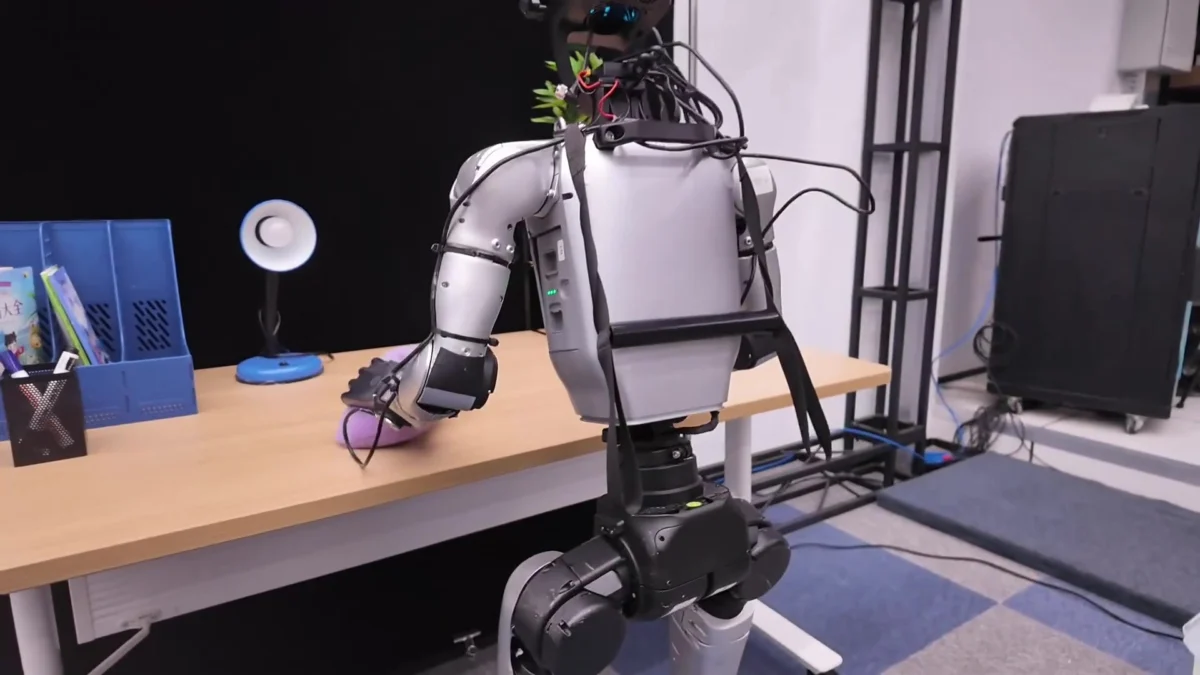
Moving and Manipulating Objects: This is the realm of advanced robotics and dexterous manipulation. It involves precision locomotion (navigating complex terrains, avoiding obstacles), fine motor control for grasping and handling a diverse range of objects (from delicate items to heavy tools), and adapting to variations in object size, shape, and material. This requires breakthroughs in robotic hardware design, control algorithms, and tactile sensing, allowing agents to perform tasks that currently demand human-level dexterity and adaptability, such as assembling intricate components, picking items in a disorganized warehouse, or assisting in surgical procedures.
Completing Tasks in Open, Dynamic Environments: Unlike controlled factory settings, "open, dynamic environments" are unpredictable. They involve changing lighting conditions, moving obstacles (including humans), varying surface textures, and unexpected events. A "Physical Agent" must be robust enough to operate effectively in these real-world scenarios, exhibiting resilience, adaptability, and real-time decision-making capabilities. This is where advanced perception (vision, lidar, radar, auditory), simultaneous localization and mapping (SLAM), and sophisticated planning algorithms are crucial for safe and efficient operation.
The potential applications for such "Physical Agents" are vast and transformative. In manufacturing, they could perform complex assembly tasks, quality control, and material handling with greater efficiency and consistency. In logistics and warehousing, they could automate order fulfillment, inventory management, and loading/unloading operations, revolutionizing supply chains. In healthcare, they could assist with patient care, perform sterile tasks, deliver medications, or even aid in surgical procedures. For domestic use, they could help with chores, elder care, and home maintenance. Furthermore, in hazardous environments like disaster zones or space exploration, these agents could perform critical tasks too dangerous for humans.
Strategic Use of Funds: Fueling the Next AI Revolution
PHYMI’s planned allocation of its nearly US$100 million in seed funding reflects a clear understanding of the monumental challenges and requirements inherent in developing truly capable embodied AI.
Core Technology Research: This is the bedrock of PHYMI’s mission. The funds will be invested in pushing the boundaries of AI research, focusing on areas such as general-purpose foundation models for robotics, advanced reinforcement learning algorithms for skill acquisition, multi-modal AI that integrates visual, auditory, and tactile information, and robust control systems that enable precise physical interaction. This research will also delve into human-robot interaction, ensuring that "Physical Agents" can collaborate intuitively and safely with human counterparts. The goal is to develop AI brains that can learn continuously and generalize knowledge across a wide range of tasks and environments.
Real-World Data Infrastructure: High-quality, diverse, and vast datasets are the lifeblood of modern AI. For embodied AI, this data must capture the complexities of physical interaction, including successful task executions, failures, environmental variations, and human demonstrations. PHYMI plans to invest heavily in building infrastructure for collecting, annotating, and managing this crucial real-world data. This could involve developing specialized robotic platforms for data collection, leveraging advanced simulation environments to generate synthetic data, and potentially establishing partnerships for access to real-world operational environments. The ability to efficiently collect and process this data will be a significant competitive advantage.
Product Engineering: Translating cutting-edge research into deployable, reliable products requires a strong engineering focus. The funding will support the development of robust prototypes, the refinement of hardware-software integration, and the design of user-friendly interfaces. This includes rigorous testing and validation processes to ensure that "Physical Agents" can perform consistently and safely in target applications. The goal is not just to create intelligent algorithms but to build complete, functional robotic systems ready for real-world deployment.
Team Expansion: To execute on its ambitious vision, PHYMI will need to attract top-tier talent from around the globe. The funding will enable the company to recruit leading AI researchers, robotics engineers, software developers, hardware specialists, data scientists, and product managers. Building a diverse and highly skilled team capable of tackling the interdisciplinary challenges of embodied AI is paramount to the company’s success. This expansion will likely involve setting up specialized labs and fostering a collaborative research and development environment.
Broader Implications and the Competitive Landscape
PHYMI’s emergence and significant funding highlight a global race in embodied AI and robotics. Major players like Google DeepMind, OpenAI (with its investment in Figure AI), Tesla Bot, Boston Dynamics, and numerous startups are all vying to create the next generation of intelligent physical agents. China, in particular, has made strategic investments in AI and robotics, recognizing their importance for economic growth and technological leadership. PHYMI, with its strong backing and experienced founder, is poised to become a significant contender in this highly competitive arena.
The successful development and widespread adoption of "Physical Agents" could have profound societal implications. Economically, they promise increased productivity, reduced operational costs, and the ability to perform tasks in environments unsafe or undesirable for humans. However, this also raises questions about the future of work, potential job displacement, and the need for new skills and training programs. Ethically, the deployment of autonomous physical agents necessitates careful consideration of safety, accountability, privacy, and the potential for misuse. Regulatory frameworks will need to evolve to keep pace with these technological advancements.
Liu Nianqiu and the PHYMI team face a monumental but exhilarating challenge. The journey from initial research to widespread commercial deployment of general-purpose "Physical Agents" will be long and arduous, requiring continuous innovation, substantial investment, and a relentless focus on solving complex engineering and ethical problems. However, with nearly US$100 million in seed funding and a clear vision, PHYMI is exceptionally well-positioned to contribute significantly to shaping the future of artificial intelligence and robotics, potentially ushering in an era where intelligent machines seamlessly integrate into our physical world.

 Nana Muazin
 Evan Lee Salim