Raul Delapena Setiawan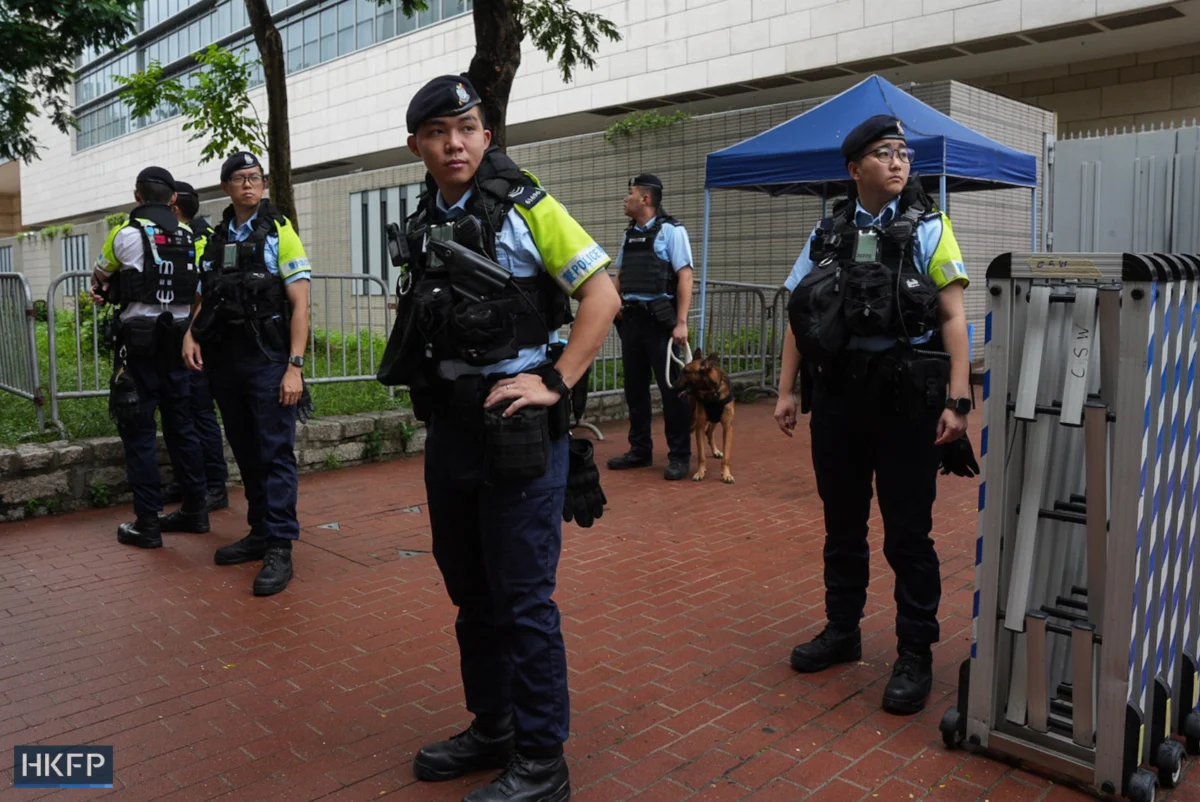
Three prominent Hong Kong activists, formerly leading figures of the now-disbanded Hong Kong Alliance in Support of Patriotic Democratic Movements of China, are set to receive their sentences this Friday. Chow Hang-tung, Lee Cheuk-yan, and Albert Ho have been convicted under the stringent national security law, a legislation enacted by Beijing in 2020 to quell dissent in the city. Each faces a maximum penalty of 10 years imprisonment, a severe consequence that underscores the shrinking space for political expression and remembrance in Hong Kong.
The sentencing will take place at the West Kowloon Law Courts Building, as confirmed by the Judiciary’s court schedule. The trio were key organizers of the annual candlelight vigils held in Victoria Park to commemorate the 1989 Tiananmen Square crackdown, a tradition that drew tens of thousands of participants for decades until it was banned in 2020 and 2021, ostensibly due to public health concerns surrounding the COVID-19 pandemic.

A Crackdown on Remembrance and Dissent
The conviction of Chow, Lee, and Ho represents a significant moment in Hong Kong’s evolving political landscape, signaling a determined effort by authorities to dismantle organizations and suppress activities deemed to challenge Beijing’s authority. The national security law, imposed on Hong Kong following widespread pro-democracy protests in 2019, has been instrumental in this crackdown. It criminalizes acts of secession, subversion, terrorism, and collusion with foreign forces, with broad interpretations that have led to the prosecution of numerous activists, journalists, and opposition figures.
Chow Hang-tung, a barrister and former vice-chairperson of the Hong Kong Alliance, and Lee Cheuk-yan, a former lawmaker and labor activist, stood trial and pleaded not guilty to charges of inciting subversion. Their trial concluded earlier this year, with the judges ultimately finding them guilty. In their ruling, the judges stated that the defendants had "all along been hostile towards the [Chinese Communist Party] and the Central Government under its leadership." This assertion highlights the court’s perception of their long-standing opposition to the ruling party as a foundational element of their guilt. Both Chow and Lee have been held in custody since September 2021, a period of prolonged pre-trial detention that is increasingly common under the national security law.

Albert Ho, also a former lawmaker and the former chairperson of the Hong Kong Alliance, took a different legal path. He pleaded guilty to the charge of inciting subversion when his trial commenced in January. Initially granted bail after his arrest, Ho’s situation changed in March 2023 when a magistrate ruled that he had violated his bail conditions. This led to his remand in custody, a stark reminder of the strict conditions imposed on those facing national security charges.
The Disbandment of a Landmark Organization
The Hong Kong Alliance in Support of Patriotic Democratic Movements of China, a group synonymous with the annual Tiananmen vigils, announced its disbandment in September 2021. This decision came in the wake of intense pressure from authorities and the enactment of the national security law, which had already led to the arrest and prosecution of several of its leaders. The organization itself was not spared; it was subsequently prosecuted and found guilty, alongside Chow and Lee, in a separate but related proceeding. The conviction of the group signifies the state’s attempt to erase a tangible symbol of Hong Kong’s unique political space and its historical engagement with the Tiananmen massacre.

Background: The Tiananmen Vigils and Hong Kong’s Identity
For over three decades, the June 4th candlelight vigil in Hong Kong’s Victoria Park was the largest public commemoration of the 1989 Tiananmen Square crackdown in the Chinese-speaking world. It served as a powerful symbol of Hong Kong’s commitment to freedom of speech and assembly, and its distinct identity from mainland China. The vigil was not just an act of remembrance; it was a political statement, a defiance against the official narrative of the Chinese Communist Party (CCP), and a rallying point for democratic aspirations.
The crackdown on June 4, 1989, saw the People’s Liberation Army use live ammunition to suppress student-led protests in Beijing, resulting in a significant but disputed number of civilian deaths. While the Chinese government has largely erased public discussion of the event within mainland China, Hong Kong maintained a tradition of open remembrance. The annual vigils were a critical component of this tradition, allowing citizens to openly mourn the victims and express their solidarity with the pursuit of democracy.

The shift began in earnest with the imposition of the national security law in June 2020. This law was a direct response to the massive, often violent, pro-democracy protests that swept Hong Kong in 2019. Critics argue that the law has systematically dismantled Hong Kong’s freedoms, leading to a chilling effect on dissent, media, and civil society. The banning of the Tiananmen vigils in 2020 and 2021, followed by the prosecution of organizers, marked a pivotal moment in this erosion of freedoms.
Legal Framework and Potential Penalties
The charge of "inciting subversion" under the national security law carries a severe penalty. Article 21 of the Safeguarding National Security Ordinance (which largely mirrors the provisions of the 2020 National Security Law) stipulates that any person who incites, aids, or abets others to commit subversion shall be guilty of an offense. The maximum sentence for this offense is imprisonment for life. However, for cases where the subversion is not aimed at overthrowing the constitutional order of the Hong Kong Special Administrative Region or fundamentally changing its laws or institutions, the maximum penalty is a fixed-term imprisonment of not less than three years and not more than ten years. Given the context of the Tiananmen vigil, it is likely that the prosecution will argue for the latter category, leading to the potential 10-year sentences.

The conviction of the Hong Kong Alliance itself, as an organization, also sets a precedent. It signals the authorities’ willingness to dismantle and prosecute groups perceived as threats to national security, further constricting the space for civil society organizations in Hong Kong.
Reactions and Broader Implications
International human rights organizations and governments have consistently voiced concerns over the application of the national security law in Hong Kong, viewing it as a violation of the "one country, two systems" principle and a blow to the city’s autonomy. While specific statements from the defendants or their legal representatives regarding the upcoming sentencing have not been widely publicized, their previous defense has emphasized their commitment to remembering historical events and advocating for democratic values.

The sentencing of Chow Hang-tung, Lee Cheuk-yan, and Albert Ho will likely be closely watched by international observers and human rights advocates. It represents another chapter in the ongoing narrative of Hong Kong’s political transformation and the ongoing struggle for democratic freedoms. The potential for lengthy prison terms for individuals who engaged in peaceful remembrance and advocacy underscores the profound shift in Hong Kong’s legal and political environment since the imposition of the national security law. The implications extend beyond these three individuals, serving as a stark warning to any who might seek to challenge the prevailing political order in the city. The legacy of the Tiananmen Square crackdown, once openly commemorated in Hong Kong, now faces the full force of a national security apparatus determined to enforce a singular, state-sanctioned narrative.

 Muslim
 Rifan Muazin