Ali Ikhwan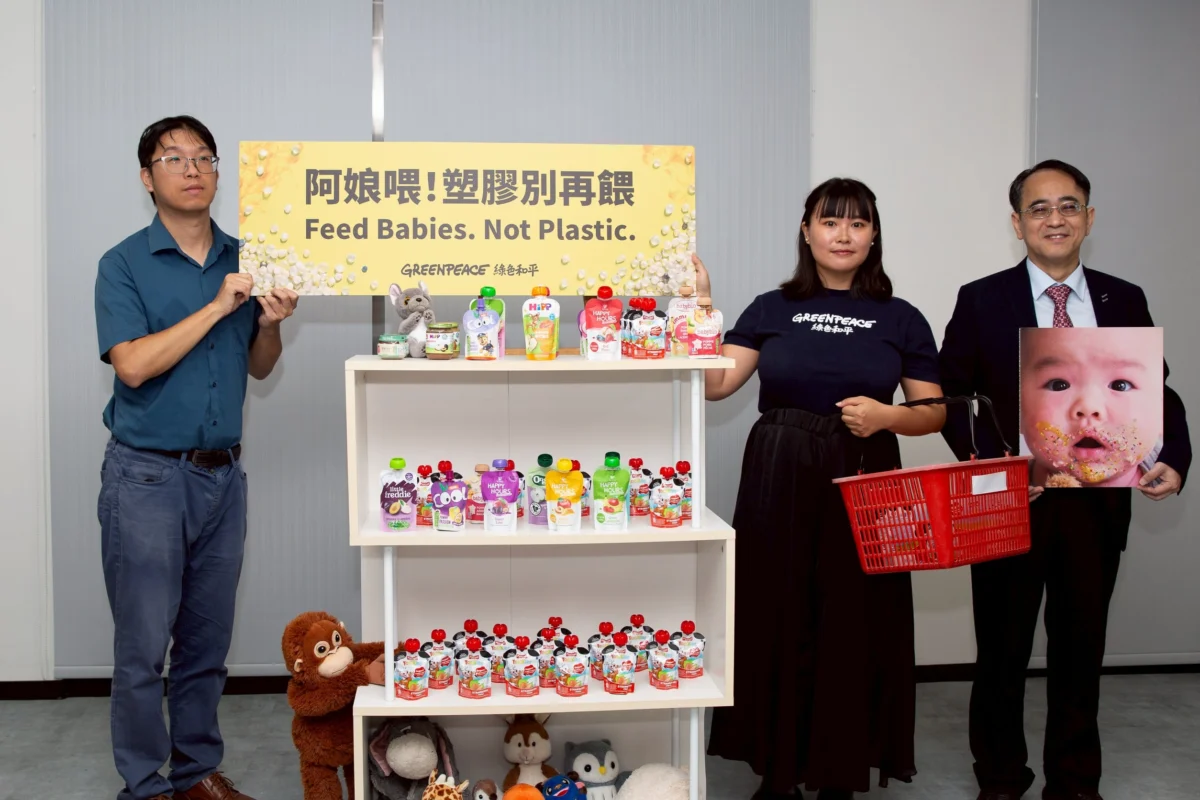
Taipei, July 14, 2026 – A landmark survey released today by Greenpeace Taiwan has unveiled a pervasive reliance on plastic pouches for packaging baby food products, including fruit purees and yogurts, across major retail channels in Taiwan. The report, titled "Packaging Survey of Baby Food Products, Including Fruit Purees and Yogurts, in Major Retail Channels in Taiwan," found that an alarming 80 percent of these essential infant consumables are presented in plastic pouches. In hypermarkets, this figure escalates to a staggering 100 percent, effectively leaving parents with virtually no non-plastic packaging alternatives when sourcing complementary foods for their infants.
The comprehensive survey, conducted in April 2026, meticulously examined baby fruit puree and yogurt products available through a wide spectrum of retailers, encompassing hypermarkets, pharmacies, dedicated baby product stores, and prominent online shopping platforms such as Momo, PChome, Shopee, and Coupang. The findings paint a stark picture: while hypermarkets exclusively offer plastic-pouched options, other retail segments show a slightly lower but still dominant proportion, ranging from 74 percent to 79 percent. Prominent brands identified in the survey include Babybio, HiPP, Pascual, and Earth Love, all of which are widely trusted by Taiwanese parents.
Chi Lo, Communications Officer at Greenpeace Taiwan, expressed profound concern over the findings. "Parents purchase baby food with the sole intention of nourishing their children, not to subject them to potential plastic risks from their very first spoonfuls," Lo stated. "When nearly 80 percent of products are presented in plastic pouches, this transcends a matter of mere parental choice. It signifies a market failure to provide adequate safer alternatives and a regulatory framework that has demonstrably failed to keep pace with evolving scientific understanding and consumer concerns."
Microplastic Exposure: A Growing Concern in Infant Nutrition
The report highlights a critical emerging concern: plastic pouches may serve as a significant conduit for microplastic exposure in infants. These pouches, typically constructed from multiple layers of composite materials such as polyethylene terephthalate (PET), aluminum foil, and polyethylene (PE), feature a PE inner layer, spout, and cap that come into direct contact with the food. Recent scientific research increasingly points to risks extending beyond environmental pollution, suggesting that plastic packaging itself could be a substantial source of microplastic ingestion for humans.
Underscoring this concern, a 2025 commissioned study by Greenpeace International, conducted by Norway’s SINTEF Ocean laboratory, analyzed pouch-packaged baby food products from two major multinational brands. The laboratory tests revealed the presence of microplastics in every single product examined. Some fruit puree samples contained an astonishingly high concentration of up to 99 microplastic particles per gram of food, translating to over 10,000 microplastic particles within a single pouch. Similarly, certain yogurt products were estimated to contain more than 5,000 microplastic particles per pouch.
The SINTEF Ocean study further identified common polymers like polyethylene (PE) and polypropylene (PP) in the food samples, strongly indicating that the packaging materials are a primary source of microplastic contamination. Beyond microplastics, researchers also detected a range of plastic-related chemicals, including substances known for their potential toxicity and endocrine-disrupting properties.
Experts Advocate for Precautionary Principle to Safeguard Children
In light of these findings, medical and scientific experts are urging for a proactive approach, advocating for the application of the precautionary principle to better protect vulnerable children. Dr. Tzung-Hai Yen, a distinguished nephrologist at Chang Gung Memorial Hospital, Linkou, emphasized the current scientific landscape. "While the full extent of microplastic exposure’s harm to human health is still under extensive investigation, existing animal and cell studies have indicated that substantial microplastic ingestion may lead to adverse health effects such as oxidative stress, inflammation, and even organ damage," Dr. Yen explained.
He stressed the urgency of preventive measures: "Action should not be deferred until the health impacts on humans are unequivocally proven. The precautionary principle must guide our actions, compelling us to proactively mitigate human exposure to microplastics." Dr. Yen further elaborated on the unique vulnerability of infants and young children, stating, "Infants and young children are at a crucial developmental stage, making them inherently more susceptible to harmful environmental substances than adults. Consequently, minimizing their exposure should be a paramount priority."
Adding another layer of concern, Dr. I-Lun Hsiao, Director of the Food Safety Testing and Functional Development Research Center at Taipei Medical University, pointed out that plastic pouches can leach not only microplastics but also a spectrum of chemically complex substances. These compounds, often referred to as non-intentionally added substances (NIAS), can be generated during the manufacturing process or through the use of the packaging.
Dr. Hsiao also highlighted a significant regulatory gap in Taiwan. "When compared to regions like the European Union, the United States, and Japan, Taiwan currently lacks a comprehensive regulatory framework specifically governing the chemicals used in plastic food packaging and mandating robust information disclosure," she stated. She further warned about the potential for synergistic effects when multiple plastic-related chemicals are ingested concurrently. "Some plastic-related chemicals may possess endocrine-disrupting properties. When a cocktail of such chemicals enters the human body simultaneously, they can interact, creating synergistic effects that could amplify potential health risks," Dr. Hsiao cautioned.
Joint Call for Strengthened Government Regulations and Industry Responsibility
In response to the compelling evidence presented by the Greenpeace survey and expert testimony, Greenpeace and the involved experts are issuing a unified call to action directed at Taiwan’s Food and Drug Administration (TFDA) and other relevant government agencies. Their demands include:
- Strengthening Food Packaging Regulations: Implementing stringent regulations that address the safety of plastic food packaging, particularly for infant and child products. This includes setting clear limits for microplastic migration and establishing comprehensive guidelines for the assessment and disclosure of NIAS.
- Mandating Chemical Disclosure: Requiring manufacturers to disclose all chemical additives used in food packaging materials, especially those with potential health concerns like endocrine disruption.
- Promoting Safer Alternatives: Incentivizing and supporting the development and adoption of alternative, sustainable packaging materials that minimize or eliminate plastic use.
- Investing in Research: Allocating resources for further research into the long-term health impacts of microplastic and NIAS exposure on vulnerable populations, including infants and children.
Greenpeace is also placing a direct call on baby food manufacturers to take immediate responsibility. The organization urges them to proactively conduct rigorous testing of their products for microplastics and hazardous chemicals and to transparently publish the results of these tests.
"Every parent’s deepest desire is to provide the best possible nutrition for their children. It is unconscionable that the next generation should be burdened with the health risks associated with plastic packaging," Lo reiterated. "Given the pervasive scientific uncertainties surrounding the long-term health consequences of plastic pollution, it is imperative that the government strengthens food packaging regulations. Simultaneously, we must address the issue at its source by reducing unnecessary plastic production and phasing out high-risk, single-use plastic products and packaging. Only through such comprehensive and decisive action can we genuinely safeguard the future health of our children and mitigate their exposure to microplastics and concerning plastic-related chemicals."
The report’s appendices provide detailed information: Appendix 1 outlines the methodology and specific findings of the Packaging Survey of Baby Food Products in Taiwan, while Appendix 2 presents the Greenpeace report titled "The Microplastics Crisis: Hidden Risks of Plastic Pouches in Baby Food," which details the SINTEF Ocean laboratory findings. The release of this report marks a significant moment in Taiwan, prompting crucial discussions about food safety, environmental responsibility, and the long-term health implications for its youngest citizens.

 Lina Hope
 Asep Darmawan