Lina Hope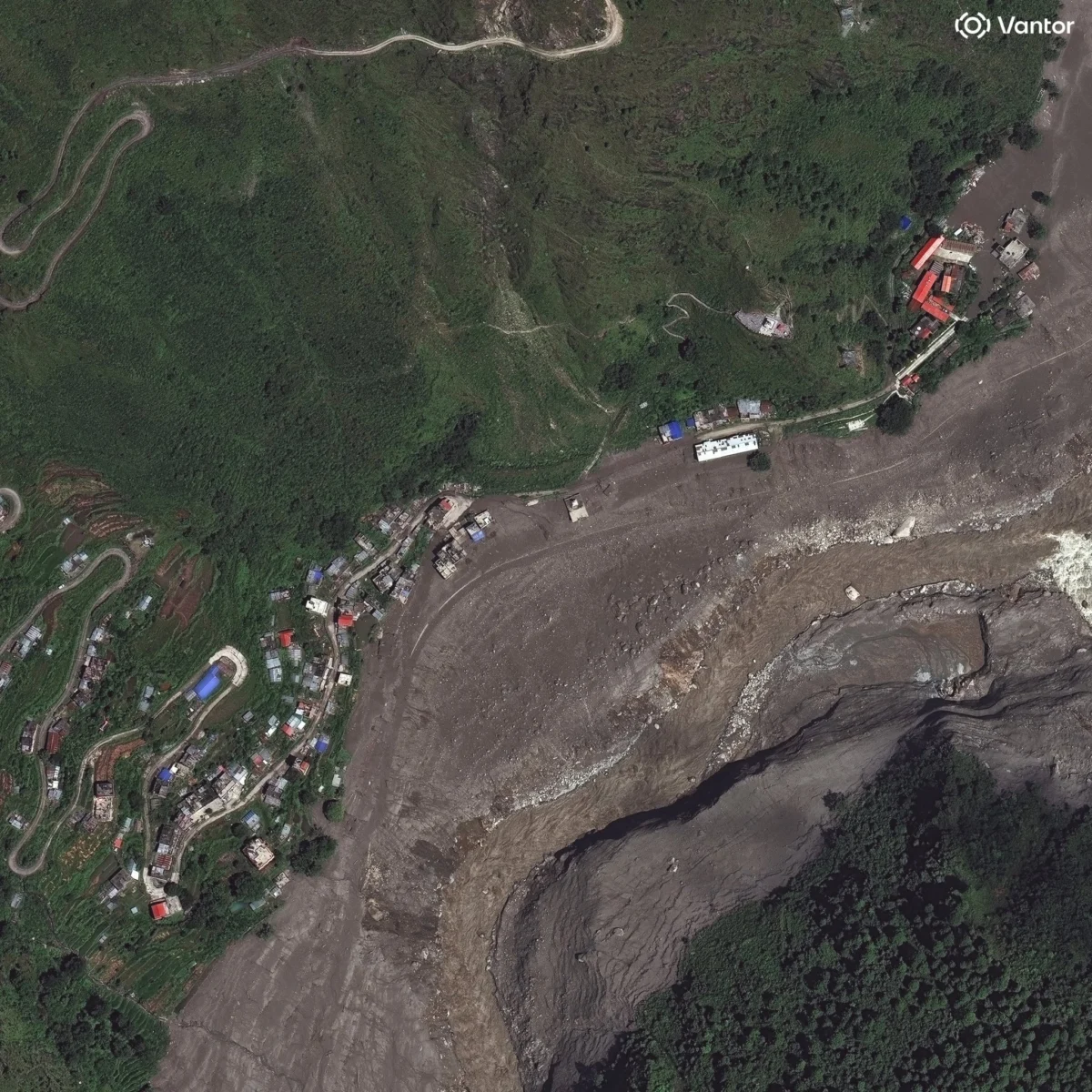
Rescuers in Nepal and China were still battling Saturday to locate thousands of people missing days after a deadly, tsunami-like wall of water and debris swept through the Himalayan region on Wednesday, August 26, 2026, engulfing villages and critical infrastructure. The catastrophic flash floods, suspected to be exacerbated by extreme hydrological events in the high mountains, have left an unprecedented trail of destruction across the shared border, with the death toll steadily rising and fears mounting for the vast numbers still unaccounted for. The sheer scale of the disaster has overwhelmed local capacities, prompting urgent calls for sustained international support as affected communities grapple with unimaginable loss.
The grim statistics continued to climb on Saturday, with the number of missing persons soaring close to 3,000, according to the latest figures released by authorities in both countries. So far, 633 bodies have been recovered, a figure that includes 626 in Nepal and seven in China’s Tibet Autonomous Region. Disturbingly, reports indicate that some victims may have been swept far downstream, with seven bodies already recovered from rivers flowing out of Nepal into India, underscoring the immense force and reach of the deluge. The humanitarian impact is profound, with the Red Cross estimating that as many as 93,000 people may have been directly affected by the catastrophe, facing displacement, loss of livelihoods, and the agonizing uncertainty over the fate of their loved ones.
The Human Cost and Desperate Search

Nepal’s disaster authority has significantly expanded its missing persons list, adding 933 hydropower workers who were engaged in the region’s vast energy infrastructure projects. These vital economic ventures, often situated in vulnerable river valleys, have become focal points of the tragedy. Beyond the workers, the missing list also includes numerous trekkers and pilgrims, many of whom were en route to Tibet’s sacred Mount Kailash, a revered site for Hindus and Buddhists alike. This highlights the diverse populations impacted by the disaster, from local communities and laborers to international tourists and devotees.
Survivors recount harrowing tales of escape and profound loss. Buddhi Ram Dangol, whose village was obliterated, told AFP, “All the settlements near the river were swept away. There is nothing left.” His words echo the sentiments of countless others who have lost everything – homes, possessions, and the very fabric of their communities. They now face the daunting prospect of rebuilding their lives from scratch, all while enduring the agonizing wait for news of missing family members. Samjhana Thing, waiting for three days for word of her brother, encapsulated this despair: “We don’t know anything. Hopefully, he is in a safe place.” The emotional trauma inflicted by Wednesday’s catastrophe, as noted by the Red Cross, is "enormous," casting a long shadow over the affected regions.
Chronology of a Catastrophe and Ongoing Rescue Efforts
The disaster unfolded with terrifying speed on Wednesday, August 26, 2026. A "tsunami-like wall of water and debris" descended upon the unsuspecting communities. While the precise trigger is still under investigation, early assessments suggest a combination of factors, potentially including a Glacial Lake Outburst Flood (GLOF) or a massive landslide damming and then releasing a river, exacerbated by heavy monsoon rains. Such events are characterized by the sudden release of enormous volumes of water, ice, and sediment, which can carve new river channels and decimate anything in their path.

In the immediate aftermath, emergency teams mobilized across both Nepal and China, racing against time to retrieve survivors from the widespread devastation. However, their efforts have been severely hampered by the sheer scale of the destruction, which has rendered roads impassable, communication lines down, and access to remote areas extremely challenging. Food and water supplies are rapidly dwindling in many affected zones, adding to the urgency of the humanitarian response.
A critical challenge compounding the search for the missing has been the persistent threat of further flooding. The initial deluge of ice and mud caused huge lakes to form in upstream areas, creating unstable natural dams. On Saturday, Nepali police issued an urgent warning to all rescuers to "immediately move to a safe location," citing information that "a water dam has burst again on the Tibetan side." This alarming development forced Beijing to suspend its rescue operation at Gyirong, one of the hardest-hit areas in Tibet, over the renewed flooding risk. Although state news agency Xinhua later reported that the immediate threat had eased and two villagers were rescued in the area, the incident highlighted the volatile and perilous conditions faced by rescue personnel.
On the Nepali side of the border, the military has focused significant efforts on the Trishuli 3A hydropower project, where numerous workers were trapped inside tunnels. Army spokesman Raja Ram Basnet confirmed to AFP that "Two helicopters have been dispatched, but it is challenging because it is tough to even locate the entry points of the tunnel." Despite these difficulties, some 350 workers and residents have been successfully brought to safety from the site. However, efforts were ongoing to rescue more than a hundred individuals believed to be still trapped in the same area. Buddha Tamang, a worker rescued from another dam project along the Trishuli valley, described his miraculous survival by being inside a tunnel when the flood struck, adding that "The senior officers working on the other side, they were all swept away." Tamang was airlifted on Thursday after being marooned for over 24 hours.
Regional Impact and Vulnerability

The affected region, straddling the Nepal-China border, is a vital corridor for trade, tourism, and hydropower development. The Trishuli River system, a major tributary of the Gandaki River, is a lifeline for many communities and a crucial site for Nepal’s energy ambitions. The destruction of hydropower projects not only represents a significant economic loss but also threatens the country’s energy security and development trajectory.
The incident also underscored the vulnerability of the popular Mount Kailash pilgrimage route. Scores of Hindu devotees from across the world were among those caught in the disaster. Sivaranjani Muthunathan, 46, recounted her terrifying experience to AFP. She was travelling by bus with 56 others towards the Chinese border when they encountered what they initially thought was a traffic jam. "Then there was fog, smoke, something that seemed to suddenly engulf us," she described, showing a phone video of a torrent surging towards her. Around them, vehicles were swept away or buried under mud. "One by one, we also climbed out through the driver’s side," then scrambled up a hill, a testament to the instinctual fight for survival amidst chaos.
Across the border in Tibet, which remains largely inaccessible to foreign journalists, Chinese state media reported the initial toll of seven deaths and 554 missing. Authorities there have also focused on evacuating stranded individuals, successfully moving 555 tourists and 499 Chinese residents from the affected areas. The cross-border nature of the disaster necessitates close coordination between Nepal, China, and even India, particularly given the interconnected river systems.
Geological Context and Climate Change Implications

The Himalayan range, often referred to as the "Third Pole" due to its vast ice and snow reserves, is a geologically active and climatically sensitive region. It is highly susceptible to natural hazards such as earthquakes, landslides, and floods. In recent decades, the accelerating pace of climate change has amplified these risks. Rapidly melting glaciers are forming and expanding glacial lakes, many of which are held back by unstable moraine dams. These Glacial Lake Outburst Floods (GLOFs) are becoming more frequent and intense, capable of releasing colossal volumes of water and debris with devastating force, much like the "tsunami-like wall of water" witnessed in this event.
Furthermore, the region experiences intense monsoon rains, which can saturate the already fragile mountain slopes, triggering massive landslides. These landslides can then block rivers, creating temporary dams that, upon breaching, unleash secondary flash floods. While the exact scientific classification of this specific event awaits detailed study, the characteristics described by witnesses and the widespread devastation are consistent with such high-impact hydrological events, potentially a GLOF compounded by monsoon-driven landslides. The combination of steep topography, unstable geology, and climate-induced changes makes the Himalayas a global hotspot for such catastrophic natural disasters.
Broader Implications and the Path Forward
The disaster carries significant long-term implications for the affected regions. Economically, the destruction of hydropower projects represents a severe blow to Nepal’s developmental aspirations. These projects are crucial not only for domestic energy supply but also as a source of revenue through energy exports. Rebuilding this critical infrastructure will require substantial financial investment and a re-evaluation of engineering and siting standards to enhance resilience against future climatic events. The loss of agricultural land and livestock will further devastate local economies, many of which are already subsistence-based.

From a humanitarian perspective, the immediate focus remains on search and rescue, providing emergency shelter, food, and medical aid to survivors. The Red Cross and other international aid organizations are preparing for a protracted relief effort, recognizing the immense psychological trauma inflicted on the communities. Long-term recovery will involve complex challenges, including resettlement, livelihood restoration, and psychological support for those who have lost everything.
The disaster also underscores the critical need for enhanced transboundary cooperation in disaster risk reduction and management. Given the interconnected river systems and shared mountain ecosystems, early warning systems, joint monitoring of glacial lakes, and coordinated emergency response mechanisms between Nepal, China, and India are paramount. Investment in robust early warning technologies, community preparedness programs, and climate change adaptation strategies will be essential to mitigate the impact of future, increasingly frequent and severe, extreme weather events in this vulnerable region. The lessons learned from this tragedy must inform future development planning, ensuring that infrastructure projects and human settlements are not inadvertently placed in harm’s way, and that the unique environmental sensitivities of the Himalayas are respected and protected.


 Sagoh
Sagoh
 Asro
Asro