Iffa Jayyana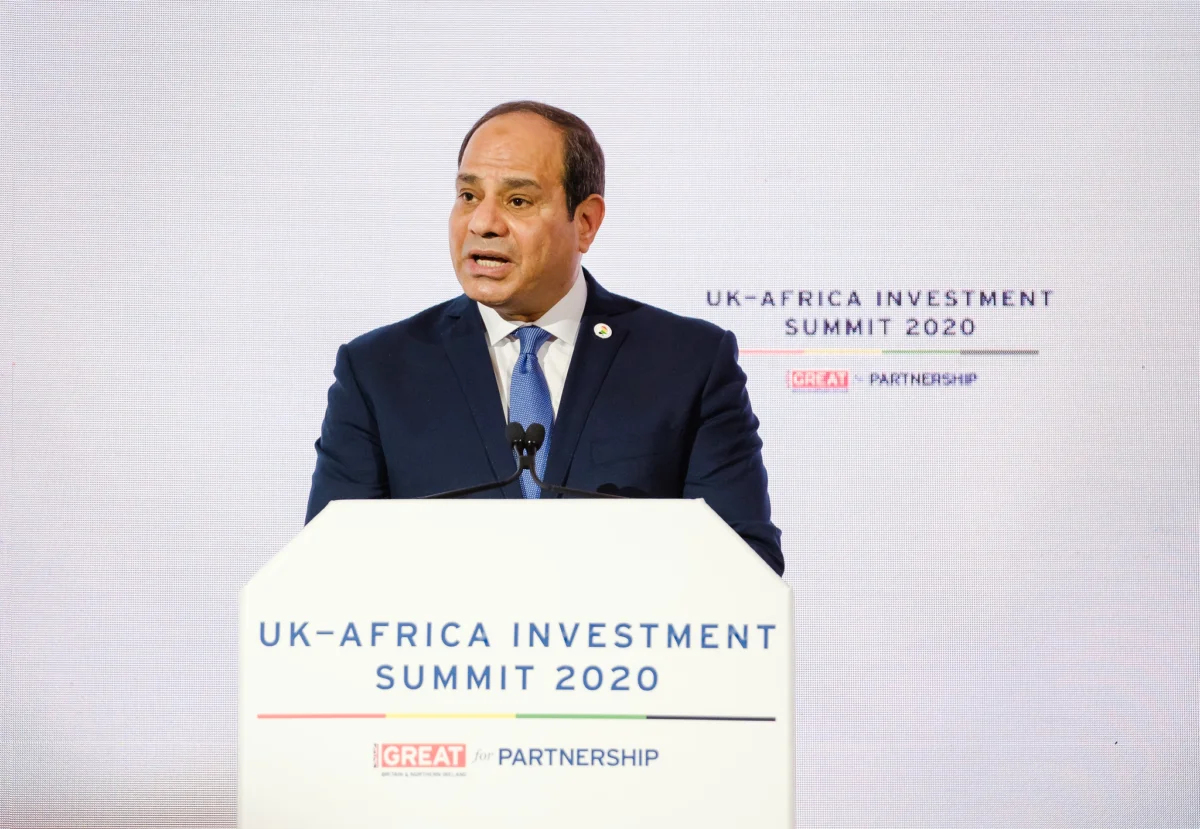
Egypt’s President Abdel Fattah al-Sisi on Wednesday received his Chinese counterpart Xi Jinping on his first visit to Cairo in a decade, a meticulously planned diplomatic overture signaling Beijing’s intensified quest for a greater foothold in the strategically vital Middle East and North Africa (MENA) region. This high-stakes visit unfolds against the turbulent backdrop of the escalating US-Iran conflict, which continues to cast a long shadow over global maritime trade and regional stability, making Egypt’s role as a nexus of trade and diplomacy more critical than ever.
The arrival of President Xi was marked by a full 21-gun salute at Cairo’s historic Ittihadiya Palace, an honor reserved for heads of state, underscoring the profound significance Egypt places on this bilateral engagement. The day’s agenda was packed, with anticipated discussions spanning the multifaceted implications of the Middle East conflict, including pressing concerns over maritime trade security in crucial waterways like the Suez Canal and the Red Sea. Beyond immediate regional crises, the leaders were expected to chart a course for significantly boosting Chinese investment across various sectors in the Arab world’s most populous nation, solidifying a partnership that both nations increasingly view as indispensable in an evolving global order.
Both China and Egypt, as prominent members of the BRICS economic bloc, share a vision for a more multipolar world. This shared perspective is expected to manifest in a series of economic agreements covering cutting-edge fields such as artificial intelligence, critical transport infrastructure, and advanced manufacturing. These agreements are not merely transactional; they represent a strategic alignment aimed at fostering sustainable economic development in Egypt while simultaneously expanding China’s economic and technological influence across Africa and the Middle East.

A Decade of Evolving Relations: Contextualizing Xi’s Return
President Xi Jinping’s return to Cairo after a ten-year hiatus underscores a significant maturation in Sino-Egyptian relations. His previous visit in 2016 saw the signing of numerous agreements, laying the groundwork for substantial Chinese investment and cooperation under the umbrella of China’s ambitious Belt and Road Initiative (BRI). Since then, Egypt has emerged as a crucial node in the BRI, leveraging its unique geographical position at the crossroads of Africa, Asia, and Europe. This strategic importance has only grown, particularly with the ongoing geopolitical realignments and economic challenges facing the global south.
In the intervening decade, China has steadily ascended as a global economic powerhouse and a formidable diplomatic actor, while Egypt, under President Sisi, has embarked on an ambitious program of economic reform and infrastructure development. The convergence of these trajectories has made Egypt an attractive partner for China’s outward investment and a key ally in its broader foreign policy objectives, particularly in challenging the established unipolar international system. The current visit, therefore, is not merely a continuation but an acceleration of this strategic partnership, designed to adapt to new geopolitical realities and capitalize on emerging opportunities.
Economic Pillars of the Partnership: Investment and Trade

The economic ties between China and Egypt are robust and rapidly expanding. Current estimates place Chinese investments in Egypt at approximately US$10 billion, a figure that is projected to grow substantially following the anticipated agreements. A cornerstone of this economic relationship is China’s significant stake in the Suez Canal Economic Zone (SCZone). This vital industrial and logistics hub, adjacent to one of the world’s most critical shipping lanes, has attracted considerable Chinese capital and expertise, transforming it into a beacon of bilateral cooperation. As the US-Iran conflict intensifies and poses tangible threats to global maritime trade, the stability and efficiency of the Suez Canal become paramount, and China’s vested interests in the SCZone are expected to deepen as Beijing seeks to secure its supply chains and trade routes.
Beyond the SCZone, Beijing has played an instrumental role in President Sisi’s flagship megaprojects, most notably the New Administrative Capital (NAC). Located 50 kilometers (30 miles) east of Cairo, the NAC is a colossal undertaking designed to decongest the megalopolis and serve as Egypt’s new administrative and financial heart. Large swathes of this ambitious project, including critical infrastructure and iconic buildings, have been bankrolled and constructed with substantial Chinese investment and technical assistance. This deep involvement showcases China’s capacity for large-scale infrastructure development and its commitment to Egypt’s long-term developmental goals. The NAC, therefore, stands as a tangible symbol of the strategic partnership, demonstrating China’s confidence in Egypt’s future and its willingness to invest in its transformation.
China’s role as a major exporter to Egypt further underscores the depth of their economic interdependence. According to Chinese customs data, China’s trade surplus with Egypt reached a staggering US$12 billion in the first seven months of 2026 alone. While this trade imbalance highlights Egypt’s reliance on Chinese imports, it also signifies the vast consumer market and industrial demand within Egypt that China is effectively serving. The discussions during President Xi’s visit are expected to explore avenues for rebalancing this trade relationship, perhaps through increased Egyptian exports to China or through greater localization of manufacturing within Egypt, driven by Chinese investment.
Geopolitical Chessboard: Navigating Regional and Global Tensions

The timing of President Xi’s visit is highly significant, occurring amidst heightened tensions in the Middle East. The ongoing US-Iran conflict has destabilized key maritime corridors, particularly the Strait of Hormuz, the Bab al-Mandab, and the Red Sea, which are crucial for global energy supplies and international trade. For China, a major consumer of Middle Eastern oil and a global manufacturing hub, ensuring the security of these shipping lanes is an economic imperative. Egypt, controlling the Suez Canal, holds a pivotal position in this geopolitical landscape, making it an indispensable partner for any global power seeking to safeguard its commercial interests in the region.
From Cairo’s perspective, the summit provides an invaluable opportunity to reassert its strategic autonomy. Analysts suggest that President Sisi aims to leverage Egypt’s close ties with both Washington and Beijing, demonstrating a sophisticated "independent foreign policy" that serves Egypt’s national interests without being beholden to any single superpower. This approach allows Egypt to diversify its partnerships, secure much-needed investment, and enhance its diplomatic leverage on the global stage.
President Sisi himself articulated this stance in an op-ed published in Egyptian media on Tuesday, emphasizing Cairo’s commitment to an "independent foreign policy." He further highlighted that Egypt and China are partners in "strengthening the role of the global south" in an increasingly polarized world. This narrative resonates deeply with both nations, which advocate for a multilateral international system and greater representation for developing countries.
The recent targeting of an Emirati branch of Egypt’s second-largest bank, Banque Misr, by US sanctions for alleged support to Iran, provides a stark illustration of the complexities Egypt navigates. Washington has vowed to economically isolate Iran, threatening expanded sanctions that could impact a wide range of international financial institutions, including Chinese banks. China, being a major buyer of Iranian oil, has unequivocally stated its intention to safeguard its legitimate interests, setting the stage for potential friction with the US. This scenario places Egypt in a delicate position, balancing its long-standing strategic alliance with the US against its burgeoning economic and military partnership with China.

Diversifying Partnerships: Military Cooperation and Diplomatic Outreach
Egypt’s pursuit of an independent foreign policy is also evident in its evolving military cooperation. In August, just weeks before Xi’s visit, Egypt hosted major joint air combat exercises with the Chinese military, a significant development that featured Beijing’s powerful J-16 fighter jet. This military engagement signals Egypt’s strategic diversification of its defense partners, moving beyond its historical reliance on US military aid. While Egypt remains one of the largest recipients of US military assistance and a key Middle East mediator, its decision to conduct high-profile exercises with China underscores a deliberate effort to enhance its defense capabilities and deepen its strategic relationships with emerging global powers. This diversification is particularly noteworthy given that under Sisi’s administration, Egypt has become one of the world’s top weapons buyers, seeking advanced military technology from various international sources.
The visit also serves as a crucial prelude to an expected meeting between President Xi and US President Donald Trump later this month. By shoring up ties with US-friendly regional nations like Egypt, China aims to demonstrate its broad international appeal and strategic depth, potentially strengthening its negotiating position ahead of critical discussions with Washington. For Egypt, hosting Xi and simultaneously navigating US sanctions related to Iran highlights its critical role as a regional lynchpin, capable of engaging with multiple global powers and influencing geopolitical dynamics.
Cultural Exchange and Public Diplomacy

Beyond the high-level talks and economic agreements, President Xi’s visit incorporated elements of cultural diplomacy designed to foster goodwill and mutual understanding. Across Cairo, a sprawling megalopolis home to over 26 million people, major streets were adorned with a vibrant display of Chinese and Egyptian flags, alongside billboards prominently featuring the images of Presidents Sisi and Xi. These public displays were complemented by street signs boasting of "generations of Egyptian-Chinese friendship flowing like the Nile River," a poetic nod to the deep historical and cultural ties between the two ancient civilizations. While residents were warned to plan for substantial traffic delays on their commutes due to the extensive security measures and presidential motorcades, the visual spectacle underscored the importance of the visit to the Egyptian populace.
President Xi’s itinerary included a symbolic stop at the Grand Egyptian Museum, an architectural marvel overlooking the iconic Giza Pyramids. This visit to one of the world’s largest archaeological museums not only showcased Egypt’s rich cultural heritage but also highlighted the potential for increased cultural exchange and tourism between the two nations, further cementing the bonds of friendship. Such gestures are crucial in building soft power and long-term relationships that extend beyond economic and political calculations.
Implications and Future Outlook
President Xi Jinping’s visit to Egypt is more than a diplomatic formality; it is a clear strategic move by China to expand its influence and secure its interests in a critical geopolitical region. For Egypt, it represents an opportunity to secure vital investments, diversify its international partnerships, and assert its role as a significant player in a rapidly changing world order.

The deepening of China-Egypt ties carries several key implications:
- Economic Diversification for Egypt: Increased Chinese investment in AI, transport, and manufacturing sectors can help Egypt modernize its economy, create jobs, and reduce its reliance on traditional industries.
- Enhanced Regional Stability (Chinese Perspective): A stronger relationship with Egypt provides China with a reliable partner to advocate for stability in the MENA region, particularly concerning maritime security and trade routes, crucial for its global economic ambitions.
- Challenge to Unipolarity: Both nations’ emphasis on the "Global South" and "independent foreign policy" contributes to the ongoing shift towards a multipolar international system, potentially altering the dynamics of global governance.
- Balancing Act for Egypt: Egypt’s ability to maintain strong ties with both the US and China, despite geopolitical tensions, will be a testament to its strategic acumen and its determination to pursue its own national interests.
- Precedent for Other Nations: The success of the China-Egypt partnership could serve as a model for other developing nations seeking to diversify their foreign policy and economic partnerships away from traditional Western dominance.
As the world grapples with shifting power balances and regional conflicts, the strategic partnership between China and Egypt will undoubtedly play an increasingly significant role in shaping the future of the Middle East and the broader international landscape. The agreements forged and the diplomatic signals sent during President Xi’s visit are poised to have lasting repercussions, reinforcing a relationship that both Cairo and Beijing consider foundational to their respective long-term visions.

 Sagoh
Sagoh
 Asro
Asro