Ali Ikhwan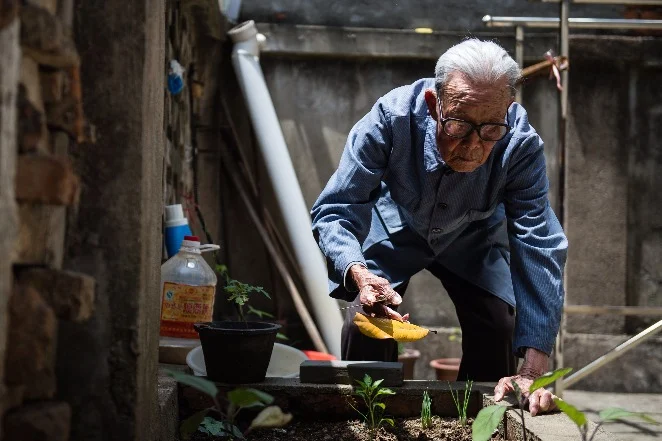
The oldest known survivor of the Nanjing Massacre, Guan Guangjing, passed away on Sunday at the venerable age of 100, leaving fewer than 100 direct witnesses to one of the 20th century’s most horrific atrocities. His death, just three days before China’s National Memorial Day for Nanjing Massacre Victims, casts a solemn shadow over the upcoming 80th anniversary commemoration, which will see state leaders gather at the Memorial Hall of the Victims in the Nanjing Massacre by Japanese Invaders on Wednesday. The dwindling number of survivors underscores the critical race against time to document and preserve their invaluable testimonies, serving as irrefutable evidence against historical revisionism and a stark reminder of humanity’s darkest chapters.
Guan Guangjing’s Legacy and Passing
Guan Guangjing, a centenarian whose life spanned an epoch of profound change and indelible trauma, succumbed to multiple organ failure at his home, having been bedridden for six months due to heart disease. His 76-year-old son-in-law, identified only by his surname Liu, confirmed the passing of a man who bore witness to unimaginable horrors. Guan’s resilience and determination to share his experiences made him a pivotal figure in the ongoing efforts to chronicle the massacre. He contributed vital verbal testimony to "Irrefutable Evidences, A Memoir of the Lishui Bombing Caused by Japanese Invaders," a significant historical document published by Nanjing Press in November 2016. This book meticulously compiled 31 oral accounts from survivors detailing the devastating bombing in Nanjing’s Lishui county on November 29, 1937, an event that claimed over 1,200 lives. Guan recounted vividly how he sought refuge under a large rock during the aerial assault, a desperate measure that saved his life even as he watched neighbors, including four generations of a family surnamed Sun, perish around him. His subsequent survival during the wider massacre, which saw Japanese invaders systematically kill more than 300,000 Chinese civilians and unarmed combatants after occupying Nanjing in December 1937, involved a harrowing existence of constant hiding and evasion. Officials from the Memorial Hall corroborated Guan’s consistent narration of witnessing Japanese soldiers perpetrating mass killings on multiple occasions, adding to the vast body of evidence of the atrocities.
Beyond his role as a historical witness, Guan Guangjing was remembered as a respected community member. An orphan before 1937 and without siblings, he built a life for himself, working as a barrel maker in Lishui county. His wife passed away five years prior at age 84. The announcement of his death on Sina Weibo by the Memorial Hall prompted an outpouring of grief and respect from internet users across China. The post highlighted his frugal lifestyle, his willingness to assist others, and the high esteem in which he was held locally. In a poignant gesture of remembrance and historical preservation, his family donated several of his personal articles – including a paper fan, a watch, and a teapot – to the Memorial Hall, ensuring that tangible links to his life and testimony will remain for future generations. These artifacts, seemingly mundane, become powerful symbols of a life lived through extraordinary circumstances, connecting the personal tragedy of one man to the collective memory of a nation.
The Dwindling Voices: A Race Against Time
Guan Guangjing’s passing underscores a grim reality: the generation of direct witnesses to the Nanjing Massacre is rapidly diminishing. With fewer than 100 survivors now remaining, the urgency to document their stories intensifies daily. As Zhang Sheng, a history professor at Nanjing University, points out, the challenge is compounded by the advanced age and declining health of these individuals; only about half of the remaining survivors are still able to articulate their experiences clearly, with most being over 85 years old. This demographic reality places immense pressure on historians, memorial institutions, and documentary projects to meticulously record every available testimony before these invaluable firsthand accounts are lost forever. The oral histories collected from survivors like Guan Guangjing are not merely personal narratives; they are indispensable pillars of historical truth, critical for education, remembrance, and countering historical negationism. Each fading voice represents a direct link to a past that must never be forgotten, making the efforts of institutions like the Memorial Hall and dedicated researchers more crucial than ever.
Historical Context: The Nanjing Massacre – 80 Years On
The Nanjing Massacre, also known as the Rape of Nanjing, stands as a brutal testament to the savagery of war and a foundational event in the collective memory of the Chinese people. It commenced in December 1937, following the capture of Nanjing – then the capital of the Republic of China – by the Imperial Japanese Army during the Second Sino-Japanese War (1937-1945). After fierce resistance, the city fell on December 13, initiating a six-week period of unparalleled horror. Japanese soldiers engaged in widespread atrocities, including mass executions of civilians and disarmed soldiers, systematic rape, looting, and arson. Estimates suggest that over 300,000 Chinese were killed, a figure meticulously documented by the Nanjing War Crimes Tribunal and widely accepted in international scholarship, though often disputed by elements within Japan. The scale of sexual violence was equally staggering, with tens of thousands of women, from young girls to the elderly, subjected to rape and sexual slavery. The atrocities were not random acts but often systematic, including "killing competitions" and widespread destruction.
The brutality was witnessed and documented by a small group of Westerners who had established an International Safety Zone within Nanjing. Figures like John Rabe, a German businessman and Nazi Party member, and Minnie Vautrin, an American missionary and educator, risked their lives to protect Chinese civilians, providing shelter and recording the atrocities in diaries and letters that later became crucial evidence. Their accounts, along with those of foreign journalists and photographers, provided immediate international condemnation and serve as corroborating evidence for survivor testimonies. However, despite overwhelming evidence, historical revisionist narratives in Japan continue to downplay or deny the extent of the massacre, creating ongoing diplomatic and historical tensions between China and Japan. The annual commemoration serves not only as a remembrance of the victims but also as a steadfast affirmation of historical truth in the face of such denials. This historical backdrop lends immense weight to the significance of each survivor’s testimony and the urgency of their preservation.
Chronology of Remembrance and Recognition
The journey towards comprehensive remembrance and official recognition of the Nanjing Massacre has been long and arduous, reflecting decades of national mourning and international advocacy.
- Post-War Trials (1946-1948): Following Japan’s surrender in 1945, major figures responsible for the massacre were prosecuted. The International Military Tribunal for the Far East (Tokyo Trials) and the Nanjing War Crimes Tribunal convicted several Japanese officers, including General Iwane Matsui, the commander of the Japanese Central China Area Army, who was found guilty of command responsibility and executed. These trials established a legal framework for accountability, though they did not fully address the widespread nature of the crimes or the immense suffering. They were crucial in establishing factual guilt, though the collective national reconciliation remained elusive.
- Establishment of the Memorial Hall (1985): The Memorial Hall of the Victims in the Nanjing Massacre by Japanese Invaders was officially opened on August 15, 1985, on the 40th anniversary of Japan’s surrender. Located at a site where thousands of victims were buried, the museum serves as the primary institution for research, exhibition, and public education about the massacre. Its establishment marked a significant step in institutionalizing the memory of the event and providing a permanent space for remembrance and historical inquiry. Over the years, it has undergone significant expansions, becoming a major international center for peace education.
- National Memorial Day (2014): In February 2014, China’s top legislature, the National People’s Congress Standing Committee, designated December 13 as the National Memorial Day for Nanjing Massacre Victims. This decision elevated the commemoration to a national level, underscoring the event’s profound significance for the entire nation and ensuring that its memory would be honored annually with solemnity and official recognition. This year’s observance holds particular weight as it marks the 80th anniversary, symbolizing eight decades since the atrocity.
- UNESCO Memory of the World Register (2015): In October 2015, documents related to the Nanjing Massacre were officially inscribed in UNESCO’s Memory of the World Register. This international recognition provided crucial validation of the historical authenticity and global significance of the massacre’s records, further strengthening efforts to preserve historical truth and counter revisionist narratives. The collection includes eyewitness accounts, official reports, and photographic evidence, reinforcing the irrefutable nature of the events and placing them within a global context of preserved heritage.
The Significance of Oral Testimonies
In the absence of direct witnesses, historical understanding often relies on secondary accounts and interpretations. This makes the oral testimonies of survivors like Guan Guangjing utterly indispensable. They provide a human dimension to historical facts, offering vivid, personal perspectives that academic texts alone cannot fully capture. These firsthand accounts imbue the numbers and dates with the raw emotion, fear, and resilience of those who endured the atrocities. Wu Lisong, a history lecturer at Nanjing University, leads a project initiated in September 2016 specifically to collect such oral accounts. He highlights the enduring psychological scars carried by survivors, noting that "some of them are stricken with fright when people wearing Japanese military uniforms appear on the TV screen, and some become irritable whenever people mention those years to them." This profound and lasting trauma underscores that the pain of the massacre is not merely a historical event but a deeply personal wound that persists throughout a lifetime. The collection and preservation of these testimonies are not just about recording history; they are about acknowledging the suffering of individuals, validating their experiences, and ensuring that their voices continue to speak truth to power. They serve as powerful counter-narratives to any attempts at historical revisionism, grounding the atrocities in undeniable human experience.
Official Responses and Commemoration
The upcoming National Memorial Day ceremony at the Memorial Hall will be a moment of national solemnity, attended by state leaders. Their presence signifies the Chinese government’s unwavering commitment to remembering the victims and ensuring that the lessons of history are never forgotten. While specific statements from officials have not been pre-released, the tone of such commemorations typically emphasizes several key themes: the importance of peace, the condemnation of war atrocities, the affirmation of historical truth, and a call for vigilance against militarism and historical revisionism. The Memorial Hall itself plays a crucial role as a beacon of memory, continually educating the public and the international community about the massacre through extensive exhibitions and educational programs. The official stance often reiterates the desire for reconciliation, but one that is firmly predicated on Japan’s full and unambiguous acknowledgment of its wartime past and its responsibilities. As Wu Lisong articulated, "Neither an apology nor compensation can reverse the traumas to the victims and survivors, but we still must make clear the history, which may be a starting point of reconciliation." This statement encapsulates the delicate balance between seeking justice and fostering understanding, rooted in an unvarnished account of historical events, aiming for a future built on mutual respect and shared historical understanding.
Broader Implications: Memory, Justice, and Reconciliation
The passing of Guan Guangjing and the diminishing cohort of Nanjing Massacre survivors bring into sharp focus the broader implications for memory, justice, and the elusive goal of reconciliation. The trauma, as Wu Lisong notes, is not something that simply passes; it is a profound and lifelong burden. For the survivors, every December 13 is not just a date on the calendar but a reawakening of deep-seated pain. The global community’s responsibility extends beyond mere remembrance; it involves actively supporting efforts to preserve historical records, combat historical revisionism, and ensure that such atrocities are never repeated. The Nanjing Massacre serves as a stark warning about the consequences of unchecked nationalism, dehumanization, and military aggression. Its lessons resonate globally, reminding humanity of the fragility of peace and the devastating cost of conflict.
Achieving genuine reconciliation between China and Japan remains a complex and sensitive issue, largely because of differing historical narratives and ongoing debates over wartime responsibility. While China consistently calls for Japan to acknowledge its past sincerely, some Japanese political figures and historians continue to offer apologies that are seen as insufficient or to promote narratives that minimize the scale of the atrocities. The act of remembrance, therefore, becomes not just a tribute to the dead but also a continuous plea for historical justice and a foundation for future peace built on truth. Education plays a vital role in this process, ensuring that younger generations in both nations understand the historical facts and the human cost of conflict. The testimonies of survivors, even those collected posthumously, serve as powerful educational tools, preventing the past from being relegated to mere footnotes in history books and embedding it firmly in collective consciousness.
The Role of Digital Platforms
In the contemporary era, digital platforms play an increasingly significant role in public discourse and collective memory. The announcement of Guan Guangjing’s death on Sina Weibo, China’s popular microblogging platform, exemplifies this. The immediate outpouring of condolences and shared grief demonstrated the enduring impact of the massacre on the national consciousness and the way social media can mobilize collective sentiment. Such platforms facilitate broader awareness, allowing millions to participate in virtual mourning and discussions about historical events. They also provide avenues for the Memorial Hall and other historical institutions to disseminate information, share survivor stories, and engage with the public, ensuring that the memory of the Nanjing Massacre remains vibrant and relevant, even as the direct witnesses fade away. This digital engagement helps bridge generational gaps and ensures that the narrative of the massacre continues to be told and understood by a global audience.
Conclusion
As China prepares to observe its National Memorial Day for Nanjing Massacre Victims, the passing of Guan Guangjing serves as a poignant reminder of the solemn duty to remember. His century-long life, marked by unimaginable horror and quiet resilience, now becomes part of the enduring legacy of those who suffered. With fewer than 100 survivors remaining, each death amplifies the urgency of historical preservation and the imperative to learn from the past. The 80th anniversary of the Nanjing Massacre is not merely a commemoration of a historical event; it is a profound act of remembrance, a defiant stand against oblivion, and a fervent prayer for a future where such atrocities are consigned solely to the history books, never to be repeated. The voices of Guan Guangjing and his fellow survivors, though increasingly silent, will continue to echo through the corridors of time, demanding justice, fostering peace, and illuminating the pathway to a more humane world built on the bedrock of historical truth.

 Sagoh
Sagoh
 Asro
Asro