Nila Kartika Wati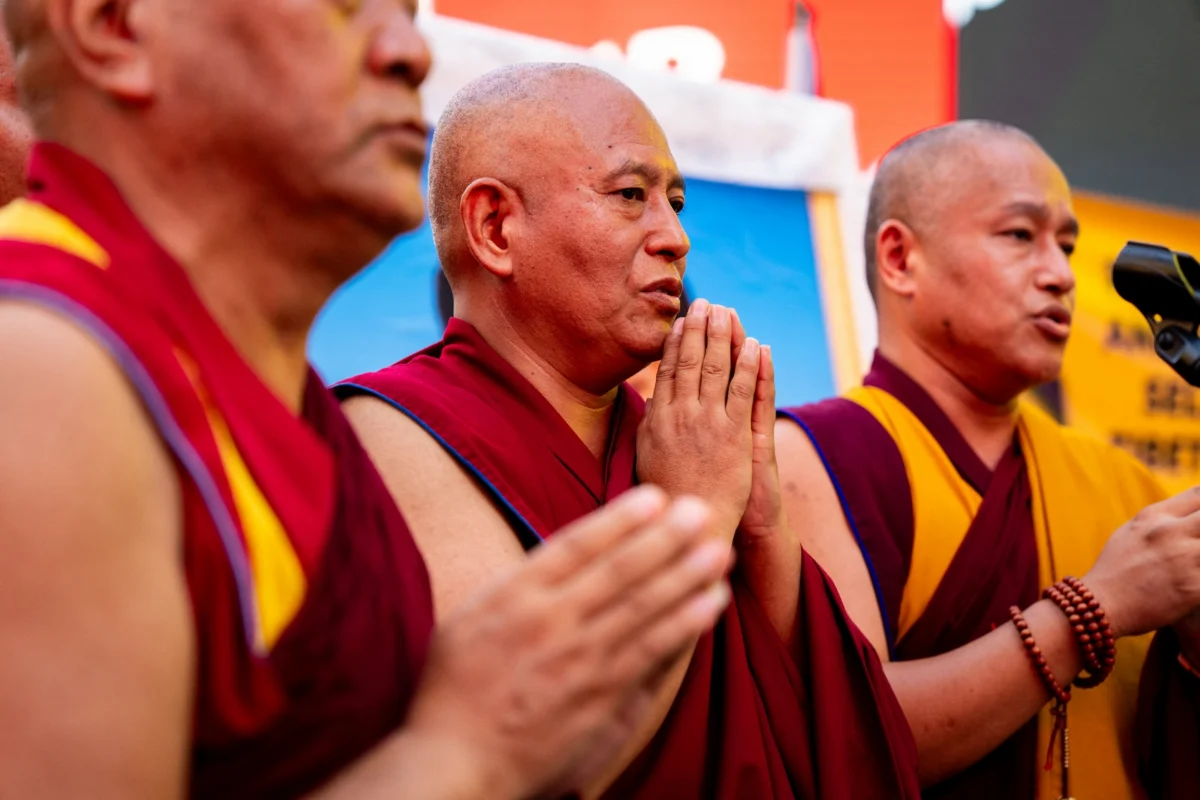
The searing heat and thick, acrid smoke that billowed outside the United Nations Headquarters in Manhattan on the night of July 2, 2026, were more than just the tragic end of a life; they were a profound, agonizing cry for freedom from a man whose dedication to the Tibetan cause transcended even his own existence. Lobga Rangzen, a 52-year-old exiled Tibetan activist, chose self-immolation as his ultimate protest against Chinese communist rule, an act meticulously planned yet kept hidden from those closest to him – his monk friend of three decades and his niece in New York. The sheer isolation of his decision underscores the depth of his conviction and the despair that often underpins such extreme forms of political expression.
His niece, Tenzin Choekyi, then 21, was engrossed in the World Cup on television in Queens when the first fragments of the devastating news reached her. A friend’s cryptic message, "her uncle had ‘burned himself’ in front of the United Nations," initially conjured images of a minor accident, a terrible mishap. But as the horrifying details solidified – that her uncle, a long-time advocate for Tibetan independence, had intentionally set himself ablaze and died – a "wave of absolute terror" engulfed her. This personal tragedy, however, was swallowed by the clamor of a bustling metropolis and the relentless churn of global news cycles. That balmy July night, the dominant headlines across American media were not of a Tibetan activist’s sacrifice but of pop superstar Taylor Swift’s wedding at Madison Square Garden, just a few miles away on the other side of Manhattan. The stark contrast highlighted the persistent struggle of the Tibetan movement to penetrate the global consciousness and draw sustained attention to their plight.
A Community in Anguish and Resolve

While the incident barely registered in the broader American public sphere, its impact reverberated profoundly within the global Tibetan diaspora. For Rangzen’s fellow exiled Tibetans, who have long toiled to secure international recognition and support for their opposition to Beijing’s authoritarian grip, his death was met with a complex blend of profound anguish and unwavering respect. Within hours, a makeshift shrine emerged at the site of his self-immolation, directly below the iconic turquoise-windowed facade of the UN. Adorned with fresh flowers and sacred white khata scarves, traditional symbols of purity and compassion, the site quickly transformed into a poignant rallying point for Tibetan activists. It became a solemn space for collective mourning, prayer, and a renewed commitment to the cause he died for. Jampa Choedup, a monk who had known Rangzen since 1997 and spent time with him just the day before his death, articulated the collective sentiment: “His passing has left many of us Tibetans with the fervor to act.” This fervent resolve underscores the profound, albeit tragic, impact of Rangzen’s ultimate sacrifice on a community that continues to fight for its identity and autonomy.
A Precedent of Desperate Measures: The History of Self-Immolation in Tibet
Lobga Rangzen’s act was not an isolated incident but rather a continuation of a tragic and desperate form of protest that has become synonymous with the Tibetan struggle. He was consciously emulating the more than 170 monks, nuns, and laypeople who have self-immolated between 2009 and 2022. The vast majority of these acts occurred within China, specifically in Tibetan-populated regions, but also in neighboring India and Nepal, where significant Tibetan refugee communities reside. This wave of self-immolations commenced in the aftermath of the brutal crackdown by Chinese authorities on widespread mass demonstrations across the Tibetan plateau in 2008. These protests, which coincided with the Beijing Olympics, were met with severe repression, leading to numerous deaths, detentions, and a tightening of Beijing’s control over the region.

The 2008 unrest marked a significant turning point, pushing many Tibetans, particularly the younger generation, to desperate measures. With traditional avenues of protest increasingly suppressed and international attention often fleeting, self-immolation emerged as a harrowing final resort to draw global focus to their enduring grievances: religious repression, cultural erosion, political subjugation, and the denial of basic human rights under Chinese rule. Beijing, which steadfastly maintains that Tibet is an inalienable part of its territory and has been since ancient times, has only intensified its control in the intervening years. On the very eve of Rangzen’s death in July 2026, the Chinese government adopted a new “ethnic unity” law. Critics, including human rights organizations and Tibetan advocacy groups, swiftly condemned this legislation, arguing it would further degrade the rights and cultural distinctiveness of minority groups, including Tibetans, by promoting assimilationist policies under the guise of national unity. This legislative move likely intensified the sense of urgency and despair that fueled Rangzen’s ultimate protest.
Lobga Rangzen: A Life Forged in Resistance
Born Lobsang Palden, he adopted the name “Rangzen,” a Tibetan word meaning “independence,” a powerful declaration of his life’s unwavering purpose. His journey began in East Tibet, a region historically rich in resistance against Chinese occupation. As a young man, he fled his homeland, a path taken by countless Tibetans seeking refuge from persecution and the opportunity to preserve their culture and faith. He spent 14 formative years as a monk in southern India, a common sanctuary for exiled Tibetans, where he immersed himself in Buddhist teachings and the collective struggle for his homeland. In 2006, he relocated to the United States, settling in Queens, New York, a vibrant hub for the Tibetan diaspora.

Despite his deep commitment, life in exile was not without its challenges. His English proficiency was limited, and he navigated various jobs before finding stability as an Uber driver. Yet, his professional life remained secondary to his activism. Jigme Ugen, president of the exiled Tibetan National Congress, where Rangzen led the New York and New Jersey chapter, described him as a mainstay at protests outside the UN and the Chinese consulate. Ugen recalled Rangzen saying he was "married to the movement," a testament to his singular devotion. This commitment was deeply rooted in his family’s history. According to Ugen and Jampa Choedup, Rangzen grew up steeped in stories of resistance; one of his uncles died in combat, and another perished in prison after being captured while fighting for Chushi Gangdruk, an anti-China guerrilla force established with covert CIA support in 1958. These familial sacrifices undoubtedly shaped his worldview and solidified his resolve.
The meticulous planning behind his final act was evident. “It wasn’t something he did abruptly,” Ugen observed. “He clearly prepared himself.” This preparation included recording a six-minute farewell video, timed for release after his death, in which he articulated his motives. A chilling livestream of his final moments captured a heavy-set man striding purposefully across a street, clad in a traditional chuba robe. He planted a vibrant Tibetan flag directly outside the UN building, a symbolic act of defiance at the heart of international diplomacy. Then, in a horrific spectacle, he erupted in flames twice his height, dark smoke billowing around him. A UN security guard, realizing the gravity of the situation too late, rushed in with a fire extinguisher, but it was to no avail. Rangzen was pronounced dead about an hour later at a nearby hospital. The New York Police Department confirmed they were still investigating the death, a standard procedure for such an incident.
The First in the United States: A New Front for Protest

Lobga Rangzen’s self-immolation marked a grim first: he was the inaugural Tibetan to undertake such an act on American soil. The United States is home to a significant Tibetan population, estimated at approximately 25,000, the vast majority of whom are devout followers of the Dalai Lama. The spiritual leader, now in his late eighties, fled Tibet in 1959 following a failed uprising against Chinese rule and has since resided in Dharamsala, India, leading the Tibetan government-in-exile.
Rangzen’s personal demeanor, however, often belied the gravity of his political convictions. His niece, Tenzin Choekyi, remembered him as a "joyful" man who delighted in participating in weekly Tibetan gorshey circle dances, a vibrant expression of cultural identity and community bonding. Yet, beneath this joyful exterior lay a profound commitment to the Tibetan cause. Jampa Choedup recounted a conversation with Rangzen the day before his death, where the activist spoke passionately about Tibetans’ individual responsibility in the quest for freedom. This theme resonated powerfully in his posthumously released farewell video. Speaking in Tibetan, sitting cross-legged with sweat visible on his brow, he declared: “Today, if I engage in alarming activism, it is not because I do not have food, or clothes or out of sadness. I do it for the Tibetan nation.” His words made clear that his act was not one of despair over personal hardship, but a calculated, self-sacrificial plea for his people’s liberation.
Official Reactions and the Dalai Lama’s Moral Conundrum

The issue of self-immolation presents a profound moral and political dilemma for the Tibetan leadership. As China has progressively cemented its seven-decade grip over the Tibetan plateau, and official negotiations on Tibet’s future with the Dalai Lama have long since stalled, some of his followers have resorted to these extreme acts. This places the Nobel Peace Laureate in a precarious position regarding how to respond.
Beijing, which routinely defends its administration of Tibet by highlighting alleged economic development and social improvements, has consistently accused the Dalai Lama of "glorifying" self-immolations. Chinese state media often portrays these acts as orchestrated by external forces or as suicides stemming from personal grievances, rather than political protests. This narrative aims to discredit both the victims and the broader Tibetan freedom movement.
The Dalai Lama, while expressing deep sorrow over the loss of life, has generally refrained from explicitly endorsing or condemning self-immolation, acknowledging the immense suffering that drives such acts while questioning their overall efficacy. This nuanced stance has, however, drawn criticism from some scholars and activists who argue he should more forcefully intervene to discourage the practice, fearing it could be interpreted as tacit approval or simply lead to more tragic deaths without tangible political gains.

Following Rangzen’s death, Penpa Tsering, the head of the Tibetan government-in-exile (the Central Tibetan Administration), issued a statement urging all Tibetans to “cherish” their lives. His message sought to balance honoring Rangzen’s sacrifice with a plea for the preservation of human life for the long-term struggle. "While we honor his devotion, human life is precious and must be preserved to serve the long-term struggle for Tibet," Tsering stated, reflecting the leadership’s difficult position in navigating the extreme actions of its community members. In his own farewell video, Rangzen directly challenged Chinese policies and implored exiled Tibetans to actively contribute to building a new future. His final message was one of resolute purpose: “There is no need to mourn for me.” This call to action, rather than mourning, underscored his hope that his death would ignite a renewed commitment to the cause.
Broader Implications and the Future of Tibetan Advocacy
Lobga Rangzen’s self-immolation, the first of its kind in the United States, adds a new, poignant chapter to the history of Tibetan resistance. His act, performed on the doorstep of the United Nations—the very symbol of international cooperation and human rights—was a desperate attempt to cut through the noise of global affairs and force a reckoning with the ongoing human rights situation in Tibet. The question remains whether this ultimate sacrifice will achieve its desired outcome: to garner significant and sustained international attention for a cause that often struggles to compete with other geopolitical crises. The initial overshadowing by pop culture events in the US suggests the immense challenge.

Within the Tibetan diaspora, Rangzen’s death inevitably intensifies the ongoing internal debate about the effectiveness and morality of self-immolation as a protest tool. While some see it as a powerful, unavoidable expression of profound desperation and a call to conscience, others, including elements of the Tibetan leadership, worry about the toll it takes on the community and its long-term strategic value. The act highlights the deep frustration felt by many Tibetans who perceive a lack of meaningful engagement from the international community regarding China’s policies in Tibet.
Rangzen’s symbolic act, planting the Tibetan flag before his self-immolation, positions him as a Pawo—a hero or martyr—in the eyes of many Tibetans. His farewell video, urging a focus on the nation rather than mourning his individual fate, encapsulates the spirit of selflessness that many in the movement aspire to. However, the path ahead for Tibetan advocacy remains fraught with challenges. China’s unwavering stance on Tibet, the advanced age of the Dalai Lama and the looming question of his succession, coupled with the slow erosion of Tibetan cultural identity among younger generations in exile, all present formidable obstacles. Rangzen’s death, therefore, serves as a stark reminder of the enduring struggle and the desperate lengths to which some are driven in the fight for freedom and justice for Tibet. It forces a renewed examination of the global community’s responsibility to protect human rights and support self-determination, even in the face of powerful geopolitical interests.

 Sagoh
Sagoh
 Asro
Asro