Jia Lissa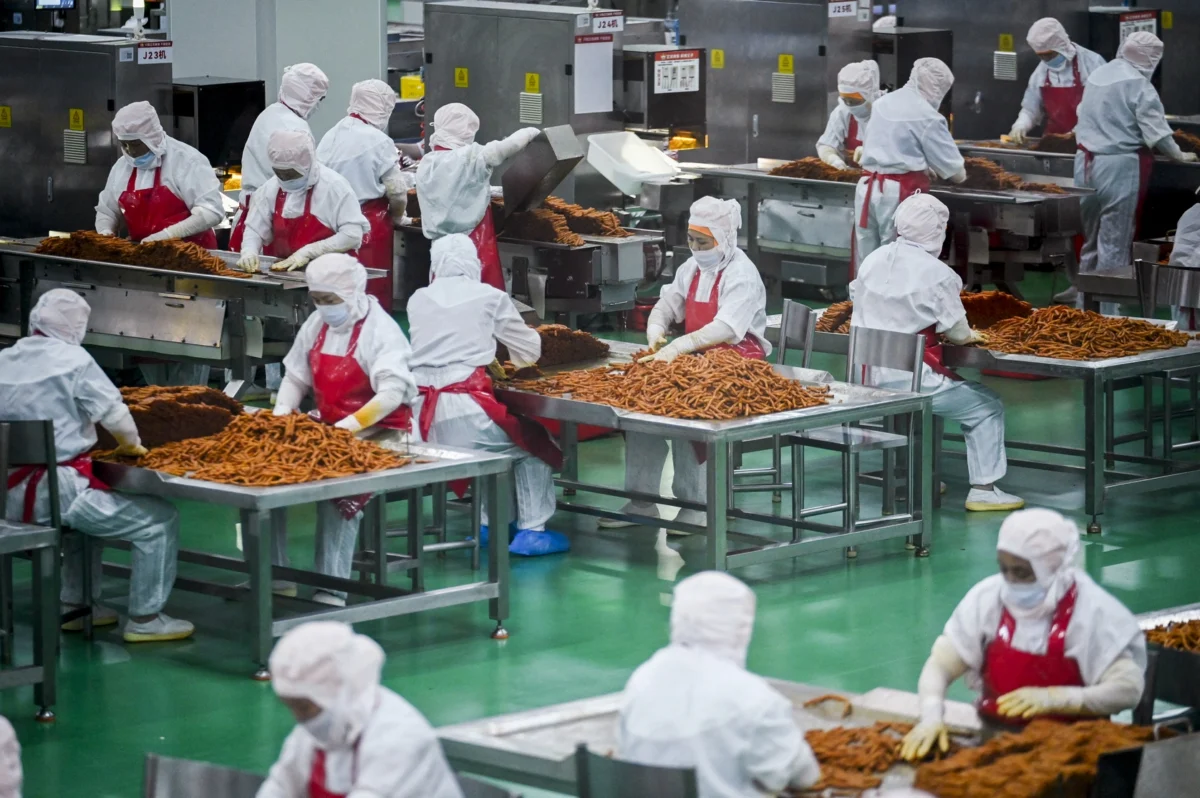
At a gleaming new factory in China’s central hinterland, masked workers in white uniforms meticulously season and sift through mounds of latiao, a longtime popular snack that has found hungry fans overseas, transforming a humble emergency food into a global sensation. This modern facility in Pingjiang county, nestled within China’s central Hunan province, exemplifies the dramatic evolution of latiao from a local delicacy to an international culinary curiosity, driven by meticulous production and savvy digital marketing.
Latiao, literally translating to "spicy strips," is a distinctive Chinese snack known for its spicy, sweet, and curiously chewy texture. Primarily made by cooking wheat flour dough at high temperatures and pressures, these spongy, red-coloured strips resemble squashed French fries drenched in a flavorful oil. Despite its historical reputation as a "junk food," often criticized for its unhygienic production in its early days and perceived unhealthy additives, latiao has undergone a remarkable transformation, evolving into an industry now valued at over 60 billion yuan (approximately $8.9 billion USD). The Mala Wangzi factory, a pivotal player in this booming market, currently produces a staggering nearly 700 tonnes of these addictive strips daily, all for domestic consumption, showcasing the immense local demand before even considering its burgeoning international presence.

The Humble Origins of Latiao: Born from Necessity
The story of latiao’s inception is rooted in an act of ingenuity born from adversity. Its creation dates back to 1998 in Pingjiang, the very region now home to advanced production facilities. That year, devastating floods ravaged the local soybean crop, a staple ingredient for many traditional snacks. Faced with a severe shortage, local producers improvised, turning to readily available wheat flour as a substitute. Through experimentation with high-temperature extrusion and the addition of various spices and oils, they developed a resilient, flavorful, and inexpensive snack that could serve as an emergency staple food. This humble origin as a survival food quickly gave way to widespread popularity due as it provided an affordable and tasty treat, especially for children and young adults across China.
However, the rapid proliferation of latiao in its early years was largely unregulated, leading to numerous small-scale, often unsanitary production facilities. This lack of oversight contributed to its perception as an unhealthy and unhygienic snack, a stigma that latiao brands have since spent years, and significant investment, trying to counteract. For a generation of Chinese consumers, the memory of these early, less-than-ideal versions lingered. As 22-year-old Beijing resident Wang Jingfei recalled, "When I was young, my parents believed they contained too many additives." This sentiment was widespread, highlighting the significant image challenge the industry faced.

Elevating Standards: Industry’s Response to Criticism
Recognizing the need to shed its unsavoury image and capture a broader market, the latiao industry embarked on a concerted effort to modernize and professionalize. This transformation involved substantial investment in new technologies, quality control, and brand building. Manufacturers like Mala Wangzi adopted stringent production standards, drawing inspiration from high-precision industries. Li Manliang, Mala Wangzi’s vice president, proudly stated that their hygienic conditions are based on standards typically used in the pharmaceutical industry, a bold claim underscoring the shift in manufacturing philosophy. The factory floor, once a source of concern, is now a stage for live-streamed tours, allowing consumers to witness the clean, automated processes firsthand, directly addressing past anxieties about food safety.
Beyond improving manufacturing hygiene, the industry has also focused on reformulating the snack itself. Li explained, "We’re reducing the use of oil, salt, sugar and additives, and using more natural raw ingredients." This strategic pivot aims to make latiao a healthier alternative, aligning with growing global consumer demand for healthier snack options. While the core essence of the spicy, chewy treat remains, these modifications represent a significant step towards rehabilitation and broader acceptance. Wang Jingfei’s updated perspective reflects this success: "As the industry has developed and more brands have emerged, food safety has drawn a lot of attention… so I don’t think it’s a big problem to eat it now and then." This change in consumer perception domestically has been crucial for laying the groundwork for international expansion.

A Global Phenomenon: The Rise of "Chinamaxxing" and Digital Marketing
While latiao has long been a domestic staple, its recent surge in global popularity is nothing short of remarkable. The snack is now exported to more than 160 countries worldwide, a testament to its increasing internationalization. This global reach has been significantly propelled by the phenomenon of "Chinamaxxing," an online trend where foreign users embrace and showcase aspects of Chinese culture, including its cuisine and snacks. Social media platforms, particularly TikTok and Instagram, have become powerful conduits for this cultural exchange, transforming latiao into a viral sensation.
Videos of foreigners trying the fiery snack have garnered millions of views. One influencer, for instance, amassed 1.5 million views by constructing and then consuming a model house made entirely of the glutinous strips. In another viral TikTok video, an Australian reviewer’s enthusiastic endorsement of a giant latiao, exclaiming, "If you can handle your spice, I think you would enjoy this. Highly, highly recommend," generated 2.6 million views and countless comments. These organic, influencer-driven promotions have created a powerful ripple effect, driving curious consumers to seek out latiao in specialist grocery stores, on e-commerce platforms, and through various online retailers.

The commercial impact of this digital virality is substantial. Weilong, China’s largest latiao producer and a Hong Kong-listed company, reported overseas sales of 117 million yuan (approximately $17.3 million USD) last year. This figure represents an impressive nearly 50 percent increase from 2024, indicating a steep upward trajectory in international demand. While specific brands like Mala Wangzi currently focus on the domestic market, the success of Weilong and others underscores the immense potential for all players in this expanding global landscape. Regions like East and Southeast Asia have seen particularly rapid growth, likely due to cultural proximity and existing preferences for spicy and savory snacks, but the snack’s appeal now stretches far beyond, reaching consumers from the United States to Australia.
Beyond the Snack: Cultural Resonance and Economic Impact
The journey of latiao from an emergency food to a global snack powerhouse is not just a tale of culinary evolution; it also highlights significant economic and cultural implications. The industry’s growth to over $8.9 billion USD signifies a robust economic engine, creating thousands of jobs in manufacturing, supply chain logistics, marketing, and retail, particularly in central provinces like Hunan. The modernization of factories and adherence to stricter standards also mean an investment in human capital, requiring more skilled labor and better working conditions.

Companies like Mala Wangzi have also understood the importance of connecting with their main consumer base – younger buyers – through innovative marketing strategies that transcend traditional advertising. They have opened pop-up museums dedicated to latiao, celebrating its history and cultural significance. In a testament to its deep integration into youth culture, the company has even sponsored e-sport events, music festivals, and animation conventions, associating the snack with popular youth pastimes. Perhaps most uniquely, Mala Wangzi has hosted over 4,000 latiao-themed weddings for superfan couples, transforming a simple snack into a symbol of shared passion and celebration. These initiatives foster a strong brand identity and cultivate a sense of community around the product.
For many young consumers, latiao offers more than just flavor. Yang Xuhao, 24, articulates this sentiment: "I find latiao is quite addictive and also stress-relieving. When I don’t feel like having a proper meal, I’ll just eat latiao instead. I also like to snack on them while watching TV shows." This speaks to its role as a comfort food, a quick energy boost, and a companion during leisure, solidifying its place in the daily lives of millions.
Challenges and Future Outlook

Despite its meteoric rise, latiao’s path to universal acceptance is not without its challenges. While the industry has made significant strides in improving food safety and ingredient quality, the "junk food" label still persists for some. Li Peng, 22, represents this segment, stating he "kicked the latiao habit" he developed in his school days because he wants "to have a healthy lifestyle and get in shape." This highlights the ongoing tension between indulgence and health consciousness, a common dilemma in the snack food industry.
Furthermore, taste preferences remain subjective, and not everyone is immediately captivated by latiao’s unique profile. A foreign reviewer in a video watched 2.8 million times described it as "kind of like chewy tofu" and "very oily," indicating that while some embrace its distinct characteristics, others might find it unusual or less appealing compared to conventional snacks. Adapting to diverse palates while retaining its authentic essence will be crucial for sustained international growth. This might involve developing new flavors, textures, or even formats to appeal to a broader global audience without alienating its core fans.
Looking ahead, the latiao industry is poised for continued expansion. With robust domestic demand, increasing international interest, and a concerted effort by manufacturers to enhance product quality and appeal, its future appears bright. The industry will likely focus on further product innovation, exploring healthier formulations, diversifying flavor profiles, and strengthening its global distribution networks. As "Chinamaxxing" continues to introduce more aspects of Chinese culture to the world, latiao stands as a prime example of a local staple successfully transcending borders, demonstrating the powerful synergy between cultural exchange and global commerce. From a humble response to a natural disaster, latiao has truly evolved into a vibrant symbol of China’s dynamic snack industry and its growing influence on the global culinary stage.


 Sagoh
Sagoh
 Asro
Asro