Asep Darmawan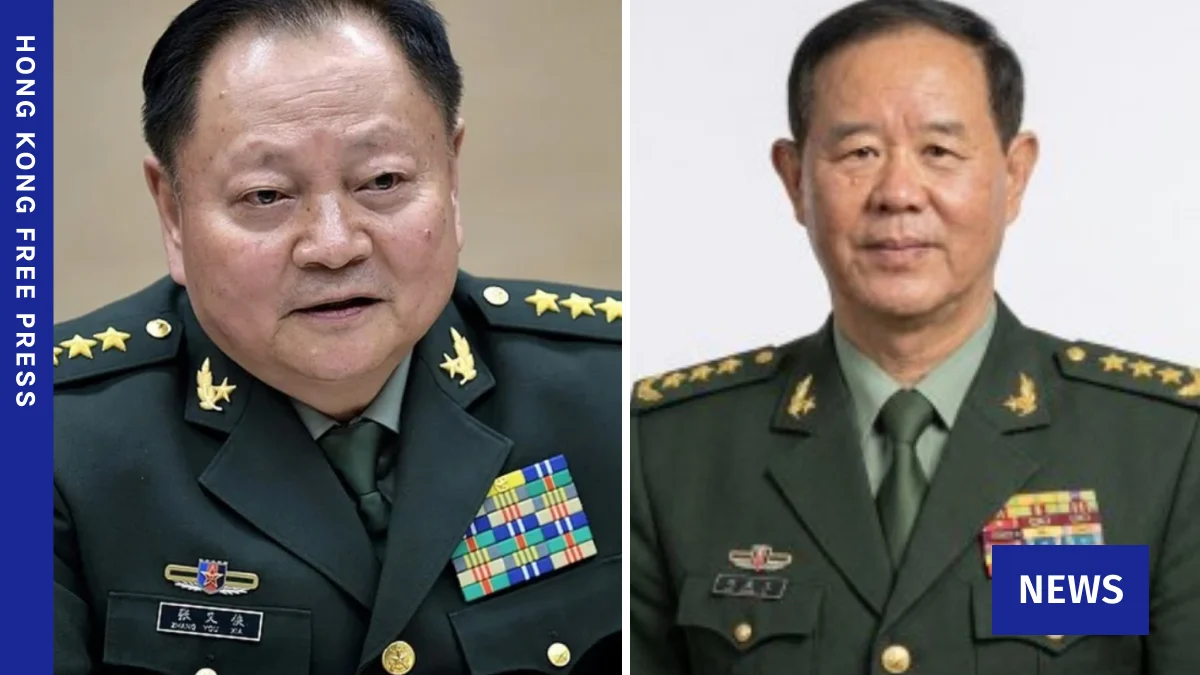
Beijing, China – China has officially removed two of its most senior military officers, Zhang Youxia and Liu Zhenli, from their positions within the Central Military Commission (CMC), the country’s most powerful military decision-making body. The removals, reported by state media on Friday, follow seven months after the officers were placed under investigation for "serious violations of discipline and the law," a well-known euphemism for corruption. This latest development underscores President Xi Jinping’s relentless anti-graft drive, which has profoundly reshaped China’s political and military landscape since he came to power in 2012.
The Shocking Removals and Their Context

Zhang Youxia, who held the more senior of the two vice-chairmen posts on the Central Military Commission, was effectively China’s highest-ranked general. His prominent position and widely perceived close relationship with President Xi Jinping had made his initial investigation in January particularly startling to observers of Chinese politics and military affairs. Liu Zhenli, the other officer removed, served as the Chief of Staff of the CMC’s Joint Staff Department, a critical role overseeing combat planning and operational coordination for the People’s Liberation Army (PLA).
The official confirmation of their removal came via a report from the state news agency Xinhua, detailing a meeting of the standing committee of China’s parliament. The report stated that "the meeting decided to remove Zhang Youxia from the post of Vice Chairman of the Central Military Commission of the People’s Republic of China," with Liu Zhenli’s removal also confirmed. While the initial announcement of their investigation in January by the defence ministry used the phrase "suspected of serious violations of discipline and the law," the specifics of the alleged wrongdoings have not been publicly disclosed, nor have the current whereabouts of Zhang and Liu. This opacity is characteristic of high-level corruption probes in China, where investigations and judicial processes often occur behind closed doors.
Xi Jinping’s Enduring Anti-Graft Campaign

The removal of Zhang Youxia and Liu Zhenli is the latest, and perhaps one of the most significant, events in President Xi Jinping’s decade-long anti-corruption campaign. Launched shortly after he assumed leadership, this campaign, officially dubbed "tigers and flies" (referring to high-ranking and low-ranking officials alike), has been instrumental in consolidating Xi’s power and eliminating potential rivals. The military, in particular, has been a major focus of this sweeping initiative.
Historically, corruption within the PLA has been a persistent issue, with practices such as selling military ranks, procurement fraud, and embezzlement undermining both morale and combat readiness. Xi’s campaign targeted this deeply entrenched problem, aiming to foster loyalty, discipline, and effectiveness within the armed forces. Previous high-profile military purges include those of General Xu Caihou and General Guo Boxiong, both former vice-chairmen of the CMC. Xu, who was once considered one of China’s most powerful military figures, was expelled from the Communist Party in 2014 and died of cancer before his case concluded. Guo Boxiong, another former CMC vice-chairman, was sentenced to life imprisonment in 2016 for bribery. These cases, occurring early in Xi’s tenure, sent a clear message that no one, regardless of rank or past contributions, was immune from scrutiny.
According to various reports from the Central Commission for Discipline Inspection (CCDI), China’s top anti-corruption body, hundreds of thousands of officials, including thousands of military personnel, have been investigated and punished since the campaign began. While the official narrative emphasizes the need to purify the Party and strengthen governance, analysts widely agree that the campaign has also served as a potent tool for Xi to solidify his authority and ensure absolute loyalty within the Party and the military.

The Central Military Commission: Power and Structure
The Central Military Commission (CMC) stands at the apex of China’s military command structure, wielding immense power over the People’s Liberation Army. Chaired by President Xi Jinping, who holds the titles of General Secretary of the Communist Party of China, President of the People’s Republic of China, and Chairman of the CMC, it is the ultimate authority for all military decisions, policies, and operations.
The original article highlights a crucial distinction: "Technically, there are two – a state CMC and a Communist Party CMC. For practical purposes, however, they are treated as one (and) the same in (China’s) bureaucracy." Friday’s announcement specifically refers to the removal of Zhang and Liu from their positions in the state CMC, which formally aligns with the governmental structure. However, the Party CMC is the true locus of power, with its leadership almost always mirroring that of the state CMC. This dual structure underscores the principle of "the Party commands the gun," meaning the military is unequivocally under the control of the Communist Party, not merely the state.

The CMC is typically composed of a chairman, two vice-chairmen, and several members. With the removal of Zhang Youxia and Liu Zhenli, the CMC, which is supposed to have seven members (Chairman, two Vice-Chairmen, and four Members), is now left with only two known representatives: Xi Jinping himself, and Zhang Shengmin, the Secretary of the Commission for Discipline Inspection of the CMC, who effectively serves as the anti-corruption chief within the military. This significant reduction in known active members leaves critical leadership gaps, raising questions about potential reshuffles and appointments in the near future. The absence of other named members indicates a possible ongoing consolidation or a deliberate thinning of the ranks to ensure unquestioning loyalty.
A Timeline of Allegations and Action
- January [Year Unspecified in Source, but implied to be current year]: The Chinese Defence Ministry publicly announces that Zhang Youxia and Liu Zhenli are "suspected of serious violations of discipline and the law." This marks the official commencement of their investigation, although internal processes may have begun earlier. The timing of such announcements often coincides with key political meetings or periods where the Party seeks to project an image of strength and discipline.
- Seven Months Following Announcement: The investigations proceed largely out of public view, consistent with the opaque nature of China’s internal discipline and legal processes. During this period, both officers would likely have been stripped of their duties and placed under internal detention, undergoing interrogation and disciplinary reviews.
- Friday [Reported Day]: State news agency Xinhua reports on a meeting of the standing committee of China’s parliament, confirming the formal removal of Zhang Youxia from his post as Vice Chairman of the Central Military Commission of the People’s Republic of China, and Liu Zhenli from his role as Chief of Staff of the CMC’s Joint Staff Department. This legislative action formalizes the disciplinary measures initiated months prior.
Expert Perspectives and Broader Implications

The removal of such high-ranking officers, particularly Zhang Youxia, carries profound implications for China’s political and military landscape. Analysts suggest that Zhang’s perceived closeness to Xi – having served together in the same military unit early in their careers and being seen as a key ally in military reforms – makes his downfall a powerful demonstration that no one is indispensable or beyond the reach of the anti-graft campaign.
An editorial published in the People’s Liberation Army (PLA) Daily at the time the investigation was announced offered a crucial insight into the official narrative, stating that the two men had "seriously trampled on and undermined the system of ultimate responsibility resting with the CMC chairman – that is, Xi." This statement is highly significant, indicating that the alleged violations were not merely about financial corruption but also about challenging or failing to uphold the absolute authority of Xi Jinping over the military. In China’s highly centralized political system, loyalty to the paramount leader is paramount, and any perceived deviation or formation of independent power bases is met with severe consequences.
Observers believe these purges further solidify Xi Jinping’s control over the military, ensuring that the PLA remains an unswervingly loyal instrument of the Party and his leadership. It sends a chilling message to other high-ranking officers about the need for absolute allegiance and adherence to Party discipline. The opaque nature of these proceedings, where accusations are vague and due process is not transparent, also reinforces the idea that the Party’s internal disciplinary mechanisms operate above conventional legal frameworks, prioritizing political control and stability.

Impact on Military Modernization and Readiness
China has been engaged in an ambitious military modernization program, aiming to transform the PLA into a world-class fighting force by 2049. This involves significant investments in advanced weaponry, technological innovation, and structural reforms. While the anti-graft campaign is ostensibly designed to root out corruption that could impede these goals, some analysts cautiously suggest that frequent high-level purges could also introduce an element of instability or hesitancy within the command structure. Officers might become overly cautious, fearing being caught in future purges, which could potentially stifle initiative or slow down decision-making processes crucial for a modern military.
However, the prevailing view is that Xi views a "clean" and loyal military as fundamental to achieving his strategic objectives, including securing China’s sovereignty claims and projecting its power globally. The removals, therefore, are likely seen by Beijing as a necessary step to ensure the military’s ideological purity and operational effectiveness, particularly in the context of rising geopolitical tensions in regions like the South China Sea and the Taiwan Strait.

The Unanswered Questions
Despite the formal announcement of their removals, many questions remain unanswered. The specific nature of the "serious violations of discipline and the law" attributed to Zhang Youxia and Liu Zhenli has not been detailed, leaving room for speculation about whether the allegations involve financial corruption, disloyalty, factionalism, or a combination thereof. Furthermore, their current whereabouts remain unknown, and it is unclear whether they will face further legal proceedings or if their removal from office constitutes the entirety of their punishment. The absence of such details is a hallmark of political purges in China, where the focus is on the outcome – the removal of the individual – rather than transparent accountability of the process.
In conclusion, the ousting of Zhang Youxia and Liu Zhenli from the Central Military Commission represents a significant escalation in President Xi Jinping’s anti-corruption campaign within the military. It underscores his unwavering commitment to consolidating power and ensuring absolute loyalty within the PLA, reinforcing the principle that the Party’s command over the gun is absolute and unchallenged. While the immediate consequences for the two generals remain veiled, their removal sends a clear message about the unwavering nature of Xi’s authority and the strict discipline expected of all officials, especially those entrusted with the nation’s defense.

 Sagoh
Sagoh
 Asro
Asro