Nila Kartika Wati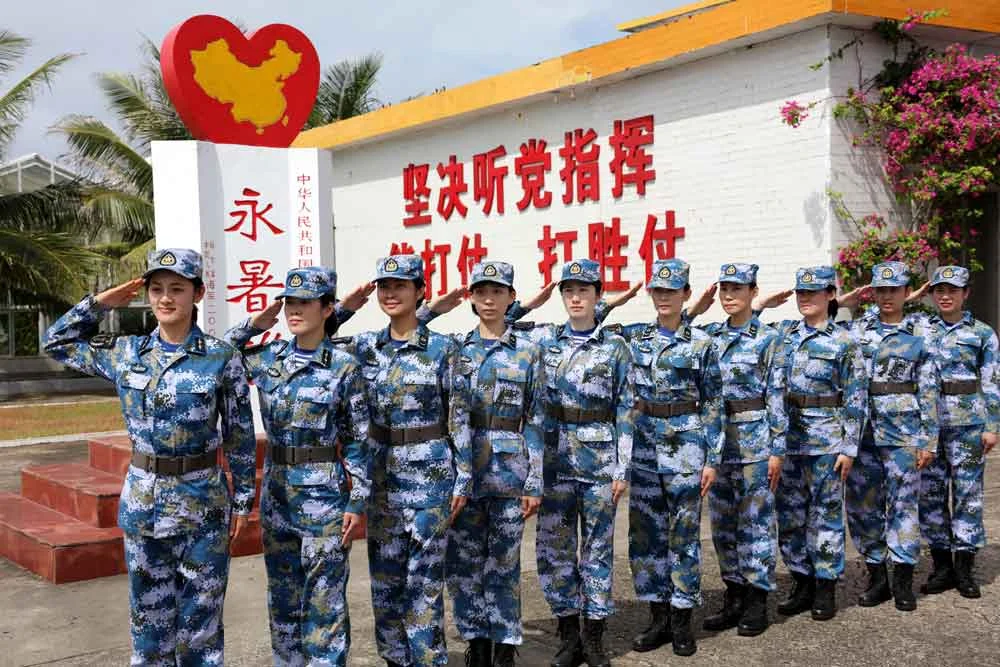
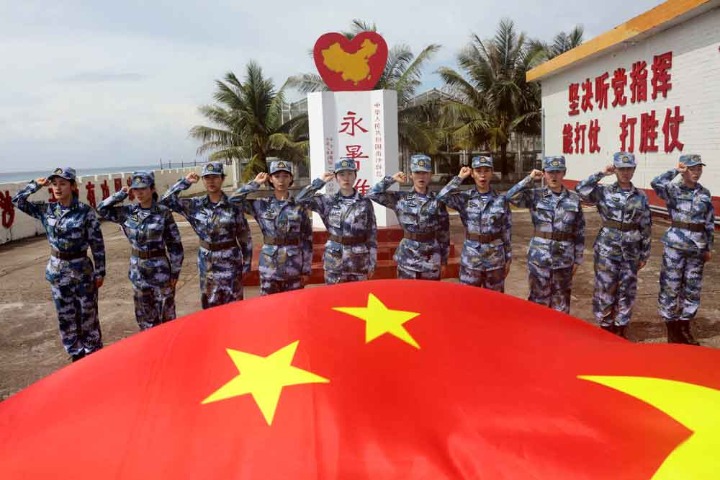
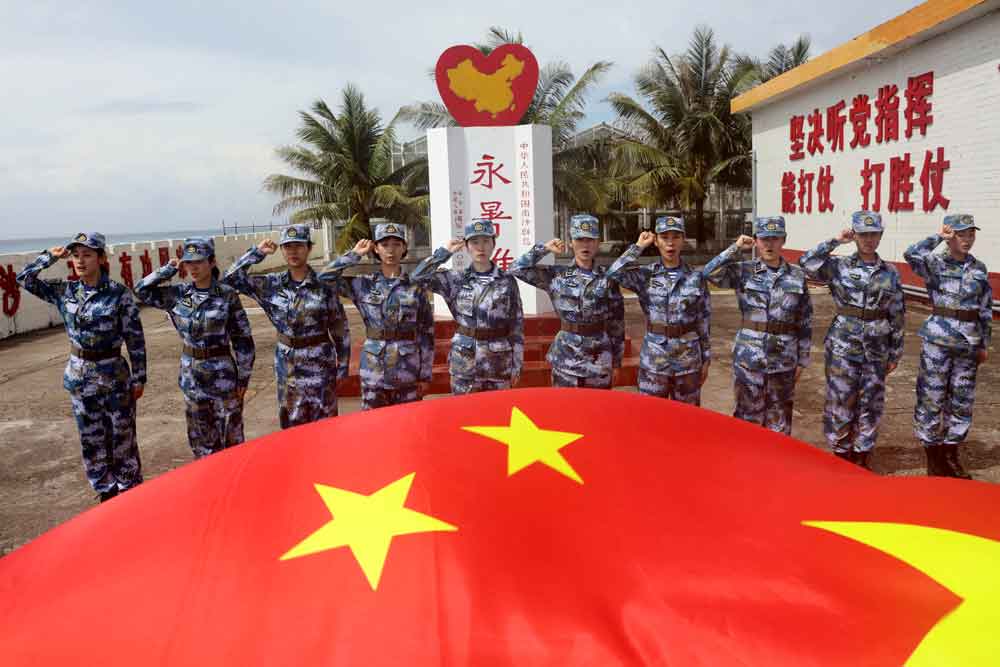
In a significant milestone for the People’s Liberation Army (PLA) and China’s strategic presence in the South China Sea, a contingent of ten female service members has been deployed to the Nansha Islands (Spratly Islands), marking the first time women have been permanently stationed in the country’s southernmost territories. The deployment, announced by the PLA Navy on a Monday afternoon, saw these pioneering women formally commence their duties on Yongshu Reef, one of the largest features in the disputed archipelago, on the same day. This move underscores an evolving approach to military staffing and a broader enhancement of capabilities in a geopolitically sensitive region.
The newly deployed personnel represent a highly qualified and diverse group within the PLA. Comprising officers and sergeants, the ten women boast an average age of 23, with all holding university diplomas, according to the official news release. Their assignments span a critical range of posts essential for garrison operations, including staff coordination, advanced communications, and comprehensive medical services. This multi-faceted deployment highlights a strategic intent to integrate women into vital operational roles, moving beyond traditional auxiliary functions and leveraging a broader talent pool to strengthen China’s presence in the Nansha Islands.
Historical Context of Female Roles in the PLA
The deployment of women to the Nansha Islands marks a notable progression in the role of female personnel within the People’s Liberation Army. Historically, women in the PLA were predominantly assigned to administrative, medical, communications, and cultural roles. Their integration into combat units or frontline garrison duties was limited. However, over the past two decades, the PLA has gradually expanded opportunities for women, reflecting a global trend in military forces towards greater gender inclusivity and recognizing the diverse skills women can bring to modern warfare and defense.
From the late 1990s and early 2000s, the PLA began to integrate women into more specialized and demanding roles, including fighter pilots, submarine crews, special forces, and missile units. This shift has been part of a broader military modernization drive aimed at professionalizing the force and enhancing its overall effectiveness. While female PLA members have previously visited the Nansha Islands, these were typically short-term missions, with personnel operating under orders from their original mainland units. This current deployment, by contrast, establishes a permanent female presence as integral members of the Nansha Islands Garrison, signifying a fundamental change in policy and operational strategy for these remote and strategically important outposts.
Significance of the Deployment
This inaugural long-term deployment carries multiple layers of significance, both domestically for the PLA and internationally concerning China’s posture in the South China Sea.
Symbolic and Social Impact: Domestically, the deployment serves as a powerful symbol of gender equality within China’s armed forces. It showcases the PLA’s commitment to leveraging the full spectrum of national talent and provides inspiring role models for young women considering military careers. It reinforces the narrative of a modern, professional, and inclusive military, aligning with broader national goals of social progress and meritocracy. The selection of highly educated women for these demanding roles further underscores the PLA’s emphasis on quality personnel.
Operational Enhancement: From an operational standpoint, integrating women into the garrison brings diverse skill sets and perspectives, potentially enhancing unit cohesion, problem-solving capabilities, and overall morale. Their specialized roles in communications, medical services, and staff work are critical for maintaining the operational readiness and well-being of the entire garrison. A diverse workforce is often seen as more adaptable and resilient, crucial for the unique challenges of remote island postings.
Sovereignty Assertion and Presence: Geopolitically, the deployment subtly reinforces China’s claims and long-term commitment to its presence in the Nansha Islands. By integrating a permanent female contingent, China demonstrates the normalization and institutionalization of its administrative and military presence on these features. It signals a sustained, multi-faceted approach to managing its claimed territories, emphasizing not just military strength but also the establishment of a robust and stable civilian-like presence, complete with comprehensive support infrastructure and personnel diversity.
Conditions and Infrastructure on Yongshu Reef
Zhou Yaling, one of the newly deployed female service members, offered a vivid description of her initial impressions of Nansha, noting that the islands are "more beautiful than what they had imagined." She was quoted as saying, "There are airports, harbors, streets, hospitals and sporting grounds. All of them make the islands like a lovely city on the sea." Her statement highlights the extensive infrastructure development undertaken by China on Yongshu Reef and other features in the Nansha Islands.
Yongshu Reef, a significant outpost within the Spratly archipelago, has undergone substantial land reclamation and construction in recent years. What was once a submerged reef or a tiny outcrop is now an artificial island featuring a 3,125-meter runway capable of accommodating military and civilian aircraft, a deep-water port facilitating naval vessel docking, and extensive support facilities. These include multi-story buildings for living quarters, administrative offices, and specialized units. The presence of streets, hospitals, and sporting grounds indicates a concerted effort to create a habitable and sustainable environment for long-term residency, mitigating the inherent isolation and harsh conditions of remote maritime outposts. The hospital facilities, in particular, are crucial for supporting the health and well-being of personnel, offering critical care capabilities in an isolated environment. Recreational facilities such as sporting grounds are vital for maintaining physical fitness and mental health, combating the psychological stresses associated with remote postings.
Personnel Welfare and Support Systems
Recognizing the unique challenges associated with extended deployments to remote and isolated locations like the Nansha Islands, the PLA has implemented specific welfare and support measures for its personnel. Zhang Jiahong, the political commissar of the PLA Nansha Islands Garrison, affirmed that these female members, like their male counterparts, would be regularly rotated back to the mainland for rest periods every several months. This policy is crucial for ensuring their physical and mental health, mitigating the effects of prolonged separation from family and the stresses of a high-stakes operational environment.
Beyond rotational leave, the modern facilities on Yongshu Reef contribute significantly to personnel welfare. Access to advanced communication systems allows service members to stay connected with their families and the outside world, alleviating feelings of isolation. The provision of comfortable living quarters, diverse dining options, and recreational activities aims to create a supportive community environment. Medical support, including dedicated hospital facilities and trained personnel, ensures that health concerns can be addressed promptly and effectively, which is paramount in such a remote setting. The PLA’s emphasis on these welfare provisions reflects a contemporary understanding of military human resources, where the well-being of service members is seen as directly linked to their effectiveness and retention.
Broader Context: South China Sea Disputes
The Nansha Islands, internationally known as the Spratly Islands, are a highly contested archipelago in the South China Sea. The region is claimed in whole or in part by several nations, including China, Vietnam, the Philippines, Malaysia, Brunei, and Taiwan. These claims are driven by strategic location, rich fishing grounds, and potential vast hydrocarbon reserves beneath the seabed. China’s assertion of "indisputable sovereignty" over these islands and surrounding waters forms a cornerstone of its maritime strategy.
Over the past decade, China has significantly expanded its presence in the Nansha Islands through large-scale land reclamation and construction activities, transforming submerged reefs into artificial islands capable of hosting military facilities. These developments, including the construction of airfields, radar installations, and naval berths, have been met with concern and criticism from other claimant states and international powers, particularly the United States, which views them as militarization and a challenge to freedom of navigation. The deployment of a permanent female garrison, while a human resources development, is inherently situated within this broader geopolitical context, further solidifying China’s long-term commitment to its presence and claims in the region.
Timeline of PLA’s Nansha Presence and Development
China’s presence in the Nansha Islands dates back several decades, initially established through rudimentary structures on various features. However, the scale and sophistication of its presence dramatically accelerated in the early to mid-2010s.
- 1980s-1990s: China began establishing a more permanent, albeit modest, presence on several reefs in the Nansha Islands, often involving small detachments housed in basic structures.
- Early 2000s: Gradual improvements were made to existing outposts, but large-scale infrastructure remained limited.
- 2013-Present: This period marked a dramatic escalation in China’s construction activities. Utilizing dredging technology, China embarked on extensive land reclamation projects on features like Yongshu Reef, Mischief Reef, and Subi Reef. These projects transformed small reefs into artificial islands spanning several square kilometers.
- 2015-2016: Major infrastructure, including runways, hangars, radar facilities, and port capabilities, began to emerge on these artificial islands, significantly enhancing China’s logistical and operational reach in the South China Sea.
- December 2017: The deployment of the first permanent female contingent to the Nansha Islands Garrison on Yongshu Reef. This event is a continuation of the long-term strategy to professionalize and normalize the extensive facilities constructed over the preceding years, marking a new phase in the human element of China’s sustained presence.
This chronology illustrates a clear progression from basic outposts to sophisticated, multi-functional island bases, with the current female deployment signifying an advanced stage of human resource integration into these complex facilities.
Analysis of Implications
The deployment of female service members to the Nansha Islands carries several significant implications for the PLA and the broader geopolitical landscape.
Military Modernization and Professionalization: This move is indicative of the PLA’s ongoing efforts to modernize and professionalize its forces. By integrating highly educated women into diverse roles, the PLA is aligning itself with contemporary military trends observed in leading global powers. It suggests a strategic shift towards optimizing human resources, valuing diverse talents over traditional gender roles, and enhancing the overall operational effectiveness of its garrisons in challenging environments. It reflects a force that is becoming more sophisticated in its personnel management and deployment strategies.
Human Resources Strategy and Retention: For the PLA, attracting and retaining top talent is crucial. Offering opportunities for women in prestigious and challenging roles like those on the Nansha Islands can boost recruitment efforts and improve morale across the force. It demonstrates that career progression and significant contributions are open to all qualified personnel, regardless of gender. The emphasis on university diplomas for these recruits further highlights the PLA’s focus on intellectual capital.
Public Image and Narrative: Domestically, this deployment enhances the PLA’s public image as a progressive and modern institution. It can foster national pride and support for the military. Internationally, while the underlying geopolitical context of the South China Sea remains contentious, the image of a diverse and professional garrison may subtly influence perceptions. It presents a softer, more integrated aspect of China’s presence, rather than solely focusing on hardware and military might.
Future Trends: This pioneering deployment could set a precedent for similar assignments in other remote or challenging areas under Chinese jurisdiction. It suggests a potential future where female personnel play an increasingly integral role across all branches and operational theaters of the PLA, further diversifying its capabilities and reinforcing its commitment to a comprehensive and modern defense posture. It signals that China views its presence in the Nansha Islands as a long-term, stable, and increasingly normalized aspect of its national defense, requiring a fully integrated and professional human contingent.
Official Responses and Media Coverage
The announcement of this historic deployment came directly from the PLA Navy via a news release, signaling its importance and official endorsement. Chinese state media, including China Daily, promptly covered the story, highlighting the pioneering nature of the deployment and emphasizing the professionalism and dedication of the female service members. The narrative consistently focused on national pride, the commitment of the PLA to defend China’s territories, and the personal sacrifices made by these individuals. The quotes from Zhou Yaling and Zhang Jiahong, provided in the official release, served to humanize the story while reiterating the military’s commitment to personnel welfare. The objective reporting style, while celebrating the milestone, maintained a factual and informative tone suitable for a national news outlet.
In conclusion, the deployment of the first permanent female contingent to the Nansha Islands is a multifaceted event. It is a testament to the evolving role of women within the PLA, a significant step in the modernization and professionalization of China’s armed forces, and a subtle but firm reinforcement of China’s long-term commitment to its claims and presence in the South China Sea. As these ten pioneering women embark on their duties, they not only contribute to the operational effectiveness of the Nansha Garrison but also etch a new chapter in the history of the People’s Liberation Army.


 Basiran
 Jia Lissa