Nila Kartika Wati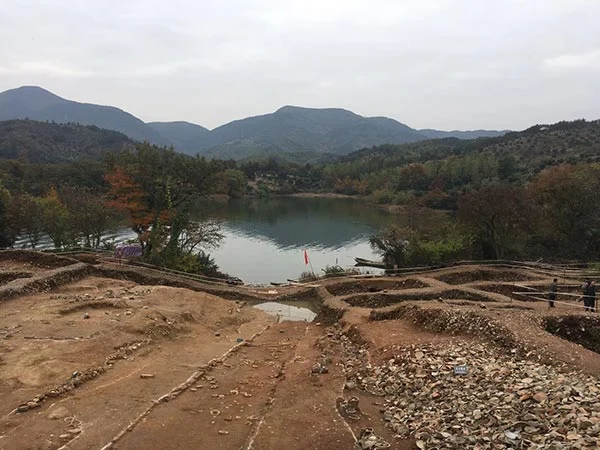
The State Administration of Cultural Heritage (SACH) has officially designated twelve new sites as national-level archaeological parks, a significant move to bolster the preservation, research, and public engagement with China’s rich historical tapestry. The announcement, made on Saturday, expands the prestigious list of protected archaeological areas, underscoring a continued commitment to safeguarding cultural heritage and fostering a deeper understanding of China’s past. These newly recognized parks represent a diverse array of historical periods and cultural achievements, offering invaluable windows into critical junctures of Chinese civilization.
Among the most prominent additions is the Shanglinhu Yue Kiln site in Cixi, Zhejiang province. This location is renowned for its extensive remains of kilns that produced the exquisite Yue ware, a type of celadon pottery that flourished from the Eastern Wu period (229-280 AD) through the Tang and Song dynasties (618-1279 AD). The Shanglinhu site, in particular, is recognized as a pivotal center for the production of Yue ware, with its archaeological discoveries revealing sophisticated craftsmanship and extensive trade networks that spanned centuries. The sheer scale of the kilns and the quality of the unearthed pottery provide irrefutable evidence of the site’s importance in the history of Chinese ceramics and its influence on East Asian art. The inclusion of Shanglinhu Yue Kiln as a national-level archaeological park is expected to spur further research into kiln technology, glaze composition, and the socio-economic conditions that supported such a massive production center.
Another significant inscription is the Middle Capital site of the Ming Dynasty (1368-1644) in Anhui province. While less widely known than some other imperial capitals, the Middle Capital played a crucial role during the early stages of the Ming Dynasty. Its establishment and subsequent development reflect the strategic planning and consolidation of power by the founding emperor, Zhu Yuanzhang. Archaeological investigations at this site have unearthed urban planning layouts, imperial residences, and administrative structures, offering vital insights into the governmental and architectural practices of the nascent Ming empire. The recognition of this site highlights the importance of understanding the foundational periods of major Chinese dynasties, not just their later, more prominent phases.
The Weiyang Palace ruins in Xi’an, Shaanxi province, dating back to the Western Han Dynasty (206 BC – 25 AD), also joins the esteemed list. Weiyang Palace was the imperial palace of the Western Han Dynasty and served as the political center of the empire for over two centuries. Its vast scale and the remnants of its grand architecture speak volumes about the power and ambition of the Han emperors. The site has yielded significant archaeological finds, including architectural elements, imperial seals, and artifacts that illuminate the daily life and courtly rituals of one of China’s most influential dynasties. Its inclusion underscores the ongoing efforts to preserve and interpret the legacy of the Han Dynasty, a period often considered a golden age in Chinese history.
The National Archaeological Site Park Initiative: A Framework for Heritage Preservation
The concept of a national-level archaeological site park in China is designed to provide a comprehensive framework for the protection, interpretation, and sustainable utilization of key archaeological sites. These parks are designated to be accessible for public education, scientific research, and tourism, thereby fostering a greater appreciation for China’s historical legacy among both domestic and international audiences. The initiative, first launched by SACH in 2010, has seen a gradual but consistent expansion of its list of recognized sites. Previous notable inclusions have included the Old Summer Palace (Yuanmingyuan) in Beijing, a testament to imperial grandeur and subsequent destruction, and the Mausoleum of the First Qin Emperor, home to the iconic Terracotta Army, which stands as a monumental testament to the unification of China.
The criteria for designation are rigorous, typically requiring sites to possess significant historical and scientific value, substantial archaeological remains, and the potential for effective management and public access. The goal is not merely to cordon off historical areas but to transform them into dynamic centers of learning and cultural exchange. This involves careful conservation of archaeological features, the development of visitor facilities, the creation of interpretive materials, and the implementation of robust management plans that balance preservation needs with the demands of tourism and local development.
A Growing List of Heritage Treasures
The addition of these twelve new sites brings the total number of national-level archaeological parks to a significant figure, reflecting a proactive approach by the Chinese government to safeguard its vast cultural heritage. The geographical distribution of the new sites is also noteworthy, spanning various regions of China and representing diverse historical periods and cultural traditions. Beyond the aforementioned Shanglinhu Yue Kiln, Middle Capital, and Weiyang Palace, other newly recognized parks likely include sites of provincial and local importance that have demonstrated exceptional archaeological significance and potential for development as public heritage attractions.
While specific details on all twelve sites were not immediately available at the time of the announcement, the SACH’s press release indicated that the new entries collectively represent crucial historical moments in China through large-scale relics. This suggests a focus on sites that offer tangible evidence of major historical transitions, societal developments, or significant cultural achievements. The inclusion of sites from imperial periods, as highlighted by the Ming Dynasty capital and the Western Han palace, suggests a continued emphasis on understanding the evolution of Chinese governance, urbanism, and imperial power.
SACH’s Commitment to Scientific Development and Balanced Growth
To coincide with the announcement, SACH organized a national meeting in Cixi, the same city hosting the Shanglinhu Yue Kiln site. This gathering brought together experts, heritage professionals, and local officials to deliberate on the future trajectory of these archaeological parks. A key theme of the meeting was the exploration of more scientific development strategies, emphasizing the crucial need to strike a delicate balance between urban construction and archaeological preservation.
This focus on balanced development is particularly relevant in a rapidly modernizing China. As cities expand and infrastructure projects proliferate, archaeological sites can face significant threats. The SACH’s emphasis on scientific development implies a commitment to employing advanced archaeological techniques, employing rigorous conservation methodologies, and integrating heritage considerations into urban planning processes. It also suggests a desire to foster greater collaboration between archaeologists, urban planners, and developers to ensure that progress does not come at the expense of irreplaceable historical assets. The meeting likely served as a platform for sharing best practices, discussing innovative approaches to site management, and developing strategies for long-term sustainability.
Implications and Future Prospects
The designation of these twelve new national-level archaeological parks carries several important implications. Firstly, it signifies an increased allocation of resources, both financial and human, towards the preservation and management of these sites. This will likely lead to enhanced conservation efforts, improved visitor infrastructure, and more comprehensive research programs.
Secondly, it will undoubtedly boost tourism to these locations, providing economic benefits to the surrounding communities. However, the emphasis on "scientific development" suggests a commitment to managing tourism sustainably, avoiding the pitfalls of overdevelopment and commercialization that can sometimes detract from the historical integrity of heritage sites. The SACH’s proactive stance aims to ensure that tourism serves as a vehicle for education and appreciation rather than exploitation.
Thirdly, the expansion of the national park list reinforces China’s commitment to international heritage standards and its role as a steward of global cultural history. By meticulously documenting, preserving, and presenting its archaeological heritage, China contributes to a broader understanding of human history and civilization.
The future development of these parks will be closely watched. The success of the initiative will depend on continued government support, effective collaboration between various stakeholders, and the ongoing engagement of the public. The SACH’s commitment to scientific rigor and balanced development suggests a forward-thinking approach that prioritizes the long-term preservation and meaningful interpretation of China’s invaluable archaeological treasures. The inclusion of sites like the Shanglinhu Yue Kiln and the Weiyang Palace ruins not only enriches the list of national parks but also promises to unlock new chapters in our understanding of China’s multifaceted past, making history more accessible and engaging for generations to come. The ongoing dialogue initiated at the Cixi meeting is a testament to the dynamic and evolving nature of heritage management in China, aiming to weave the threads of the past into the fabric of the present and future.

 Asep Darmawan
 Rifan Muazin