Siti Muinah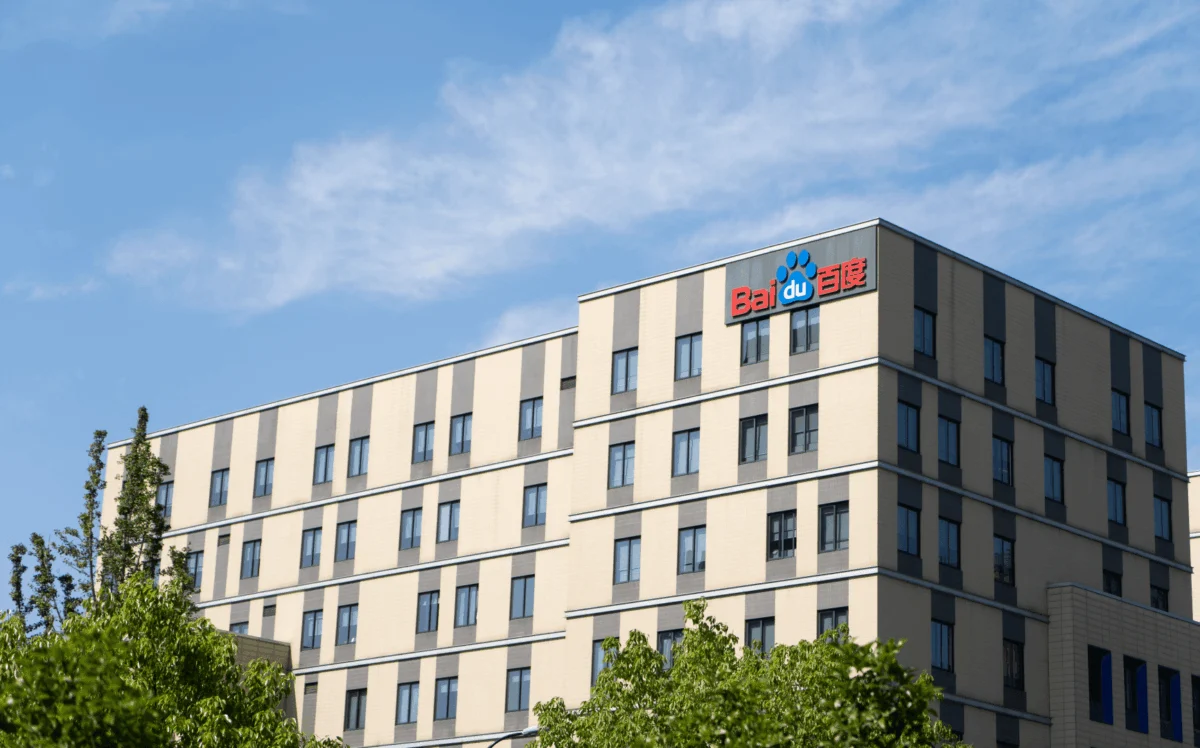
Baidu, Inc., the prominent Chinese technology giant, has officially announced its intention to convert its secondary listing on the Hong Kong Stock Exchange (HKEX) into a primary listing, a pivotal move slated to take effect on September 1. This strategic elevation will bestow upon Baidu the distinctive status of a dual-primary listed company, maintaining its existing primary listing on the Nasdaq Stock Market in the United States while fully embracing the regulatory framework of Hong Kong. The company has confirmed that upon the conversion’s completion, the "S" marker, which denotes a secondary listing, will be removed from its Hong Kong dollar- and yuan-denominated stock names. This significant reclassification underscores a broader trend among Chinese technology firms navigating an increasingly complex global financial and geopolitical landscape.
The Strategic Imperative: Navigating Geopolitical Headwinds
Baidu’s decision to upgrade its Hong Kong listing is deeply rooted in a confluence of geopolitical tensions and evolving regulatory pressures, primarily stemming from the strained relationship between the United States and China. For several years, Chinese companies listed on U.S. exchanges have faced the looming threat of delisting due to a long-standing audit dispute. The enactment of the Holding Foreign Companies Accountable Act (HFCAA) in December 2020 by the U.S. Congress formalized this risk, stipulating that foreign companies could be delisted from U.S. exchanges if they fail to allow the Public Company Accounting Oversight Board (PCAOB) to inspect their audit working papers for three consecutive years. This legislation specifically targeted Chinese firms, as Beijing’s national security laws historically prevented direct access by foreign regulators to audit documents of companies operating within China.
The HFCAA created an existential crisis for hundreds of Chinese companies with a combined market capitalization running into trillions of dollars, prompting many to seek alternative, more secure listing venues. Hong Kong, with its established financial infrastructure, geographical proximity, and cultural ties to mainland China, emerged as the natural choice for these "homecoming" listings. By establishing a primary listing in Hong Kong, companies like Baidu are strategically hedging against the uncertainty and potential disruption of a forced delisting from U.S. markets, thereby safeguarding investor interests and ensuring continued access to global capital.
Understanding Listing Structures: Secondary vs. Dual-Primary
To fully appreciate the significance of Baidu’s move, it is crucial to understand the distinctions between secondary and primary listings, and the advantages offered by a dual-primary structure.
A secondary listing in Hong Kong, often chosen by U.S.-listed Chinese companies, typically involves less stringent compliance requirements than a primary listing. Companies pursuing a secondary listing benefit from certain waivers and exemptions, as their primary regulatory obligations remain with their initial listing exchange (e.g., Nasdaq or NYSE). While it provides a pathway for greater investor access in Asia, it doesn’t confer all the benefits of a full domestic listing. The "S" marker appended to the stock name serves as an identifier of this status.
A primary listing, conversely, subjects a company to the full suite of regulatory requirements and listing rules of the Hong Kong Stock Exchange. This includes comprehensive disclosure obligations, corporate governance standards, and operational compliance, making it equivalent to a company primarily listed solely in Hong Kong.
A dual-primary listing, which Baidu will now hold, means the company is primarily listed on two separate exchanges, in this case, Nasdaq and HKEX, and must comply with the full regulatory requirements of both jurisdictions independently. This structure offers several compelling advantages:
- Enhanced Regulatory Resilience: It provides a robust hedge against delisting risks in one jurisdiction, as the company maintains full compliance and market access in another. Should a delisting occur in the U.S., the Hong Kong primary listing would ensure the company’s shares remain tradable and accessible to investors, mitigating severe disruption.
- Broader Investor Base and Liquidity: A key benefit of a Hong Kong primary listing is eligibility for the Southbound Stock Connect program. This vital mechanism allows mainland Chinese investors to directly trade eligible Hong Kong-listed shares, opening up a vast pool of capital from individual and institutional investors in mainland China. This can significantly boost liquidity, improve valuations, and diversify the company’s shareholder base.
- Local Market Integration: A primary listing signifies a deeper commitment to the local market, potentially enhancing the company’s brand and investor relations within Asia. It also aligns the company more closely with regional market dynamics and investor preferences.
- Reduced Regulatory Arbitrage: By complying with two full sets of regulations, companies like Baidu operate with greater transparency and adherence to international best practices, which can instill greater investor confidence.
A Timeline of Baidu’s Listing Journey
Baidu’s journey through global capital markets reflects the broader narrative of Chinese technology’s ascent and the subsequent challenges.
- August 2005: Baidu made its landmark debut on the Nasdaq Stock Market, raising approximately $109 million in its initial public offering (IPO). Its IPO was famously oversubscribed, signaling the early global appetite for Chinese internet and technology firms. For years, Baidu thrived on Nasdaq, becoming a bellwether for China’s burgeoning digital economy and a constituent of various U.S. indices.
- December 2020: The passage of the HFCAA intensified the pressure on U.S.-listed Chinese companies, forcing many to re-evaluate their listing strategies.
- March 2021: In response to the escalating regulatory uncertainty in the U.S. and following in the footsteps of other tech giants like Alibaba and JD.com, Baidu successfully completed its secondary listing on the Hong Kong Stock Exchange. This move raised approximately HK$23.9 billion (around US$3.1 billion), demonstrating a strategic pivot towards diversifying its investor base and mitigating U.S. delisting risks. At the time, Baidu emphasized its long-term commitment to its U.S. listing while acknowledging the importance of connecting with Asian investors.
- August 2023: Baidu announces its intention to convert its Hong Kong secondary listing to a primary listing, solidifying its commitment to the Asian market and positioning itself for deeper integration with mainland Chinese capital.
- September 1, 2023: The effective date for the conversion, marking a new chapter in Baidu’s corporate finance strategy.
Baidu’s Evolution and Market Position
Founded in 2000, Baidu has evolved from China’s dominant internet search engine into a diversified artificial intelligence (AI) powerhouse. Its core businesses now span AI cloud computing, autonomous driving (Apollo platform), smart devices, and mobile ecosystem services (Baidu App). The company has invested heavily in R&D, particularly in AI, positioning itself at the forefront of technological innovation in China. Its market capitalization, though subject to market fluctuations, consistently places it among the largest technology companies globally, underscoring its significant influence within the tech sector. The strategic move to a dual-primary listing is not just a regulatory compliance exercise but also a reflection of Baidu’s long-term vision to secure stable funding channels for its ambitious AI-driven growth initiatives.
The "S" Marker and Regulatory Alignment
The removal of the "S" marker from Baidu’s Hong Kong stock name is a symbolic yet critical aspect of this conversion. The "S" (meaning secondary) is typically used by HKEX to denote companies whose primary listing is elsewhere. Its removal signifies Baidu’s full embrace of Hong Kong’s regulatory regime as a primary jurisdiction. Consequently, Baidu will become subject to all rules applicable to dual-primary listed companies in Hong Kong, including but not limited to:
- Full compliance with the HKEX Listing Rules: This encompasses requirements for financial reporting, corporate governance, shareholder rights, and market disclosures, often more extensive than those for secondary listings.
- Greater scrutiny from Hong Kong regulators: The Securities and Futures Commission (SFC) and HKEX will exercise primary oversight over Baidu’s compliance in Hong Kong, ensuring adherence to local market integrity and investor protection standards.
- Potential for increased administrative and compliance costs: Meeting the dual regulatory demands of Nasdaq and HKEX will likely entail additional resources for legal, accounting, and internal compliance functions. However, these costs are typically viewed as a necessary investment for long-term stability and market access.
Unlocking New Investor Avenues: The Southbound Stock Connect
One of the most significant implications of Baidu’s dual-primary listing status is its eligibility for the Southbound Stock Connect program. Launched in 2014, Stock Connect is a groundbreaking cross-boundary investment channel that links the stock markets of Hong Kong with those in Shanghai and Shenzhen. The Southbound leg allows qualified mainland Chinese investors to trade eligible shares listed in Hong Kong.
Previously, as a secondary-listed company, Baidu was largely excluded from this program. With its conversion to a primary listing, Baidu’s shares are now expected to become accessible to the vast pool of mainland Chinese capital. This eligibility is anticipated to:
- Boost Liquidity: Increased trading activity from mainland investors can enhance the liquidity of Baidu’s Hong Kong-listed shares, making them more attractive to a wider range of institutional and retail investors.
- Improve Valuation: Greater demand from mainland investors, who often have a deeper understanding and appreciation for domestic Chinese companies, could lead to a re-rating or higher valuation for Baidu’s stock in Hong Kong.
- Diversify Shareholder Base: It will allow Baidu to tap into a new, significant investor demographic, reducing its reliance on U.S. or international institutional investors alone. This diversification can contribute to greater stock price stability.
- Reinforce "Homecoming" Narrative: For mainland investors, investing directly in a leading Chinese tech company listed in Hong Kong provides a sense of national pride and direct participation in the growth of their domestic champions.
Analyst Perspectives and Market Reactions
Financial analysts and market observers have largely viewed Baidu’s move as a pragmatic and strategically sound decision. Many anticipate a positive impact on the company’s stock performance in Hong Kong, particularly once it is formally included in the Stock Connect scheme. Analysts have highlighted that:
- The move de-risks Baidu’s equity financing strategy by providing a stable trading venue irrespective of U.S. regulatory outcomes.
- It offers a clear pathway for mainland Chinese investors to directly participate in Baidu’s growth, potentially leading to increased trading volumes and a more robust valuation.
- The conversion aligns Baidu with a growing trend among leading Chinese technology companies, signaling a proactive adaptation to the evolving global financial landscape.
- The removal of the "S" marker simplifies the investment proposition for a broader set of investors who might prefer fully compliant primary listings.
Hong Kong’s Ascendance as a "Homecoming" Hub
Baidu’s conversion further solidifies Hong Kong’s critical role as a leading international financial center and the preferred "homecoming" destination for Chinese tech giants. The HKEX has actively reformed its listing rules in recent years to attract these companies, including allowing dual-class share structures and providing a streamlined path for secondary listings. The success of these reforms is evident in the substantial capital raised by Chinese companies in Hong Kong over the past few years. This trend not only bolsters Hong Kong’s market depth and liquidity but also reaffirms its unique position as a gateway connecting mainland Chinese capital with global markets, even amidst broader geopolitical shifts. The HKEX benefits from increased trading volumes, greater market capitalization, and enhanced prestige as it hosts more of China’s most innovative and influential companies.
Broader Implications for Chinese Tech Giants
Baidu’s elevation to dual-primary listing status is indicative of a broader, irreversible trend among Chinese technology companies. Faced with sustained U.S. regulatory scrutiny and the allure of tapping into the vast mainland Chinese investor base, more companies are expected to follow this path. This shift represents:
- Diversification of Capital Sources: Chinese tech firms are increasingly diversifying their funding channels, reducing over-reliance on any single market.
- Enhanced Resilience: A dual-primary listing provides a robust defense mechanism against geopolitical risks, ensuring business continuity and investor confidence.
- Shifting Financial Power Dynamics: The "homecoming" trend signals a gradual reorientation of global capital flows, with Hong Kong and mainland China playing an increasingly central role in financing China’s innovation economy.
- Strengthening Domestic Markets: The influx of these high-profile listings strengthens the overall attractiveness and sophistication of Hong Kong’s financial markets.
Challenges and Considerations
While the move offers significant advantages, Baidu will also face new challenges. Complying with two distinct primary regulatory regimes (U.S. and Hong Kong) will undoubtedly increase the company’s compliance burden, requiring robust internal controls and comprehensive disclosure practices. Furthermore, market dynamics in Hong Kong, while offering access to new capital, are also subject to their own unique volatility and investor sentiment. The ongoing dialogue between U.S. and Chinese regulators regarding audit inspections could still evolve, potentially impacting the long-term viability of the Nasdaq listing, even for dual-primary companies. Baidu’s ability to effectively manage these dual responsibilities will be crucial for its continued success.
In conclusion, Baidu’s decision to upgrade its Hong Kong listing to primary status is a strategic imperative driven by the evolving global regulatory landscape and a clear vision to enhance investor access and safeguard its long-term market stability. This move not only fortifies Baidu’s position within the Asian financial ecosystem but also serves as a potent symbol of Hong Kong’s enduring appeal as a critical hub for Chinese technology companies navigating the complexities of the 21st-century global economy.


 Suro Senen
 Nana Muazin