Muslim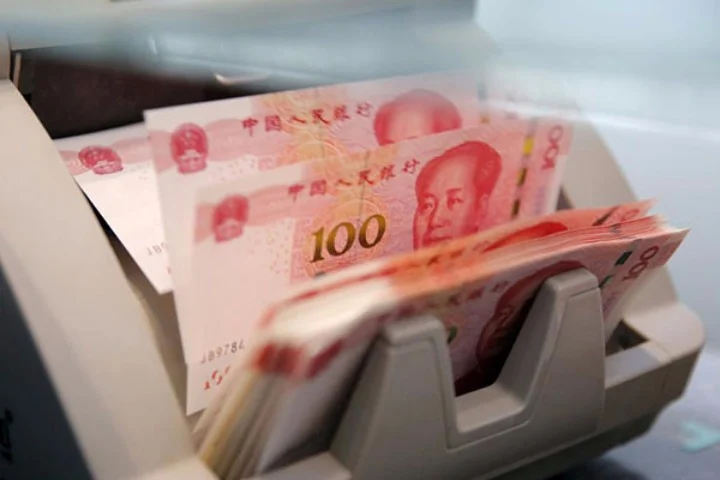
China’s financial landscape in November witnessed a delicate balancing act, with key monetary indicators signaling a concerted effort to support economic growth even as top officials reiterated the paramount importance of proactively and effectively preventing systemic financial risks. Data released by the People’s Bank of China (PBOC), the central bank, on Monday, revealed an acceleration in the money supply growth rate and a significant surge in newly issued yuan-denominated loans, underscoring Beijing’s commitment to maintaining economic momentum amidst an ongoing campaign to rein in excessive leverage and speculative activity within the financial system. This dual focus highlights a sophisticated approach to economic governance, aiming to foster sustainable growth while fortifying the nation’s financial stability against potential shocks.
The November Economic Snapshot: Targeted Easing Amidst Vigilance
November’s financial statistics provided a clearer picture of the monetary authority’s strategy. The M2, a broad measure of money supply encompassing cash in circulation, checking accounts, and savings deposits, increased by 9.1 percent year-on-year last month. This represented an acceleration from the 8.8 percent recorded in October, suggesting a calibrated easing of liquidity conditions. However, it is crucial to note that despite this uptick, the November M2 growth rate remained 2.3 percentage points lower than the same period a year earlier, indicating that the overall stance on money supply growth continues to be more restrained than in previous years of rapid expansion. This controlled expansion reflects the PBOC’s strategy to provide sufficient liquidity for the real economy without fueling asset bubbles or speculative behavior, a stark contrast to periods where M2 growth often outpaced nominal GDP growth by significant margins, leading to concerns about inflationary pressures and inefficient capital allocation.
Complementing the M2 data, banks’ new lending in yuan surged dramatically to 1.12 trillion yuan ($169.69 billion) in November. This figure was almost double the 663.2 billion yuan issued in October and significantly exceeded market expectations, which had hovered around 800 billion yuan. While robust, this figure remained below the 1.27 trillion yuan recorded in September, suggesting that the November increase, though substantial, was not an unrestrained loosening of credit. The outstanding yuan loans, by the end of November, had increased by 13.3 percent from a year earlier, demonstrating continued, albeit more disciplined, credit expansion within the banking sector. Furthermore, the cumulative new loans in the first 11 months of the year reached an impressive 12.94 trillion yuan, surpassing the full-year record of 2016 by 290 billion yuan. This substantial lending underscores the financial system’s ongoing role in channeling funds to support various sectors of the economy, from infrastructure projects to small and medium-sized enterprises (SMEs).
Beyond traditional bank lending, China’s total social financing (TSF), a comprehensive measure of credit and liquidity in the economy that includes off-balance sheet financing, also saw a notable increase. TSF rose to 1.6 trillion yuan in November from 1.04 trillion yuan a month earlier. This broader metric captures financing activities outside the conventional banking system, such as corporate bonds, trust loans, and entrusted loans, which have been central to the "shadow banking" concerns. The rebound in TSF, alongside M2 and new loans, suggests that while regulatory tightening has been pervasive, the authorities are also ensuring that legitimate financing needs of the real economy are met. The composition of TSF growth, however, remains a key focus for regulators, particularly the proportion attributed to less transparent or riskier channels.
The Deeper Imperative: Preventing Financial Risks
The surge in November’s lending and money supply figures was immediately contextualized by a stern warning from China’s central bank governor, Zhou Xiaochuan. Speaking at an internal meeting on the same Monday, Zhou emphasized that financial regulators must "prevent financial risks more proactively and effectively," underscoring the critical need to balance this with the pursuit of economic growth. His remarks highlight a core tenet of current Chinese economic policy: that sustained growth is only possible if underpinned by a stable and secure financial system. Zhou further articulated that the "next step is to identify the key targets of financial reform, opening-up and innovative development," signaling a continuous evolution of policy tools and regulatory frameworks to address emerging challenges.
This emphasis on risk prevention is not new; it has been a guiding principle throughout 2017 and was significantly elevated following the 19th National Congress of the Communist Party of China in October. During the Congress, President Xi Jinping articulated a vision of "high-quality development," prioritizing sustainable and balanced growth over mere speed. A key pillar of this new development paradigm is the resolution of "major risks," with financial risk identified as one of the most critical. Years of rapid credit expansion, fueled by massive stimulus packages post-2008 and a relentless pursuit of GDP targets by local governments, have led to a significant accumulation of debt across various sectors, particularly corporate debt and local government financing vehicles (LGFVs). This rapid credit growth also spawned a complex "shadow banking" sector, characterized by less regulated lending, often through wealth management products, trusts, and interbank activities. These opaque structures raised concerns about potential contagion, maturity mismatches, and inadequate capital buffers, posing a systemic threat to China’s financial stability.
A Chronology of Deleveraging Efforts
The push for deleveraging and financial risk prevention gained significant momentum in early 2017. Throughout the year, China’s top financial regulators — the PBOC, the China Banking Regulatory Commission (CBRC), the China Securities Regulatory Commission (CSRC), and the China Insurance Regulatory Commission (CIRC) — have collaborated on a series of measures aimed at reining in risky practices.
- Early 2017: The year began with a noticeable tightening of interbank liquidity by the PBOC, leading to higher short-term interest rates. This was a deliberate move to curb excessive leverage within the financial system, particularly among smaller banks heavily reliant on interbank borrowing for funding.
- April-May 2017: The CBRC launched a comprehensive crackdown on "regulatory arbitrage," targeting various off-balance sheet activities, interbank investments, and wealth management products (WMPs) that channeled funds into riskier assets. This involved issuing a series of directives demanding banks to self-inspect and rectify their practices, resulting in a slowdown in the growth of shadow banking assets.
- July 2017: The National Financial Work Conference, a quinquennial meeting that sets China’s financial policy for the next five years, reiterated the importance of financial stability. It established a new Financial Stability and Development Committee under the State Council, aimed at strengthening macro-prudential regulation and coordinating the efforts of various financial watchdogs. This institutional reform was a clear signal of the government’s long-term commitment to addressing financial risks.
- November 2017: The PBOC, CBRC, CSRC, and CIRC jointly released draft guidelines for regulating asset management products (AMPs), a cornerstone of the shadow banking sector. These new rules aimed to standardize regulations across different types of financial institutions, eliminate regulatory arbitrage, require financial institutions to provision for credit losses, set leverage limits, prohibit implicit guarantees, and push for net-value-based accounting. These regulations, once finalized, are expected to fundamentally reshape China’s asset management industry and significantly curb shadow banking risks.
- Throughout 2017: The PBOC also actively managed liquidity through open market operations, signaling its intent to maintain "prudent and neutral" monetary policy. This involved using tools like the Medium-term Lending Facility (MLF) and Standing Lending Facility (SLF) to guide market interest rates and provide targeted liquidity, ensuring stability without promoting excessive credit growth.
These regulatory actions have had a tangible impact, cooling money supply growth and leading to a more disciplined approach to lending, especially in high-risk areas. The intent is clear: to steer credit towards the real economy and productive investments, away from speculative ventures and unsustainable debt.
Official Stance and Expert Commentary
Governor Zhou Xiaochuan’s recent remarks underscore the PBOC’s consistent message. His emphasis on "proactively and effectively" preventing risks aligns with the broader strategic objectives set by the Party Congress. It signifies a shift from merely reacting to problems to anticipating and mitigating them before they escalate. The PBOC, under Zhou’s leadership, has navigated a complex economic environment, balancing the need for growth with the imperative for stability. His call to identify "key targets of financial reform, opening-up and innovative development" suggests that the regulatory framework itself is not static but will continue to evolve, embracing technological advancements while ensuring robust oversight.
Economists largely agree with the direction of China’s financial policy. Louis Kuijs, head of Asia Economics at Oxford Economics, articulated this consensus, stating: "In 2018, we expect policymakers to remain focused on reducing financial risks and deleveraging parts of the financial system deemed particularly risky, foreseeing regulatory tightening with respect to interbank market activity and shadow banking." Kuijs’s projection reinforces the view that the November data, while showing increased liquidity, does not signal a reversal of the deleveraging campaign but rather a nuanced approach. He further expects policymakers to aim for a gradual slowdown of credit growth next year, projecting it to ease to around 13 percent in 2018, after likely slightly exceeding the 13.8 percent target for 2017. This forecasted moderation in credit growth is considered essential for stabilizing debt levels and ensuring the long-term health of the economy.
International bodies, such as the International Monetary Fund (IMF), have also consistently highlighted the need for China to address its debt accumulation. In various reports, the IMF has praised China’s deleveraging efforts but cautioned that further decisive actions are needed to contain financial risks, particularly in the shadow banking sector and among local government financing vehicles. These external perspectives often reinforce the domestic drive for reform, adding weight to the policy imperative.
Implications for China’s Economic Future
The ongoing campaign to prevent financial risks carries profound implications for China’s economic trajectory.
- Economic Rebalancing: By curbing excessive credit and redirecting funds, the government aims to facilitate a structural rebalancing of the economy. This involves moving away from an investment- and export-driven model towards one fueled by domestic consumption, innovation, and high-value-added industries. Tighter credit controls on inefficient state-owned enterprises (SOEs) and speculative sectors free up capital for more productive, market-oriented businesses.
- Financial Sector Reform: The regulatory crackdown is fundamentally reshaping China’s financial sector. Banks are being pushed to operate with greater transparency, adhere to stricter capital requirements, and manage risk more prudently. The shadow banking sector, once a significant source of systemic risk, is undergoing a profound transformation, with many of its opaque practices being brought under formal regulation. This process, while potentially painful for some institutions, is vital for building a more resilient and sophisticated financial system capable of supporting a modern economy.
- Corporate Sector Adjustments: Companies, particularly those heavily reliant on easy credit or engaged in industries with overcapacity, will face increased pressure to deleverage, improve efficiency, and innovate. This may lead to some corporate defaults or consolidations, but ultimately, it is expected to foster a healthier, more competitive business environment. Access to financing may become more challenging for smaller, riskier firms, prompting a shift towards more equity-based financing or greater reliance on direct market funding.
- Global Impact: China’s financial stability is not just a domestic concern; it has significant global implications. As the world’s second-largest economy and a major trading partner, any significant financial upheaval in China could send shockwaves across global markets. By proactively addressing its financial risks, China contributes to global economic stability, fostering a more predictable environment for international trade and investment. The successful deleveraging and rebalancing of the Chinese economy would provide a stronger foundation for global growth.
Looking Ahead: The Balancing Act Continues
The November financial data and the concurrent policy statements underscore the enduring challenge for China’s economic policymakers: to skillfully navigate the narrow path between sustaining robust economic growth and proactively mitigating financial vulnerabilities. The acceleration in money supply and lending in November suggests a calibrated approach, ensuring that deleveraging does not unduly stifle legitimate economic activity. However, the unequivocal reiteration of risk prevention as a top priority by Governor Zhou Xiaochuan signals that this commitment remains unwavering.
As China transitions into 2018, the deleveraging campaign is expected to intensify, with the new asset management rules likely to be implemented and further regulatory measures targeting specific areas of risk. The focus will remain on tightening oversight of interbank lending, curbing the growth of shadow banking, and addressing the implicit guarantees within the financial system. The challenge will be to manage these reforms without triggering a sharp economic slowdown or credit crunch. The Chinese government’s ability to maintain this delicate balance will be crucial in determining the pace and quality of its economic development in the years to come, solidifying its path towards a more sustainable and resilient future.


 Evan Lee Salim
 Suro Senen