Lina Irawan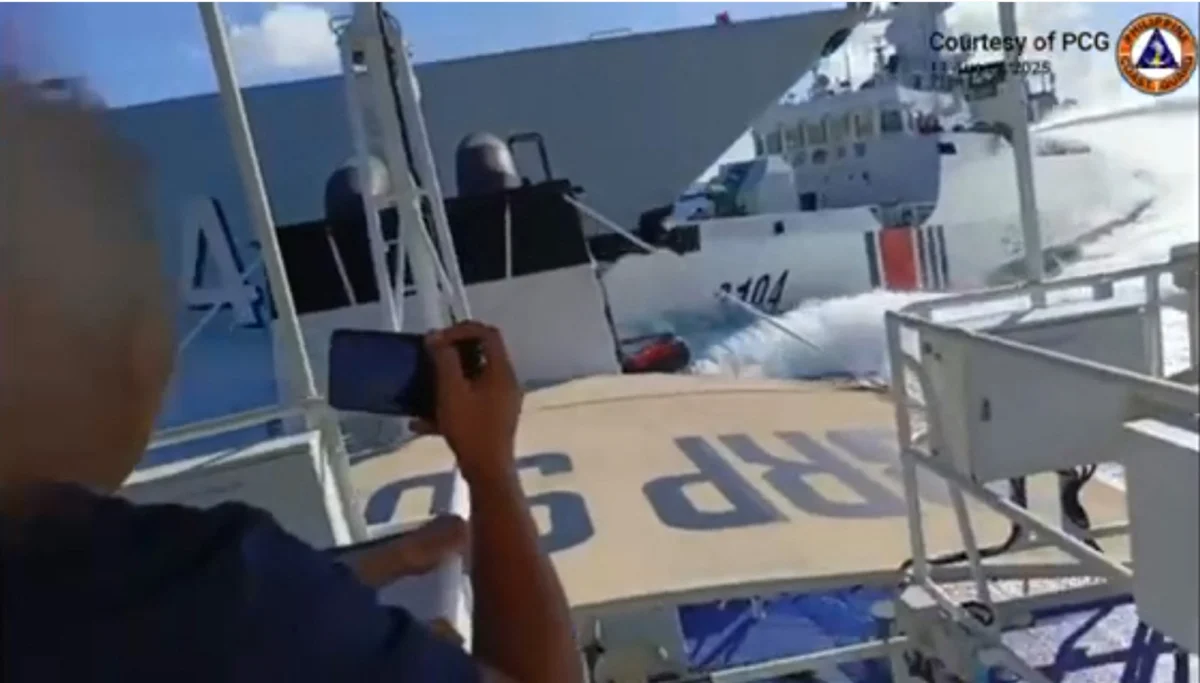
Nearly a year after a critical maritime incident in the fiercely contested South China Sea, Beijing has quietly acknowledged the deaths of two Chinese Coast Guard sailors, Yi Xinyu and Cheng Long, in a collision that occurred on August 11, 2025. This belated confirmation, revealed through government statements and profiles on the official "China Martyrs Network," sheds new light on an event that the Chinese authorities initially downplayed, reporting only a "confrontation" without mentioning casualties or a collision. The incident involved a Chinese Navy vessel and a Chinese Coast Guard ship, which collided with each other while aggressively pursuing a Philippine patrol boat near a disputed shoal, an event captured and publicly released by Manila at the time.
The disclosure of these fatalities through a commendation from the People’s Armed Police Force on social media, awarding the sailors a special title for their "steadfast political convictions, exemplary deeds and outstanding achievements," underscores the sensitive nature of maritime incidents in the region and Beijing’s tight control over information regarding its operations. Both Yi, 21, and Cheng, 25, are listed as having "sacrificed their lives" during a "rights defense operation" in the South China Sea on the exact date of the collision. This designation as "martyrs" carries significant cultural and political weight in China, entitling their families to special housing, medical support, and other forms of aid, while simultaneously framing their deaths within a narrative of patriotic sacrifice for national sovereignty.
The August 2025 Incident: A Detailed Account
The collision on August 11, 2025, occurred near Scarborough Shoal, known as Huangyan Dao in China and Bajo de Masinloc in the Philippines. This horseshoe-shaped reef, rich in fishing grounds and strategically located, has been a flashpoint for disputes between Beijing and Manila for decades. Philippine authorities released dramatic video footage showing the close-quarters maneuvering that led to the collision between the Chinese vessels. According to the Philippine Coast Guard (PCG), their patrol boat was conducting a routine maritime patrol and monitoring the activities of Chinese vessels in what the Philippines considers its exclusive economic zone (EEZ).

The video footage, widely disseminated by the PCG, depicted a Chinese Navy vessel, identified by some analysts as the Type 054A frigate ‘Changsha’ (hull number 164), making an aggressive maneuver that brought it into contact with a China Coast Guard (CCG) ship, possibly the CCG 3104. Both Chinese vessels were reportedly attempting to block or harass the Philippine patrol boat, creating a dangerous situation in an already congested area. The collision, which appeared to be unintentional on the part of the Chinese vessels towards each other, highlighted the risks inherent in the aggressive tactics employed by Chinese maritime forces. While the PCG consistently urged Chinese vessels to respect the International Regulations for Preventing Collisions at Sea (COLREGS), these calls have frequently been ignored, leading to numerous near misses and direct contacts. The immediate aftermath of the August 2025 collision saw no public acknowledgment of damage or injuries from the Chinese side, despite the visible impact and the intensity of the confrontation. This silence fueled speculation about potential casualties and the true extent of the damage to the Chinese vessels involved.
Beijing’s Delayed Acknowledgment and the Martyr Designation
The nearly year-long delay in confirming the deaths of Yi Xinyu and Cheng Long is characteristic of Beijing’s approach to sensitive incidents in the South China Sea. China often seeks to control the narrative surrounding its maritime operations, particularly when they involve negative outcomes or highlight the aggressive nature of its actions. By initially confirming only a "confrontation" without details of a collision or casualties, China likely aimed to avoid international scrutiny and potential diplomatic fallout, as well as to manage domestic perceptions of its capabilities and the costs of its territorial assertions.
The eventual revelation through the People’s Armed Police Force and the "China Martyrs Network" serves a dual purpose. Domestically, it transforms the fallen sailors into national heroes, reinforcing the government’s narrative of defending national sovereignty at all costs. The "martyr" status is a powerful tool for galvanizing public support and legitimizing ongoing operations in contested waters. It links the individual sacrifices to the broader national cause, depicting them as courageous defenders of the homeland. For the families of Yi and Cheng, who were 21 and 25 years old respectively, this designation provides not only significant material benefits but also public recognition and honor, albeit posthumously. This strategy allows Beijing to acknowledge the human cost of its territorial ambitions while simultaneously framing these losses within a heroic, nationalistic context, deflecting any potential criticism regarding the tactics that led to the incident.
The Volatile South China Sea: A Background of Contention
The South China Sea is one of the world’s most critical maritime arteries and a hotbed of competing territorial claims. China asserts sovereignty over virtually the entire sea, encompassing vast swathes defined by its U-shaped "nine-dash line," a claim that predates the establishment of the People’s Republic. This expansive claim overlaps with the exclusive economic zones and continental shelves of several Southeast Asian nations, including the Philippines, Vietnam, Malaysia, Brunei, and Taiwan. The geopolitical significance of the region stems from its strategic location, serving as a crucial passage for over one-third of global maritime trade, valued at an estimated $3.4 trillion annually. Beyond trade routes, the sea is believed to hold vast untapped reserves of oil and natural gas, and its rich fishing grounds are vital for the livelihoods of millions.

The legal framework governing maritime boundaries, the United Nations Convention on the Law of the Sea (UNCLOS), ratified by both China and the Philippines, grants coastal states sovereign rights over their EEZs, extending 200 nautical miles from their shores. However, China’s "nine-dash line" claim largely disregards these provisions. In a landmark ruling in 2016, the Permanent Court of Arbitration in The Hague definitively rejected China’s historical claims to the South China Sea, declaring them unlawful under UNCLOS. Beijing, however, has vehemently rejected this ruling, labeling it "null and void" and continuing to assert its claims through a combination of diplomatic pressure, economic leverage, and increasingly assertive military and paramilitary operations.
Scarborough Shoal, the site of the August 2025 collision, exemplifies the broader disputes. Since 2012, China has maintained effective control over the shoal, blocking access for Filipino fishermen and regularly deploying Coast Guard and maritime militia vessels to deter any Philippine presence. This control has had severe economic consequences for Filipino fishing communities who traditionally relied on the rich fishing grounds around the shoal.
Escalating Tensions and a Chronology of Incidents
The incident in August 2025 is not an isolated event but rather a grim milestone in a pattern of escalating confrontations between China and the Philippines, and indeed, other claimants. The frequency and intensity of these encounters have notably increased in recent years, particularly under the current Philippine administration which has taken a more assertive stance in defending its maritime rights.
Key Incidents and Trends:

- 2012: China effectively seized control of Scarborough Shoal after a tense standoff with the Philippines, denying access to Filipino fishermen.
- 2013: The Philippines filed an arbitration case against China’s claims under UNCLOS.
- 2016: The Permanent Court of Arbitration ruled overwhelmingly in favor of the Philippines, invalidating China’s "nine-dash line" claims. China rejected the ruling.
- Ongoing Harassment: For years, Chinese Coast Guard and maritime militia vessels have routinely harassed, blockaded, and used water cannons against Philippine vessels, particularly those engaged in resupply missions to the BRP Sierra Madre, a grounded naval vessel serving as a Philippine outpost at Second Thomas Shoal (Ayungin Shoal).
- February 2023: A Chinese Coast Guard vessel used a military-grade laser against a Philippine Coast Guard ship near Second Thomas Shoal, temporarily blinding some crew members.
- August 2023: Chinese Coast Guard vessels used water cannons against Philippine resupply boats heading to Second Thomas Shoal, causing significant damage and making it impossible for one boat to deliver supplies. This incident drew strong international condemnation.
- December 2023: Multiple incidents of ramming and water cannon use by Chinese vessels against Philippine resupply and patrol boats, leading to damage and injuries.
- January 2024: China issued new regulations allowing its Coast Guard to board and detain foreign vessels and personnel in waters it claims, raising fears of further escalation.
- July 2025 (pre-collision): Filipino and Chinese sailors clashed again in disputed waters, described as their first serious encounter in months, leading both sides to summon each other’s ambassadors. This suggests a pattern of heightened activity preceding the fatal collision.
- Post-August 2025: Incidents continued, demonstrating Beijing’s unwavering resolve to enforce its claims, often through dangerous and aggressive means. The current article mentions a clash in July (of the current year, presumably 2026, given the 2025 incident date), highlighting the continuous nature of these confrontations.
These incidents demonstrate a clear pattern of China’s "grey zone" tactics – actions that fall short of armed conflict but are designed to assert control and gradually alter the status quo without triggering a full-scale military response.
Official Responses and Diplomatic Fallout
The revelation of the sailors’ deaths adds a tragic dimension to the already strained relations between China and the Philippines, and raises questions about China’s transparency.
China’s Official Stance:
Beijing consistently maintains that its actions in the South China Sea are legitimate exercises of its sovereign rights. Following the August 2025 collision, the Chinese Coast Guard spokesperson’s initial statement acknowledged a "confrontation" but omitted crucial details about the collision and casualties, framing the incident as a necessary response to Philippine "provocations." This narrative seeks to portray China as a victim or a responder to perceived infringements on its sovereignty, rather than as an aggressor. The subsequent martyr designation further reinforces this narrative, transforming a potentially embarrassing incident into a tale of national sacrifice.
Philippines’ Reaction:
Manila has consistently condemned China’s aggressive actions as violations of international law and its sovereign rights within its EEZ. The Philippine government has repeatedly called for China to respect the 2016 arbitration ruling and to cease its dangerous maneuvers. The release of video evidence, such as that from the August 2025 collision, is a deliberate strategy by the Philippines to expose China’s actions to the international community and galvanize support for its position. The confirmation of Chinese casualties, even if belated, validates the Philippines’ account of the dangerous nature of the incident.

International Responses:
The United States, a treaty ally of the Philippines, has consistently reiterated its commitment to the Mutual Defense Treaty and has condemned China’s assertive actions in the South China Sea. Washington has emphasized the importance of upholding international law, particularly UNCLOS, and has called for peaceful resolution of disputes. Joint patrols and military exercises between the US and the Philippines have increased in response to China’s growing assertiveness, signaling a stronger commitment to regional security. Other nations, including Japan, Australia, and members of the European Union, have also expressed concerns about the stability of the South China Sea and the implications for freedom of navigation, often issuing statements that implicitly or explicitly criticize China’s actions. These statements, however, have largely failed to deter Beijing from its course.
Implications for Regional Stability and International Law
The confirmation of the deaths of Yi Xinyu and Cheng Long in the August 2025 collision carries significant implications for regional stability, international law, and the future dynamics of the South China Sea.
Risk of Escalation: The incident underscores the inherent dangers of the aggressive tactics employed by Chinese maritime forces. The close-quarters maneuvering, often in disregard of international maritime safety rules, significantly increases the risk of accidental collisions, which could easily escalate into a larger conflict. Even an unintentional collision between Chinese vessels highlights the chaotic and perilous environment created by China’s actions. A similar incident involving a vessel from another claimant state, or a non-claimant navy conducting freedom of navigation operations, could have severe geopolitical repercussions, potentially triggering mutual defense treaties and drawing in external powers.
Credibility of International Law: China’s consistent disregard for the 2016 UNCLOS arbitration ruling severely undermines the international legal framework designed to manage maritime disputes. By rejecting the ruling and continuing to enforce its expansive claims through force and intimidation, Beijing challenges the very foundation of rules-based international order. This stance sets a dangerous precedent, potentially encouraging other nations to disregard international judgments and resort to unilateral actions.

US-Philippines Alliance: The increasing tensions and incidents, including the fatal collision, have significantly strengthened the alliance between the United States and the Philippines. The US has repeatedly affirmed its commitment to defending the Philippines under the Mutual Defense Treaty, particularly in the event of an armed attack on Philippine public vessels, aircraft, or armed forces, including its Coast Guard, in the South China Sea. This enhanced security cooperation, including joint patrols and military exercises, aims to deter further Chinese aggression and bolster the Philippines’ defense capabilities.
Freedom of Navigation: While the incident involved Chinese and Philippine vessels, the broader pattern of Chinese assertiveness in the South China Sea poses a threat to freedom of navigation and overflight, which are vital for global trade and security. International shipping relies on unimpeded passage through these waters, and any disruption or militarization could have far-reaching economic consequences.
Future Outlook: The South China Sea remains a critical flashpoint. China is unlikely to abandon its claims or its assertive tactics, driven by nationalistic imperatives and strategic calculations. The Philippines, backed by international law and its allies, is also unlikely to concede its sovereign rights. This creates a volatile environment where incidents like the August 2025 collision, and the subsequent delayed acknowledgment of casualties, will likely continue. The international community faces the ongoing challenge of finding a balance between diplomatic engagement, economic pressure, and security deterrence to prevent these localized skirmishes from spiraling into a wider regional conflict. The human cost of these geopolitical struggles, now explicitly acknowledged by Beijing, adds a somber layer to the ongoing saga of the South China Sea.


 Jia Lissa
 Nana Wu