Neng Nana
As large AI models accelerate their integration into vehicles, the competitive dynamics of intelligent cars are undergoing a profound transformation. What was once a landscape dominated by smart cockpits focused on basic voice assistants, in-car applications, and multimedia services is rapidly evolving. Today, with the advent of sophisticated on-device omni-models, advanced AI agents, and nascent AI operating systems, vehicles are transitioning from mere smart terminals executing commands to intelligent AI agents capable of understanding user intent, anticipating needs, and proactively providing personalized services. This shift signifies not just an incremental upgrade but a fundamental redefinition of the automotive experience, heralding the era of AI-Defined Vehicles (AIDV).
The Evolution of In-Car AI: From Smart to Agentic
The journey of automotive intelligence has been one of continuous innovation, moving from rudimentary digital interfaces to highly complex, interconnected systems. In the early 2010s, "smart" cockpits primarily referred to the integration of touchscreens, navigation systems, and basic connectivity features. The mid-2010s saw the rise of voice assistants, often limited to specific commands like "play music" or "navigate home," alongside a proliferation of in-car apps that mirrored smartphone functionality. This initial phase, while a significant leap from traditional analog dashboards, largely kept the human as the primary initiator of interactions, with the vehicle acting as a reactive executor of explicit commands.
However, the rapid advancements in artificial intelligence, particularly in areas like natural language processing, computer vision, and generative AI, have laid the groundwork for a more intuitive and autonomous in-car experience. The current trajectory points towards "agentic AI," where the vehicle proactively understands context, anticipates user needs, and executes complex tasks without explicit, step-by-step instructions. This represents a paradigm shift from a command-and-control interface to a more symbiotic relationship between human and machine.
Banma Intelligence: A Pioneer in Automotive AI
At the forefront of this transformative wave is Banma Intelligence, a company that has strategically positioned itself as a key driver of automotive AI innovation. Founded in 2015, Banma’s journey mirrors the broader evolution of AI itself. The company initially focused on perception-based AI, integrating sensors and cameras to understand the vehicle’s immediate environment. This foundational work paved the way for its foray into generative AI, enabling more sophisticated interactions and content creation within the vehicle. Today, Banma Intelligence is firmly focused on agentic AI, striving to create vehicles that are not just smart, but truly intelligent and proactive companions.
In 2024, Banma Intelligence unveiled its ambitious "AI in All" strategy and launched the "Yan AI" smart cockpit technology brand. This initiative underscores the company’s vision to embed AI deeply into every layer of the automotive experience. Banma describes itself not merely as a provider of AI models for smart cockpits, but as a comprehensive platform technology company. Its core strength lies in integrating full-stack AI technologies, cultivating a robust service ecosystem, and possessing extensive engineering capabilities, all geared towards realizing its "AI in All" ethos. This full-stack approach encompasses everything from foundational models and AI operating systems to sophisticated AI agents, creating a cohesive and deeply integrated intelligence framework for future vehicles.
From Smart Cockpits to AI Cockpits: The Yan AI Strategy
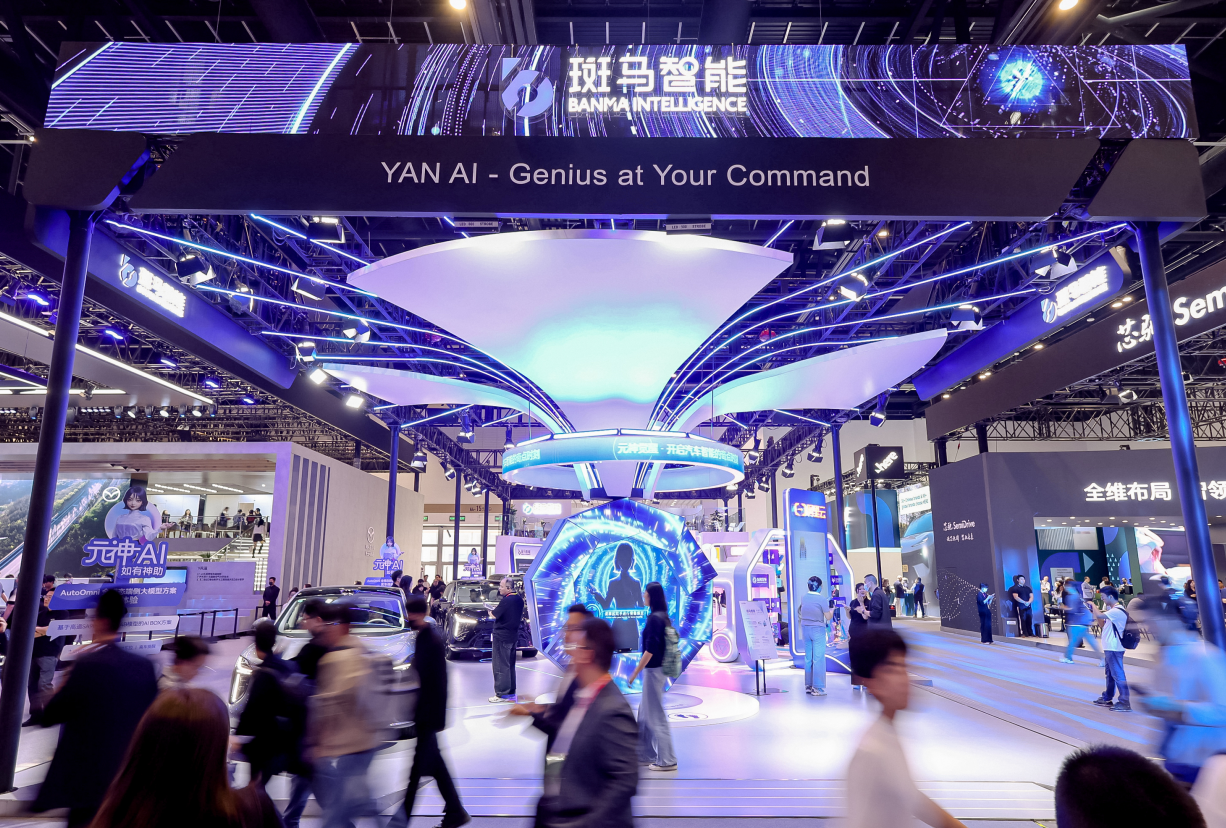
Banma Intelligence’s current AI cockpit strategy is anchored by Yan AI, a holistic suite of technologies designed to redefine the in-car experience. Yan AI’s architecture covers crucial components: advanced foundation models, optimized on-device models, intelligent AI agents, and AI-native operating systems.
Central to the Yan AI family is AutoOmni, an on-device, omni-modal foundation model. This cutting-edge model is engineered to seamlessly integrate and process information from various modalities, including visual data (from cameras), voice commands (from microphones), and textual inputs. Its core capability lies in its continuous perception and understanding of users and their surrounding environment, enabling a more nuanced and context-aware interaction.
This sophisticated approach underpins Banma Intelligence’s visionary concept of "No Touch, No App." In the conventional smart cockpit, users typically had to manually activate a voice assistant, issue a precise command, or navigate through multiple menus within the in-car system to access a specific function. Banma’s vision fundamentally alters this dynamic. It envisions vehicles that possess the intelligence to understand users proactively, anticipating their needs and providing services without requiring explicit, step-by-step prompts.
Consider practical examples of this proactive intelligence: a vehicle equipped with Yan AI could continuously monitor a driver’s physiological state, detecting signs of fatigue, and subsequently proactively adjust the seat massage settings, alter the cabin lighting, or select calming music to enhance comfort and safety. Similarly, by integrating with a user’s digital calendar, the vehicle could anticipate upcoming appointments, intelligently plan optimal routes, and even schedule necessary charging stops in advance, seamlessly integrating mobility with the user’s daily life. In this model, the vehicle transcends its role as a mere command executor; it transforms into an intelligent assistant that anticipates and provides services autonomously.
The Rise of AI Agents: From Answering Questions to Getting Things Done
Beyond the foundational models, the development and deployment of sophisticated AI agents represent a pivotal focus for Banma Intelligence’s next stage of innovation. The company’s trajectory in this domain showcases a clear progression from conversational AI to fully autonomous task execution.
The journey began with the launch of SystemAgent last year. This marked a significant shift, moving beyond mere conversational AI – which primarily answered questions – towards facilitating concrete task execution. SystemAgent introduced a robust architecture comprising a core SystemAgent complemented by specialized AI Agents, each designed to handle specific functions.

Building on this foundation, Banma subsequently introduced SuperAgent. This enhancement expanded the agent capabilities into a much broader spectrum of scenarios, encompassing entertainment (e.g., curating media playlists based on mood), mobility (e.g., finding and booking parking), lifestyle management (e.g., ordering coffee on the commute), and comprehensive vehicle services (e.g., scheduling maintenance).
This year, the company further advanced its agentic capabilities with the introduction of AutoClaw. AutoClaw is engineered to tackle complex user requests by intelligently breaking them down into manageable sub-tasks. It then plans and iterates on these tasks, dynamically calling upon different specialized agents and available tools within the vehicle’s ecosystem to complete them. This represents a monumental shift in the fundamental value proposition of automotive AI – transitioning from simply answering user questions to actively and autonomously "getting things done" on behalf of the user.
To illustrate, imagine a driver arriving at a crowded shopping mall parking lot. An integrated parking assistant agent, powered by AutoClaw, could utilize the vehicle’s exterior cameras and sensors to gather real-time information about available spaces and surrounding obstacles. An on-device foundation model would then process this visual data, perform recognition and make swift decisions regarding the optimal parking maneuver. Subsequently, AutoClaw could call upon relevant services to automatically complete parking payments upon exit. In another scenario, as users prepare to leave the vehicle, the system could leverage interior cameras and sensors to identify items commonly left behind, such as smartphones, laptops, or water bottles, and proactively issue a reminder if anything has been inadvertently forgotten. These capabilities highlight how cars are evolving beyond mere terminals providing information and entertainment, becoming true AI agents capable of perceiving their environment, invoking tools, and executing complex tasks autonomously.
The Paradigm Shift: From SDV to AI-Defined Vehicles (AIDV)
In Banma Intelligence’s overarching vision, these technological advancements and shifts in functionality ultimately point towards an even larger transformation in the competitive logic of the automotive industry: the evolution from Software-Defined Vehicles (SDV) to AI-Defined Vehicles (AIDV).
The concept of Software-Defined Vehicles has been a dominant theme in automotive innovation for several years. In the SDV era, competition has expanded far beyond traditional hardware capabilities like engine performance and chassis dynamics to encompass software-driven functionalities such as sophisticated smart cockpits, advanced intelligent driving systems, and the ability to receive over-the-air (OTA) updates for continuous improvement and feature additions. SDV acknowledged software as a critical differentiator.
AIDV takes this evolution a significant step further. It postulates that AI is not merely another software layer or an added feature; instead, AI must be deeply embedded into the very underlying architecture of vehicles, forming the core of their operational intelligence. Banma Intelligence asserts that a truly AI-native vehicle is not simply a conventional car with an additional AI feature bolted on. Rather, AI needs to serve as an integral part of the underlying operating system and the core decision-making layer. This implies that the entire vehicle – its architecture, data flow, interaction paradigms, and even its driving systems – must be fundamentally designed around AI.
This makes an AI Operating System (AIOS) a potentially critical piece of infrastructure for the next stage of automotive development. Banma Intelligence is actively building a comprehensive technology stack designed to support this vision. This stack spans from chip adaptation, ensuring seamless integration with various hardware platforms, to robust system infrastructure, on-device omni-models for continuous intelligence, and a dynamic AI agent ecosystem. The ultimate goal is to elevate AI from being merely an application running on top of an automotive operating system to becoming an intrinsic, foundational component of the vehicle’s entire digital infrastructure. Industry analysts suggest that this shift towards AIDV will not only reshape vehicle design and functionality but also demand new skill sets from engineers and fundamentally alter the automotive supply chain.

The Strategic Importance of On-Device AI in Automotive
The debate between cloud-based and on-device AI has significant implications for the automotive sector. Banma Intelligence firmly believes in the long-term strategic value and necessity of on-device AI for vehicles. Cars operate in dynamic, real-time environments, continuously processing vast amounts of information from a multitude of sensors, including cameras, microphones, radar, and lidar. This constant stream of data, critical for both safety and convenience features, necessitates immediate processing.
On-device AI offers several compelling advantages for automotive applications:
- Low Latency: Critical for safety-related functions like collision avoidance and driver assistance systems, where even milliseconds of delay can have severe consequences.
- Offline Availability: Vehicles must function reliably even in areas with poor or no network connectivity, ensuring core features remain operational.
- Data Privacy and Security: Processing sensitive user data and vehicle operational data directly on the device reduces the risk of data breaches during transmission to the cloud and enhances user privacy. Regulatory frameworks like GDPR and CCPA increasingly emphasize data localization and protection, making on-device processing an attractive solution.
- Reduced Bandwidth Costs: Minimizing the need to constantly send large volumes of sensor data to the cloud reduces operational costs and reliance on external infrastructure.
However, Banma Intelligence does not view cloud and on-device AI as mutually exclusive; instead, it advocates for a sophisticated cloud-device collaborative approach. This hybrid model leverages the strengths of both environments: complex, computationally intensive tasks that require vast datasets or superior processing power can leverage scalable cloud computing resources, while tasks demanding real-time responses, low latency, and stringent privacy protection are primarily handled directly on the vehicle. This balanced approach ensures optimal performance, reliability, and security across the entire range of automotive AI functions. Market observers note a growing industry trend towards edge computing and hybrid AI architectures in the automotive sector, validating Banma’s strategic direction.
China’s Global Ambition in Automotive Software: Banma’s Dual-Track Approach
The rapid development of automotive AI is not only redefining vehicles but also creating unprecedented opportunities for Chinese intelligent automotive software companies to expand their influence globally. Banma Intelligence stands as a prime example of this ambition.
The company boasts an impressive track record, having collaborated with 69 automakers to date, with its advanced solutions deployed in more than 10 million intelligent vehicles worldwide. Furthermore, Banma has demonstrated its versatility by adapting its technology to approximately 10 different chip companies and supporting over 30 distinct chip platforms, showcasing its capability to integrate across diverse hardware ecosystems.
For its global expansion, Banma Intelligence is pursuing a strategic dual-track approach: "In China for Global" and "From China to Global."

- In China for Global: This strategy involves actively working with established international automotive brands, such as Volkswagen and BMW, within the Chinese market. By demonstrating the efficacy and value of its AI solutions in a highly competitive and technologically advanced market like China, Banma builds credibility and expertise that can be leveraged globally. This also allows international brands to benefit from cutting-edge Chinese AI innovation.
- From China to Global: Simultaneously, Banma Intelligence is a key enabler for Chinese automotive brands, including emerging players like IM, and established names like Roewe, MG, and Jetta, as they expand into overseas markets. By equipping these domestic brands with sophisticated AI cockpits and intelligent software, Banma is effectively exporting capabilities developed and refined in China to a global customer base. This strategy capitalizes on the growing international presence of Chinese automakers and positions Banma as a crucial technology partner in their global endeavors.
Challenges and Opportunities for Globalization
While the opportunities for Chinese automotive software companies are immense, true globalization requires more than simply replicating products in overseas markets. It necessitates a deep understanding and careful navigation of a complex international landscape. Key challenges include:
- Localized Adaptation: Products and services must be meticulously adapted to local languages, cultural nuances, consumer preferences, and driving habits. A one-size-fits-all approach is unlikely to succeed.
- Data Compliance: Adhering to diverse and often stringent data privacy regulations (e.g., GDPR in Europe, CCPA in California, and other regional laws) is paramount. This includes data storage, processing, and transfer protocols.
- Cybersecurity: With connected vehicles becoming increasingly sophisticated, robust cybersecurity measures are essential to protect against vulnerabilities and ensure vehicle integrity and user safety across different regulatory environments.
- Development of Local Service Ecosystems: Building strong partnerships with local service providers, content creators, and infrastructure operators is crucial for delivering a truly integrated and valuable user experience in new markets. This often involves significant investment in local teams and infrastructure.
- Geopolitical and Trade Dynamics: Navigating the complex interplay of international trade policies, geopolitical tensions, and varying national technology standards will also be a critical factor for successful global expansion.
Despite these challenges, the global market for automotive AI and smart software is projected to grow substantially, with some estimates suggesting the automotive AI market could exceed $10 billion by the late 2020s. This growth, coupled with China’s leading position in AI development and electric vehicle adoption, creates a fertile ground for companies like Banma Intelligence to become global leaders in the AIDV era.
Broader Industry Implications and Future Outlook
The shift towards AIDV, championed by companies like Banma Intelligence, carries profound implications for the entire automotive industry:
- Consumer Experience: Drivers and passengers can anticipate a significantly more intuitive, personalized, and safer driving experience. Vehicles will become active participants in daily life, anticipating needs and offering solutions, akin to a personal assistant on wheels.
- Automaker Competition: The core competencies for automakers will further shift from traditional hardware engineering to software development, AI integration, and data management. This will intensify the demand for software talent and foster new types of partnerships.
- Supply Chain Implications: The automotive supply chain will see an increased emphasis on specialized AI hardware (e.g., powerful edge AI chips), AI development tools, and comprehensive software solutions, creating new opportunities and challenges for component suppliers.
- Ethical Considerations: As AI agents gain more autonomy, ethical questions regarding accountability for actions, potential biases in AI algorithms, and the design of human-machine interaction will become increasingly critical. Regulators and industry players will need to collaborate to establish robust ethical frameworks.
- Future Vision: The long-term vision points towards fully autonomous, context-aware vehicles that are not just modes of transport but highly intelligent, adaptive mobile AI companions, seamlessly integrated into our digital lives.
Banma Intelligence’s commitment to full-stack AI, on-device omni-models, and proactive AI agents positions it at the vanguard of this revolution. By pushing the boundaries of what automotive intelligence can achieve, Banma is not only enhancing the driving experience but also playing a pivotal role in defining the future of AI-Defined Vehicles on a global scale. The race to create the most intelligent and proactive vehicle is well underway, and companies like Banma Intelligence are leading the charge.


 Azzam Bilal Chamdy
 Siti Muinah