Layla Zulfa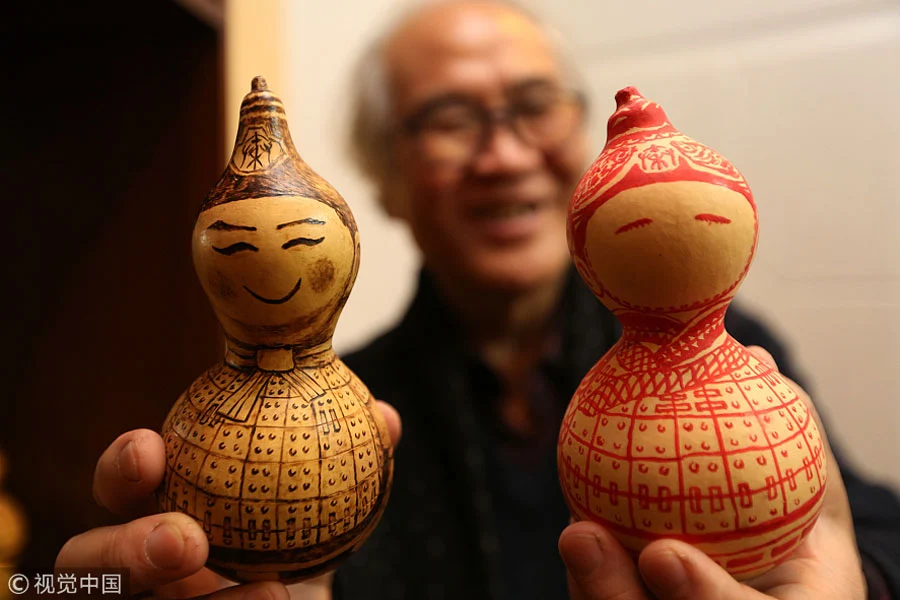
Xi’an, the venerable capital of Northwest China’s Shaanxi province, a city steeped in millennia of history and a cradle of Chinese civilization, is witnessing its profound cultural legacy being brought to life in an unexpected and artistic form: intricate calabash carvings. Liang Ping’an, a local artisan, has dedicated his craft to transforming ordinary gourds into extraordinary artworks, each one a miniature testament to Xi’an’s unparalleled historical significance and vibrant cultural heritage. His creations, notably those depicting iconic symbols such as the Terracotta Warriors and the Great Wild Goose Pagoda, serve not only as aesthetically pleasing objects but also as tangible connections to the city’s dynastic past, offering a unique avenue for cultural preservation and public engagement.
A City of Emperors and Dynasties
Xi’an’s historical importance cannot be overstated. For centuries, it served as the imperial capital for numerous influential dynasties, a role that shaped the trajectory of Chinese history and culture. Its strategic location along the ancient Silk Road facilitated trade, cultural exchange, and the diffusion of ideas, further solidifying its position as a global nexus.
- Western Zhou Dynasty (c. 11th century – 771 BC): The Zhou dynasty laid the foundations for many aspects of Chinese governance, philosophy, and ritual. Xi’an, then known as Haojing, was a significant center of power during this era.
- Qin Dynasty (221 – 206 BC): Under the first Emperor Qin Shi Huang, Xi’an (then Chang’an) became the capital of a unified China. This period is famously marked by the construction of the Terracotta Army, a monumental undertaking designed to guard the emperor in the afterlife.
- Western Han Dynasty (206 BC – AD 24): The Han dynasty further expanded China’s territory and influence, with Chang’an serving as a crucial hub for the burgeoning Silk Road trade routes. This era saw significant advancements in arts, sciences, and governance.
- Tang Dynasty (618 – 907): The Tang dynasty is often considered a golden age of Chinese history, characterized by its cosmopolitanism, artistic flourishing, and territorial expansion. Chang’an, as its capital, was one of the largest and most vibrant cities in the world, attracting merchants, scholars, and artists from across Asia and beyond.
The sheer weight of history associated with Xi’an provides an inexhaustible wellspring of inspiration for artists like Liang Ping’an. His work taps into this rich tapestry, translating monumental historical narratives into intimate, portable artworks.
The Art of Calabash Carving: A Tradition Reimagined
Calabash carving, a traditional folk art form, involves the meticulous etching or carving of intricate designs onto the dried shell of a calabash gourd. This ancient practice, found in various cultures worldwide, demands patience, skill, and an intimate understanding of the material. In China, calabashes have long been associated with good fortune, longevity, and the containment of spiritual essence, often depicted in traditional paintings and folklore.
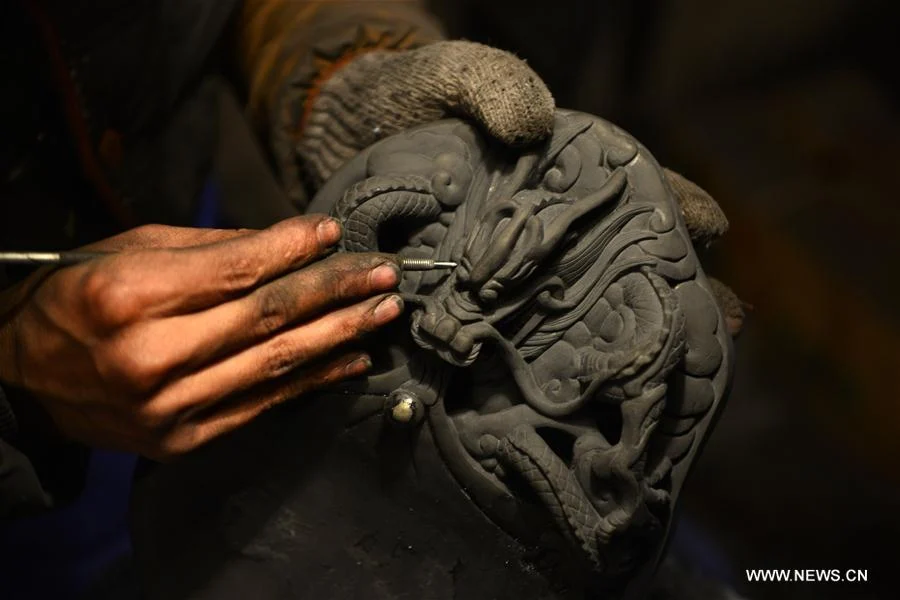
Liang Ping’an’s approach elevates this traditional craft by focusing it on the specific cultural icons of Xi’an. His studio, likely a space filled with the earthy aroma of dried gourds and the quiet hum of focused artistic endeavor, is where these transformations occur. He meticulously sketches his designs onto the gourd’s surface, then employs a range of carving tools – from fine needles to small chisels – to bring his visions to life. The natural contours and texture of the calabash become integral parts of the artwork, lending a unique organic quality to the carved figures and scenes.
Echoes of the Terracotta Warriors and the Great Wild Goose Pagoda
Among Liang’s most striking creations are those depicting the Terracotta Warriors. These life-sized figures, unearthed in 1974 and now a UNESCO World Heritage site, are a global symbol of Xi’an and the Qin Dynasty’s military might and artistic prowess. Liang’s calabash carvings capture the stoic expressions, the detailed armor, and the sheer individuality of these ancient soldiers, albeit on a much smaller scale. Each warrior, painstakingly rendered, becomes a miniature sentinel, carrying the echoes of the Qin Dynasty’s formidable army.
The Great Wild Goose Pagoda, a Buddhist stupa built in the 7th century during the Tang Dynasty, is another recurring theme in Liang’s work. This iconic landmark, originally constructed to house Buddhist scriptures brought back from India by the monk Xuanzang, represents Xi’an’s role as a center of religious and intellectual exchange. Liang’s carvings of the pagoda likely capture its elegant tiered structure, its spiritual aura, and its enduring significance as a testament to the enduring influence of Buddhism in China.
Beyond these prominent landmarks, Liang’s exploration of Xi’an’s cultural icons is likely to encompass a broader spectrum. This could include depictions of:
- Ancient City Walls of Xi’an: The most complete ancient city walls in China, offering a tangible link to the defensive architecture and urban planning of imperial China.
- Bell Tower and Drum Tower: Iconic landmarks that historically marked time and served as administrative centers in the heart of the ancient city.
- Han Dynasty pottery figures: Reflecting the artistic achievements and daily life during this pivotal era.
- Traditional Xi’an opera masks or costumes: Showcasing the vibrant performing arts heritage of the region.
- Motifs from the Silk Road: Incorporating elements of trade, cultural exchange, and the diverse peoples who traversed this historic route.
A Personal Mission: Connecting with Traditional Culture
Liang Ping’an articulates a profound purpose behind his artistic endeavors. "Carving on calabashes is more than a personal hobby," he states. "I hope people will return to traditional culture and find more inspirations in our city." This sentiment underscores a contemporary concern about the potential erosion of traditional values and practices in the face of rapid modernization and globalization.
His carvings serve as a bridge, connecting contemporary audiences with the tangible heritage of Xi’an. By transforming a humble gourd into a vessel for historical narratives and cultural symbols, Liang encourages viewers to pause, to appreciate the artistry, and to delve deeper into the stories behind these iconic representations. This act of engagement can foster a renewed sense of cultural pride and a deeper understanding of China’s rich past.
Supporting Data and Context
The cultural significance of Xi’an is reflected in its numerous archaeological discoveries and its status as a major tourist destination.
- UNESCO World Heritage Sites: Xi’an is home to multiple UNESCO World Heritage Sites, including the Mausoleum of the First Qin Emperor (which encompasses the Terracotta Army), and the portion of the Silk Roads: the Routes Network of Chang’an-Tianshan Corridor.
- Tourism Statistics: In 2019, before the global pandemic, Xi’an welcomed over 130 million domestic and international tourists, generating over 150 billion yuan in tourism revenue. This demonstrates a strong public interest in the city’s historical and cultural attractions.
- Archaeological Discoveries: Xi’an and its surrounding areas have yielded an astounding number of archaeological treasures, providing invaluable insights into ancient Chinese life, technology, and belief systems. The ongoing excavation and research continually enrich our understanding of the region’s past.
Liang’s art contributes to this broader ecosystem of cultural appreciation. By creating accessible and visually engaging interpretations of Xi’an’s heritage, he makes these historical narratives relatable to a wider audience, potentially inspiring further exploration and engagement with the city’s rich history.
Potential Reactions and Broader Implications
While specific official statements from cultural institutions in Xi’an regarding Liang Ping’an’s work are not detailed in the provided text, it is highly probable that such artistic initiatives are viewed favorably. Local governments and cultural organizations in China often actively promote traditional arts and cultural heritage as a means of promoting tourism, fostering national identity, and preserving intangible cultural assets.
- Cultural Preservation: Liang’s work can be seen as a form of intangible cultural heritage preservation. By practicing and innovating within a traditional craft, he ensures its continuation and relevance for future generations.
- Economic Impact: While not a large-scale industry, such artisanal crafts can contribute to the local economy, supporting individual artists and potentially inspiring small businesses related to traditional crafts and cultural souvenirs.
- Educational Value: The carvings serve an educational purpose, offering a visually engaging way to learn about Xi’an’s history and its most significant cultural landmarks. They can spark curiosity among both locals and tourists, encouraging them to seek out more in-depth information.
- Soft Power and Cultural Diplomacy: Art forms like these, when shared internationally, can act as ambassadors for Chinese culture, fostering understanding and appreciation among global audiences. The unique nature of calabash carving combined with the universally recognized imagery of the Terracotta Warriors offers a compelling narrative of Chinese heritage.
The implications of Liang Ping’an’s work extend beyond mere artistic expression. It highlights the enduring power of traditional crafts to connect people with their history and identity. In an era of rapid change, such artistic endeavors serve as anchors, reminding us of the deep roots and rich cultural tapestry that shape our present. His dedication to transforming the ordinary into the extraordinary, using the humble calabash as his canvas, offers a powerful testament to the enduring spirit of Xi’an and its timeless cultural legacy. As his creations continue to circulate, they not only adorn homes but also sow seeds of appreciation for a history that continues to resonate through the ages.

 Asep Darmawan
 Rifan Muazin