Raul Delapena Setiawan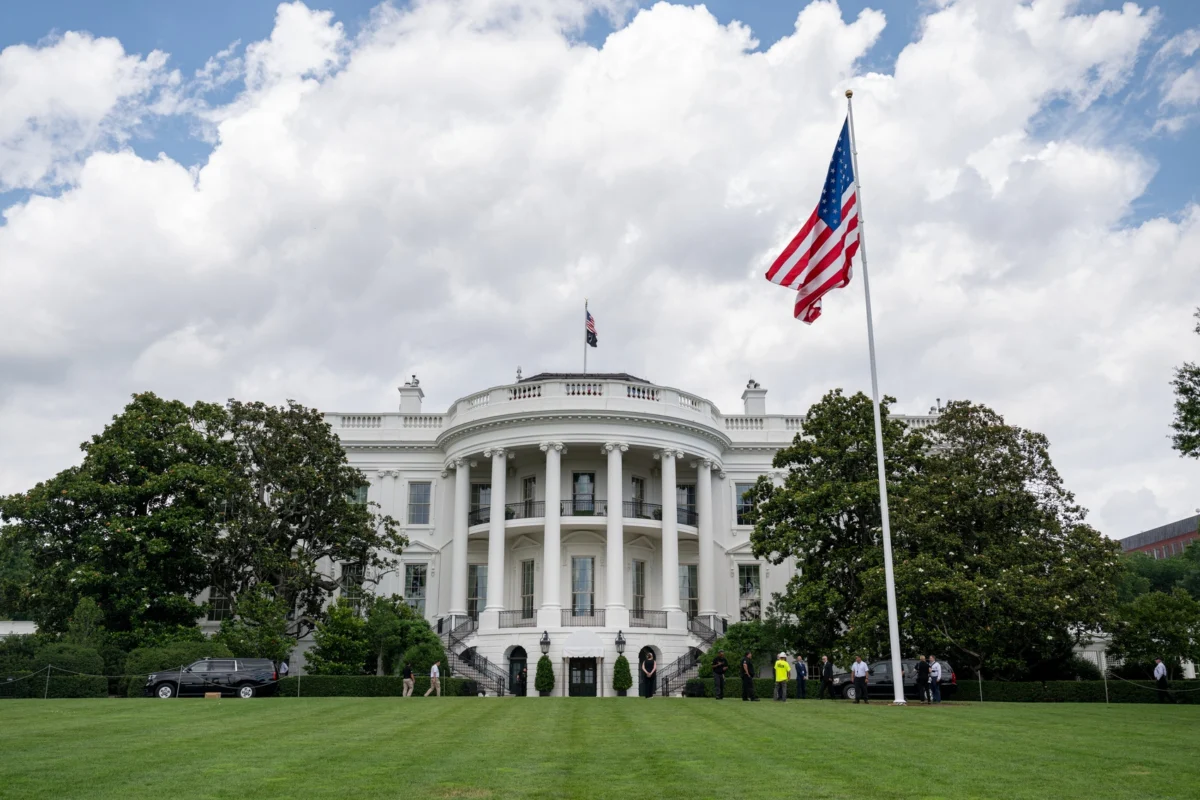
Beijing on Monday escalated the simmering technological dispute with Washington, accusing American artificial intelligence companies of leveraging Chinese models and data in their training processes, a direct counter-charge coming mere days after the United States threatened sanctions against Chinese firms for allegedly pilfering American technology. This latest exchange marks a significant intensification of the AI arms race, transforming a strategic competition into a full-blown intellectual property confrontation with potential global ramifications. The Chinese Commerce Ministry, in a strongly worded statement, asserted that "many American artificial intelligence enterprises have distilled Chinese models during their research, development, and training processes," turning the tables on Washington’s claims of illicit technology transfer. This accusation injects a new layer of complexity into the already fraught relationship between the world’s two largest economies, particularly concerning the critical domain of artificial intelligence.
The Anatomy of the Accusation: AI Distillation at the Forefront

At the heart of Beijing’s counter-accusation lies the technical process known as "distillation." In the rapidly evolving field of artificial intelligence, model distillation is a widely adopted technique where a smaller, more efficient AI model (the "student") is trained to mimic the output and behavior of a larger, more complex, and often more capable model (the "teacher"). This method is invaluable for optimizing AI deployment, allowing advanced functionalities to run on less powerful hardware or with reduced computational costs. However, while distillation is a legitimate and common industry practice, its application becomes contentious when the "teacher" model is proprietary and its intellectual property is allegedly violated.
The US has previously contended that Chinese firms have deployed distillation techniques on a vast scale to illicitly replicate proprietary American AI systems, effectively circumventing the immense investment in research, development, and data curation required to build foundational models. The White House, alongside various US intelligence and economic agencies, has consistently highlighted intellectual property theft as a major national security and economic threat. China, however, vehemently rejected these allegations, with its Commerce Ministry stating unequivocally that the US accusations "lack factual basis and legal grounds, adopt double standards in practice, and constitute typical acts of artificial intelligence hegemonism." The ministry further vowed that "China will take all necessary measures to firmly safeguard its legitimate and lawful rights and interests," signaling a readiness for a robust response to any punitive actions from the US.
A Chronology of Escalation: From Allegations to Threats

The latest salvo from Beijing follows a series of escalating warnings and accusations from Washington. The timeline of recent events underscores the rapid deterioration of trust and cooperation in the AI sector:
- Mid-May 2026: Reports begin circulating in US tech media and intelligence circles regarding the striking capabilities of certain new Chinese AI models, particularly those developed by emerging startups.
- Late May 2026: A senior White House official publicly accuses Chinese AI startup Moonshot AI of covertly copying Anthropic’s most advanced model to develop its highly anticipated Kimi K3. This accusation sends ripples through the US tech industry, with many expressing surprise at the rapid advancement and perceived similarity of the Chinese model to its American counterpart. Anthropic, a leading US AI developer, has invested billions into its Claude series of models, making any alleged replication a significant blow to its competitive edge and intellectual property.
- Early June 2026: US Treasury Secretary Scott Bessent issues a stern warning, threatening sanctions against Chinese entities found to be engaging in AI-related intellectual property theft. This threat signals a potential broadening of existing US sanctions, which have historically targeted sectors like semiconductors and advanced computing, to now explicitly include AI model development. Concurrently, reports emerge that the US government is actively weighing a comprehensive ban or significant curbs on foreign-made open-source AI models, especially those suspected of being developed through illicit distillation practices. Such a move would drastically reshape the global landscape of AI development and collaboration.
- Monday, June 9, 2026 (hypothetical date based on context): Beijing responds to these threats and accusations with its own counter-allegation, claiming that US AI companies are themselves utilizing Chinese models for training and development, thus accusing the US of the very practices it condemns. This marks a pivotal moment, shifting the narrative from a one-sided accusation to a bilateral blame game, underscoring the deep distrust pervading the US-China tech relationship.
The Broader Context: A Decades-Long Tech Rivalry
The current dispute over AI intellectual property is not an isolated incident but rather the latest flashpoint in a prolonged and intensifying technological rivalry between the United States and China. This competition has deep roots, tracing back to the early 2010s when China began its ambitious "Made in China 2025" industrial policy, aiming for self-sufficiency and global leadership in critical high-tech sectors. The US responded with increasing concerns over intellectual property theft, forced technology transfers, and state-backed industrial espionage.

The Trump administration initiated a trade war in 2018, imposing tariffs on billions of dollars worth of Chinese goods, with technology at the forefront of the dispute. This was followed by a series of targeted restrictions on Chinese tech giants like Huawei, ZTE, and ByteDance, citing national security concerns. The Biden administration has largely continued this assertive stance, further tightening export controls on advanced semiconductors and chip-making equipment, effectively seeking to hobble China’s ability to develop cutting-edge AI and supercomputing capabilities. The rationale behind these restrictions is multifaceted: to prevent China from gaining military advantage through dual-use technologies, to protect American economic competitiveness, and to uphold democratic values against what Washington perceives as an authoritarian tech model.
Artificial intelligence has emerged as the ultimate battleground in this tech rivalry. Both nations recognize AI as a foundational technology that will redefine global economic power, military capabilities, and societal structures in the 21st century. The race for AI supremacy involves massive government investments in research and development, fostering domestic talent, securing access to crucial data, and establishing global standards. China’s AI development has been characterized by its vast domestic market, abundant data, and significant government backing, leading to rapid advancements in areas like facial recognition, natural language processing, and smart city applications. The US, conversely, relies on its strong private sector innovation, leading research universities, and a vibrant startup ecosystem. The current accusations highlight the acute sensitivity surrounding the origins and ownership of the underlying models and data that power these advanced systems.
Intellectual Property and Data Sovereignty in the AI Age

The concept of intellectual property, traditionally applied to patents, copyrights, and trade secrets, faces unprecedented challenges in the era of artificial intelligence. Large language models (LLMs) and other generative AI systems are trained on colossal datasets often scraped from the internet, raising questions about data provenance, copyright infringement, and fair use. When one nation accuses another’s AI firms of "distilling" its models, it underscores the difficulty of delineating ownership in a world where AI learns by identifying patterns across vast information landscapes.
For the United States, protecting intellectual property is paramount to maintaining its technological edge and fostering innovation. US policymakers and industry leaders argue that without robust IP protections, the incentive for costly R&D diminishes, and the economic benefits of groundbreaking inventions are eroded. From China’s perspective, however, the US’s actions are often viewed as an attempt to stifle its technological rise and maintain a monopolistic control over advanced technologies. Beijing often emphasizes the principle of data sovereignty, asserting its right to control data generated within its borders and to regulate its use, which can clash with global data flows and open-source development philosophies.
The "open-source" dilemma is particularly complex in this context. Many foundational AI models are released as open-source projects, allowing researchers and developers worldwide to access, modify, and build upon them. This collaborative approach has accelerated AI development globally. However, the line between legitimate open-source use and proprietary exploitation becomes blurred when a company (potentially state-backed) uses an open-source model as a "teacher" for distillation, effectively absorbing its capabilities without contributing back or acknowledging the original intellectual labor, especially if the original model was built with significant proprietary investment. The proposed US curbs on foreign-made open-source models built via distillation illustrate this growing apprehension.

Economic and Geopolitical Implications
The escalating AI dispute carries significant economic and geopolitical implications. Economically, a full-blown "AI tech war" could lead to a further fragmentation of the global technology ecosystem. If the US proceeds with sanctions, Chinese AI companies could face restricted access to critical American software, hardware (especially advanced GPUs from companies like Nvidia), and cloud computing services. Conversely, if China retaliates, American companies operating in China or relying on Chinese supply chains could be impacted. This could lead to:
- Supply Chain Disruptions: Further decoupling of tech supply chains, forcing companies to choose sides or develop parallel, less efficient systems.
- Reduced Innovation: A more fragmented ecosystem might slow down global AI progress by limiting cross-border collaboration and the free exchange of ideas, which has historically been a driver of technological advancement.
- Increased Costs: Companies might incur higher costs for R&D as they duplicate efforts and navigate complex regulatory landscapes and restrictions.
- Investor Uncertainty: Heightened geopolitical tensions could deter investment in AI startups, particularly those with cross-border operations or ambitions.
Geopolitically, the AI intellectual property clash exacerbates existing tensions between the two superpowers. It raises the specter of a "tech iron curtain," where distinct and potentially incompatible AI ecosystems emerge, each aligned with either Washington or Beijing. This could have profound impacts on international standards for AI governance, ethics, and security. Nations caught in the middle may find themselves pressured to align with one side, further polarizing the global technological landscape. The dispute also challenges the notion of a globally interconnected internet and digital economy, pushing towards a more nationalistic approach to technology development and deployment. The risk of miscalculation or overreach by either side could trigger broader economic or diplomatic repercussions.

Looking Ahead: The Future of AI and US-China Relations
The immediate future of this AI dispute remains uncertain, but several pathways are possible. The US might move forward with targeted sanctions against specific Chinese AI firms or individuals, potentially expanding existing entity lists. It could also implement stricter regulations on data sharing, cloud computing services, or the use of specific AI models. China, in turn, is likely to double down on its indigenous innovation efforts, investing even more heavily in foundational AI research, chip design, and data infrastructure to achieve true technological self-reliance. Beijing might also explore retaliatory measures, though the specific nature of such actions would depend on the severity of US sanctions.
The long-term implications are even more profound. The current trajectory suggests a deepening bifurcation of the global AI landscape, with two distinct poles of innovation and influence. This could lead to differing AI capabilities, ethical frameworks, and regulatory environments, making international cooperation on critical global challenges (like climate change, pandemic response, or disarmament) that could benefit from AI solutions significantly more difficult. Both nations face the immense challenge of balancing national security and economic interests with the desire to foster innovation and participate in a global scientific community. The ongoing dispute over AI intellectual property is not merely a technical disagreement; it is a fundamental contest over the future of technological leadership and the very principles that will govern the next era of human advancement.

 Iffa Jayyana
 Laily UPN