Siti Muinah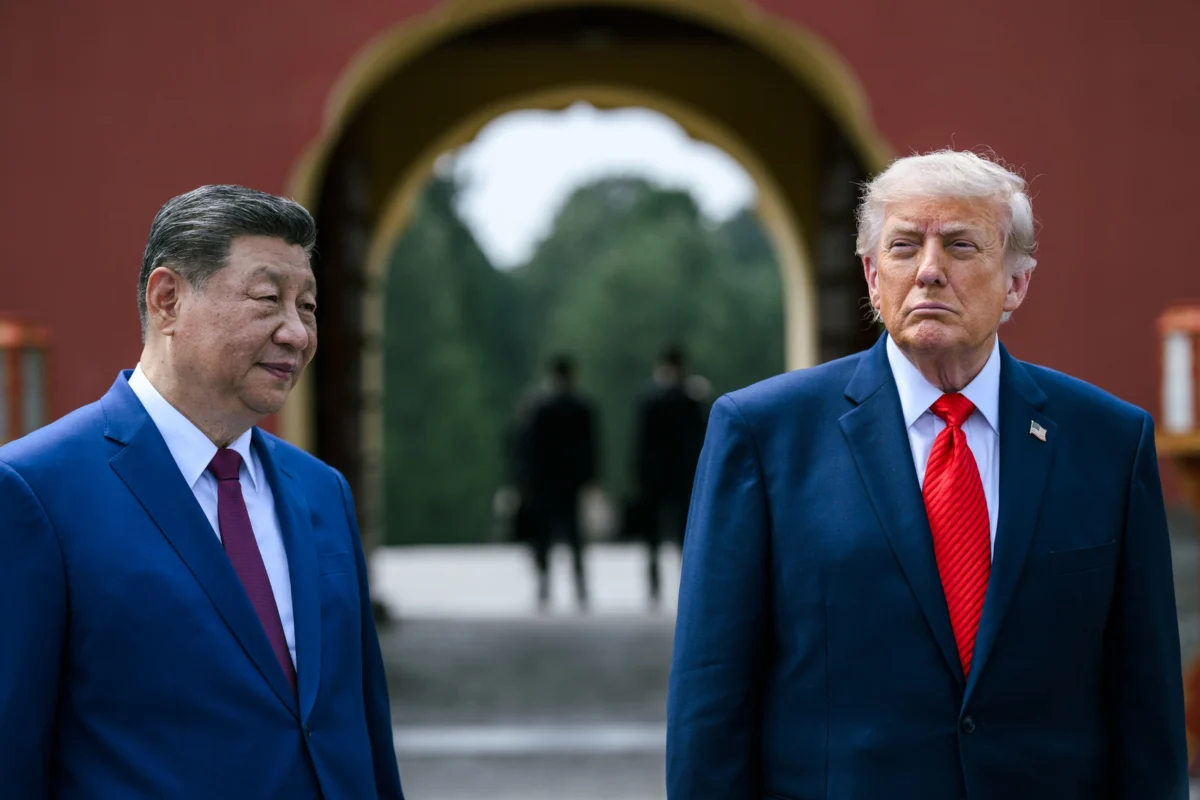
US President Donald Trump’s administration is currently facing intense pressure to formulate a robust response to the burgeoning success of Chinese artificial intelligence models, which have gained significant traction among businesses due to their cost-effectiveness, often preferred over the more powerful, yet considerably pricier, American alternatives offered by industry leaders such as Anthropic and OpenAI. This deepening technological rivalry, playing out amidst a landscape of rapidly evolving AI capabilities and economic pressures, has brought the contentious practice of "distillation" to the forefront, with White House officials alleging it constitutes a sophisticated form of intellectual property theft that threatens American innovation and national security. The unfolding scenario represents a critical juncture in the ongoing US-China tech competition, demanding delicate policy navigation that balances protection of domestic industries with the fostering of an open and competitive global AI ecosystem.
The Ascendancy of Chinese AI: A Cost-Effective Challenge to US Hegemony
The recent launch of Kimi K3 by Beijing-based AI startup Moonshot has sharply underscored China’s growing prowess in the artificial intelligence sector. This new model, alongside offerings from other prominent Chinese firms like DeepSeek and MiniMax, is rapidly capturing market share, not by outperforming US frontier models in raw power, but by providing highly capable solutions at a fraction of the cost. Many companies, particularly startups and those operating on tighter budgets, find these accessible Chinese models to be a compelling alternative to the premium-priced, proprietary systems developed by US giants like Anthropic’s Claude series or OpenAI’s GPT models. This economic advantage is creating a tangible shift in market dynamics, challenging the long-held dominance of American AI developers and forcing a re-evaluation of market strategies and regulatory frameworks. The global AI market, projected to reach an estimated $900 billion by 2030, is experiencing accelerated growth, with significant contributions from the Asia-Pacific region. China’s strategic investments in AI research and development, coupled with its vast data resources and a burgeoning tech ecosystem, have positioned its domestic firms to become formidable global competitors, particularly in areas where efficiency and affordability are paramount. The preference for Chinese models by a segment of the enterprise market signals a potential fragmentation of the global AI landscape, where different regions may prioritize different attributes of AI solutions.

The "Distillation" Controversy: IP Theft or Standard Practice?
At the heart of the current dispute lies the technical process known as "distillation." In machine learning, model distillation is a technique where a smaller, "student" model is trained to replicate the behavior of a larger, more complex "teacher" model. This often results in a more efficient, faster, and less resource-intensive student model that can perform tasks with comparable accuracy, albeit sometimes with reduced nuance or breadth compared to its larger counterpart. While the method is widely recognized and utilized across the AI industry for various legitimate purposes, such as optimizing models for deployment on edge devices or creating specialized versions, US officials are now alleging that Chinese firms are deploying it at an "industrial scale" to illicitly copy the proprietary capabilities of advanced American systems.
White House officials specifically accuse Moonshot of developing Kimi K3 by "stealing the capabilities" of Anthropic’s most powerful model through this distillation process. Sarah Heck, Anthropic’s head of public policy, publicly declared on the social media platform X that such illicit distillation constitutes "IP theft and industrial espionage" and poses "serious national security risks for the United States and democratic allies." Earlier this year, Anthropic had already formally lodged complaints with US lawmakers, specifically naming Moonshot, DeepSeek, and MiniMax for what it termed "industrial-scale distillation" of its Claude models. This accusation raises fundamental questions about intellectual property rights in the age of AI, where the "source code" of a model isn’t just lines of traditional code, but also the learned parameters and behaviors derived from massive training datasets and computational power. The distinction between legitimate inspiration, competitive reverse engineering, and outright theft becomes increasingly blurred, presenting a complex legal and ethical challenge for regulators worldwide.
US National Security Concerns and the Shadow of Export Controls
Beyond the intellectual property debate, the US administration views the rise of these Chinese AI models through a national security lens. Michael Kratsios, director of the White House Office of Science and Technology Policy (OSTP), voiced strong condemnation of the alleged distillation practices, further suggesting that Moonshot and other Chinese firms might also be circumventing existing US export curbs on powerful AI chips, particularly those manufactured by Nvidia. These restrictions, initially implemented to prevent China from acquiring advanced semiconductor technology that could bolster its military capabilities and surveillance state, are a cornerstone of the US strategy to maintain its technological edge. The Commerce Department’s Bureau of Industry and Security (BIS) has formally launched an investigation into Chinese firms, including Moonshot, specifically scrutinizing their acquisition and use of these restricted high-performance AI chips. A spokesperson for BIS confirmed the investigation to The Information, signaling the administration’s determination to enforce its technological sanctions.

The concern is multifaceted: firstly, if Chinese firms can replicate advanced US AI models using fewer or less advanced chips, it might undermine the effectiveness of current export controls. Secondly, the widespread adoption of potentially "stolen" AI models could erode the economic foundation of US AI innovators, reducing their capacity for future research and development. Thirdly, the application of these AI models, regardless of their origin, in critical infrastructure, military applications, or widespread surveillance, raises significant geopolitical anxieties, especially given the increasingly tense relationship between Washington and Beijing. The strategic importance of AI is such that both nations perceive leadership in this field as vital for future economic prosperity and geopolitical influence.
Washington’s Policy Dilemma: Sanctions and Potential Bans
The Trump administration finds itself at a critical crossroads, weighing various policy options to address this multifaceted challenge. Treasury Secretary Scott Bessent, known for his hawkish stance on economic policy, issued a stern warning this week, threatening sanctions against China in response to these developments. Simultaneously, reports indicate that the US is actively considering more drastic measures, including an outright ban or severe curbs on foreign-made open-source AI models, many of which are developed through distillation. Such a move would represent a significant escalation in the tech trade war and could have profound implications for the global AI ecosystem.
The debate within Washington is fierce. Proponents of strong action argue that failing to respond decisively would tacitly endorse IP theft and erode American technological superiority. They emphasize the need to protect the massive investments made by US companies in developing frontier AI models, which often cost billions of dollars and years of research. Without such protection, they contend, the incentive for groundbreaking innovation would diminish, ultimately harming the US economy and its national security. This perspective often highlights the "unfair" competition posed by entities that allegedly bypass the immense R&D costs by leveraging the output of others’ work.

Industry Divided: Voices for and Against Restrictions
However, the proposed restrictions, particularly a ban on foreign open-source models, have ignited a passionate backlash from a significant segment of the US tech industry, especially the vibrant startup community. Open-source, or open-weight, models are highly valued because their source code and model weights are publicly accessible, allowing programmers to customize, inspect, and build upon them. This accessibility significantly lowers development costs and fosters rapid innovation, making them particularly attractive to startups and companies that wish to avoid being locked into expensive, "as-is" proprietary models from giants like Anthropic, OpenAI, or Google.
A coalition of 179 startups, under the banner of the "Little Tech Association," penned an urgent letter to the Trump administration this Wednesday, imploring it to reconsider any plans for an outright ban or strict curbs on foreign-made models. Their argument is clear: "Denying American startups access to models available abroad would stifle competition, entrench incumbents, and function as a tax on intelligence." They contend that such restrictions would unfairly benefit the established US AI giants, reduce competition, and force entrepreneurs to bear higher costs for essential AI tools.
This sentiment was echoed by Bill Gurley, a prominent former venture capitalist, who argued in The Washington Post that the lobbying efforts to label open-model AI as a security threat are misguided. He asserted, "In fact, it is something more familiar: proper competition that should be welcomed." This perspective views the rise of capable, cost-effective models—regardless of their origin—as a natural evolution of a competitive market, pushing all players to innovate more effectively.

Adding another layer of complexity to the debate, Jensen Huang, the CEO of Nvidia, a company whose advanced chips form the very backbone of AI infrastructure globally, weighed in firmly in favor of openness. Speaking to Axios, Huang stated unequivocally that American companies should "absolutely" be allowed to use Chinese AI models. "These Chinese models are excellent. Open source models that are excellent should be used," he affirmed. Huang’s stance is particularly influential, given Nvidia’s pivotal role in supplying the hardware essential for both proprietary and open-source AI development worldwide. His comments highlight the economic interdependence of the global tech supply chain and the potential for protectionist policies to disrupt broader innovation.
The Financial Stakes: IPOs and Market Pressures for US AI Giants
Critics of limiting open-source models suggest that the current "panic" over Chinese AI might, in part, be driven by the commercial interests of US AI powerhouses like OpenAI and Anthropic. These two companies are reportedly facing significant financial pressure as they gear up for anticipated initial public offerings (IPOs) in the coming months. Wall Street investors are scrutinizing their business performance more closely than ever, demanding clear paths to profitability and sustainable growth. In this context, the emergence of highly competitive, lower-cost alternatives, especially those built through distillation, could be perceived as a direct threat to their market valuations and future revenue streams.
David Sacks, the White House’s former chief on AI policy and a figure who still maintains influence with President Trump, dismissed the alarm as "The Kimi Panic needs to stop." He advocated for a continuation of what he described as President Trump’s "light-touch regulatory approach," arguing that this strategy has been effective. "As long as we don’t sabotage ourselves with unnecessary rules, the US will continue to win," Sacks asserted on X, implying that excessive regulation could inadvertently hinder US innovation and competitiveness by creating artificial barriers for its own companies. This perspective underscores the delicate balance between protecting incumbents and fostering a dynamic, innovative ecosystem.

Broader Implications for the Global AI Landscape
The decisions made by the Trump administration in response to this challenge will have far-reaching implications for the global AI landscape. If the US implements strict bans or severe restrictions on foreign open-source models, it risks fragmenting the global AI market, potentially leading to the development of parallel, incompatible AI ecosystems. This could hinder international collaboration on AI safety, ethics, and research, areas where global cooperation is widely considered essential. Furthermore, such measures could inadvertently accelerate China’s efforts to achieve complete self-sufficiency in AI, including chip design and manufacturing, ultimately undermining the very controls intended to slow its progress.
Conversely, a perceived lack of action or insufficient protection of intellectual property could demoralize US innovators, diminish investment in cutting-edge research, and allow other nations to gain an unfair advantage. The challenge lies in defining the boundaries of fair competition and intellectual property in a domain where knowledge transfer and iterative improvement are inherent to progress. The debate also highlights the inherent tension between national security imperatives and the economic benefits of open innovation. Finding a middle ground that safeguards national interests without stifling the dynamism of the tech sector will be a defining policy challenge for the Trump administration and future governments. The outcome of this struggle will not only shape the future of AI development but also recalibrate the broader geopolitical balance of power in the 21st century.
The current situation therefore represents a microcosm of the larger US-China strategic competition, with AI emerging as a pivotal battleground. The stakes involve not just economic dominance and technological leadership, but also the fundamental principles guiding global innovation and international relations. The path forward demands a nuanced understanding of technological realities, economic incentives, and geopolitical aspirations, as the world watches how Washington navigates this complex and critical juncture in 2026.


 Asep Darmawan
 Neng Nana