Siti Muinah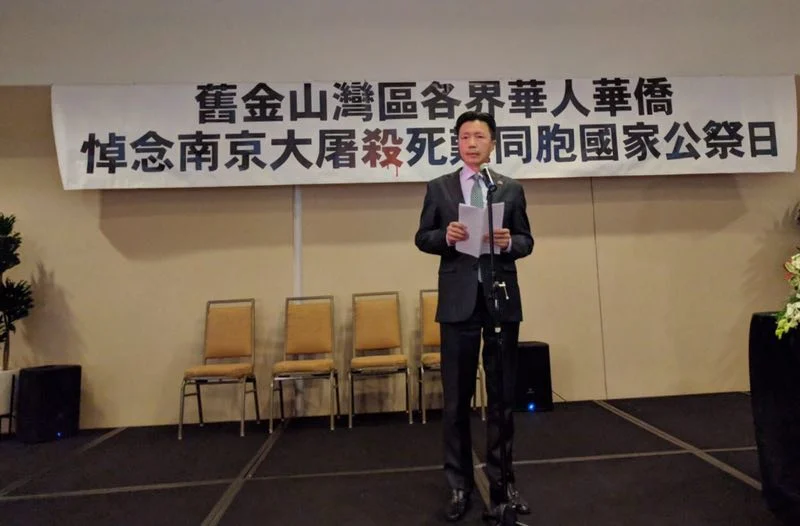
Hundreds of activists and members of Chinese and other Asian communities gathered in San Francisco on Sunday to mark the 80th anniversary of the Nanjing Massacre, a horrific atrocity committed by the Japanese military during World War II. The solemn memorial service, organized by a coalition of prominent human rights and historical preservation organizations, underscored the enduring imperative to remember and learn from this dark chapter of history. The event, held annually for two decades, aims to expose the war crimes perpetrated by the Imperial Japanese Army and to foster a deeper understanding of the suffering inflicted upon millions.
A Legacy of Atrocity and Resilience
The Nanjing Massacre, a period of unspeakable brutality, commenced on December 13, 1937, when Japanese troops captured Nanjing, then the capital of China. What followed was a horrific slaughter that lasted for more than 40 days, during which an estimated 300,000 Chinese civilians were murdered. The scale of destruction was immense, with one-third of the city’s buildings reduced to rubble. Beyond the mass killings, tens of thousands of women were subjected to systematic rape, a grim testament to the pervasive nature of the Japanese military’s violence.
Zha Liyou, acting Chinese consul general in San Francisco, addressed the attendees, emphasizing the blatant violation of international conventions and the extreme cruelty of the atrocity. "The Japanese Army blatantly violated international conventions and committed the extremely cruel atrocity in Nanjing, where 300,000 Chinese civilians were murdered and one third of the buildings were destroyed," Zha stated, his voice resonating with the weight of history.
The Interconnectedness of Suffering: Comfort Women and the Massacre
The commemoration also highlighted the inextricably linked suffering of victims of sexual slavery, often referred to as "comfort women," who were systematically coerced into sexual servitude by the Japanese Imperial Army during World War II. Judith Mirkinson, president of the Comfort Women Justice Coalition, drew a powerful connection between the Nanjing Massacre and the plight of these women. "Our stories are linked. The fate of over 400,000 women sexually enslaved by the Japanese Imperial Army during World War II is part and parcel of what happened during the Nanjing Massacre," Mirkinson declared.
Mirkinson eloquently articulated the need for truth as a prerequisite for genuine peace. "The 20th century has been called the most violent century in the history of the world, and that one way to ensure peace in the 21st century is through truth and reconciliation," she said. "Reconciliation does not come without truth. So the Japanese government must acknowledge their crimes. They must give justice to those few people who still survive from the Nanjing Massacre and to the memory of what happened there." Her words underscored the ongoing quest for accountability and justice for survivors and the historical record.
A Broader Historical Context: The Scars of Japanese Aggression
The Nanjing Massacre was not an isolated incident but rather a horrific manifestation of a broader pattern of Japanese aggression that began much earlier. Japan’s invasion of Northeast China in September 1931 marked the initial phase of its imperial ambitions. This was followed by a full-scale invasion on July 7, 1937, initiating a brutal and protracted period of occupation that lasted until 1945. During this entire period of Japanese occupation, an estimated 35 million Chinese soldiers and civilians were killed or injured, a staggering human cost that underscores the immense suffering endured by the Chinese nation.
Commemoration and the Pursuit of Lasting Peace
This year’s commemoration held particular significance as the Chinese government has designated December 13th as the National Memorial Day for Nanjing Massacre Victims. The global participation of the Chinese community in honoring the victims and survivors, and in pursuing justice and enduring peace, demonstrates the profound and lasting impact of this historical event.
Zha Liyou emphasized that remembering these atrocities is not about perpetuating animosity but about ensuring that history is not forgotten and inspiring future generations to champion peace. "To remember the atrocities committed by the Japanese Army during World War II does not mean to pass on the enmity but rather to remind people not to forget the history and inspire them to love peace," Zha explained. He added that the enduring memory of the Nanjing Massacre, etched into the consciousness of the Chinese people and global civilization, could serve as a source of comfort to the victims and those who sacrificed their lives.
International Recognition and the Fight for Historical Memory
The Nanjing Massacre has received international recognition for its historical significance. In 2015, the atrocity was inscribed onto the UNESCO Memory of the World Register. This prestigious register serves as a compendium for preserving documentary heritage of universal value, acknowledging the Nanjing Massacre’s critical place in the collective memory of humanity.
Historical Timeline of the Nanjing Massacre and Related Events
To provide a clearer understanding of the events, a chronological outline is essential:
- September 18, 1931: The Mukden Incident (also known as the Manchurian Incident) occurs, providing Japan with a pretext to invade and occupy Manchuria. This marks the beginning of Japan’s territorial expansion in China.
- July 7, 1937: The Marco Polo Bridge Incident near Beijing triggers the full-scale Second Sino-Japanese War.
- August 1937: The Battle of Shanghai begins, a brutal and protracted conflict that devastates the city.
- December 13, 1937: Japanese forces capture Nanjing, the capital of China at the time.
- December 1937 – February 1938: The Nanjing Massacre unfolds. Japanese soldiers engage in widespread murder, rape, looting, and arson, resulting in hundreds of thousands of civilian deaths and widespread sexual violence.
- Post-Massacre: The Japanese occupation of Chinese territories continues until the end of World War II in 1945.
- Post-War Period: Efforts are made to bring perpetrators of war crimes to justice, including the Tokyo War Crimes Tribunal. However, the full extent of accountability and acknowledgment remains a point of contention.
- 2000s onwards: Increased efforts by survivor groups, historians, and activists globally to preserve the memory of the Nanjing Massacre and to advocate for Japanese government acknowledgment and apology.
- 2015: The Nanjing Massacre documentary evidence is inscribed on the UNESCO Memory of the World Register, signifying its global importance.
- December 13, 2017: The 80th anniversary of the Nanjing Massacre is commemorated, as reflected in the San Francisco service, highlighting ongoing efforts for remembrance and reconciliation.
Supporting Data and Figures
The statistics surrounding the Nanjing Massacre and the broader Sino-Japanese War are staggering and underscore the immense human cost:
- Estimated civilian deaths during the Nanjing Massacre: 300,000.
- Percentage of Nanjing destroyed: Approximately one-third of the city’s buildings.
- Estimated number of women sexually enslaved (comfort women): Over 400,000 during WWII.
- Total Chinese casualties (killed or injured) during the Japanese occupation (1931-1945): Approximately 35 million.
These figures represent not just statistics but the lives of individuals, families, and communities irrevocably shattered by war and atrocity.
Broader Implications: Truth, Reconciliation, and Global Peace
The annual commemoration of the Nanjing Massacre serves as a crucial reminder of the consequences of unchecked militarism and the importance of upholding international humanitarian law. The call for truth and reconciliation, as articulated by speakers at the San Francisco event, extends beyond bilateral relations between China and Japan. It speaks to a universal need for historical honesty and accountability as foundational elements for building a more peaceful and just world.
The emphasis on "truth and reconciliation" highlights a growing global understanding that true peace cannot be achieved through amnesia or denial. For countries that have experienced historical injustices, acknowledgment and remorse from the perpetrators are vital steps towards healing and fostering mutual respect. The continued efforts to educate younger generations about such events are essential to prevent the recurrence of similar atrocities.
The Nanjing Massacre remains a sensitive and deeply emotional issue. While official apologies and acknowledgments from the Japanese government have been made over the years, many victims’ groups and historians argue that they have been insufficient or lacked genuine remorse. The ongoing demand for greater accountability underscores the persistent struggle for justice and the enduring power of historical memory in shaping present-day relationships and aspirations for a peaceful future. The San Francisco commemoration is a powerful testament to this ongoing commitment to remember, to learn, and to advocate for a world where such horrors are never repeated.


 Nana Wu
 Suro Senen