Ammar Sabilarrohman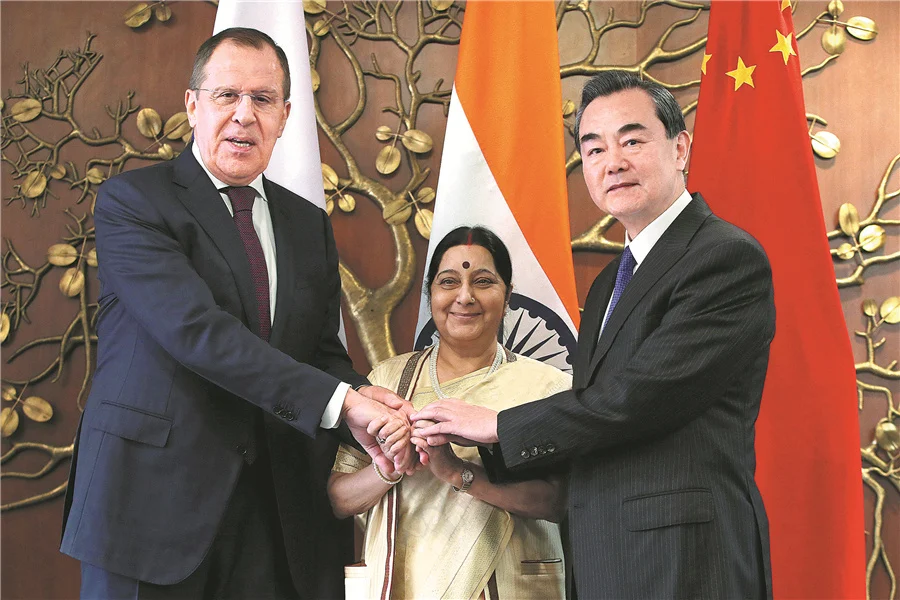
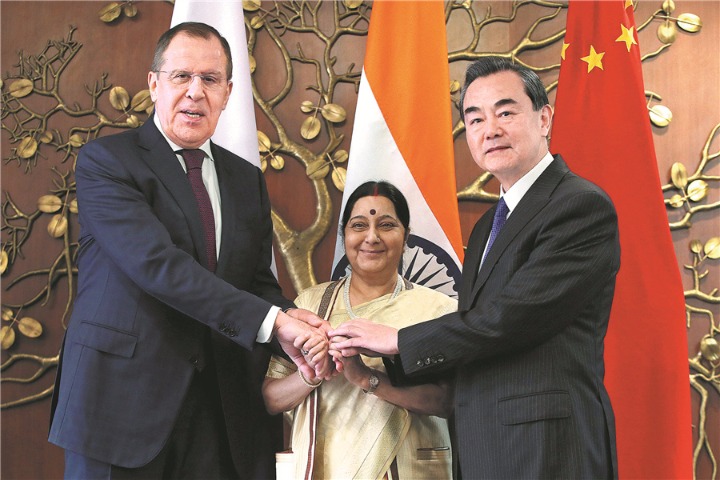
China, Russia and India, three of the world’s most influential emerging economies and key players in global geopolitics, convened for their 15th trilateral meeting of foreign ministers in New Delhi on Monday, December 11, 2017. The high-level gathering, which saw the participation of Chinese Foreign Minister Wang Yi, Russian Foreign Minister Sergey Lavrov, and Indian Minister of External Affairs Sushma Swaraj, underscored a shared commitment to regional security, economic stability, and multilateral cooperation in the Asia-Pacific region and beyond. The ministers engaged in extensive discussions on a broad spectrum of global and regional issues of mutual concern, with a particular focus on reinforcing the frameworks of BRICS and the Shanghai Cooperation Organization (SCO).
The core outcome of the meeting, as articulated in a joint statement, was a unified vision for maintaining a regional security and economic architecture that is "open, inclusive and based on multilateralism and universally recognized principles of international law." This shared principle was deemed "imperative for lasting peace and stability in the region." The ministers emphasized the critical role of coordination and cooperation within established regional forums and organizations, specifically citing the East Asia Summit as a vital platform for achieving these objectives. Their collective stance signals a proactive approach to shaping the future of the Asia-Pacific, emphasizing cooperation over confrontation and adhering to international norms.
Deepening Strategic Partnerships: BRICS and SCO at the Forefront
A significant portion of the deliberations was dedicated to the strategic importance of BRICS (Brazil, Russia, India, China, and South Africa) and the Shanghai Cooperation Organization (SCO). The three nations reaffirmed their unwavering commitment to the BRICS partnership, vowing to "work together to implement all outcomes of BRICS summits to strengthen cooperation in economic, political, security and people-to-people fields, so as to usher in the second golden decade of BRICS cooperation." This commitment comes in the wake of China’s successful hosting of the Ninth BRICS Summit in Xiamen in September 2017, which set an agenda for enhanced collaboration across various sectors. The "second golden decade" signifies an ambition to build upon the successes of the past and forge an even stronger and more impactful bloc in the coming years, leveraging the collective economic and political weight of its member states.
The ministers also placed particular emphasis on the joint work within the Shanghai Cooperation Organization (SCO). They recognized the SCO as a crucial instrument for fostering multilateral engagement in political, security, economic, and people-to-people interactions across the region. The SCO, originally established in 2001, has evolved into a significant geopolitical and economic bloc, promoting regional stability and cooperation. The trilateral focus on the SCO indicates a shared interest in leveraging this organization to address contemporary security challenges and promote economic development within its expanding membership, which now includes India and Pakistan since their full accession in 2017.

A Platform for Dialogue and Practical Cooperation
The Russia-India-China (RIC) trilateral format itself was described as a valuable platform designed to foster closer dialogue and practical cooperation in identified areas among the three countries. Crucially, the joint statement clarified that this cooperation is "not directed against any other country," underscoring its defensive and constructive nature. This assertion is significant in a region often characterized by complex geopolitical dynamics and competing interests. By explicitly stating that their collaboration is not aimed at any third party, China, Russia, and India seek to alleviate potential concerns and foster an environment of trust and transparency in their regional engagements.
The ministers expressed a desire to "strengthen the trilateral dialogue for consultation and coordination on regional and global issues of mutual interest in the spirit of mutual understanding and trust." This forward-looking statement suggests a commitment to regular and structured engagement, moving beyond ad-hoc meetings to a more systematic approach to addressing shared challenges. The emphasis on "mutual understanding and trust" highlights the foundational elements required for effective multilateral diplomacy, particularly among nations with diverse political systems and historical experiences.

The joint statement concluded with a powerful declaration of the positive impact of their cooperation: "Our cooperation is conducive to maintaining international and regional peace and stability, and promoting global economic growth and prosperity." This highlights the broader implications of the RIC trilateral, positioning it as a force for global good, contributing to a more stable and prosperous international order.
Background and Context
The 15th RIC Foreign Ministers’ meeting took place at a time of significant global flux. The international order was being reshaped by evolving economic power balances, technological advancements, and persistent geopolitical tensions. In this environment, the RIC trilateral represented a crucial axis of cooperation among major Eurasian powers.

Historical Trajectory of RIC Cooperation:
The RIC format emerged in the early 2000s as a pragmatic response to the need for enhanced dialogue among these three significant global actors. The first RIC Foreign Ministers’ meeting was held in 2002. Over the years, the RIC dialogue has evolved from a nascent forum for consultation to a robust mechanism for strategic coordination. The increasing frequency and significance of these meetings reflect the growing convergence of interests among the three nations on critical global and regional issues.
Key Drivers for RIC Collaboration:

- Multipolar World Order: China, Russia, and India are all proponents of a multipolar world order, where power is distributed among multiple centers, as opposed to a unipolar system dominated by a single superpower. The RIC dialogue serves as a platform to collectively advocate for this vision on the international stage.
- Economic Interdependence: Despite their individual economic strengths, the three nations recognize the potential for enhanced economic cooperation. Their combined economies represent a significant portion of global GDP, and collaborative efforts in trade, investment, and infrastructure development hold substantial promise.
- Regional Security Concerns: Shared security interests, particularly in areas like counter-terrorism, combating transnational crime, and maintaining stability in adjacent regions, are a significant driver for RIC cooperation. The growing influence of non-state actors and the resurgence of certain geopolitical rivalries necessitate coordinated approaches.
- BRICS and SCO Synergy: The RIC dialogue often serves as a preparatory or complementary mechanism for discussions within the broader BRICS and SCO frameworks. Aligning strategies within RIC can strengthen the collective voice and effectiveness of these larger groupings.
Supporting Data and Analysis
The RIC countries collectively represent a significant portion of the world’s population and economic output. In 2017, the combined GDP of China, Russia, and India was estimated to be in the trillions of US dollars, with China being the world’s second-largest economy, India rapidly emerging as a major economic powerhouse, and Russia a significant energy producer and exporter. Their combined population accounts for over 2.5 billion people, representing a substantial consumer base and labor force.
The emphasis on multilateralism and international law reflects a shared concern over what is perceived by some as a decline in the effectiveness of existing international institutions and a rise in unilateralist tendencies. The commitment to an "open, inclusive" architecture suggests a desire to ensure that regional and global governance structures are representative and responsive to the needs of all nations, particularly emerging economies.

The specific mention of the East Asia Summit highlights the region’s strategic importance. The East Asia Summit (EAS) is a premier ASEAN-led forum for dialogue on strategic, political, and economic issues of common interest and concern to countries in the East Asian region. By committing to coordination within the EAS, the RIC countries signal their intention to play a constructive role in shaping regional security and economic dynamics.
Broader Impact and Implications
The 15th RIC Foreign Ministers’ meeting, held in New Delhi, carries several significant implications for regional and global dynamics:

- Strengthening the Global South: The RIC trilateral is a potent symbol of the growing influence of emerging economies and their collective desire to shape global affairs. By coordinating their policies, these nations can amplify their voices in international forums and advocate for their interests more effectively.
- Counterbalancing Global Trends: In an era marked by geopolitical shifts and evolving alliances, the RIC dialogue offers a platform for these nations to present a united front on key issues, potentially acting as a counterweight to other major power blocs.
- Promoting Stability and Development: The joint commitment to regional security and economic prosperity through multilateralism offers a positive vision for the Asia-Pacific. Their cooperation in areas like counter-terrorism and economic integration can contribute to a more stable and prosperous region.
- Enhancing Multilateralism: The reaffirmation of commitment to BRICS and SCO, along with the emphasis on universally recognized principles of international law, signals a dedication to strengthening multilateral institutions and fostering a rules-based international order. This is particularly relevant in a period where the efficacy of such institutions is being tested.
- Economic Opportunities: The focus on strengthening economic cooperation within BRICS and through bilateral channels within the RIC framework could unlock significant opportunities for trade, investment, and joint ventures, benefiting all three economies and potentially fostering greater global economic growth.
The meeting in New Delhi served as a clear testament to the enduring strategic importance of the Russia-India-China trilateral relationship. As these nations navigate the complexities of the 21st century, their continued dialogue and cooperation are likely to play a pivotal role in shaping the future of regional and global governance. The shared vision articulated in the joint statement underscores their commitment to a more stable, inclusive, and prosperous world order, built on the foundations of multilateralism and international law.


 Nana Wu
 Suro Senen