Nila Kartika Wati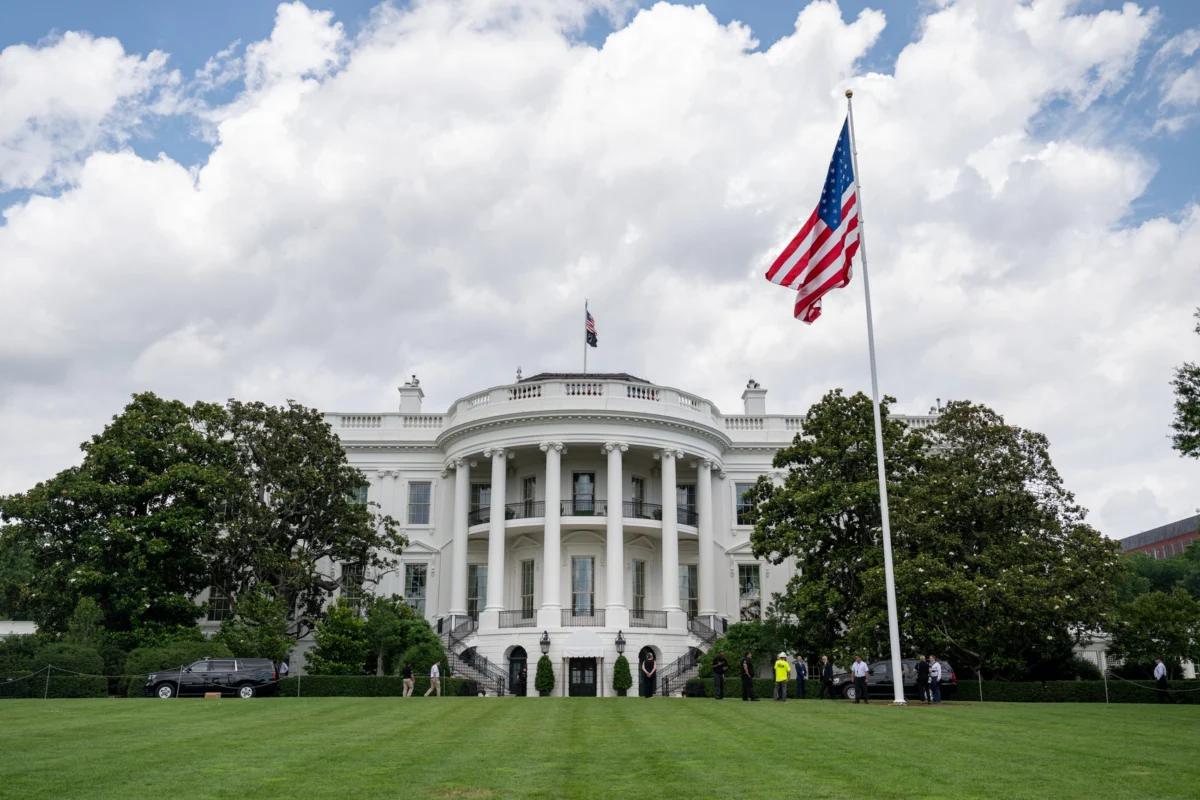
Beijing, China – In a sharp escalation of the ongoing technological and economic rivalry, China on Monday formally accused American artificial intelligence companies of leveraging Chinese models in their development and training processes. This accusation comes just days after Washington threatened to impose sanctions on Chinese firms for allegedly pilfering American technology, highlighting the deepening chasm between the world’s two largest economies in the critical domain of artificial intelligence. The Chinese Ministry of Commerce, in a strongly worded statement, dismissed the U.S. allegations as lacking factual and legal basis, characterizing them as a "typical act of artificial intelligence hegemonism" and signaling Beijing’s intent to "take all necessary measures to firmly safeguard its legitimate and lawful rights and interests."
The Core of China’s Counter-Accusation
The Chinese Commerce Ministry’s statement directly addressed the technical practice known as "distillation" within the AI industry. "It is understood that many American artificial intelligence enterprises have distilled Chinese models during their research, development and training processes," the ministry asserted. Distillation is a widely adopted technique where a smaller, more efficient AI model (the "student") is trained to replicate the output and behavior of a larger, more complex, and often more capable model (the "teacher"). This process is primarily used to reduce computational costs, improve inference speed, and deploy AI models on devices with limited resources, while retaining much of the performance of the larger model.

While distillation is a common industry practice globally, the contentious point lies in the source of the "teacher" model. The U.S. has previously argued that Chinese firms have illicitly used proprietary American systems as "teacher" models, effectively reverse-engineering or copying their functionality at scale without authorization or compensation. China’s counter-accusation, therefore, flips the narrative, suggesting that U.S. firms are engaged in similar practices, potentially exploiting the advancements made by Chinese AI research and development. This mutual accusation underscores the fierce competition for intellectual property and technological leadership in the burgeoning AI sector.
Washington’s Prior Allegations and Sanctions Threats
China’s defensive posture follows a series of recent, pointed criticisms from senior U.S. officials. Last week, a high-ranking White House official publicly accused Moonshot AI, a rapidly emerging Chinese startup, of covertly replicating Anthropic’s most advanced AI model, Claude, to develop its own formidable Kimi K3. This allegation sent ripples through the U.S. tech industry, as Moonshot AI’s Kimi K3 had notably impressed observers upon its release, reigniting discussions about China’s swift progress and competitive prowess in the AI landscape. Anthropic, a leading American AI safety and research company, is considered a pioneer in developing large language models (LLMs) and is a significant rival to OpenAI. The implication is that Moonshot AI bypassed years of costly research and development by essentially learning from or directly imitating Anthropic’s cutting-edge work.
Adding significant weight to these accusations, U.S. Treasury Secretary Scott Bessent last week issued a stern warning, threatening sanctions against China. These threats are reportedly part of a broader strategy by the U.S. government, which is also contemplating a potential ban or severe restrictions on foreign-made open-source AI models. Such restrictions could have far-reaching implications, particularly given that many open-source models are developed through collaborative efforts and often involve distillation techniques. The proposed measures aim to safeguard American technological advantage and prevent the transfer of critical AI know-how to strategic competitors. The U.S. has a history of leveraging sanctions to curb China’s technological ambitions, notably in the semiconductor industry, and the prospect of extending these measures to AI signals a deepening commitment to this strategy.

The Broader Context: US-China Tech Hegemony
This latest exchange is not an isolated incident but rather another front in the intensifying technological cold war between the United States and China. Both nations view AI as a cornerstone for future economic growth, national security, and global influence. The U.S. has long accused China of systematic intellectual property theft across various sectors, ranging from traditional manufacturing to advanced technologies. This includes allegations of cyber espionage, forced technology transfers, and outright replication of proprietary designs and software.
The strategic competition for AI dominance is multi-faceted:
- Economic Impact: AI is projected to add trillions to global GDP, transforming industries from healthcare and finance to logistics and manufacturing. Leadership in AI translates directly to economic competitive advantage.
- Military Applications: AI’s role in defense, including autonomous weapons systems, intelligence analysis, and cybersecurity, is paramount. Both nations are investing heavily in military AI, viewing it as a critical component of future power projection.
- Geopolitical Influence: The nation that leads in AI development will likely set global standards, influence ethical frameworks, and attract the brightest talent, thereby enhancing its soft power and geopolitical sway.
The U.S. has expressed particular concern over China’s "military-civil fusion" strategy, where advancements made by civilian tech companies can be leveraged by the People’s Liberation Army. This blurs the lines between commercial and military applications, complicating efforts to control technology transfer. The current dispute over AI model distillation fits squarely within this larger narrative of competition and distrust.

Technical Nuances and Challenges of Proving AI IP Theft
The concept of "intellectual property" in the context of AI models, especially large language models (LLMs), is notoriously complex. Unlike traditional software code, an AI model is not merely a set of instructions but rather a sophisticated neural network trained on vast datasets. Proving that one model has "distilled" or "copied" another is technically challenging for several reasons:
- Black Box Nature: Many advanced AI models operate as "black boxes," meaning their internal workings and decision-making processes are difficult to fully interpret or reverse-engineer, even if their outputs are similar.
- Data Scarcity vs. Abundance: While high-quality, diverse data is crucial for training, the exact composition of a training dataset is often proprietary. Accusations of using "Chinese examples" to train models, or vice versa, point to concerns about data sourcing and potential unauthorized use of copyrighted or proprietary data.
- Emergent Properties: LLMs often exhibit emergent capabilities that are not explicitly programmed but arise from the training process. Similar architectures trained on similar data might produce similar results independently, making it difficult to differentiate between genuine innovation and imitation.
- Open-Source Dilemma: The AI community thrives on open-source contributions, with researchers often building upon publicly available models, datasets, and methodologies. This collaborative environment, while fostering rapid innovation, also creates grey areas regarding ownership and attribution, especially when proprietary techniques are distilled into new models.
The U.S. claim regarding Moonshot AI’s Kimi K3 likely stems from rigorous analysis of the model’s performance characteristics, architectural similarities, and responses to specific prompts that might reveal an underlying "teacher" model. However, proving this in a court of law or to the satisfaction of international bodies presents significant hurdles.
Economic and Geopolitical Implications
The escalating rhetoric and potential for further sanctions carry significant implications:

- Decoupling of AI Ecosystems: This dispute could accelerate the decoupling of the U.S. and Chinese AI ecosystems. Both nations might increasingly develop their own parallel AI supply chains, research initiatives, and data infrastructure, leading to a fragmented global AI landscape.
- Impact on Global Collaboration: International scientific and technological collaboration in AI, which has historically been robust, could suffer. Researchers and companies might face increased scrutiny and restrictions when working across borders, slowing down overall global AI progress.
- Investment Chill: Foreign direct investment in the AI sectors of both countries could be negatively impacted. Investors might become more cautious about potential political risks, sanctions, or national security reviews.
- Open-Source AI at Risk: If the U.S. moves to ban or curb foreign-made open-source models that use distillation, it could fundamentally alter the open-source AI paradigm. This could create a more restrictive environment, potentially stifling innovation that relies on shared knowledge and community contributions.
- Reciprocal Measures: China’s strong response, stating it will take "all necessary measures," indicates a willingness to retaliate. This could involve its own sanctions against U.S. tech firms, restrictions on data access, or other measures impacting American companies operating in China.
The "artificial intelligence hegemonism" accusation by China reflects its perception that the U.S. is attempting to unilaterally dominate the AI space, similar to how it has been accused of attempting to control other critical technologies. Beijing sees U.S. actions not just as protecting IP, but as an attempt to stifle China’s indigenous technological growth and maintain American supremacy.
Looking Ahead: An Unfolding Saga
The current accusations and counter-accusations mark a critical juncture in the U.S.-China AI rivalry. The stakes are immense, touching upon economic prosperity, national security, and global leadership. As both nations continue to pour resources into AI research and development, the battle for intellectual property, talent, and market dominance will only intensify.
The world will be closely watching how these allegations are substantiated or refuted, and what specific "necessary measures" China might eventually take. Similarly, the details of the U.S. sanctions and potential restrictions on open-source models will shape the future trajectory of global AI development. This complex and multifaceted dispute is far from over, and its resolution – or lack thereof – will undoubtedly define the geopolitical and technological landscape for decades to come. The era of unfettered global technological collaboration, particularly in sensitive sectors like AI, appears to be rapidly drawing to a close, replaced by an era of strategic competition and technological nationalism.


 Muslim