Azzam Bilal Chamdy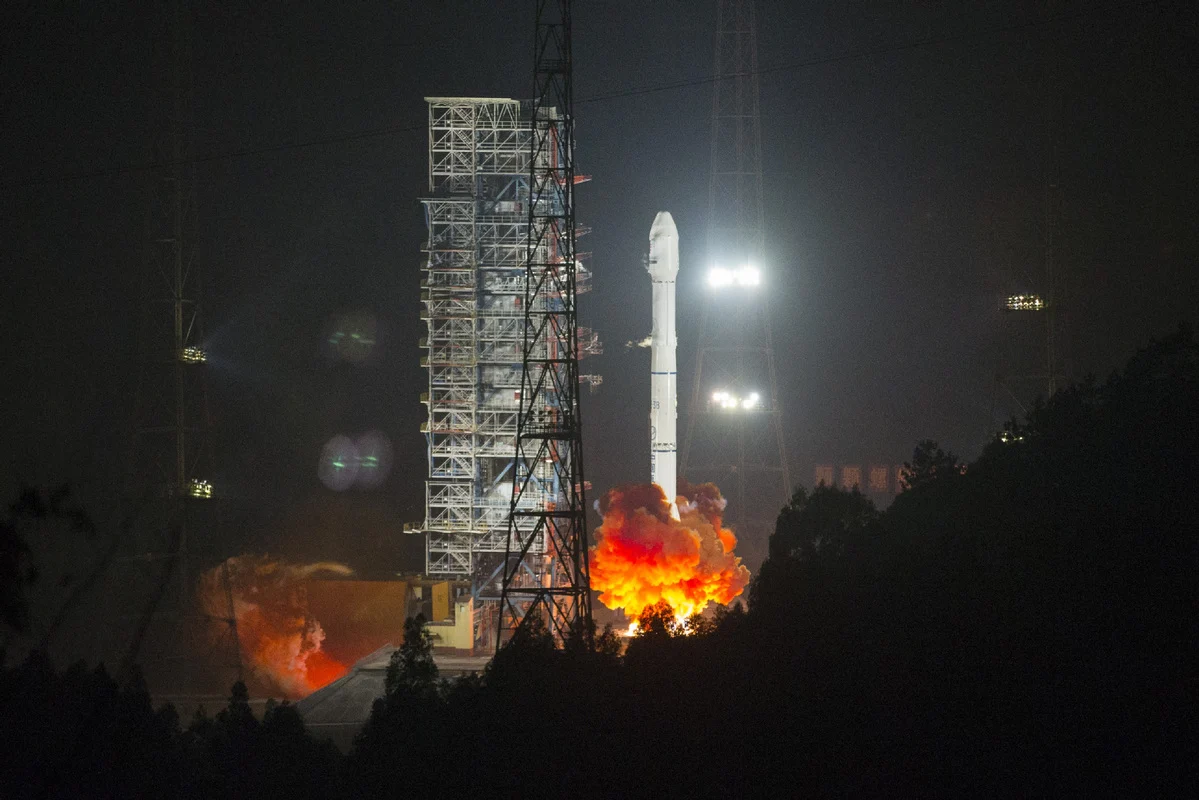
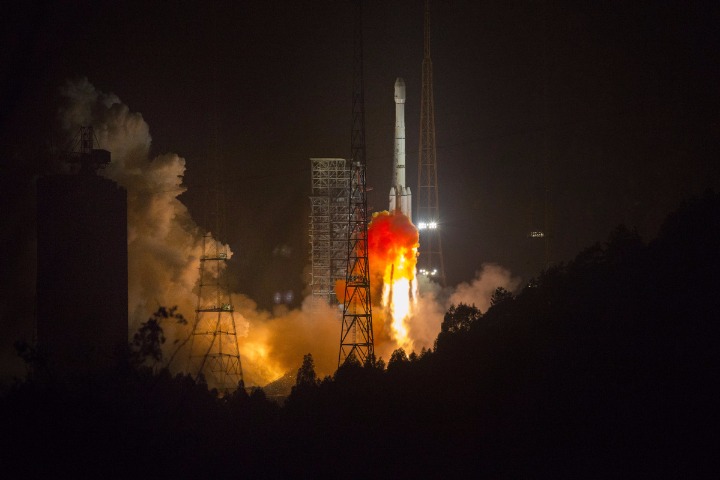
China’s burgeoning capabilities in space exploration and satellite technology reached a significant new peak in the early hours of Monday, December 11, 2017, with the successful launch of Algeria’s first communication satellite, Alcomsat-1. The launch, conducted from the Xichang Satellite Launch Center in the southwestern province of Sichuan, placed the satellite precisely into its designated orbit, heralding a new era of enhanced communication and technological advancement for Algeria and underscoring the deepening partnership between the two nations in the high-stakes realm of aerospace. This momentous event represents not just a technological achievement for Algeria, but a tangible outcome of extensive collaboration and a testament to China’s growing role as a global provider of advanced space services.
A Landmark Cooperative Endeavor
The Alcomsat-1 mission is more than just a satellite launch; it signifies the inaugural cooperative project in the aerospace industry between China and Algeria. This partnership, meticulously cultivated over time, demonstrates a shared vision for leveraging space technology to drive national development and improve the lives of citizens. The satellite, designed and manufactured to meet Algeria’s specific needs, is poised to deliver a wide array of crucial services. These include bolstering broadcast and television services, enhancing emergency communication networks, expanding the reach of distance education initiatives, facilitating e-governance platforms, improving enterprise communication infrastructure, providing broader broadband access, and supporting satellite-based navigation systems. The comprehensive scope of Alcomsat-1’s intended applications highlights Algeria’s commitment to embracing modern technological solutions to address developmental challenges across its vast territory.
The Precision of the Launch
The launch vehicle for this historic mission was a robust Chinese Long March-3B carrier rocket, a workhorse of China’s space program renowned for its reliability and payload capacity. The liftoff occurred precisely 40 minutes after midnight, a timing indicative of the meticulous planning and execution involved in space operations. This launch marked the 258th mission for the Long March rocket family, a remarkable track record that speaks volumes about the maturity and sophistication of China’s launch capabilities. The Long March-3B, specifically designed for geostationary satellite launches, is equipped with powerful engines and a stable flight trajectory, ensuring that delicate payloads like Alcomsat-1 are delivered safely and accurately into their intended orbits. The successful deployment of Alcomsat-1 into its preset orbit is a direct result of the advanced engineering and operational expertise inherent in the Long March program.
Background and Context: China’s Ascending Role in Global Space Services
China’s space program has witnessed exponential growth over the past few decades, evolving from an ambitious national endeavor to a significant player on the international stage. Initially focused on military and scientific applications, China has progressively expanded its reach into commercial satellite services, including launch capabilities, satellite manufacturing, and in-orbit operations. The successful launch of Alcomsat-1 is a clear illustration of this strategic shift. As countries worldwide increasingly recognize the indispensable role of satellites in modern infrastructure, China has positioned itself as a reliable and cost-effective partner, offering comprehensive solutions from design and manufacturing to launch and ground support. This aligns with China’s broader Belt and Road Initiative, which often includes technological cooperation as a key component, fostering economic development and diplomatic ties through shared infrastructure projects.
Algeria, a North African nation with significant geographical expanse, has long recognized the potential of space technology to bridge its own developmental gaps. The nation has been actively seeking to modernize its telecommunications infrastructure, expand access to education and healthcare in remote areas, and improve disaster response capabilities. The decision to partner with China for its first communication satellite was a strategic one, driven by China’s proven track record, its advanced technological offerings, and a willingness to engage in comprehensive technology transfer and capacity building. This partnership not only provides Algeria with a vital national asset but also offers an opportunity to foster domestic expertise in space technology.
Chronology of the Alcomsat-1 Mission
While specific detailed timelines of the Alcomsat-1 project’s development are not publicly available in the provided snippet, a general chronology of such a mission typically involves several key stages:
- Early Planning and Needs Assessment: Algeria identifies its communication needs and explores potential solutions, including satellite technology.
- Partnership Agreement and Contract Signing: Following negotiations, Algeria selects China as its partner, and contracts are signed for satellite design, manufacturing, and launch. This phase likely involved extensive technical discussions and site visits.
- Satellite Design and Manufacturing: Chinese engineers and technicians work on designing and building the Alcomsat-1 satellite, adhering to Algerian specifications and international standards. This stage often involves rigorous testing and quality control.
- Ground Station Development: Concurrently, Algeria would have been developing or upgrading its ground control stations to communicate with and manage the satellite. China often provides support in this area.
- Satellite Transportation and Integration: The completed satellite is transported to the Xichang Satellite Launch Center and integrated with the Long March-3B rocket.
- Pre-Launch Preparations and Countdown: This involves a series of checks, tests, and simulations to ensure all systems are functioning optimally.
- Launch: The scheduled liftoff of the Long March-3B rocket carrying Alcomsat-1.
- Orbit Insertion: The rocket’s upper stages guide the satellite into its designated geostationary transfer orbit.
- In-Orbit Testing and Commissioning: Once in orbit, the satellite undergoes a period of testing to verify its functionality and performance before being declared operational.
- Operational Deployment: Alcomsat-1 is then handed over to Algeria for its intended services.
The successful launch on December 11, 2017, represents the culmination of years of dedicated effort across these stages.
Supporting Data and Technological Aspects
While the provided text does not offer specific technical specifications of the Alcomsat-1 satellite itself, it is reasonable to infer certain characteristics based on its intended applications and the nature of communication satellites. Such satellites typically operate within specific frequency bands (e.g., C-band, Ku-band, Ka-band) to facilitate various communication services. For broadcast and television, high-bandwidth capabilities are crucial. Emergency communication requires robust and reliable links, often with redundancy. Distance education and e-governance demand stable and widespread connectivity. Broadband access necessitates high data throughput. Satellite-based navigation, while often associated with dedicated constellations like GPS or Galileo, can also be augmented or supported by communication satellites in certain contexts.
The Long March-3B rocket itself is a powerful launch vehicle. Its typical payload capacity to geostationary transfer orbit is around 5.5 metric tons. This suggests that Alcomsat-1 is a substantial satellite, capable of housing advanced communication payloads and having a considerable operational lifespan, often exceeding 15 years. The Xichang Satellite Launch Center is one of China’s primary launch sites, strategically located to facilitate launches into various orbits. Its infrastructure is designed to handle the complex logistics and technical requirements of modern space missions.
Official Responses and International Reactions (Inferred)
While direct quotes are not available, the successful launch would have undoubtedly elicited strong positive reactions from officials in both China and Algeria.
- Algerian Government: Officials from Algeria’s Ministry of Post, Telecommunications, Information and Information Technologies, and its space agency (ASAL) would have expressed immense pride and gratitude for the successful launch. Statements would likely have highlighted the significance of this achievement for Algeria’s national development, its technological sovereignty, and its burgeoning relationship with China. They would have emphasized the tangible benefits Alcomsat-1 will bring to the Algerian populace.
- Chinese Government: Representatives from the China National Space Administration (CNSA) and the Ministry of Foreign Affairs would have lauded the success as a testament to China’s advanced space capabilities and its commitment to international cooperation. They would have likely framed it as a win-win collaboration, contributing to global peace and development through the peaceful use of outer space.
- International Space Community: The launch would have been observed with interest by other nations and space agencies. It reinforces China’s position as a reliable provider of space launch and satellite solutions, potentially influencing future partnerships and competition within the global aerospace market. Industry analysts would likely have noted the growing influence of Chinese space technology in developing nations.
Broader Impact and Implications
The successful launch of Alcomsat-1 carries profound implications for both Algeria and China, as well as for the broader landscape of international space cooperation.
For Algeria:
- Enhanced Connectivity: Alcomsat-1 will significantly improve telecommunications infrastructure across Algeria, bridging the digital divide between urban and rural areas. This will facilitate access to information, online services, and economic opportunities for all citizens.
- National Security and Disaster Management: The satellite’s capabilities in emergency communication will be crucial for coordinating responses to natural disasters, ensuring rapid and reliable information flow during critical events.
- Socio-Economic Development: Improved access to distance education and e-governance services can empower citizens, enhance public services, and foster economic growth. The satellite will also support the expansion of broadband internet, a key enabler of the digital economy.
- Technological Advancement and Capacity Building: The collaboration with China provides Algeria with invaluable experience and knowledge transfer, potentially paving the way for future indigenous space development and a more skilled workforce.
For China:
- Strengthening Global Partnerships: The successful launch reinforces China’s reputation as a reliable and capable partner in space technology, enhancing its diplomatic influence and its standing in the global aerospace industry.
- Commercial Space Sector Growth: This mission contributes to the growth of China’s commercial space sector, demonstrating its ability to meet the diverse needs of international clients. It also opens doors for further satellite export opportunities.
- Technological Diplomacy: By providing essential space infrastructure to developing nations, China is leveraging its technological prowess to foster goodwill and build strategic alliances, aligning with its broader foreign policy objectives.
- Continued Innovation: The experience gained from such complex international projects fuels further innovation and refinement of China’s space technologies, from satellite design to launch systems.
For the Global Aerospace Landscape:
- Increased Competition and Choice: The success of China in launching satellites for other nations introduces greater competition into the global market for satellite manufacturing and launch services, potentially leading to more competitive pricing and innovative solutions.
- Democratization of Space Access: As more countries gain access to satellite technology through partnerships with nations like China, it can lead to a broader democratization of space capabilities, enabling more nations to leverage space for their own development.
- Shifting Geopolitical Dynamics: The growing role of countries like China in providing advanced space infrastructure can subtly shift geopolitical dynamics, as nations seek diverse partners for critical technological advancements.
In conclusion, the launch of Alcomsat-1 by China for Algeria is a multifaceted achievement. It is a triumph of engineering and international cooperation, a significant step forward for Algeria’s technological aspirations, and a clear indicator of China’s expanding influence in the global space arena. This mission sets a precedent for future collaborations, underscoring the transformative power of space technology in fostering national development and strengthening international relationships.


 Nana Wu
 Suro Senen