Muslim
The Chinese government has released a comprehensive draft of the Law on the Prevention and Governance of Cyberviolence, marking a significant escalation in the nation’s efforts to regulate the digital sphere and protect individuals from online harassment. This legislative move seeks to codify and centralize various existing guidelines into a unified legal framework designed to prevent, stop, and punish cyberviolence. The draft law addresses a wide array of digital harms, ranging from concentrated insults and rumor-mongering to the illegal disclosure of personal information and the use of artificial intelligence to facilitate online antagonism. By establishing clear responsibilities for online service providers, government departments, and educational institutions, the law aims to preserve national security and protect the lawful rights of citizens in an increasingly digitized society.
Defining the Scope of Cyberviolence
Article 2 of the draft law provides a rigorous definition of cyberviolence, categorizing it as the use of the internet to harm the reputation, honor, privacy, or personal information of individuals and organizations through concentrated or sustained activities. The legislation identifies four primary categories of prohibited conduct: the publication of insults, rumors, and incitements of hatred; the illegal "doxxing" or concentrated publication of private data; continuous online intimidation or harassment; and any other activities that infringe upon lawful rights and interests.
This definition is notably broad, encompassing not just direct attacks but also the fomenting of antagonism and the use of threatening coercion. The law explicitly applies to activities within the mainland territory of the People’s Republic of China (PRC), but it also extends its reach to overseas organizations or individuals who target victims within the PRC. This extraterritorial provision highlights the government’s intent to provide a comprehensive shield for its citizens, regardless of the perpetrator’s physical location.
Strengthening Platform Accountability and Governance
A central pillar of the draft law is the imposition of stringent requirements on online service providers. Under Chapter II, platforms are mandated to establish robust systems for user registration, account management, and information review. Most notably, Article 12 reaffirms the "real-name verification" requirement, stating that platforms must not provide services to users who fail to provide authentic identity information.
The draft law places a heavy emphasis on the proactive identification of cyberviolence. Online service providers are required to develop "early-warning models" and maintain "cyberviolence marker pools" using a combination of artificial intelligence, big data, and manual review. When a risk of cyberviolence is detected, platforms are prohibited from using algorithmic recommendations to push the related content. Furthermore, they must implement dynamic real-name verification for irregular accounts and apply restrictive measures such as traffic limitations or the suspension of information updates.
In a move to protect vulnerable populations, Article 14 requires platforms to provide specialized protection modes for minors, the elderly, and persons with disabilities. This includes the provision of "minor modes" that offer guardians the ability to receive safety alerts and monitor online usage. Platforms must also provide users with the technical means to block unknown users and prohibit comments or forwards on their own posts.
A Timeline of Legislative Escalation
The release of this draft law follows several years of incremental regulatory tightening by Chinese authorities. The timeline of these developments reflects a growing urgency to address the social consequences of unregulated digital speech:
- 2021-2022: The Cyberspace Administration of China (CAC) launched various "Qinglang" (Clear and Bright) campaigns targeting "fandom culture" and online rumors, which were identified as breeding grounds for cyberviolence.
- September 2023: The Supreme People’s Court, Supreme People’s Procuratorate, and the Ministry of Public Security jointly issued the "Guiding Opinions on Punishing Cyberviolence Crimes According to Law." This document provided the initial judicial basis for treating cyberviolence as a criminal matter.
- Early 2024: Increased public pressure followed several high-profile tragedies, including the suicides of individuals targeted by mass online harassment campaigns. These events catalyzed the transition from administrative guidelines to a formal, standing law.
- Current Phase: The draft law is now in the public consultation phase, seeking input from stakeholders before being finalized and enacted by the National People’s Congress.
Judicial Protection and the "Private to Public" Prosecution Shift
One of the most significant legal innovations in the draft is found in Chapter V, which addresses judicial protection. Traditionally, cases of online insult or defamation were treated as private prosecutions, meaning the burden of proof and the initiative to sue rested entirely on the victim. Recognizing that victims of cyberviolence often lack the resources to collect evidence against anonymous mobs, Article 41 allows the People’s Procuratorate to initiate public prosecutions if the cyberviolence "seriously impacts social order and national interests."
Furthermore, Article 37 introduces "injunctions against harm to personality rights." This allows victims to apply for a court order to stop imminently harmful conduct before a full trial concludes. If a victim is unable to apply due to coercion or incapacity, organizations such as the Women’s Federation or the Disabled Persons’ Federation are empowered to apply on their behalf. This represents a major shift toward a more proactive, state-supported judicial intervention in digital disputes.

Penalties and Liability for Organizations and Individuals
The draft law outlines a tiered system of penalties designed to ensure compliance from both tech giants and individual users. Article 49 stipulates that online service providers who fail to fulfill their security management obligations can face fines ranging from 500,000 to 2 million RMB. In "especially serious" cases, fines can escalate to 10 million RMB, and platforms may face the revocation of their business licenses or the closure of their websites and applications.
For individuals and entities that organize or incite cyberviolence, the law provides for administrative and criminal responsibility. Article 51 targets "Public Internet User Accounts" with large followings (often referred to as "Big Vs" or influencers), prohibiting them from using their influence to incite harassment. Multi-channel Network (MCN) agencies are also held accountable for the conduct of the creators they represent. If an MCN is found to have organized or assisted in cyberviolence, they face platform-wide blacklisting and the suspension of monetization features.
Supporting Data and Contextual Analysis
The necessity of this law is underscored by the scale of China’s digital landscape. As of 2024, China has over 1.09 billion internet users, with a significant portion of daily social interaction occurring on platforms like Weibo, Douyin, and WeChat. According to various sociological studies conducted within the PRC, nearly 40% of internet users have reported experiencing some form of online harassment, though only a small fraction previously sought legal recourse due to the high costs and complexity of litigation.
The inclusion of Artificial Intelligence in the draft is particularly noteworthy. Article 31 prohibits the use of generative AI to produce or synthesize cyberviolence information. This reflects the government’s concern regarding "deepfakes" and automated bot accounts that can amplify a harassment campaign a thousandfold within minutes. By requiring platforms to label AI-generated content and track it to its source, the law attempts to "future-proof" the regulations against emerging technologies.
Societal Governance and Educational Mandates
Beyond the courtroom and the server room, the draft law envisions a "coordinated co-governance" model. Chapter IV mandates that education departments include anti-cyberviolence training in school curricula. Schools are required to intervene immediately if they discover students are involved in cyberviolence, whether as victims or perpetrators.
Guardians are also assigned legal responsibilities. Article 29 stipulates that parents must regulate their own internet usage to provide a positive model for minors and actively oversee their children’s digital activities. Failure to do so can result in admonishment from residents’ committees or school units, emphasizing that the fight against cyberviolence begins within the family unit.
Broader Implications and Global Context
The enactment of this law will likely have profound implications for the global tech industry. Multinational companies operating in China will need to significantly upgrade their content moderation algorithms and reporting mechanisms to meet the "early-warning" and "dynamic verification" standards. The requirement to store records and report leads to public security organs may also raise questions regarding data privacy and the role of private corporations in state surveillance.
Domestically, the law is expected to provide a "chilling effect" on the more aggressive elements of Chinese internet culture, such as "human flesh search engines" (online doxxing) and organized "trolling" groups. While critics may express concern over the potential for these laws to be used to suppress legitimate public opinion oversight, Article 59 explicitly states that the law does not apply to those "lawfully reporting or exposing others’ violations" or "implementation of public opinion oversight."
As the draft moves toward finalization, it stands as one of the world’s most detailed and punitive legal frameworks dedicated specifically to the issue of cyberviolence. Its success will depend on the balance between rigorous enforcement and the protection of the very "online literacy" and "active, healthy culture" it seeks to promote. For the millions of Chinese internet users who have navigated an often-volatile digital environment, the law represents a promise of state-backed protection against the faceless crowds of the internet.


 Rifan Muazin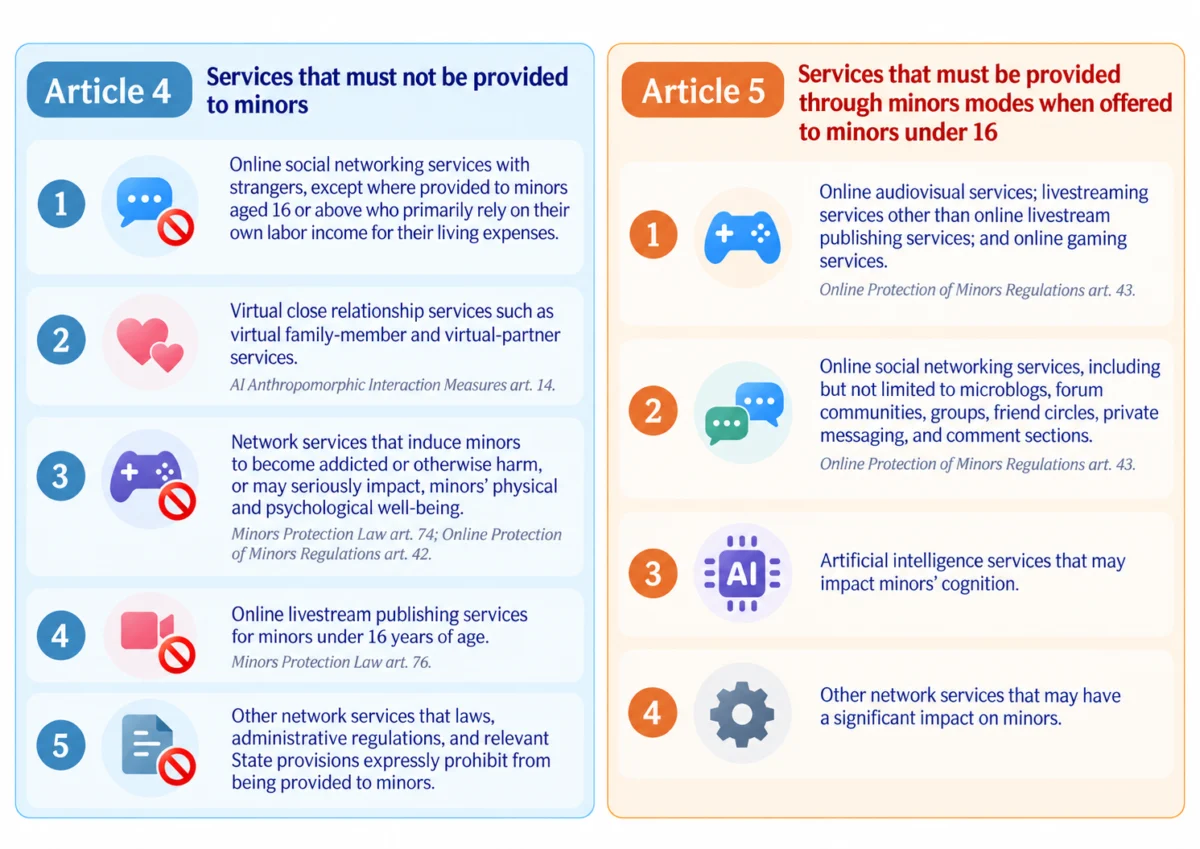
 Raul Delapena Setiawan