Siti Muinah
As the global artificial intelligence computing revolution accelerates at an unprecedented pace, the semiconductor industry has transitioned from a specialized market sector into the bedrock of national resilience and global technological competitiveness. Taiwan, currently at the epicenter of this transformation, finds its leadership challenged not only by the rigors of advanced manufacturing but by the necessity of maintaining a highly integrated value chain that demands a stable energy supply, a deep pool of international talent, and agile policy frameworks. While the nation’s foundry dominance remains undisputed, a new report from industry experts and policy committees suggests that structural constraints are becoming more pronounced as the sector moves toward leading-edge nodes and large-scale AI deployment, requiring immediate and coordinated public-private action to ensure long-term stability.
A Strategic Pivot for the Digital Age
The current landscape of the semiconductor industry is defined by a shift from general-purpose computing to specialized AI-driven architectures. This transition has placed Taiwan’s infrastructure under a microscope. Industry leaders have identified four critical priorities to sustain Taiwan’s competitive position: energy security, talent acquisition, tax reform, and the adoption of a distributed AI model.
The committee’s findings emphasize that Taiwan’s role is evolving from a manufacturing hub into a critical platform for the global digital economy. However, this evolution is contingent upon the government’s ability to address systemic vulnerabilities. The rapid growth in AI-driven electricity demand, for instance, requires a total diversification of energy sources. Carbon-free energy (CFE) is no longer just an environmental goal; it has become a strategic resource essential for industrial survival. Simultaneously, as global competition for high-skilled professionals intensifies, Taiwan’s policy response must align with international standards to prevent a "brain drain" and instead foster a "brain gain."
Strengthening the Foundation: Energy Security and Predictability
The semiconductor value chain is the most energy-intensive segment of the modern economy. With electricity demand driven by AI projected to reach historical highs by 2028, the pressure on Taiwan’s power system is reaching a breaking point. The committee’s primary suggestion focuses on ensuring a resilient and predictable electricity supply, noting that technological capability is meaningless without the power to run the fabrication plants (fabs).
The LNG Vulnerability and Geopolitical Risks
Taiwan’s current energy mix is heavily reliant on imported liquefied natural gas (LNG), which has recently surpassed coal as the primary source of power generation. While LNG is a cleaner alternative to coal, it introduces significant geopolitical risks. As an island nation, Taiwan is almost entirely dependent on maritime imports, making its energy supply susceptible to regional tensions and supply chain disruptions.
Currently, Taiwan’s LNG storage capacity lags behind other major importers. While the Natural Gas Industry Act mandates minimum stockholding levels, these are largely defined through administrative measures rather than robust statutory requirements. In contrast, economies like Japan and South Korea maintain significantly higher storage buffers and diversified receiving infrastructure. To mitigate these risks, the committee urges the government to:
- Accelerate Infrastructure Development: Expedite the construction of LNG receiving terminals to expand import capacity and build strategic reserves.
- Legislative Reform: Amend Article 31 of the Natural Gas Industry Act to establish clear, enforceable, and statutory minimum LNG stockholding requirements.
- Price Predictability: Establish a mechanism for advance notice regarding electricity price adjustments, allowing industrial users to plan budgets and operations without the shock of sudden volatility.
Integrating Renewables into National Security
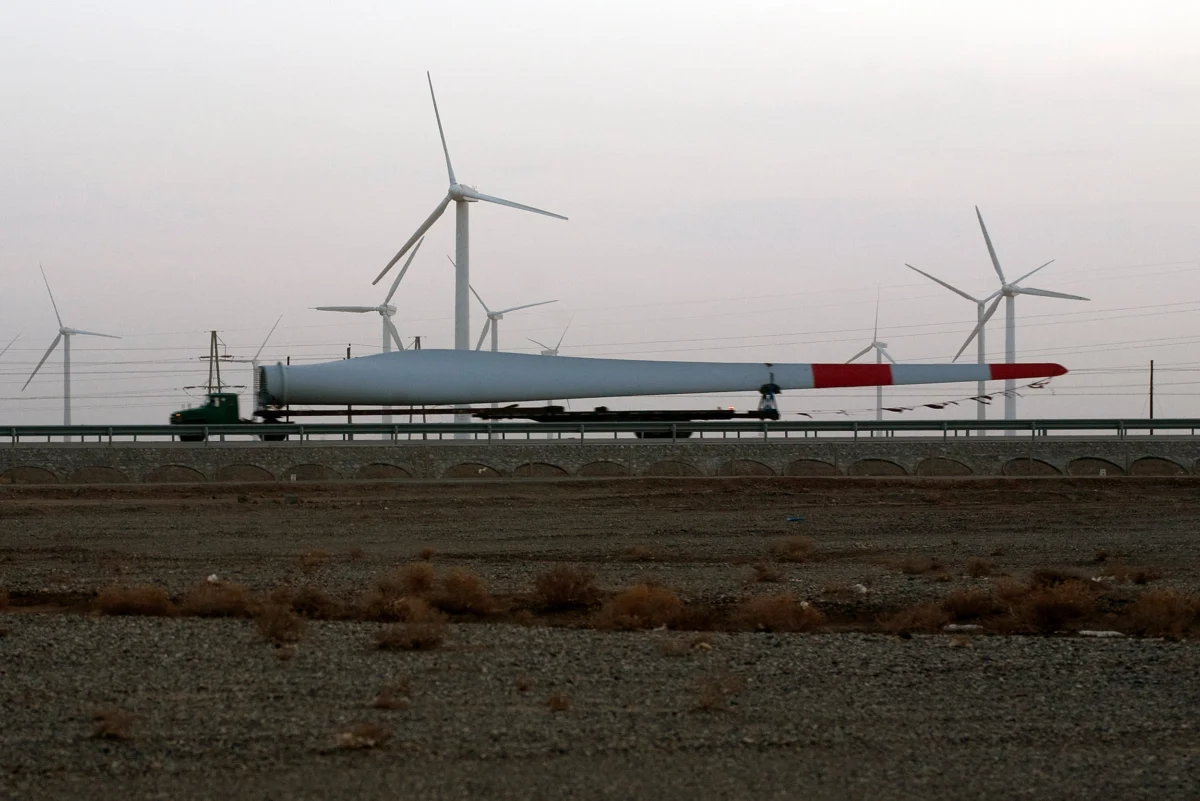
Beyond fossil fuels, the committee advocates for a reframing of renewable energy as a pillar of energy resilience. Because wind and solar are domestically generated, they are immune to maritime blockades or international fuel price spikes. The recommendation is to move beyond seeing renewables solely as a decarbonization tool and to start viewing them as a national security asset. This requires a cross-ministerial coordination mechanism at the Executive Yuan level to align land use, environmental reviews, and grid development.
The Global War for Talent: Tax Incentives and Retention
The second pillar of the proposed strategy addresses the human element of the semiconductor race. While Taiwan’s "Employment Gold Card" has been successful in attracting initial interest, long-term retention remains a hurdle. Current tax incentives for foreign professionals are often limited to a five-year window, which industry experts argue is insufficient for long-term career and family planning.
Benchmarking Against Global Standards
To remain competitive, Taiwan must look toward international models. Italy, for example, utilizes a "5+5" framework, allowing tax benefits to be extended if an individual meets certain retention criteria, such as continued employment or relocating family members. Similar preferential regimes exist in the Netherlands and Spain, offering flat rates or significant partial exemptions for qualifying workers.
The committee suggests that Taiwan should not only extend the duration of these incentives but also expand the flexibility of talent-related tax mechanisms. This includes a review of Article 19-1 of the Industrial Innovation Act to improve the treatment of equity-based compensation. By adjusting the caps and timing of taxation on stock-based incentives, Taiwan can better align its compensation structures with the global standards used to attract top-tier AI researchers and semiconductor engineers.
Refining the Industrial Innovation Act for R&D Sustenance
Research and development (R&D) is the lifeblood of the semiconductor sector, spanning design, packaging, and materials science. Article 10-2 of the Statute for Industrial Innovation was designed to incentivize this investment through tax deductions. However, current implementing regulations have created a "catch-22" for high-growth companies.
The Intensity Threshold Dilemma
Under the current framework, companies must meet both a minimum R&D expenditure threshold and a specific R&D intensity ratio (R&D spending as a percentage of revenue) within the same tax year. This dual requirement creates uncertainty. For instance, if a company’s revenue spikes due to market conditions, its R&D intensity ratio may drop even if its actual R&D spending has increased. This fluctuation can disqualify firms from receiving the very incentives they rely on for long-term planning.
The committee recommends a more flexible approach:
- Allowing companies to meet either the absolute expenditure threshold OR the intensity ratio.
- Evaluating eligibility over a multi-year average to smooth out market-driven revenue fluctuations.
- Ensuring that the policy intent—to encourage cutting-edge technology investment—is not undermined by rigid administrative formulas.
The Shift to the Edge: A New AI Architecture
As AI applications move beyond massive, centralized data centers, Taiwan has a unique opportunity to lead in "Edge AI." While cloud-based training (using massive clusters of GPUs) is the current focus, the future of AI lies in inference—running AI models directly on devices like PCs, smartphones, autonomous vehicles, and industrial robots.
Reducing Infrastructure Strain
An overly centralized AI model places immense pressure on network bandwidth and power grids. By promoting a distributed "cloud-to-edge" model, Taiwan can reduce the energy burden on its centralized infrastructure. Edge AI enables data to be processed closer to the source, which improves latency, enhances data security, and ensures operational continuity even when network connections are unstable.
The committee proposes that the government embed this distributed approach into national flagship programs, such as the "Chip-based Industrial Innovation Program" and the "Ten AI Initiatives Promotion Plan." This would involve:
- Targeted Incentives: Supporting R&D for AI-capable end-user devices.
- Public Sector Adoption: Promoting edge AI solutions within government agencies and small-to-medium enterprises (SMEs) to create a domestic market for these technologies.
- Cross-Ministerial Coordination: Designating an Executive Yuan-level authority to oversee AI policy, ensuring that computing resources, data governance, and application development are not fragmented across different ministries.
Chronology and Timeline of Taiwan’s AI Evolution
The current push for reform is the culmination of several years of rapid development:
- 2021-2022: The global chip shortage highlights Taiwan’s systemic importance to the global economy.
- Early 2023: The "ChatGPT moment" triggers a massive surge in demand for AI accelerators, leading to record-breaking revenues for Taiwan’s semiconductor leaders.
- Mid 2023: Taiwan enacts the initial phases of the Industrial Innovation Act amendments to protect its technological "moat."
- 2024: The introduction of the AI Basic Act provides a legal framework for AI development, while industry groups begin calling for deeper structural reforms in energy and tax policy.
- 2028 Projection: Expected peak in AI-driven energy demand, serving as the "deadline" for Taiwan to stabilize its power grid.
Analysis of Implications: The Cost of Inaction
The stakes for Taiwan are not merely economic but existential. If Taiwan fails to resolve its energy stability issues, global tech giants may feel compelled to diversify their supply chains away from the island to mitigate "concentration risk." This would not only impact Taiwan’s GDP but also its "Silicon Shield"—the concept that Taiwan’s importance to the global economy deters geopolitical aggression.
Furthermore, the transition to Edge AI represents the next "Gold Rush" in tech. If Taiwan remains focused solely on manufacturing chips for other people’s clouds, it may miss the opportunity to dominate the hardware-software integration of the edge computing era. By adopting the committee’s recommendations, Taiwan can transition from being the world’s "foundry" to becoming the world’s "AI Engine," providing both the hardware and the architectural framework for the next generation of digital life.
Conclusion: A Call for Coordinated Action
The path forward requires a departure from "business as usual." The committee’s report serves as a roadmap for a more resilient, attractive, and innovative Taiwan. By securing its energy future, winning the global talent war, refining its R&D incentives, and leading the charge into Edge AI, Taiwan can reinforce its role as an indispensable partner in the global digital economy. The enactment of the AI Basic Act and the planned National AI Strategy Special Committee are positive first steps, but the speed of implementation will determine whether Taiwan remains the leader of the AI revolution or becomes a spectator to it.


 Raul Delapena Setiawan
 Pevita Pearce