Azzam Bilal Chamdy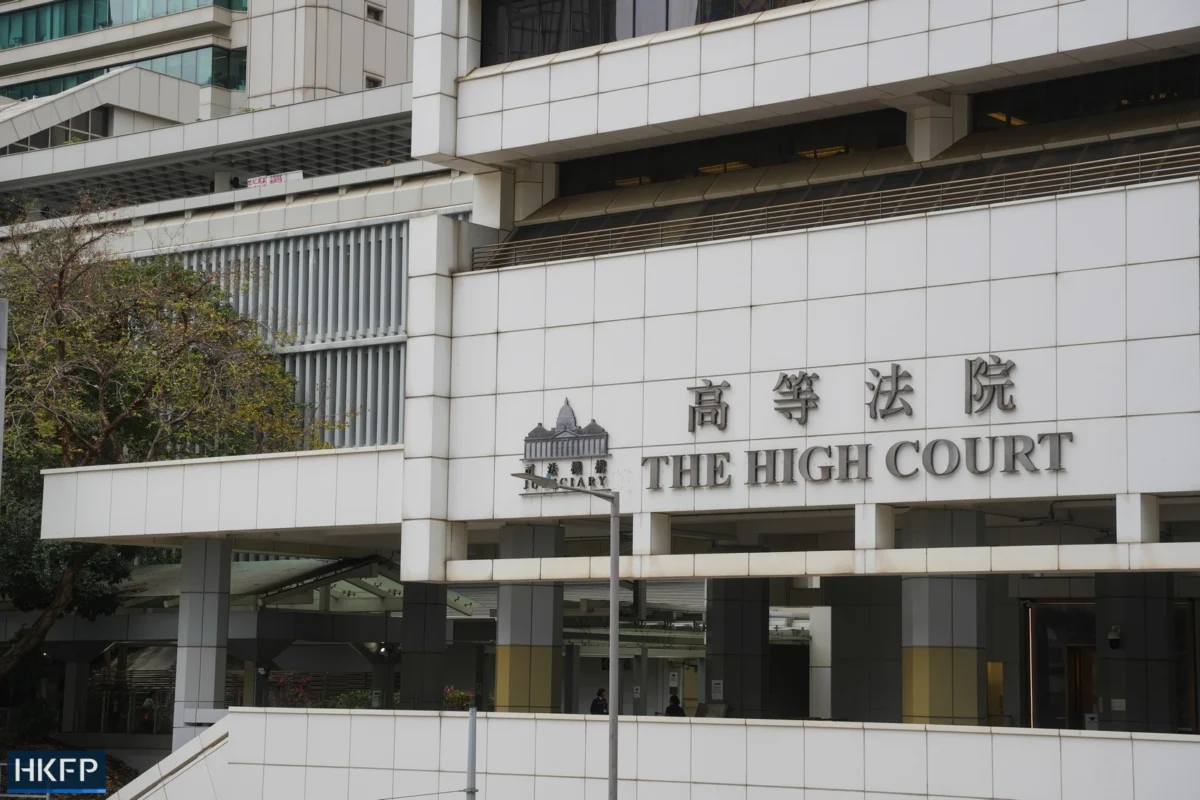
A Hong Kong court has ordered a retrial for a man accused of the 2021 murder of a taxi driver, after the jury in his initial trial was unable to reach a majority verdict. The decision comes after a lengthy legal process that has underscored the complexities of the case and the challenges in securing a unanimous or near-unanimous conviction.
Matthew Choi, 36, who has pleaded not guilty to the murder charge, faces a renewed legal battle following the High Court’s decision to discharge the jury and schedule a new trial. The initial proceedings, which commenced on July 15, concluded on Wednesday, marking the 23rd day of testimony and deliberation.
The prosecution’s case posited that the murder was a premeditated act, carefully planned by the defendant. However, Choi’s defence presented a starkly different narrative, arguing that the accused was experiencing a state of mind where he felt his actions were beyond his control, attributing this to a belief that he was being targeted by the government. This psychological defence, focusing on delusions and a perceived lack of agency, formed a central pillar of the defence’s argument.

Chronology of Events and Investigation
The tragic incident that led to the murder charge occurred in the early hours of October 12, 2021. Wai Kim-hung, a 48-year-old night-shift taxi driver, was reportedly stabbed to death while on duty in Sai Ying Pun. According to the prosecution, Wai was driving along Eastern Street when Choi hailed his taxi outside the WE Hotel. Shortly after boarding, Choi allegedly produced a knife and stabbed the driver in the neck before fleeing the scene on foot within a minute.
The immediate aftermath of the stabbing triggered a citywide manhunt. Choi was eventually apprehended on Lamma Island on October 13, 2021, following a two-day search operation. Reports indicated that a Lamma Island resident alerted the police after realizing that a drinking partner was, in fact, the murder suspect on the run. Wai Kim-hung was pronounced dead at Queen Mary Hospital at 6:17 am on the day of the incident.
Further details presented by the prosecution during the trial painted a picture of alleged post-murder actions by Choi. It was stated that he discarded some of his belongings in the vicinity of the crime scene, returned to his residence to wash his clothes, and subsequently travelled to Lamma Island, where he was later arrested.

The prosecution emphasized that Choi was clear-headed during the commission of the crime. Evidence supporting this included his check-in at the WE Hotel a day prior to the incident, his alleged change of clothes before hailing the taxi, and the fact that he reportedly brought a towel with him, suggesting an intention to clean himself up after the act.
Defence’s Counter-Narrative and Psychiatric Evaluation
The defence’s strategy hinged on the defendant’s mental state at the time of the alleged offense. Choi maintained his plea of not guilty, asserting that he felt his mind was being controlled when he assaulted the taxi driver. His defence team elaborated that Choi harboured a belief that he was being targeted by the government, a delusion that they argued significantly impaired his judgment and intent.
To support this defence, a psychiatrist from Castle Peak Hospital was called to testify. The psychiatrist reportedly stated that Choi began exhibiting symptoms of mental illness at the age of 20. These symptoms included delusions, with the defendant believing he was a target of artificial intelligence (AI). The psychiatrist further indicated that Choi had no recollection of the killing and had not expressed any intent to harm others to her.

The defence also presented information that Choi had relocated to Hong Kong from South Africa at the age of 26. Upon his arrival, he developed a belief that he was being mistreated by the Hong Kong government, a sentiment that purportedly continued to influence his perceptions.
Jury Deliberation and Court’s Decision
The seven-member jury commenced their deliberations on Wednesday, engaging in a protracted discussion that lasted for 16 hours. Despite their efforts, they were unable to reach a majority verdict on the murder charge. Under Hong Kong law, a majority verdict in criminal cases requires at least six out of seven jurors to agree.
Following the jury’s inability to reach a consensus, High Court Judge Esther Toh formally discharged the jury. She then directed that a retrial be scheduled, acknowledging the impasse and the necessity for a new judicial process to determine the facts of the case.

Broader Implications and Legal Context
The ordering of a retrial in such a serious case highlights several critical aspects of the Hong Kong legal system. Firstly, it underscores the principle that a defendant is entitled to a fair trial, and if a jury cannot reach a verdict, the process must be repeated to ensure justice is served. Secondly, it brings into focus the challenges of prosecuting cases where mental health is a significant factor in the defence. Proving intent (mens rea) is paramount in murder trials, and when a defendant claims their actions were involuntary due to mental illness, the burden of proof and the interpretation of evidence become highly complex.
The defence’s claim of feeling "mind controlled" and being a target of the government or AI raises questions about the defendant’s capacity and understanding of his actions. The psychiatrist’s testimony about his long-standing mental health issues provides crucial context, but the jury’s inability to reach a verdict suggests that the evidence presented may have led to differing interpretations of whether these mental health issues negated the required intent for murder.
The failure to reach a verdict can also place a significant emotional and financial burden on the victim’s family, who are seeking closure and justice. For the accused, it means continued uncertainty and the prospect of enduring another trial.

Potential Outcomes and Future Proceedings
The retrial will likely involve the presentation of similar evidence, but potentially with different emphasis or new expert testimony. The prosecution will aim to convince a new jury beyond a reasonable doubt that Matthew Choi intended to kill Wai Kim-hung, presenting evidence of planning and premeditation. The defence will continue to rely on the argument of diminished responsibility or lack of intent due to mental illness, seeking to persuade the jury that Choi’s actions were a product of his delusions and not a conscious act of malice.
The outcome of the retrial will depend on how the new jury interprets the evidence, the credibility of witnesses, and the persuasive power of both the prosecution and defence arguments. It is a stark reminder of the rigorous demands of the justice system in ensuring that guilt is established only when proven to the highest legal standard. The legal community will be watching closely as this case progresses, particularly concerning the interplay between criminal responsibility and mental health in the Hong Kong context. The court’s decision to order a retrial signifies that the pursuit of justice in this deeply unfortunate case is far from over.


 Ammar Sabilarrohman
 Lina Irawan