Asep Darmawan
A prominent union representing Hong Kong’s migrant domestic workers has forcefully rejected proposals by employer groups for a wage freeze, arguing that recent salary increases have fallen significantly short of keeping pace with the escalating cost of living in the city. The Hong Kong Federation of Asian Domestic Workers Unions (FADWU) has instead called for enhanced protections and a more equitable compensation structure for its members, many of whom are the sole breadwinners for their families in their home countries.
The FADWU’s strong stance comes in direct response to a petition submitted by the International Domestic Service Industry Development Federation and the Quadripartite Alliance for Harmonious Employment Practices (QAHEP) earlier this week. These employer groups advocated for a halt in wage increments for domestic workers, citing concerns over rising labor costs. However, FADWU contends that the proposed freeze would exacerbate the financial strain on workers who are already struggling to make ends meet.

Erosion of Real Wages Amidst Inflationary Pressures
In a statement released to the press, FADWU highlighted that the nominal wage increases, often hovering around 2%, have consistently failed to offset the effects of inflation. "These increases have never been enough to keep up with inflation," the union stated. "In effect, migrant domestic workers’ real wages have been decreasing for many years." This sentiment underscores a growing concern within the community that their purchasing power is diminishing year after year, despite their essential role in Hong Kong households.
The union pointed to the current year’s projected inflation rate of 2.6% as a critical factor in their opposition to a pay freeze. "People should justify in an objective manner how a wage freeze is reasonable," FADWU challenged, implying that employer arguments lack a solid basis when measured against objective economic indicators. The union’s position is further bolstered by the fact that the statutory minimum wage for domestic workers has historically lagged behind the general inflation rate, creating a persistent gap between earnings and the cost of essential goods and services.
Stagnant Food Allowance Adds to Financial Burden
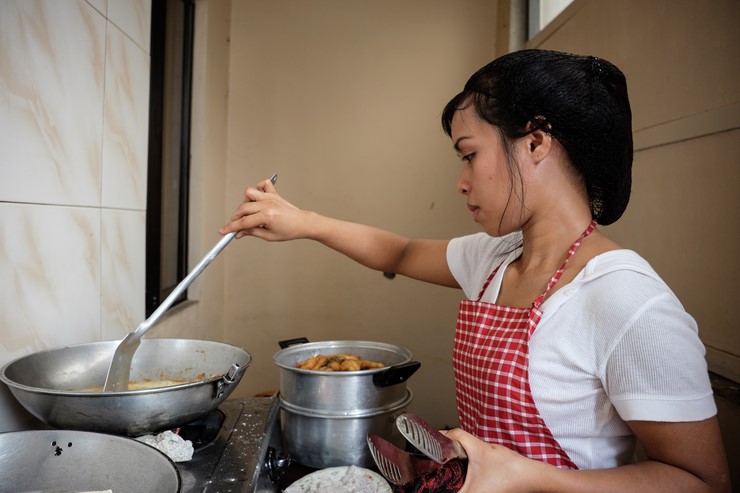
Adding to the financial pressures, the monthly food allowance, mandated for employers who do not provide meals to their domestic workers, has remained stagnant. Currently set at HK$1,236, this allowance has been frozen for two consecutive years and is slated to remain so until the end of September. This prolonged freeze on a crucial component of a worker’s remuneration further diminishes their overall compensation in real terms, especially considering the rising prices of food and other daily necessities in Hong Kong.
Employer Opposition and Contrasting Economic Narratives

The employer groups, conversely, presented a different economic narrative. QAHEP, for instance, released survey findings indicating that a staggering 97% of employers are "strongly opposed" to any pay rises for their domestic staff. Their argument hinges on the assertion that minimum wage increases for domestic workers, amounting to 7.8% over the past three years, have purportedly outpaced the rise in Hong Kong’s composite Consumer Price Index (CPI), which they claim stood at 5.4% during the same period. This statistic, however, is being contested by FADWU, which emphasizes the impact of cumulative inflation over longer periods and the specific cost of living faced by migrant workers.
The employer groups’ perspective often focuses on the perceived burden of labor costs on household budgets. However, critics argue that this perspective overlooks the significant contributions of domestic workers to the Hong Kong economy and society, enabling many dual-income families to maintain their professional careers.
Exploitation and the “Extreme-Low-Income” Dilemma

The FADWU also shed light on a more concerning aspect of the employment landscape: instances of exploitation, particularly among "extreme-low-income" families. The union reported cases where employers, in an effort to manage their financial constraints, resort to underpayment, withholding of food, or providing inadequate accommodation. This practice, FADWU argues, is a direct consequence of insufficient government support for families struggling to meet their care needs.
Hong Kong’s regulations currently stipulate a minimum monthly family income of HK$15,000 for households wishing to employ a domestic worker. While a majority of employers reportedly earn well above the median household income – HK$37,800 for a three-person household and HK$54,000 for a family of four – a minority of families operate closer to the minimum income threshold. It is within this latter group that the union observes a higher propensity for exploitative practices.
"The care needs of low-income families who have not received government social service support cannot be achieved by abusing workers," the union stated emphatically. "They are forced to exploit domestic workers to meet these needs due to their own limited resources." This highlights a systemic issue where the lack of adequate social safety nets for vulnerable families inadvertently places pressure on domestic workers.

Calls for Government Intervention and Enhanced Social Support
In response to these challenges, FADWU has urged the government to reconsider the HK$15,000 monthly family income eligibility criterion for employing domestic workers. They advocate for increased social service support for families who may struggle to afford domestic help without compromising on fair wages and working conditions. Furthermore, the union proposed that the government explore the possibility of providing subsidies to families who genuinely require the assistance of domestic workers.
"The government can subsidise them to hire migrant domestic workers to maintain their care needs, but please NOT by exploiting us," the union implored, drawing a clear line between necessary support and exploitative practices.

Advocating for a Collective Bargaining Framework
A significant demand from FADWU is the establishment of a formal three-way collective bargaining mechanism. This proposed framework would involve representatives from domestic workers, employers, and government officials. The aim is to create a structured platform where wages, food allowances, and other employment-related matters can be discussed and negotiated in a transparent and equitable manner.
"Allowing all three parties to discuss wages, food allowances, and other matters concerning employers and domestic workers simultaneously at the negotiating table in a reasonable manner," the union elaborated, envisioning a system that fosters mutual understanding and fair resolution of disputes. Such a mechanism could potentially lead to more sustainable and mutually beneficial employment arrangements, moving beyond the current adversarial dynamic.

Broader Context: The Indispensable Role of Migrant Domestic Workers
Migrant domestic workers form the backbone of many Hong Kong households, enabling the city’s robust economy to function by providing essential childcare, eldercare, and household management services. The vast majority of these workers hail from Southeast Asian countries, sending a significant portion of their earnings back home to support their families. Their labor is not only crucial for the daily lives of their employers but also contributes to remittances that are vital for the economies of their home nations.
The ongoing debate over wages and working conditions for domestic workers is intrinsically linked to broader issues of labor rights, social welfare, and economic equity in Hong Kong. As the city grapples with demographic shifts, an aging population, and persistent income inequality, the role and rights of its migrant workforce will continue to be a focal point of public discourse and policy-making. The FADWU’s proactive stance signals a growing assertiveness among these workers and their advocates, demanding recognition and fair treatment in a society that relies heavily on their contributions. The current conflict over wage freezes underscores the urgent need for a balanced approach that acknowledges both the economic realities faced by employers and the fundamental right of workers to a dignified livelihood.


 Ammar Sabilarrohman
 Nana Wu