Raul Delapena Setiawan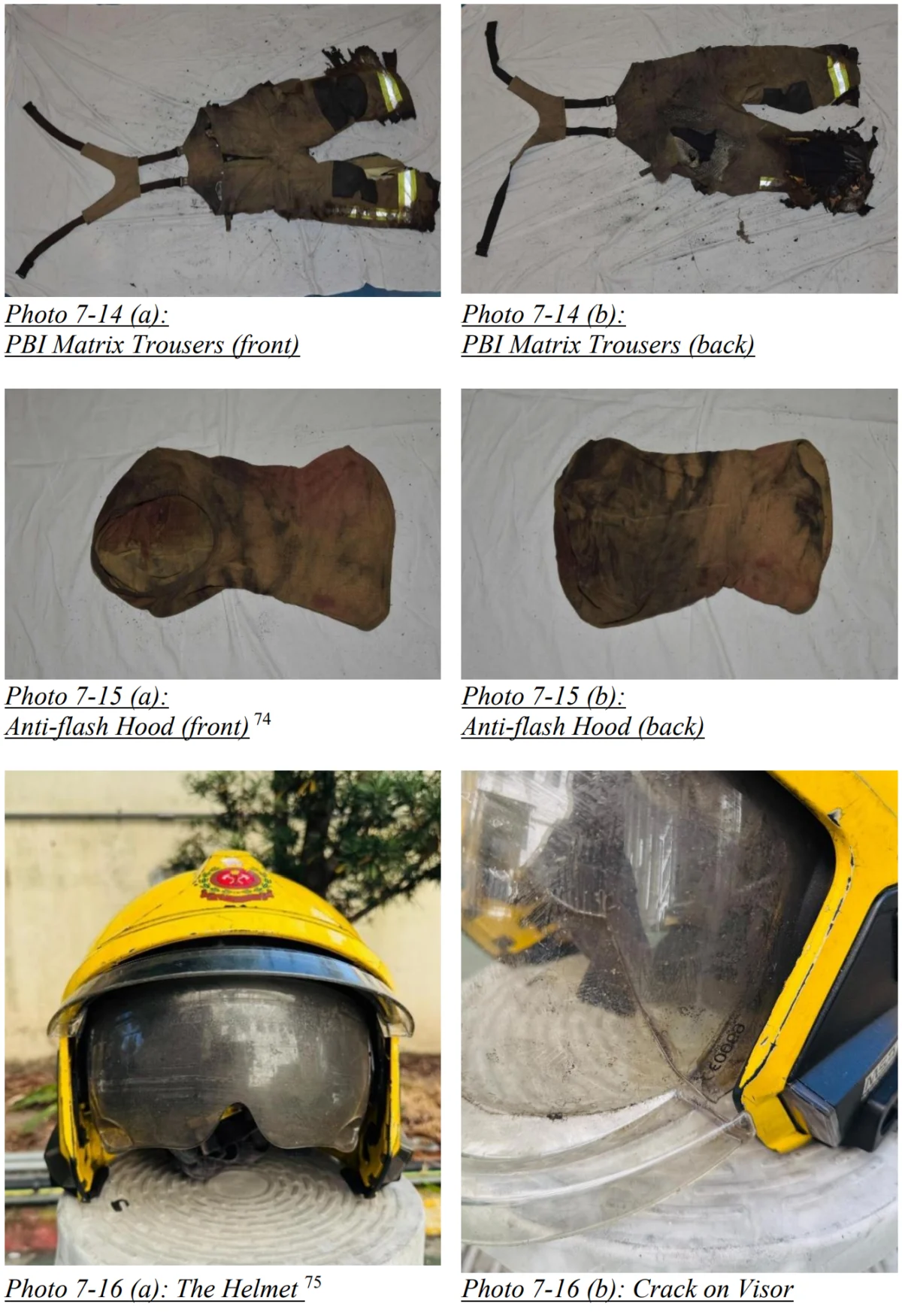
A comprehensive investigation into the devastating fire that ravaged Tai Po’s Wang Fuk Court last year has concluded that the inferno, which claimed 168 lives and displaced thousands, was likely ignited by a carelessly discarded cigarette butt. The final report, made public on Friday, details the tragic events of November 26, 2025, and sheds light on the circumstances surrounding the death of firefighter Ho Wai-ho, who perished in the line of duty. The findings also include poignant images of his fire-damaged uniform and equipment, underscoring the perilous nature of the rescue efforts.
The Genesis of a Catastrophe: A Chain of Negligence and Material Failure
The fire, which originated on a platform outside two flats on the first floor of Wang Cheong House, the initial building to be engulfed at the Wang Fuk Court Home Ownership Scheme estate undergoing renovation, was attributed to the "improper disposal" of a cigarette. This seemingly minor act, in the face of a confluence of other critical factors, spiralled into one of Hong Kong’s deadliest residential fires in recent memory. The investigation committee’s exhaustive 1,142-page report meticulously details how this single act of negligence acted as the spark that ignited a tinderbox of combustible materials.

The report explicitly states that while "windy and dry weather conditions contributed to its development," it was the "abundant presence of combustible materials that played a crucial role in allowing the fire to grow in size, intensify and rapidly spread further to other combustibles." This highlights a critical systemic failure in site management and adherence to safety protocols during the renovation project. The presence of flammable materials, such as wooden planks and cardboard, significantly accelerated the fire’s spread. Furthermore, the investigation pointed to the renovation contractor’s use of substandard materials, including non-fire-retardant scaffolding nets, as a significant factor in the rapid and unchecked dissemination of the flames throughout the complex.
In response to these findings, smoking has since been officially banned on all construction sites across Hong Kong, a measure aimed at preventing similar tragedies in the future.
A Timeline of Tragedy: From Ignition to Devastation
The events of November 26, 2025, unfolded with terrifying speed. The fire began on the first floor of Wang Cheong House, a residential block undergoing extensive renovation as part of the Home Ownership Scheme. Surveillance footage, previously reviewed by the committee, captured a renovation worker smoking on the estate’s roof just hours before the blaze erupted, providing a stark visual precursor to the disaster.

The dry and windy conditions of that day acted as an accelerant, fanning the initial flames. The abundance of flammable materials, including construction debris and potentially unaddressed storage of flammable items, allowed the fire to quickly gain momentum. As the fire spread, it consumed scaffolding nets, which were found to be non-fire-retardant, further facilitating its unimpeded march across the building facades and into adjacent structures.
The sheer scale and rapid progression of the fire overwhelmed initial response efforts. Firefighters were dispatched to the scene, facing an increasingly desperate battle against an inferno that had already taken hold of multiple floors. The tragedy intensified with the loss of firefighter Ho Wai-ho, who became separated from his team during the chaotic operations.
The Unshirkable Responsibility: Systemic Failures and Government Oversight
The independent committee, established to thoroughly probe the fire’s cause and recommend reforms to Hong Kong’s fire safety regime, concluded that the disaster was not solely attributable to individual negligence but also to broader systemic failures. Lawyer Victor Dawes, representing the inquiry committee, stated during closing statements that the government bears an "unshirkable responsibility" for the fire. This assertion points to potential shortcomings in regulatory oversight, enforcement, and the overall framework governing construction site safety in Hong Kong.

The report identified a "combination of the construction sector’s greed as well as buck-passing and gaps in the government’s regulatory regime" as contributing factors. This suggests a need for a more robust and proactive approach to fire safety, encompassing stricter adherence to building codes, more frequent and thorough inspections, and greater accountability for contractors and developers who prioritize cost-saving over public safety. The potential for a lack of stringent enforcement of existing regulations, or inadequacies in the regulations themselves, are areas that warrant further examination and reform.
The Sacrifice of a Hero: Firefighter Ho Wai-ho’s Final Moments
The report also provided harrowing details surrounding the death of 37-year-old firefighter Ho Wai-ho. He was posthumously awarded a full-honours funeral in recognition of his bravery and sacrifice. An interim report indicated that Ho "might have been in prolonged contact with hot or burning objects, resulting in severe fire damage" to his uniform.
Images released alongside the final report offer a grim testament to the intensity of the fire and the risks faced by emergency responders. His charred station t-shirt and trousers, his PBI matrix firefighting jacket and trousers, an anti-flash hood, and his helmet with a cracked visor were all presented as evidence of his ordeal. Crucially, tests conducted on all of his gear a month prior to the fire confirmed that it was in full working order, ruling out equipment failure as a cause.

Surveillance footage revealed a critical moment where Ho became separated from his team and entered Wang Tai House, instead of the intended Wang Cheong House. Despite the deteriorating situation, the report suggests that Ho remained in Wang Tai House in an attempt to assist in the evacuation of others. This selfless act of courage, however, tragically led to his demise.
His facemask, gear, helmet, and hammer were found on the 31st floor of the building. The report infers that Ho likely placed his gear down before exiting the building onto the scaffolding, which may have been his only potential means of escape or seeking assistance. The autopsy report’s findings of injuries consistent with a fall strongly support the theory that he fell from the building. The report postulates that Ho may have succumbed to smoke inhalation and lost consciousness before falling, or that he fell and sustained incapacitating injuries. This detailed account serves as a somber reminder of the immense risks firefighters undertake in protecting the public.
Data and Statistics: Contextualizing the Scale of the Tragedy
The Wang Fuk Court fire stands as a stark reminder of the devastating consequences of inadequate fire safety measures. The sheer number of fatalities, 168, places it among the most severe residential fires in Hong Kong’s history. The thousands displaced further underscore the profound social and economic impact of the event.

- Date of Fire: November 26, 2025
- Location: Wang Fuk Court, Tai Po (Home Ownership Scheme estate undergoing renovation)
- Fatalities: 168
- Displaced Residents: Thousands
- Investigating Body: Independent committee formed to probe the cause and recommend reforms.
- Report Length: 1,142 pages
- Key Findings: Accidental ignition due to discarded cigarette butt; rapid spread due to abundant combustible materials and substandard scaffolding nets.
- New Regulations: Smoking banned on construction sites.
Broader Implications: A Call for Enhanced Fire Safety and Accountability
The Wang Fuk Court fire and its subsequent investigation carry significant implications for Hong Kong’s approach to fire safety. The report’s emphasis on systemic failures, regulatory gaps, and the "unshirkable responsibility" of the government signals a critical need for a comprehensive review and overhaul of existing fire safety protocols.
The tragedy highlights the urgent necessity for:
- Enhanced Regulatory Oversight: Stricter enforcement of building codes and renovation site safety regulations.
- Improved Contractor Accountability: Holding contractors and developers to higher standards of safety and material quality.
- Public Awareness Campaigns: Educating the public on fire prevention, particularly regarding smoking in hazardous areas.
- Support for First Responders: Ensuring firefighters have the necessary training, equipment, and support to safely execute their duties.
The memory of the 168 lives lost, and the sacrifice of firefighter Ho Wai-ho, must serve as a catalyst for meaningful change. The findings of this investigation provide a roadmap for preventing such a catastrophe from ever happening again, demanding a renewed commitment to safety and accountability from all stakeholders. The full implementation of the committee’s recommendations and a proactive approach to risk mitigation are essential to safeguard the lives and well-being of Hong Kong’s residents.

 Layla Zulfa
 Ammar Sabilarrohman